
Menswear Is Having A Romantic Revival
Ruffles, florals and flyaway blouses are rewriting masculine dress codes.
By Aaron Kok - published
Sniff the air. Something smells heavenly, and no, it’s not your cologne. It’s actually romance.
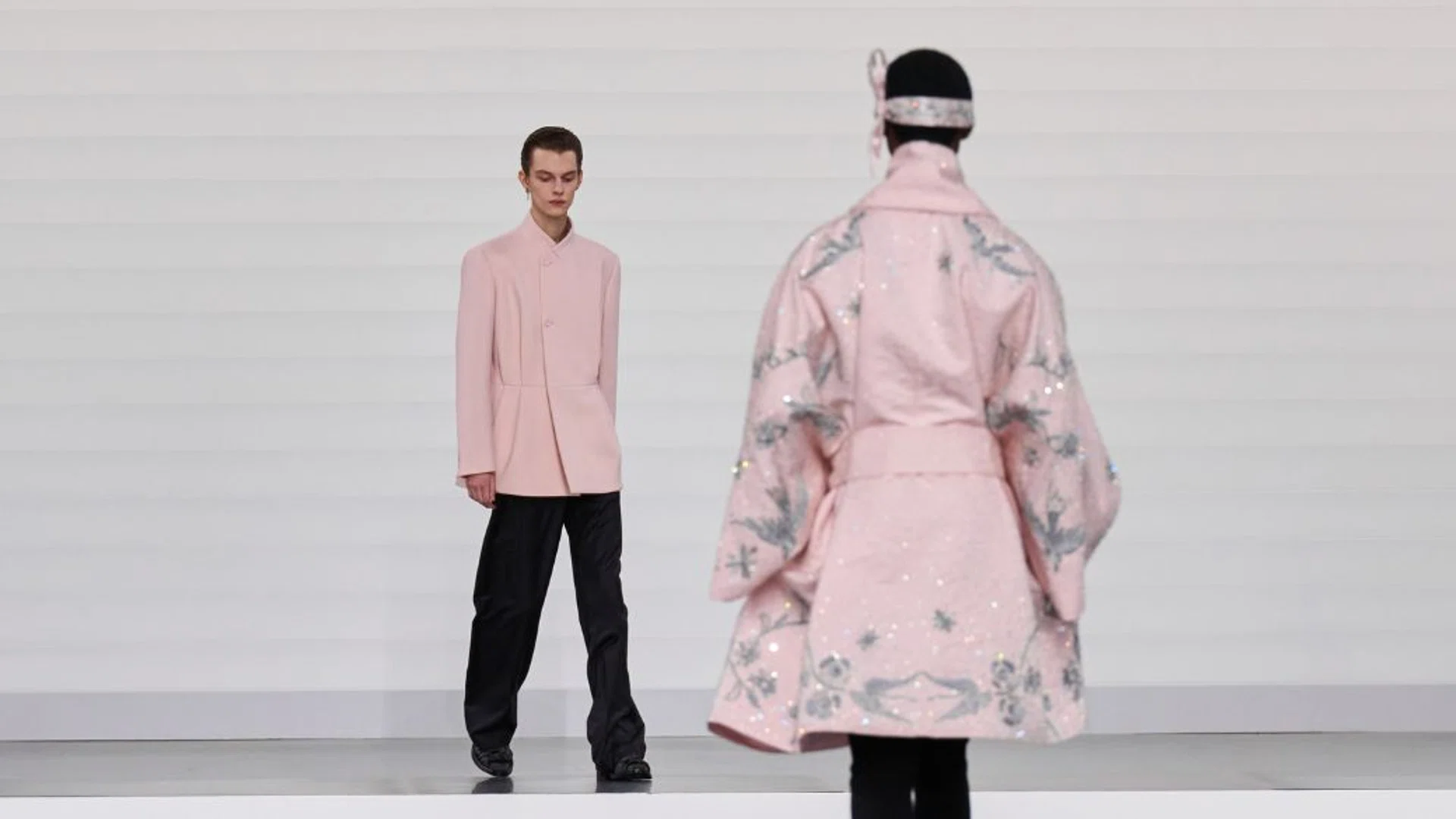
Once upon a time, the closest a man came to romantic dressing was a velvet blazer at a prom. Fast forward to fall/winter 2025 and even spring/summer 2026, and the mood is a little less James Bond in Monaco and a little more Byronic hero with a closet full of bows. The whiff of silk blouses and elaborate kimonos fluttered down the runway at Dior Men. Gargantuan bows and lifelike blooms showed up at Dries Van Noten. Jacquemus sent out men in a skirt worn over trousers and flyaway cotton shirts worn over toned and tanned bare chests.
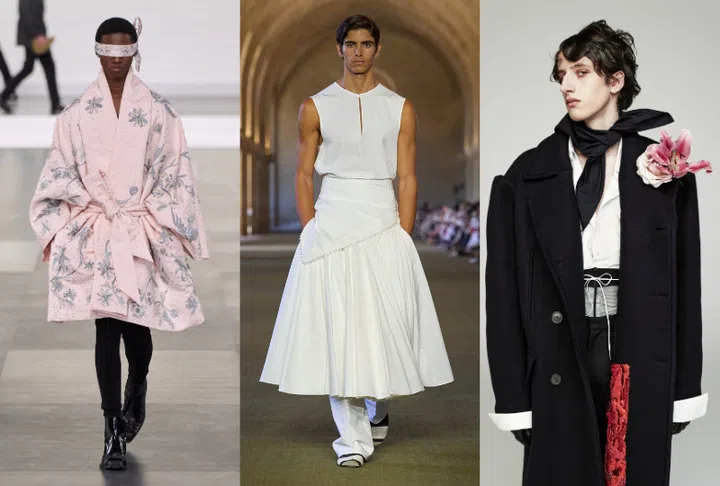
From left: Dior Men, Jacquemus, Dries Van Noten
But let’s be clear: this isn’t genderless fashion; that’s a separate conversation. What we’re seeing now is a recalibration of traditional menswear codes, where men still wear trousers and tailoring, but it comes tinged with softness. Romanticism isn’t replacing menswear; rather, it’s infiltrating it with a touch of loveliness.
“I think what’s exciting about this moment is that the foundations of menswear are still intact,” says Daryll Alexius Yeo, a Singapore-based stylist known for putting his male clients in pearl-covered jackets and sculptural corsages. “There’s still structure, there’s still suiting—but then you get that one detail that changes everything. It doesn’t scream femininity. It just feels human.”
That human touch is precisely what’s been missing from the male wardrobe for years, and the latest fashion seasons seem determined to bring it back. At his swansong Dior Men show for fall/winter 2026, creative director Kim Jones laced the House’s heritage with florals, delicate shirting, and fluttering ribbons—subtle subversions that reimagine masculinity through the lens of beauty and poetry. Meanwhile, at Valentino, Alessandro Michele opened the floodgates with transparent guipure lace shell tops, silk waistcoats, and rose brooches big enough to rival a bridal bouquet.
Related article: Men With Style: BJ Pascual, Fashion Photographer
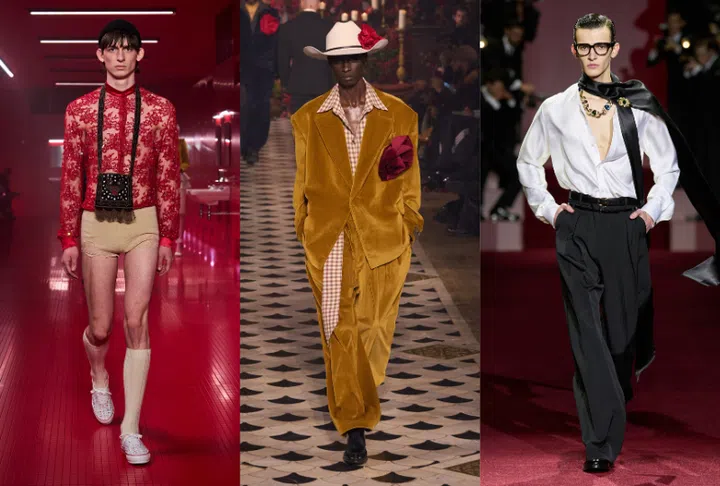
From left: Valentino, Willy Chavarria, Dolce&Gabbana
This isn’t about fragility, though. Rather, it’s about a kind of emotional depth made tangible. “I think men are finally giving themselves permission to show something real,” says Yeo. “A sheer blouse or diamanté corsage isn’t about gender anymore—it’s about an expression of who you are. And maybe even about joy: the joys of dressing up, of feeling good in your own skin.”
That sentiment is echoed by Alejandro Gómez Palomo, the designer behind Palomo Spain, a label that has long embraced ruffles, beads, and all things soft. “Menswear lacked detail, glamour, luxury,” he says. “I wanted to give people the option in their dressing, and in a way, liberate men.”
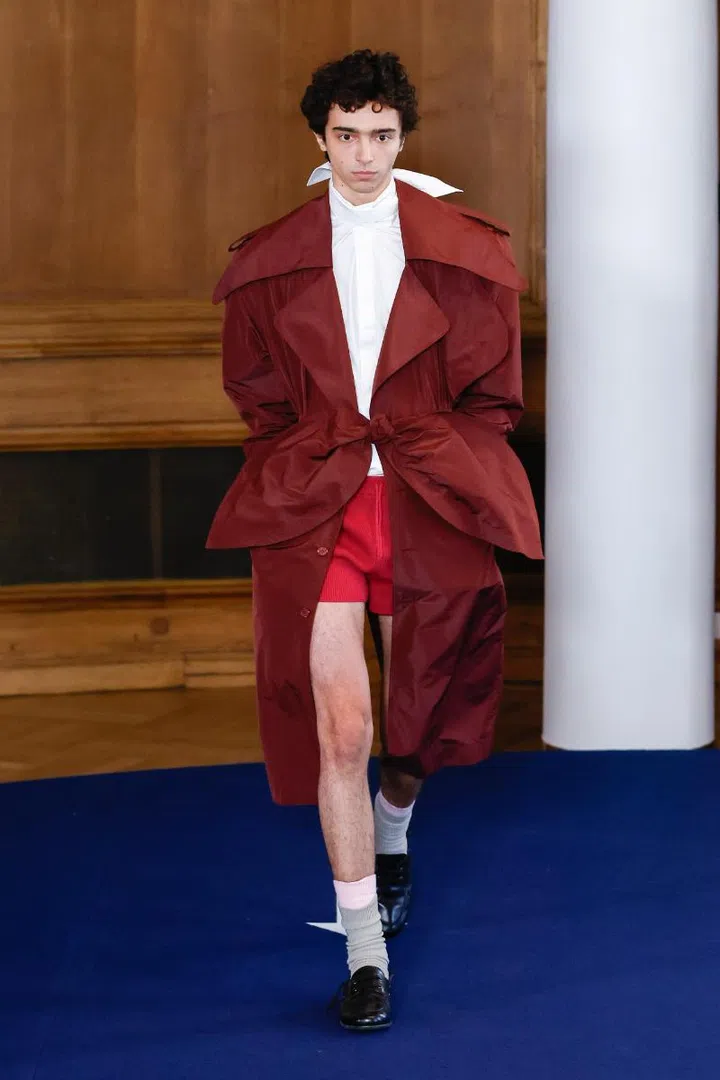
Palomo Spain
It’s a liberation built not on shock value, but on quiet confidence—a kind of unapologetic elegance that lets a man wear a beaded blouse without overexplaining it.
Just ask Raynard Randynata, creative director of Indonesian brand Drunk Dad, where t-shirts come beaded and men’s shirts are trimmed with lace or cascade into a waterfall of ruffles. “The keywords I always return to are romantic and witty,” says Randynata. “Even when we’re designing menswear, it’s instinctive for me to lean into softness—not necessarily femininity, but softness. That little detail, like a bow at the collar, changes the energy of the whole look.”
Drunk Dad doesn’t consider itself gender fluid. The clothes are still recognisably menswear—button-downs, tailored pants, boxy jackets. But zoom in and you’ll notice the subtext: a floral embroidery here, a lace insert there. “It all feels very intuitive for me,” Randynata adds. “Even the beading on our tees wasn’t a ‘fashion statement’. It was just what I personally liked. It’s personal first. The statement comes after.”
That personal resonance is part of what makes this wave of romantic menswear feel more authentic than previous flirtations. It isn’t performative, and it doesn’t rely on making men wear dresses to prove a point. Instead, it sits in a grey zone.
Related article: Why Man Bags Are Back And Bigger Than Ever
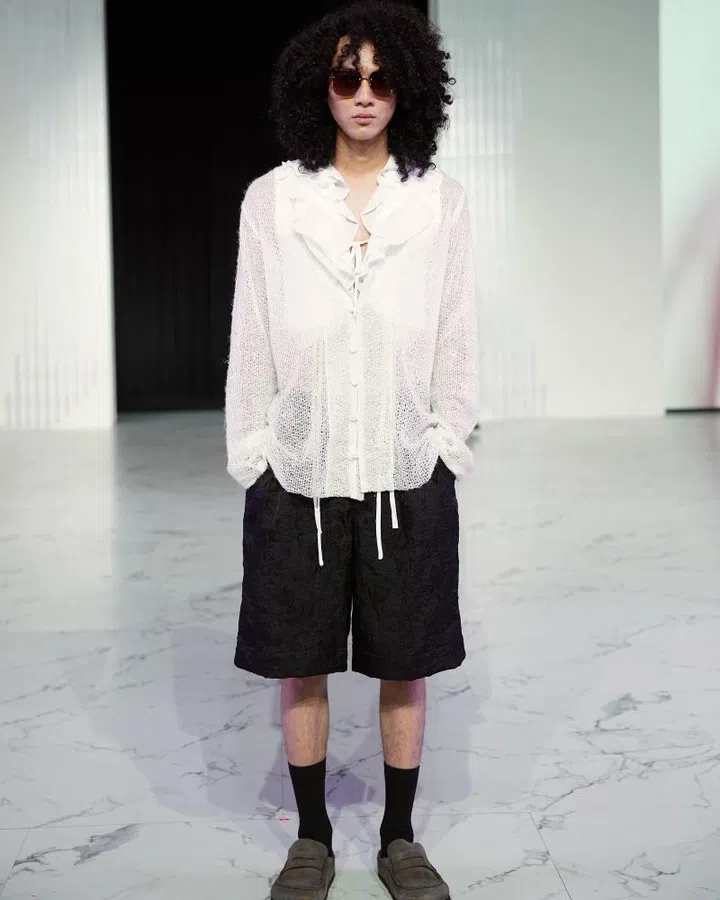
A lace shirt from Drunk Dad.
“Once you strip away those labels, what you really see are people. Whether it’s women in strong boxy power suits, or men carrying soft sculptural bags, that tension between structure and sensitivity is where fashion feels the most alive to me,” says Yeo.
Even Palomo agrees: “I don’t think I play with the idea of gender,” he said. “I crave the idea of men being able to wear the same beautiful embroideries, volumes and materials women wear. Men should be able to make their fantasies come true through fashion.”
And yet, the romantic revival isn’t just a European or high-fashion phenomenon. In Southeast Asia, this softness is taking on new meaning. “Jakarta is still quite hetero-centric,” says Randynata. “So I like to play with that—not in a way that’s loud, but in ways that allow men here to express themselves. They may not wear a full lace blouse, but maybe a work shirt with a detachable bow. It still looks ‘masculine’, but it carries a kind of rebellion.” And it’s not just happening on the runway. It’s creeping into wardrobes, thanks to stylists like Yeo, designers like Randynata and Palomo, and men who are simply tired of the binary codes that fashion has long upheld for decades.
Related article: When Did Streetwear Get So Grown Up?
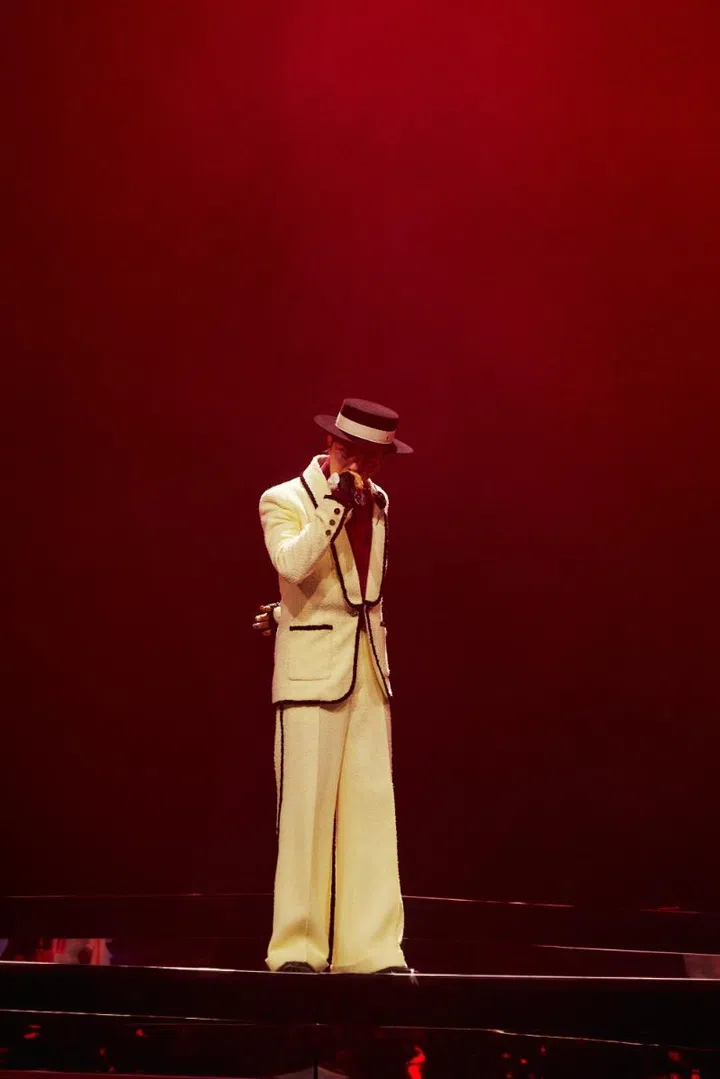
South Korean rapper G-Dragon performs in a custom Chanel look, which is inspired by a woman’s tweed jacket. The look comes completed with a red camellia flower brooch.
“There’s this idea that to be a man is to look a certain way,” says Randynata. “And I’ve always wanted to push against that through design choices that feel personal and a little rebellious. I didn’t see pieces like this in the market, so I made them.”
What we’re seeing now is the return of a kind of dressing that doesn’t apologise for beauty. It’s menswear that is confident enough to wear a flower, that knows a well-cut blouse doesn’t negate a man’s identity. If anything, it might just help him find it. “Romanticism in menswear has always been there,” says Yeo. “From the poets to the rock stars, it just went quiet for a while. But now it’s back, and men are no longer afraid to feel or to dress like it.” So go ahead. Put on the silk shirt. Fasten the brooch. Tie the bow. You’re not losing your masculinity, you’re just learning to wear it differently.