
From Prep To Streetwear: How The Loafer Has Evolved
Once confined to offices and prep-school wardrobes, the loafer has become the shoe that stylish men are wearing with almost everything.
By Aaron Kok - published
For decades, the loafer was a symbol of all things well-behaved. It belonged to uniforms, office dress codes and even the wedding guest who remembered to polish his shoes the night before. As fashion embraced it, the shoe carried a certain air of good manners: 2026’s early prep resurgence saw penny loafers come with Ivy League associations; horsebits suggested a more Italian kind of polish. Either way, there were rules.
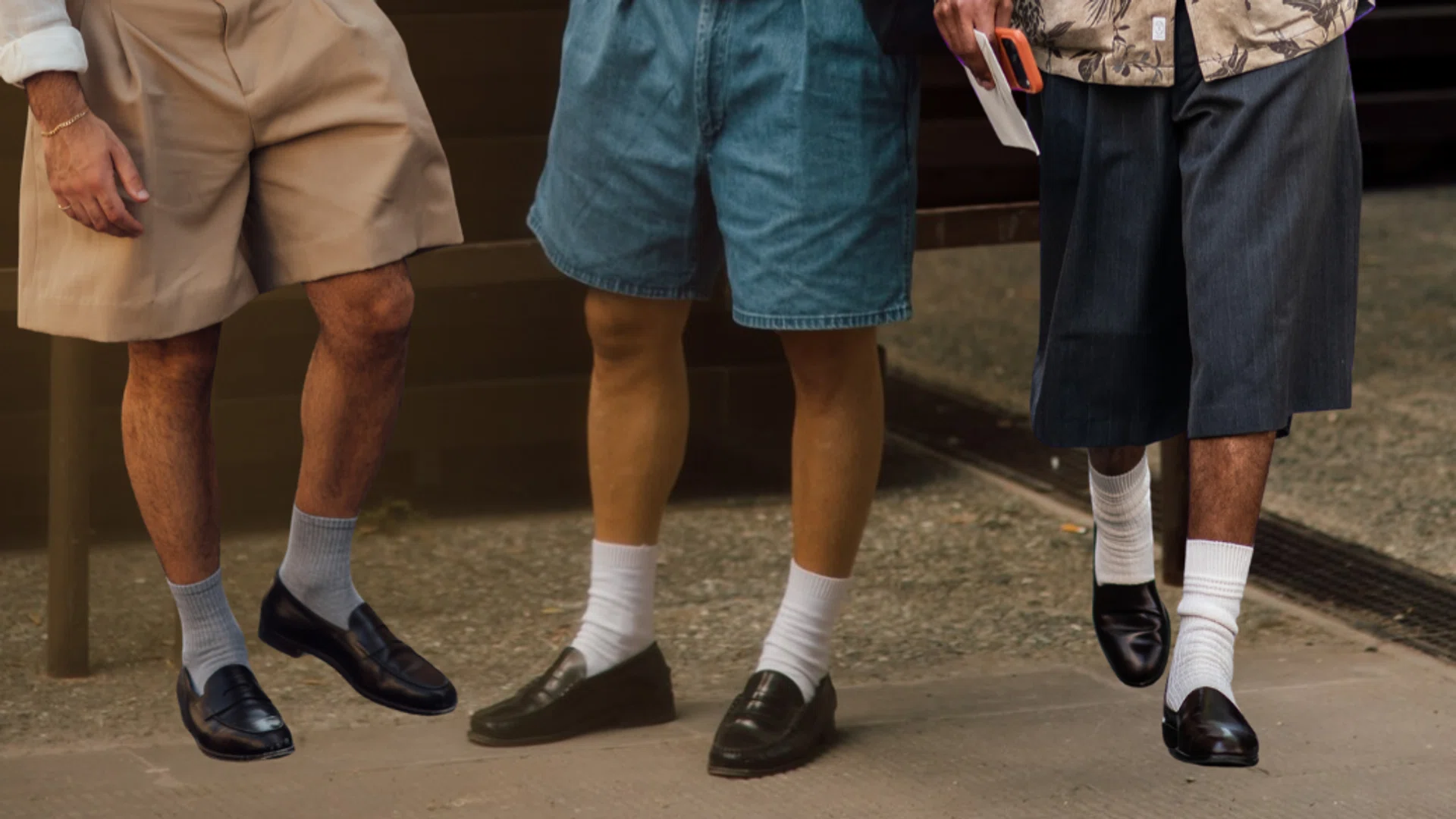
Those rules have become considerably less interesting, and thank the fashion gods for that. Look around now and the loafer is just as likely to appear beneath enormous jorts, washed cargos or a pair of sweatpants as it is under tailoring. Socks may be white and deliberately visible, and trousers can pool over the vamp. The leather might be mirror-bright or supple enough that the shoe begins to resemble a slipper. On social media, where an outfit can move from convincing to catastrophically overthought in about three swipes, loafers have somehow become one of the safest ways to make a look feel sharper.
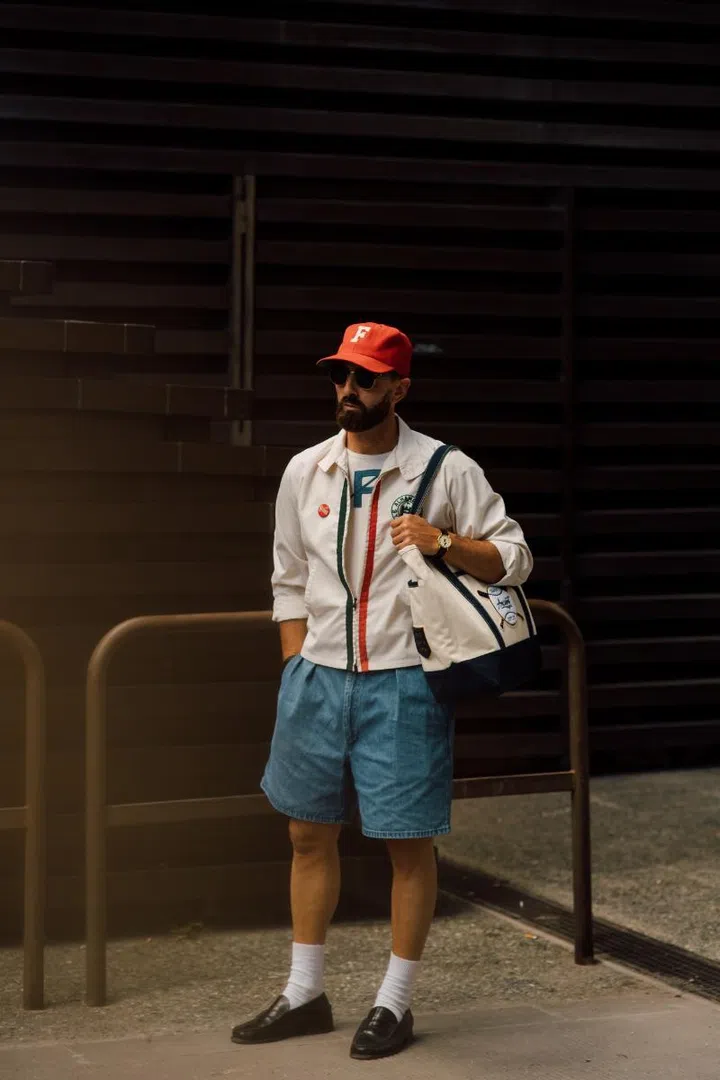
An attendee at fashion week in his loafers.
Related content: Men With Style: Matthias Selvam, Video Director and Content Creator
Fashion creator and creative director Ethan Diaz noticed the shift when people around him started reaching for loafers regardless of what the rest of the outfit was doing. “The contrast is what made it very interesting to me,” he says. For Diaz, the shoe became compelling once it lost the obligation to behave like a dress shoe. He likes it most when it is worn “wrong”. Filipino fashion content creator David Guisson shares the sentiment: “We have more freedom with fashion now and that’s what makes it exciting.”
That may be the simplest explanation for the loafer’s current appeal. The shoe itself has hardly been waiting in obscurity for a comeback. G.H. Bass introduced its Weejuns in 1936, adapting Norwegian slip-on footwear into what the company describes as the first penny loafer. Gucci followed with its Horsebit loafer in 1953, fixing an equestrian-inspired metal detail across the vamp and creating one of the House’s enduring signatures. Thanks to office wardrobes, as well as trends like prep and celebrity culture, loafers have never struggled to find an audience. Their meaning, however, keeps changing.
Heritage Reinterpreted for Today
Michael Wong, founder and principal of Jakarta-based menswear store Archie, is wary of treating the current interest as a sudden return. Loafers and slip-ons have been strong sellers for the store since its inception, and in a way, the geography matters here. In Jakarta’s heat and humidity, not unlike that of Singapore, Wong says customers have long appreciated footwear that feels comfortable and convenient while still looking considered. Some reach for loafers every day, while others keep them in rotation with sneakers for work or weddings.
That Southeast Asian perspective adds further nuance to the trend. Fashion loves a resurrection because it gives us something to announce, preferably in capital letters. Real wardrobes are usually messier. A shoe can be perennial in Southeast Asia, corporate elsewhere and suddenly desirable to a 22-year-old who would recoil at the suggestion that he is dressing like his father.
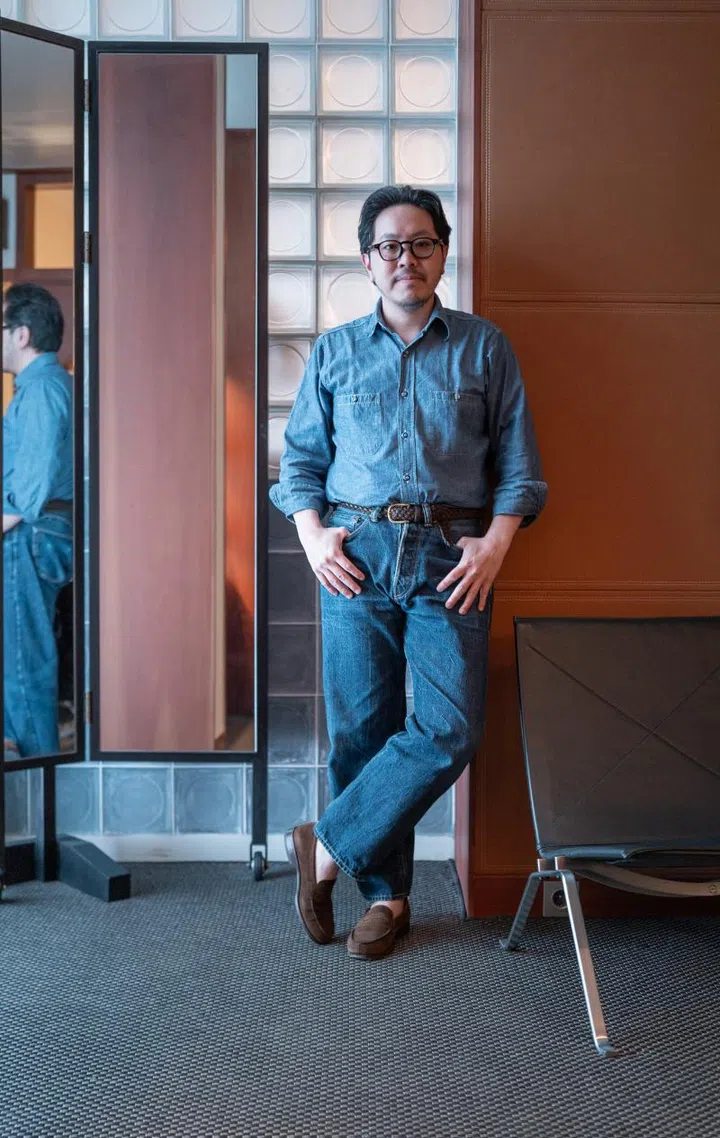
Michael Wong, founder and principal of menswear store Archie.
What has changed more decisively is the customer surrounding it. At Farfetch, head of merchandising Doralice Belli has seen growing demand for men’s loafers alongside a broader interest in building wardrobes for the long term. She points to Gen Z and millennial shoppers with roots in streetwear culture who are now folding loafers into the daily rotation once dominated by high-profile sneaker drops. The classic penny loafer remains especially strong, while chunkier soles and hybrid versions offer an easier route into leather footwear for anyone reluctant to abandon rubber entirely.
The sneaker comparison is unavoidable, although reports of its demise can safely remain in drafts for now. Guisson says he now reaches for sneakers mainly on particularly long days; during a month-long summer trip through Europe, they were relegated largely to transit days. “I just felt I was more stylish with a pair of loafers,” he says. The leather shoe introduces intention without demanding ceremony.
This helps explain why the loafer feels particularly suited to menswear now. Recent seasons have seen designers and dressers revisit traditional codes of formality with newfound twists, and nobody seems especially interested in following the old instructions. The loafer works neatly within that approach because it can finish baggy jeans with enough polish to register, while a suit suddenly feels less corporate when the shoe underneath is soft, low-slung and worn with a little irreverence.
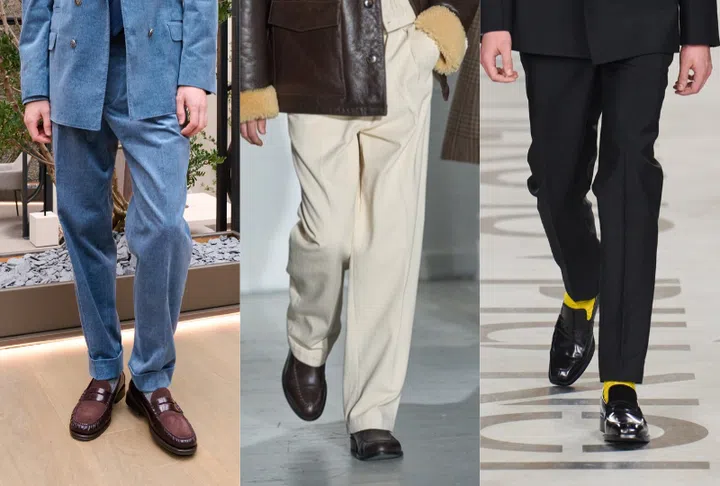
Fall/winter 2026 loafers from Brunello Cucinelli, Officine Generale and Fendi.
Related content: Menswear Is In Its New Aristocratic Era
Social media has accelerated that re-reading. Diaz points out that a loafer might appear traditionally styled in one video, then resurface minutes later with huge shorts and socks. Seeing the same shoe inhabit unrelated wardrobes slowly erodes the idea that it belongs to one particular type of man. Younger customers can arrive at loafers through creators whose clothes bear little resemblance to the prep-school fantasy once attached to them.
“The internet is really good at taking something that feels old and giving it a new context,” Diaz says. It is a fairly accurate description of fashion in 2026 too. The designers making these shoes have responded accordingly. Sharan Kaur, co-founder of Singapore footwear label Arden Teal, says the challenge comes from working with a shape that is already deeply familiar. The question guiding the brand, she explains, is how much a traditional loafer can be adjusted before it loses the versatility that made it useful in the first place.
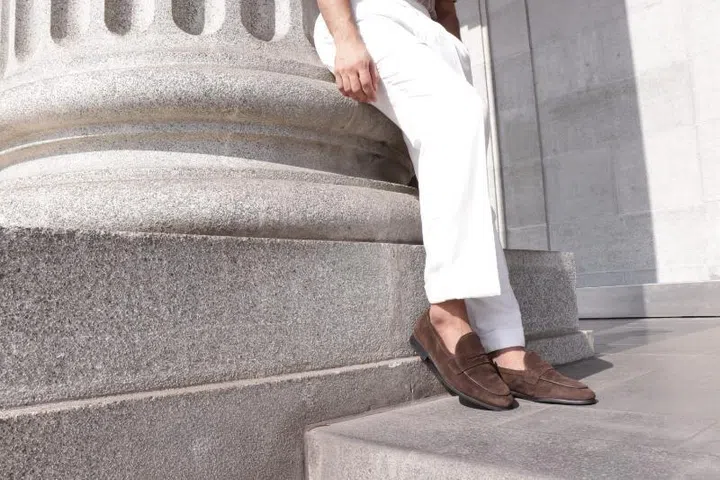
A pair of loafers from the local footwear maker, Arden Teal.
Arden Teal has recently moved towards slimmer profiles and less aggressive vamps, responding to customers looking for a more refined silhouette. Its Coronda Gurkha loafer, released to mark the label’s eighth anniversary, replaces the familiar penny strap with a cross-strap treatment and pares back the shape. The changes are subtle by design, because a loafer does not require reinvention every season to feel relevant; often a few millimetres can alter its entire attitude.
Kaur also points to softer construction as one of the category’s most important developments. Contemporary loafers have become lighter and more flexible, allowing them to compete with the ease that made sneakers so dominant. This matters more than the fashion industry sometimes admits. Men may happily experiment with an unusual trouser shape or a questionable little scarf, but very few want to spend 12 hours discovering that their shoes are instruments of punishment.
Related article: Has Menswear Gotten Messier? Yes, But With Good Reason

Content creator Ethan Diaz in a pair of distressed loafers.
Comfort also helps explain why the loafer is moving beyond its old occasions. Once a leather shoe can survive a full day without requiring the wearer to contemplate walking home barefoot, its place in the wardrobe changes. Kaur has seen men substitute softer loafers for sneakers and sandals while retaining enough polish to make the outfit feel deliberate. Wong’s experience in Jakarta suggests the same practicality has long been important in warmer climates.
There is also money involved, naturally. Belli says Farfetch is seeing men place greater value on craftsmanship and durability when shopping for footwear. Wong similarly finds customers willing to pay a premium when the quality of a traditional leather shoe is clear. For both retailers, this interest reaches beyond the promise of looking smarter. A well-made shoe can earn its price through repeated wear and maintenance, particularly as consumers become more demanding about what deserves space in the wardrobe.
From Sneakers To Loafers
Perhaps sneaker culture prepared men rather well for this. It taught a generation to notice minute differences in silhouette and to understand footwear as an object worthy of research. Once you have spent years caring about the precise shape of a sneaker toe box, developing opinions about the right loafer vamp for yourself hardly represents a personality transplant.
Belli’s observations make that migration particularly interesting. The streetwear customer has begun looking towards a shoe with a lineage far older than the hype economy, yet many of the behaviours remain recognisable. Men still care about the maker and the exact model, and they still understand that footwear can carry disproportionate weight within an outfit. The object has changed while the attention remains.
The wider market has given them more to examine. Belli points to woven leather, raffia and year-round suede among the materials broadening what a loafer can be, while slipper-like constructions are pushing the silhouette further away from its boardroom past. Even the penny loafer, still Farfetch’s strongest style within the category, can now look drastically different depending on the sole and the length of the toe.

Fashion content creator plays with colour in his platform loafers.
Related content: Men With Style: Ken Yuktasevi, Founder And Creative Director Of Parable Of A Studio
Which leaves the question of whether the loafer really is menswear’s new It shoe. Novelty alone makes a poor argument for a design approaching its centenary, so perhaps, cultural relevance makes a better one. The loafer now occupies the space once monopolised by sneakers as a shoe capable of communicating taste while remaining viable for daily life.
Its latest success comes from men becoming far less concerned with wearing it correctly. The corporate associations have loosened, the styling possibilities have widened, and a shoe previously saved for an occasion is increasingly being worn on an ordinary Tuesday. Diaz’s instinct to wear the loafer “wrong” gets to the heart of the shift. Classics survive because they remain useful, just like how fashion returns when somebody decides the old instructions are no longer worth reading. Sneakers taught a generation of men to look down at their feet. The loafer has given them another reason to keep looking.