
“Success To Me Now Means Sustainability”: Sezairi Sezali On What 15 Years In Music Has Taught Him
The Singaporean musician talks ownership, sustainability, Southeast Asia and the music still waiting to be made.

By Aaron Kok - published
Sezairi Sezali writes albums with the stage already in his head. Before there is a finished set list, the singer is thinking about the few seconds before he walks out, whether the music can begin while he is still offstage, when the guitar should enter, and how a song might feel once a room full of people start moving to it. “I write to perform,” he says. It is a useful detail because Sezairi’s relationship with music has always been physical. Songs are meant to leave the studio eventually. They need somewhere to go.
More than 15 years into his career, there are plenty of places for them to go. In 2025, Sezairi released his fifth studio album, The Art of Surrender, his first fully self-produced record, after establishing Offlane Records with his wife Syaza and longtime collaborator Tay Jie Ming. This year, the album has continued through the Surrender Sessions, a live reworking of the project. He is also a resident judge on Suria’s Anugerah and at Offlane, he has begun producing the second EP of newly signed artist 19-year-old Heema Izzati. Meanwhile, a sixth album is already taking shape for 2027. Looking back can be useful, though he seems more interested in what all that experience buys him.
Anugerah has provided an unexpectedly vivid reminder. Sitting on the judging panel and watching young contestants manage their nerves before a live performance, Sezairi has found himself remembering the early days of his own career. Before going onstage during Singapore Idol, he says, anxiety would sometimes make him physically sick backstage. These days, the reaction has largely disappeared, as age has given him a better sense of how much stress he can carry.
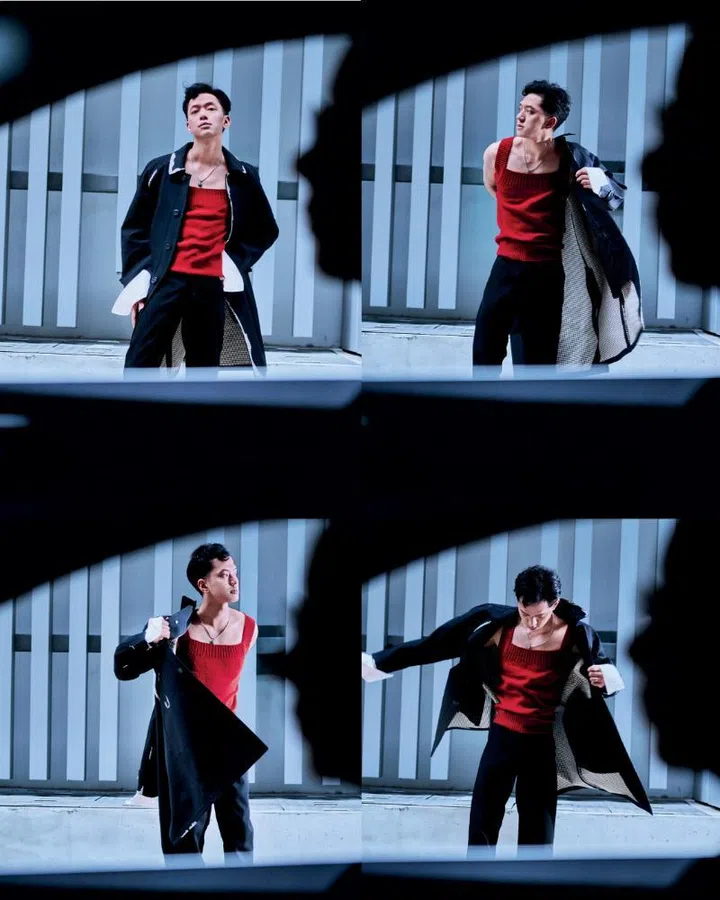
Coat; knit top; trousers, Prada. Necklace (worn throughout), Sezairi’s own.
That recalibration extends to work. Sezairi talks about knowing how many “spoons” he has in a day, especially as his job now requires him to move between making music, run a label and perform. The younger version of him wanted to accept everything and prove he could deliver, even admitting that he once thought a productive studio session meant writing a song a day.
Now he measures a day by what the work required from him. “Who was I trying to impress?” he asks, with a knowing smile. It is a surprisingly practical question for a musician whose career began with the machinery of a television competition and later produced one of Singapore’s biggest streaming successes.
His answer to what success means today is equally practical. “Success to me now means sustainability,” he says. “I think the apex of a successful artist is that he’s an artist full time... his whole life.”
Related article: “Music Is How I Survive”: Singer-Songwriter LAYYI On Creative Control, Vulnerability And Her Debut Album
Making It Last
Awards and peaks have their place, but Sezairi’s preferred luxury is considerably less ceremonial: waking up, walking into his studio, and having three hours to play the piano or practise the guitar. He recounts how he spent his younger years growing up in a household where money was tight, and he remembers being told there simply was not enough for piano lessons. “There was a scarcity mindset for sure,” he says, though sans any tinge of self-pity. The ability to invest in his craft as an adult carries a significance that a chart position cannot quite replicate.
That also led to an early forged attitude of scrappiness and being resourceful in making his dreams become a reality. Sezairi recounts that while studying, he played music several nights a week to pay his way towards financial independence. The schedule eventually played havoc with his attendance because a 4am gig and morning classes are natural enemies. Still, earning money from music was proof that the life he wanted might actually be possible. “I knew at my very core that I wanted to do music from then,” he says with an unwavering determination. If a job involved music and could keep him afloat, he was going to find a way to do it.
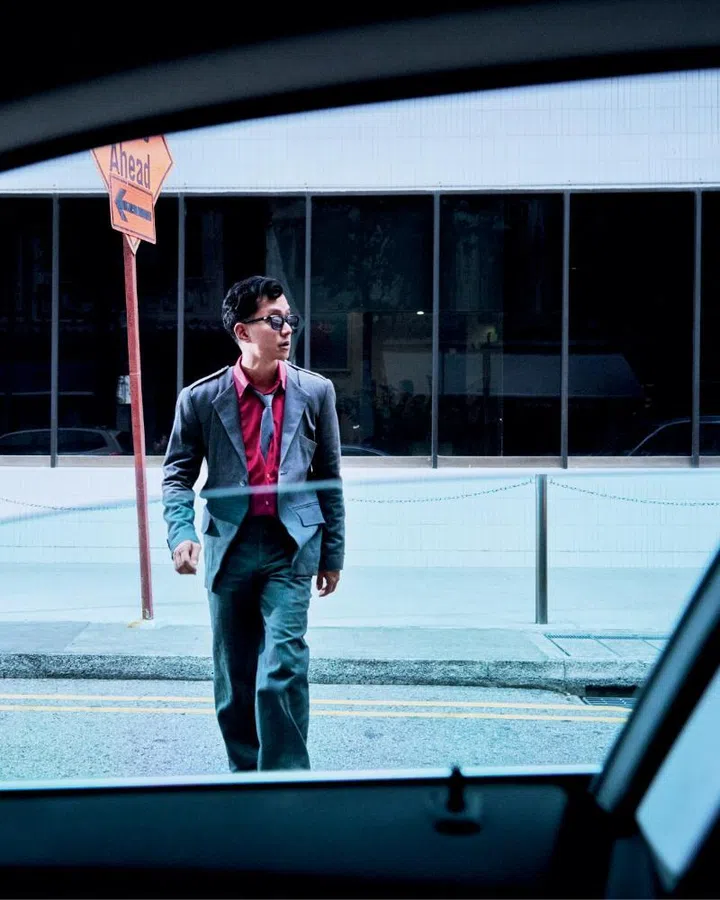
Jacket; tie; shirt; trousers, Dickson Lim. Sunglasses, Gentle Monster.
Related article: “I Want To Make Music With Total Freedom”: Mikah On Reinvention, Family And Finding His Voice
The Long Game
For a while, numbers became part of that equation. “It’s You”, released in 2018, eventually crossed 200 million global streams after finding a huge second life online, and Sezairi admits that he once benchmarked new work against its success. The thinking was straightforward: bigger numbers could unlock touring and make the economics of being a musician easier.
He calls it “proof of concept” that if a Singaporean-sung song could earn royalties, those royalties could create breathing room, and breathing room could fund the next interesting idea. The music industry, naturally, has a habit of changing the maths while everyone is still working out the previous equation.
It is part of what pushed Sezairi towards ownership. He began paying closer attention to contracts, distribution and the percentage of his masters he actually controlled. In 2025, that thinking became Offlane Records. Running a label has added a distinctly unromantic side to his working life, yet he speaks about ownership with the enthusiasm of someone who understands that business knowledge can protect the art. The contracts Offlane offers its artists are informed by what he wishes he had understood earlier, and in some way, his own career became the test case.

Top image: Jacket; tie; shirt, Dickson Lim. Sunglasses, Gentle Monster. Bottom image: Jacket; shirt, Tod’s.
Related article: BAZAAR Exclusive: Raye Reflects On The Making Of Her Latest Album And Her Relationship With Time
The Art of Surrender is the clearest result of that process. The album arrived after years of learning in other people’s studios, from Bandung to Sweden, where Sezairi made a habit of watching producers work and asking questions. Before starting the record, he approached Indonesian musician and producer Petra Sihombing, a collaborator he respected enormously, to produce it. Much to Sezairi’s surprise, Sihombing turned him down with a flattering reason. “‘I think you can do it yourself, bro’ is what Petra said to me,” Sezairi recalls. The vote of confidence landed harder than expected and as Sezairi got off the call, he broke down. For years he had watched other producers and quietly wondered whether he already understood more than he gave himself credit for. Now, someone he trusted had finally said it aloud.
The album also arrived during a period of grief. Sezairi’s mother passed away in 2023 while he was in Bali recording, and her presence found its way into the music through sounds he had known since childhood. Her parents were Indonesian immigrants, and the music she played and sang at home came largely from Indonesia. Sezairi’s father, meanwhile, worked at one point as a hi-fi salesman, which meant their four-room flat doubled as something of a showroom. Music was constantly present, and Sezairi jokes that, as an overstimulated child, he grew up hating the very concept of music itself because of how ever-present it was in their household.
Years later, while producing The Art of Surrender, melodies associated with his mother kept returning. Earlier in his career, he had imagined himself as an English-language R&B songwriter and occasionally recoiled when something he wrote sounded what he perceived as a distinctly stereotypical sound. Making the record forced him to examine that instinct and he began hearing those melodies as part of his own musical vocabulary. The album’s blend of R&B, soul and Nusantara pop grew from there, carrying his heritage through the shape of the music itself. For him, cultural identity does not require an obvious traditional instrument inserted for effect; instead, it can live inside a melody before the listener even knows why it feels familiar.
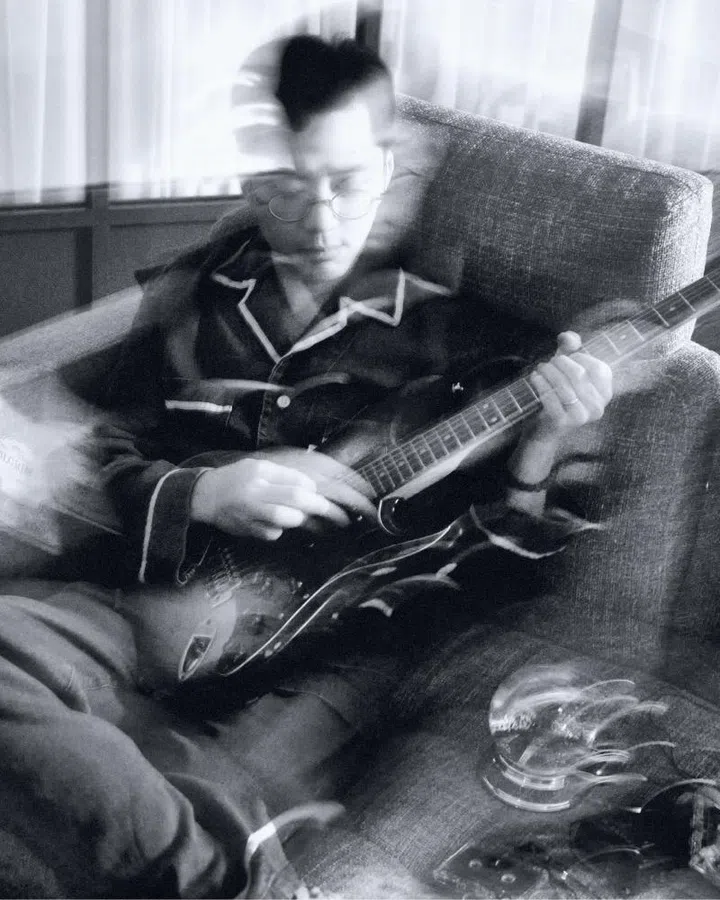
Shirt; pants; sneakers, Onitsuka Tiger. Glasses, Sezairi’s own.
Related article: Upcoming Concerts and Music Festivals in Singapore: Dates and Tickets
Closer To Home
That idea has become more important as his work has taken him around Southeast Asia. Time spent working in Indonesia, in particular, has complicated the old assumption that regional success eventually points westward.
Sezairi sees Southeast Asia as a collection of music cultures with their own languages, audiences and independent industries, many of which remain surprisingly invisible to one another. An English-language act from the region may be chasing a completely different listener from an Indonesian-language pop star with an enormous domestic following. Both can work, even though the routes differ.
His hope is that Southeast Asian music can become more self-contained, with artists able to build sustainable careers and tour the region without needing approval from somewhere else first. After all, his travels have also made him optimistic about what already exists. He talks excitedly about musicians folding local references into contemporary pop and younger audiences embracing cultural forms that previous generations might have dismissed as old-fashioned.
The more he looks around the region, the larger his idea of the music industry becomes. Offlane gives him a chance to participate in that future from another seat, which in this case, is producing Izzati’s EP for a planned 2027 release. Working with her has been humbling in the best way, and he describes her as being so musically gifted that she makes him question whether he should have paid more attention in class. After spending roughly two years making The Art of Surrender largely by himself, producing for someone else has also reminded him why collaboration matters. Another person can interrupt habits you did not realise had formed. Sezairi seems increasingly comfortable allowing that interruption.
And that brings us back to album number six, which Sezairi will work on in 2027. While the details are still guarded, he does let one thing slip: he has been thinking about disco. The reason is almost comically functional, as he lets on that his current set needs more fast-tempo songs. He grew up listening to bands such as Jamiroquai and is fascinated by disco’s relationship with technology and live musicianship, where dance-floor propulsion can still come from a human playing an instrument in the room rather than something sampled off the Internet. He wants future music to feel more organic and more kinetic, built with performance and humanity in mind.
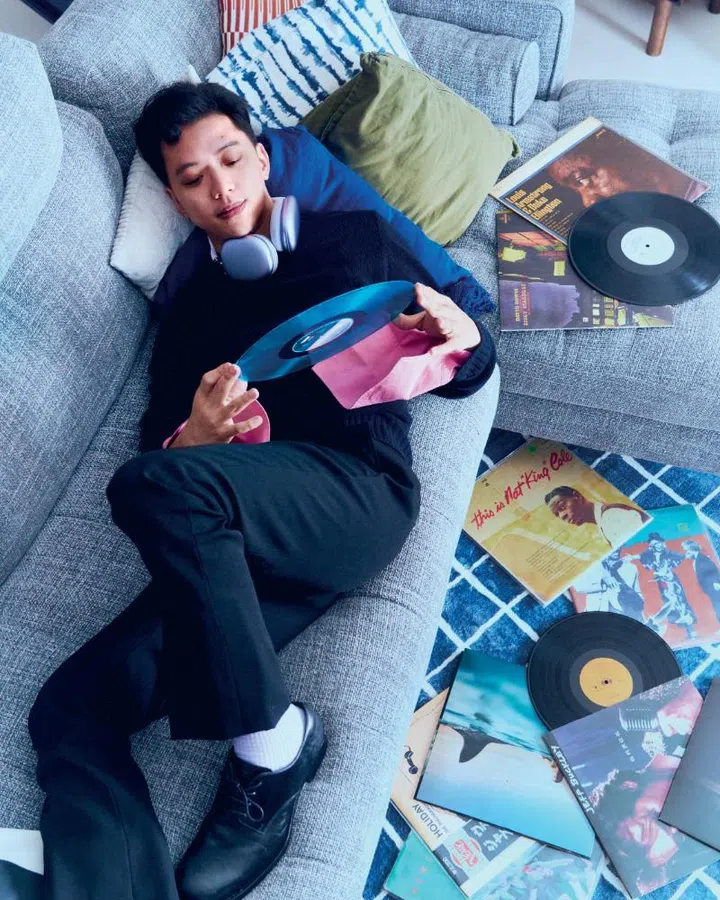
Knit; trousers; shoes, Prada. Socks, Sezairi’s own.
Related article: Nathan Hartono On Married Life, Writing For Others, And Finding New Ways To Connect Through Music
That makes sense for an artist who still describes being onstage with a locked-in band and thousands of people responding as one of the greatest feelings he knows. For all the industry talk about streams, algorithms and scale, Sezairi’s ambitions keep returning to the act itself: people making music together and an audience receiving it in real time. He keeps photographs of younger versions of himself on his wall, from childhood through the period when he first started dating his wife. In the valleys, these pictures remind him who all this work is for, and his goal these days is to prove that younger Sezairi right.
More than a decade ago, he talked publicly about wanting to go overseas simply to sit in rooms with better musicians and see how far curiosity could take him. Some people interpreted ambition as grandiosity and, well, misplaced delusions. Yet looking back, Sezairi remembers it differently. He just wanted access to the room, to learn, adapt and absorb. Since then, there have been plenty of rooms across Singapore and beyond, and he has watched closely enough to eventually build one of his own. Going places, in Sezairi’s version, means staying in the game long enough to keep choosing where the music takes him.
Somewhere on that wall, the younger Sezairi who wanted this life is still looking back at him. “I told you building something out of this was always possible,” he says to me on our call, but he could also be saying it to that version of himself. It is hard to think of a better accolade and affirmation than that.