
Culture Club: How Chanel's Métiers d’Art 2022/23 Collection Transcends Time And Place
First shown in Dakar, Chanel brings its Métiers d’art presentation to Tokyo, where we discovered the enduring craftsmanship and cultural relevance of the unique collection
By Renée Batchelor - published
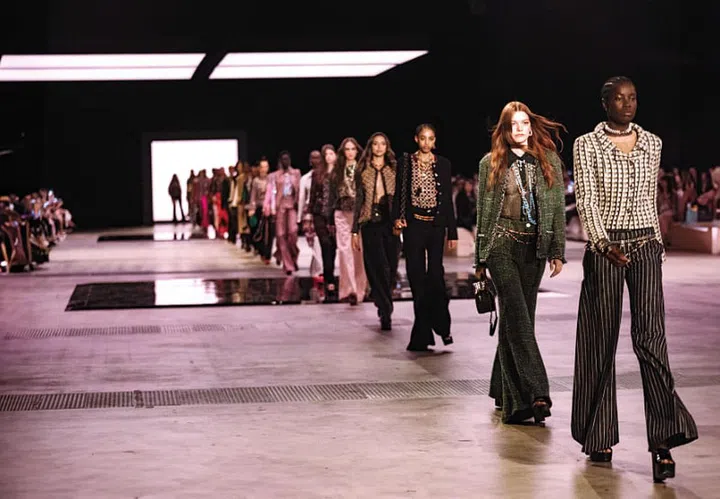
Photo: Courtesy of Chanel
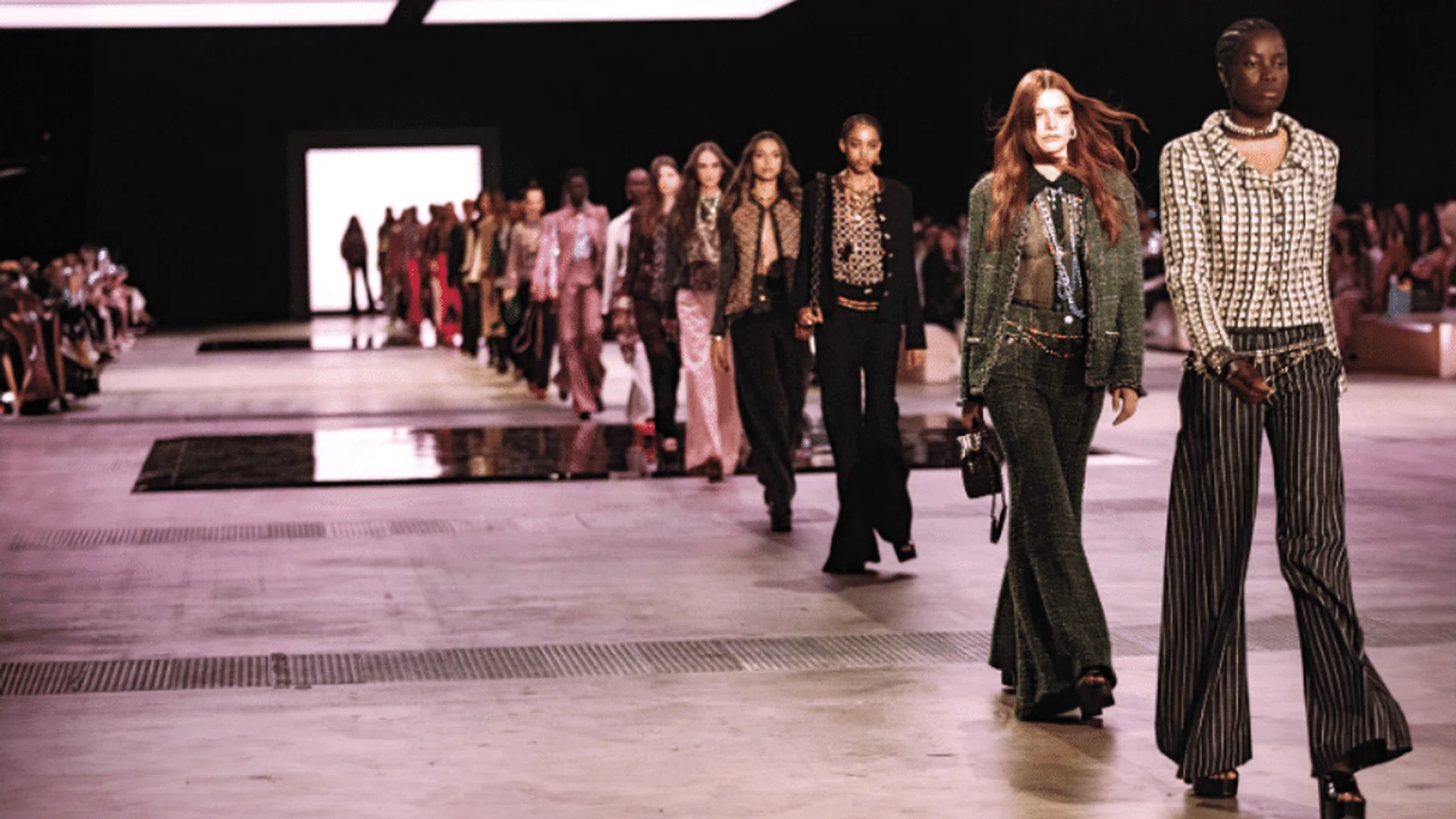
The finale at the Chanel Métiers d’art show in Tokyo Big Sight. Models donned Seventies -inspired looks that featured intricate embroidery and detailing crafted by the House’s various Maisons d’art
When Chanel first unveiled its Métiers d’art collection in Dakar, Senegal, in December 2022, it was an ambitious first in many ways. Chanel had already shown previous Métiers d’art collections in out-of-the-box locales like Monte Carlo, Edinburgh, Dallas and Salzburg but it was the first time the House had ever presented in the African continent.
Related article: Chanel Cruise 2023/24: G-Dragon, Margot Robbie, Elle Fanning, And A Match Made In Hollywood Heaven
The presentation in Senegal signalled its artistic influence as a bonafide cultural capital, in fields ranging from fashion to cinema to dance to contemporary art. By inviting a slew of celebrity guests including Naomi Campbell and Pharrell Williams, and highlighting Senegalese culture and arts with performances by rapper Nix and singer Obree Daman, and having Senegalese models walk the show, Chanel was shining a spotlight not just on this collection, but also on the country.
Photo: Courtesy of Chanel
Photo: Courtesy of Chanel
“It was very important for us to do something in Dakar. It was the right moment and we found such a unique energy there and we have been able to put this energy into the collection. In Dakar, they know everything about embroidery, threads and weaving, even before us in Paris,” says Bruno Pavlovsky, the president of Chanel SAS. As a continuation of the partnerhsip between the two, Chanel also staged a three-month long exhibition in Dakar, “Sur le fil: de Dakar à Paris”, featuring artists from Senegal, South Africa, France and Bolivia. The show was brought to Galerie du 19M in Paris in May this year, expanding the cross-cultural exchange.
To say fashion has gone global today is an understatement. And it’s not just fast fashion that has its tentacles all around the world. Haute couture as well as Chanel’s craftsmanship-focussed Métiers d’art collection have an increasingly global focus.
The Métiers d’art collection—French for Master of Art—is shown once a year by Chanel to highlight the exceptional savoir faire of the maisons d’art, a collection of artisanal workshops that the brand owns, now housed within the le19M complex in Paris. The maisons include the plumassier Lemarié, the embroiderer Lesage and the milliner Maison Michel. While they do not exclusively create for Chanel but operate as independent entities, each Chanel Métiers d’art collection is where these maisons really get to shine, displaying their workmanship and skill on the collection that falls somewhere between ready-to-wear and haute couture.
Says Pavlovsky, “Step by step, first with Karl [Lagerfeld] and now with Virginie [Viard] we developed this Métiers d’art collection that has now become huge for Chanel. Métiers d’art is a way to value the craft, embroiderers and all of the maisons supporting Virginie, and also being able to create a very unique product. The detail and the sophistication in this collection can only happen when you have all the different métiers around you.”
Related article: Chanel’s Skincare Experts On Its New Anti-Ageing Beauty Line, No. 1
Pavlovsky does not think that these maisons d’art, some of which were over a century old, are a part of fashion’s past with their time-worn techniques. “We see them as part of the future of fashion and their contribution is becoming key, not just in Chanel, but if you look at the shows today—everyone wants to value this unique know-how. But only Chanel can do it with this level of impact and sophistication. It’s not just about embroiderers, but every single métier. And we are going to value all of them.”
Chanel’s decision to present the collection in Tokyo is an intriguing but not unexpected cross-cultural proposal, adding yet another layer to this global story. From the moment we arrived in Tokyo, it was clear that the show would be re-contextualised. The night before the show, friends of the House including Japanese actress Nana Komatsu, Nix, and House ambassador Kristen Stewart gathered in an izakaya to share their memories of the Dakar show, their artistic passions and the importance of collaboration.
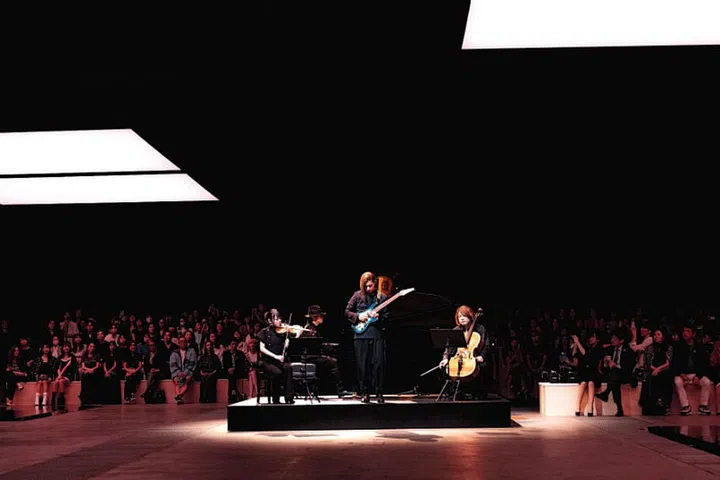
Photo: Courtesy of Chanel
An opening performance by Ichika Nito. Nix joins Nito on stage.
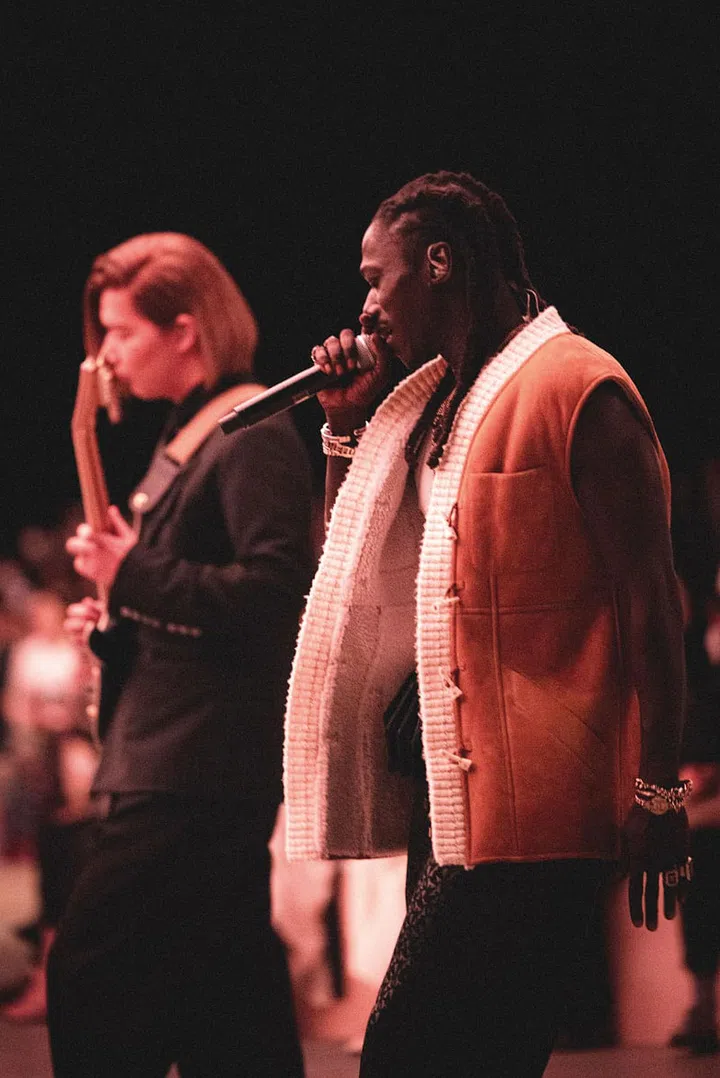
Photo: Courtesy of Chanel
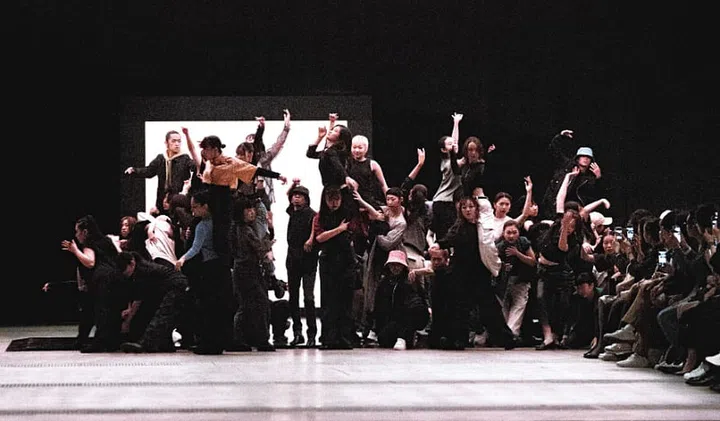
Photo: Courtesy of Chanel
A performance by Japanese dance students lent an energy to the revelry
The presentation the next day at Tokyo Big Sight in the Ginza district also took on a Japanese spin. Set in a minimalist, black and beige space, it opened with outdoor dance number “Slow Show” by dancers from several notable Japanese universities, and choreographed and adapted by Dimitri Chamblas who also worked on the original Dakar show. Nix appeared with Japanese guitarist Ichika Nito who performed his track “The World is Still Beautiful” as well as the late Ryūichi Sakomoto’s instantly recognisable composition “Merry Christmas, Mr Lawrence.”
Photo: Courtesy of Chanel
Photo: Courtesy of Chanel
The collection itself was a homage to the ’70s by way of Chanel’s signature tweed. Chanel’s artistic director Virginie Viard showcased plant motifs, geometric shapes and a warm, multicoloured palette on an elongated silhouette—models in fitted coats and flared trousers paired with chunky platforms for a leg-lengthening effect. The accessories too had a different spin. The House’s signature chain link straps were replaced by chunky wooden links, adding a new look to the vibrantly-hued mini bags. Other highlights included a crystal bib detailing on a black dress accompanied by a detachable crystal tie-necklace. Because this was a Métiers d’art collection, embellishments added a craftinspired but sophisticated update to the Chanel oeuvre. The oversize sweaters—perfect canvases for the House’s dazzling embroidery work done by Atelier Montex and Lesage—were emblazoned with the signature Chanel camellia in eye-popping 3D, and with gorgeous twinklings of pearls and jewelled buttons.
Related article: Chanel N°5 Looks Back On 100 Years Of Celebrity
Earlier before the show, I spoke to Pavlovsky on why Tokyo was chosen for the restaging. “Tokyo has that creative energy. It is all about putting people together, storytelling and creation. I don’t know if we could have done that in any other country. Chanel has had a connection with Japan for over 40 years and we felt it was the right timing and the right collection to come to Tokyo. It’s not scientific! It’s more of intuition.”