
Ryoji Shoda, Head Of Onitsuka Tiger, On His Vision For The Brand And Why He Likes To Put Himself In Others’ Shoes
We spoke to Shoda when he was in Barcelona to celebrate the opening of the brand’s new store on the prestigious Passeig de Gràcia.
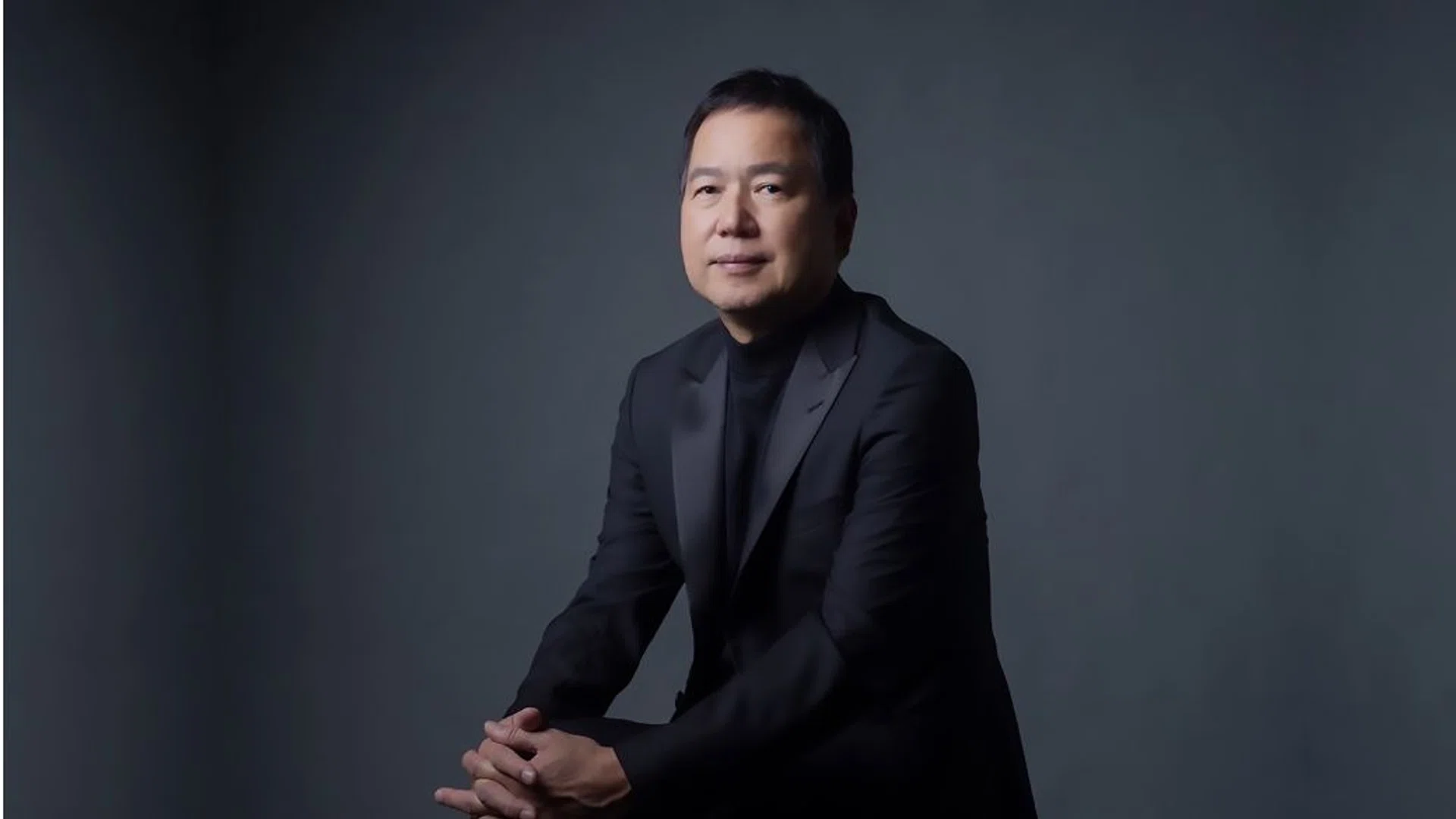
By Windy Aulia - published
Fresh off showing its fall/winter 2025 Yellow collection in Milan, Japan-based international brand Onitsuka Tiger veiled its first-ever Spanish flagship store in Barcelona, and invited Harper’s BAZAAR Singapore to experience the energy and the festivities first-hand.
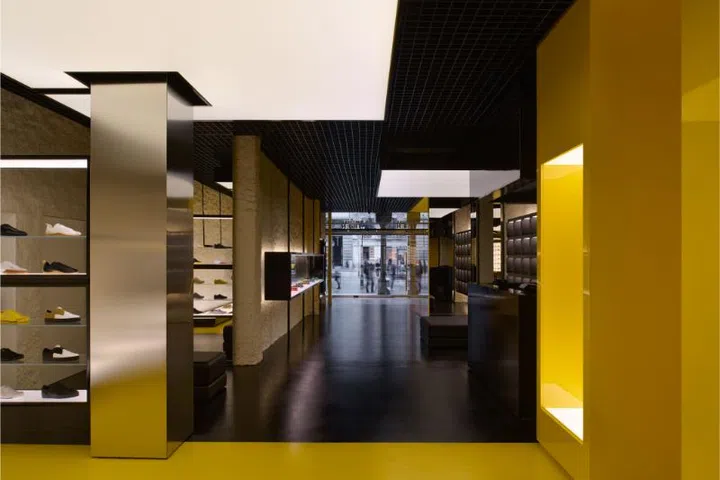
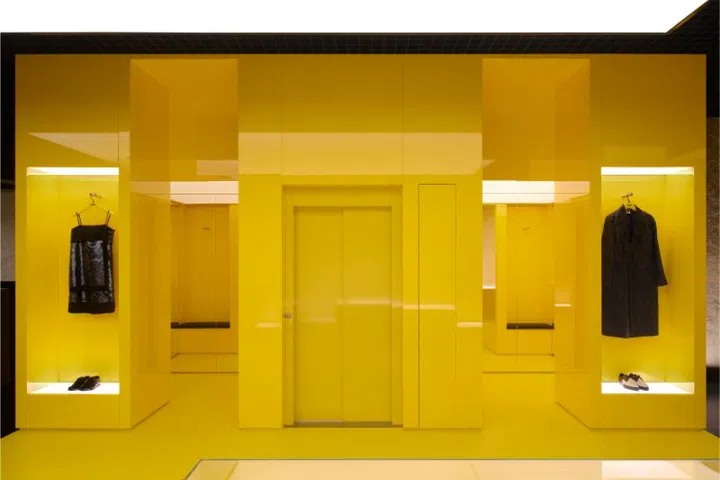
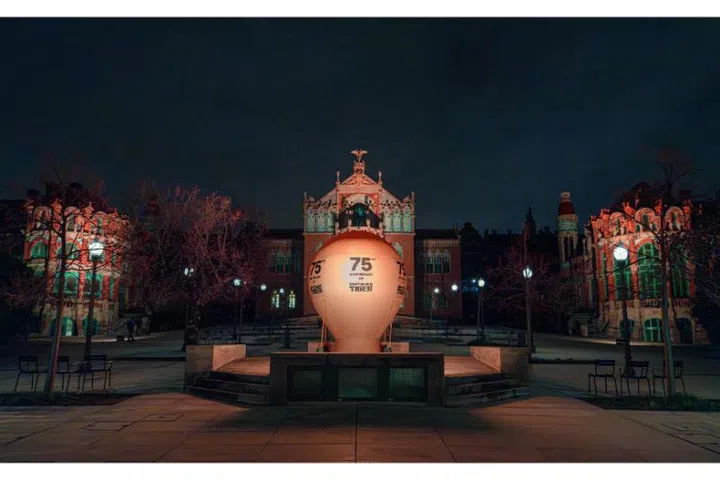
Underlying its European expansion, the beautiful store was designed with a contrast of the brand’s Japanese minimalist roots and Barcelona’s architectural charm. The two-storey immersive boutique retains the elegant façade along with the other luxury boutique fronts on Barcelona’s prestigious Passeig de Gràcia, contrasted with Tokyo’s cutting-edge aesthetics for the interior, conceptualised by STUDIODINICATALDI. Inside, the flagship is dominated by a sleek, high-gloss display in Onitsuka Tiger’s signature yellow hue, while the basement level serves as a spacious gallery space, which, for the occasion of the opening event, housed the brand’s archive collection highlighting 75 years of legacy and innovation.
Related article: Discovering Onitsuka Tiger’s Fall/Winter 2025 Yellow Collection In Milan With Aimee Cheng-Bradshaw
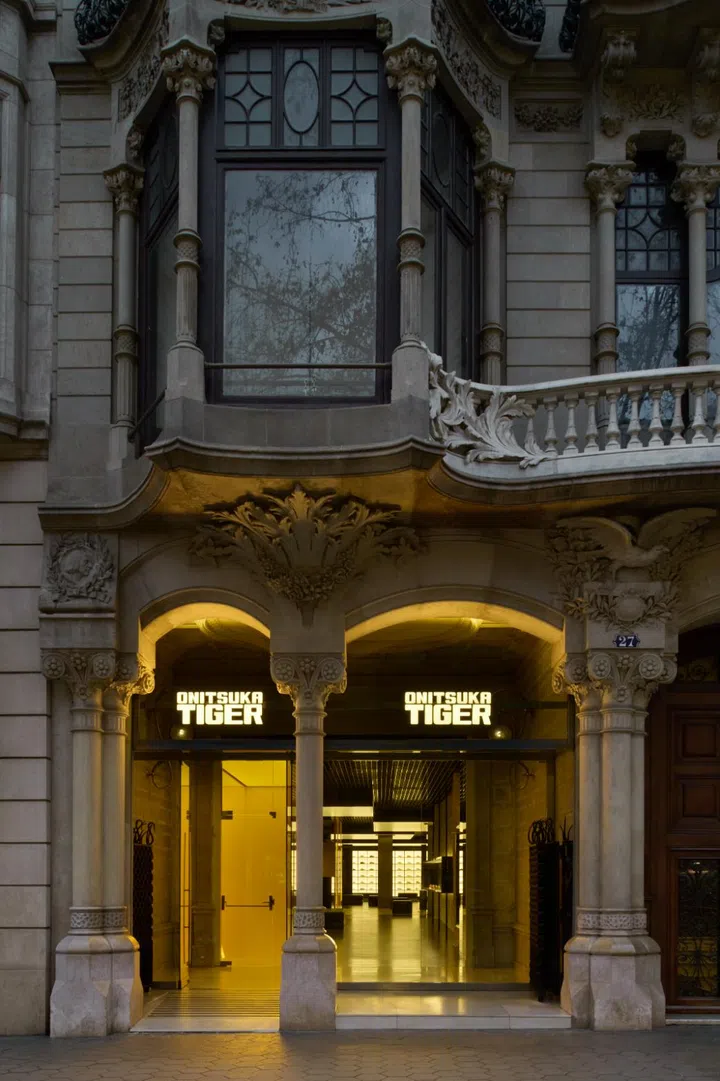
Ryoji Shoda, Head of Onitsuka Tiger, shared, “In Barcelona, where tradition and innovation coexist, the opening of our flagship store on Passeig de Gràcia, one of the world’s premier shopping destinations, marks a significant milestone in our brand strategy across Europe.”
In the 11 years that Shoda has been at the helm of the company, he’s been carrying with him a grand plan—to make Onitsuka Tiger known as a global lifestyle brand. At the aforementioned fall/winter 2025 show in Milan this past February, the brand debuted its first-ever fragrance to a stronghold of fashion week front row guests and international celebrities alike, including Korean breakout star Wi Ha Joon, Thai heartthrob Gulf Kanawut, Japanese singer Momo and Filipina style maven, Heart Evangelista.
Then there’s the opening of more stores around the world, like the Onitsuka Tiger Yellow Collection concept store in Tokyo’s Omotesando (opened in April 2025) and a flagship in Paris’ world-famous shopping avenue, Champs-Élysées (due to open in July 2025).
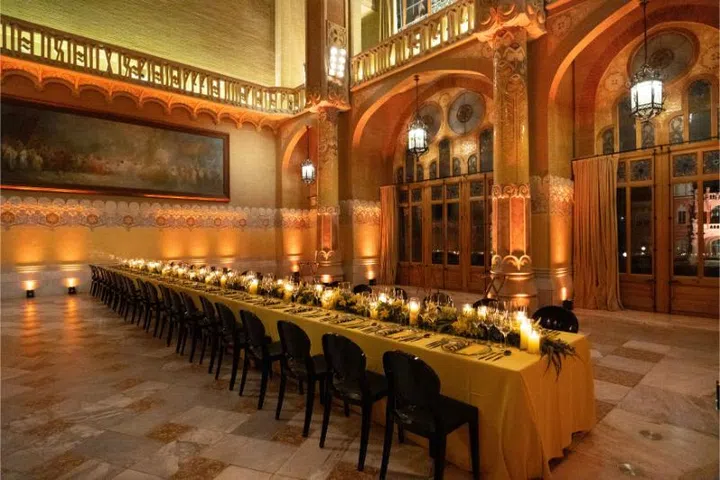
Back in Barcelona, Shoda gave a heartfelt speech about the brand’s evolution as it cemented itself as a Japanese luxury house with a global outlook during an intimate dinner at the Hospital de Sant Pau, a UNESCO World Heritage site and one of the city’s most important landmarks. The evening was made even more meaningful by the candlelit dining tables under the breathtakingly intricate Catalan architecture and the Spanish gastronomic journey by Hermanos Torres, the renowned culinary duo.
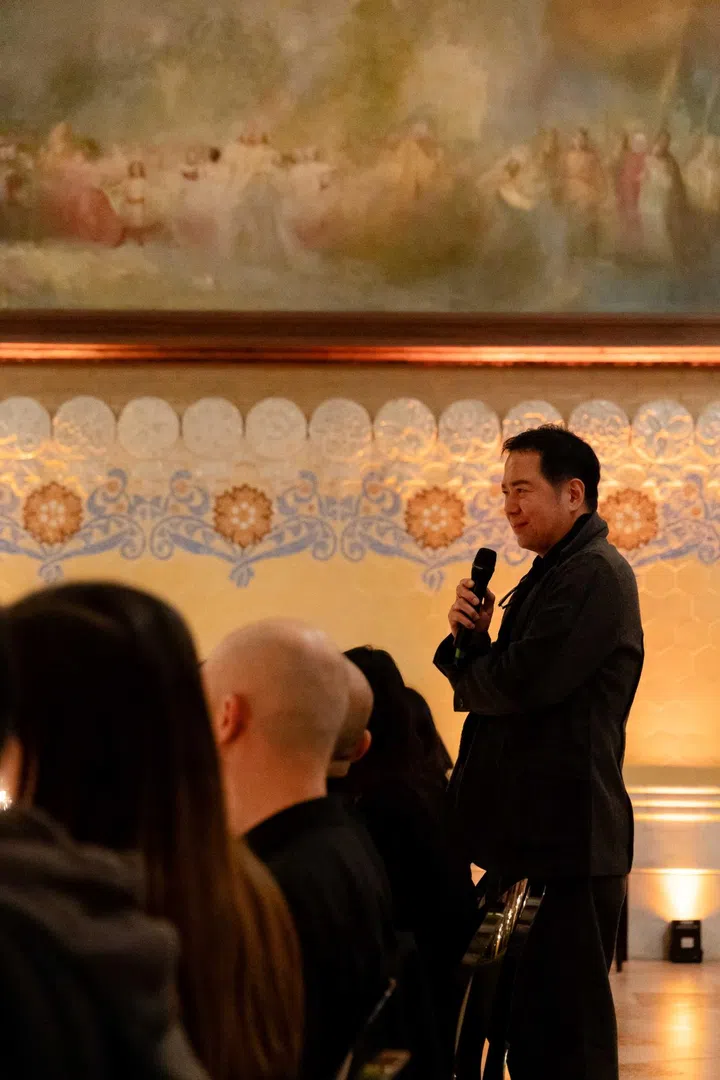
Shoda sat down for an exclusive interview on the eve of this important event, and shared more about his vision for Onitsuka Tiger’s 100th year anniversary and his interesting way of putting himself in other people’s shoes.
What’s the reason behind opening the first Onitsuka Tiger store in Barcelona?
It’s our goal to be more known and popular in Europe, as we have already established our position in Asia as being a successful fashion brand. When we rebranded our brand to be a fashion brand from a sports brand, we started it in Europe. After we established the brand as a fashion brand in Europe, we took everything back to Asia again, and now we’re successful in Asia. So we’re coming back to Europe to have some form of branding activities here.
In terms of opening stores in Europe, we always select the best location within that country. And the reason why we’re opening a store here is because we found this really nice location in Barcelona, and that’s what pushed us to open the store. We are a very historical brand with values like heritage and history. This building is also a very historically known building. There is a good similarity here, so that’s also one of the reasons. As a brand, we’ve been collaborating with a lot of artists, designers or brands, and we think that our brand has a lot of compatibility with art, and we think Barcelona city synchronizes really well, as an artistic city with a lot of historical buildings.
Since the goal is to have Onitsuka Tiger to be known more as a fashion brand, does the location of the store matter?
Yes, definitely. We make sure that our neighbours are luxury fashion brands, because we think that our stores are actually like a showroom of our brand, rather than just a store. And obviously there’s more traffic here, and also when you come into the store, I think you would understand that this is not just a store, but we actually show and express our brand through how we decorate the store.
In the spirit of global expansion, how do you want people to connect with the brand?
Just as a background image, we obviously don’t have stores in all countries. We have a limited, you know, we are very selective with where to open our stores. But when we do have stores, we make sure that people know that we’re special in the location that we have the stores, so that when they visit, those visitors who don’t have our stores in their country would also be like, “Oh, wow, this store is great.” And they even want to spread the word in their own country, even though they don’t have the store in their country. That’s what we make sure of. So when we have stores in somewhere like this, we make sure that we express the brand and it’s shining, so that people would want to spread the word.
Do you mean the experiential part of shopping?
Yeah, we don’t have stores everywhere, but we do have e-commerce. That’s why we said we want to make stores like showrooms of the brand because even though they don’t have stores in their country, they can still buy it online if they start to like a brand through this experience in the stores.
Where do you think Onitsuka Tiger now sits in the industry and where is it heading?
It varies with which region we’re talking about, but in general, we think that there are more customers who like us because of our brand, rather than just liking products. So rather than pushing the products, we have raised brand awareness; we are more recognised as a brand, our tone and manner and mood. So we think that it’s important to increase the categories within our brand so that more people would be able to experience our brand and know our brand and like our brand.
Are there any categories in fashion that haven’t been explored by Onitsuka Tiger much yet?
In terms of categories, we just launched a collection called DENIVITA, which is a denim collection, Japanese denim. That’s one category that we challenged this year, but we could definitely go farther. It’s more of the lifestyle category like homeware, perfumes.
What is the marker of success for Onitsuka Tiger each season?
Rather than caring about the success of little projects, we care more about, like, a long-term goal as a brand, and how consumers would think about our brand. We don’t really actually have an exact measurement of what is success in each season. It’s more long-term. So we have a vision in like, every three years. That’s how long of a term we’re looking at. But one idea I can give you is that, rather than the sales of the products, we care more about what consumers feel through what we do. So that’s the plans we have for the future, what kind of activities we could do to make consumers know and experience our brand.
In fashion, creative collaborations seem to be one of the most favoured ways to expand a brand further, just like Onitsuka Tiger’s Astro Boy collection, as well as the recent Patou collection. How do you decide on who to collaborate with?
Actually, the interesting thing is we never look for any collaboration partners ourselves. When we say we don’t look for partners, because we value the branding of our brand, we’re not trying to take something from other brands. That’s why we don’t actively look for it, but thankfully, we get a lot of other brands telling us that they want to collaborate with [us]. So in that case, we study and examine each brand carefully, and if there’s anything that synchronises with our brand, we consider them as collaboration partners. We don’t really like to use other partners’ names to, you know, spread our brand. It’s more like if there’s some synergy in our brand and the other partners’ brands.
For example, Patou used to be a sportswear brand, and now they are known as a fashion brand. It’s something that’s really [in] common with us, too. We thought that there’s a good synergy and connection. We do collaborations, but it’s not a tier one activity for us, because we think that we have to strengthen our identity through our own activities and our own products.
So what’s the next collaboration? Anything you can share with us?
We can’t really say. But in terms of Astro Boy, we are continuing the collaboration. The reason why we’re continuing is because we usually don’t change anything about the partner brands, but in terms of Astro Boy, they’re being really flexible that now we have like, Astro Boy wearing yellow boots instead of red, which is actually a really good outcome of this collaboration. It’s really new and not something that every brand can do. So we decided to continue using this icon for the collaboration.
What is the goal for the brand in 2025?
The goal for Onitsuka Tiger for 2025 is [that] in 25 years, it is going to be our hundredth anniversary. So building the platform to celebrate the 100th anniversary. It’s long-term. We can’t really disclose what kind of platform we’re building, but we are finishing building the platform this year so that we can start building something for the 100th anniversary. So we’re rapidly growing as a brand these past couple years. We also think it’s important to slow down a little bit too, because we don’t want to end up being a trendy brand. So that’s why we’re saying we’re building platforms rather than doing something very proactive.
It’s really interesting to find the balance between having the brand more known, but also kind of not wanting the brand to be too trendy.
Actually that’s a really good point, because I think selling products too much is also a bit of a de-branding activity. So we stopped all the wholesale, and we only do direct-to-consumer stores like this [Barcelona store]. We sell from our own stores. It’s really rare to do something like that in fashion. I think in fast fashion, that is really common, but not luxury. We’ve been doing this for the past 10 years, but we’ve been accelerating now. Now we’re almost achieving 100 percent of non-wholesale [sales]. We’re almost there.
What is Onitsuka Tiger’s next big project? What’s in the pipeline?
Obviously, Barcelona, this store opening was one of the big milestones for us. But the next one that’s coming up, and we can tell you, is the Paris Champs-Élysées store opening. We will have the store opening in July. We have stores opening everywhere, globally, including Japan, but the next big one is in Paris.
You’ve been with the brand for more than 11 years now. How much has it changed since? And how do you keep your passion for the brand alive?
When I joined the company, the total sales was actually one-tenth of what they are now, and we did have negative sales. The brand wasn’t in a really good situation. So because that was the situation, my mind was looking into the next 10 years: what do I need to do to make this brand better?
One of the biggest changes that happened within the 10 years since I entered the company is that when I originally entered the company, Onitsuka Tiger was under the ASICS brand. They weren’t two separate brands, it was part of ASICS. So what I did, and it was the biggest change for us, was I took Onitsuka Tiger out of ASICS to have a completely different branding and sales channels and strategy. That was the biggest change we had within 10 years.
In terms of how to keep the passion alive, there’s one thing I can tell you, is that what I value is to ‘discover the difference’, which is like a philosophy of Onitsuka Tiger—always looking for something different and finding something new and unique. That’s what we’ve been doing as a brand, and that’s what I’ve been doing myself. That’s a really important philosophy, that’s how I keep the passion alive. As an example, ASICS does wholesale [sales], but we don’t do it. It’s like discovering the difference between the two, by doing something different.
When you started 11 years ago, did you have a vision that it would be showing in Milan, and in Europe and Asia? And in terms of the brand, is this how you envisioned the brand and how you wanted it to be known?
Yes, I definitely did have a vision of that. But we have to do things step by step. So Europe wasn’t the first step for us when I entered. It was more like Asia, including Japan and Thailand, Singapore, doing the branding and selling in those regions was the first step. Now, I think it’s finally reached the point where we could have stores around Europe and having shows.
Back then, one of the big troubles for us as a brand was when we decided to open stores in malls. The mall didn’t give us a good place. You know, it was always the sports section. What I did back then was to open the store in Omotesando, Tokyo, so that we could show those people from the malls that we have a store in a really good location. And then people started to realise our value as a brand, and started giving us good locations.
I’m curious, in these 11 years, were there a lot of times when you had to move the brand in a certain direction, make changes and adapt, or have you been very focused on following the steps in order to achieve the goal?
My vision is not limited to a single point in the future. It’s more of a direction I want to go. So in case something happens, I will be able to shift and change the directions. If it’s one point, we always have to go there, but if it’s more generally like, let’s go in this direction, we are able to make changes and be flexible.
What is your ambition for Onitsuka Tiger?
As a brand, what I value is that our business isn’t collecting money from the customers. Our value is that we make customers happy through what we do. That was the founder’s ideology of building this brand. I have been doing that myself, and then one day I just came across this saying, it’s not like I have been believing in this all along. It’s more like I was really being in line with what the founder believed. And then this word came, and I really felt like I was on the right track, so I now deeply believe in it, but I think my ambition is to make the customers happy, rather than making the business big. One [of the things we teach] the store staff is, “Don’t sell products to the customers”. We don’t really give sales targets to the store staff, because we don’t want them to push the customers to buy our products. What I value is for customers to have fun browsing the store. Now, because we’re too successful as a brand, the stores are packed all the time and we’re not able to give that store experience. So I believe opening this kind of store is significant as it contributes to enhancing consumer satisfaction, especially due to the increased spaciousness.
Out of curiosity, on a more personal level, what do you read? Where do you find inspiration?
In terms of inspiration, rather than reading articles, I like to put myself in other people’s shoes. So what if I was a teenager? What if I were this or that? And by putting myself in other people’s shoes I also want to know more about them, and be more curious about them. That’s how I get my inspiration.