
Singapore’s Activewear Boom: A Look At The Rise Of Local Activewear Brands
Climate, culture, and community are shaping better gymwear; and homegrown brands are leading the shift.
By Aaron Kok - published
Who would’ve thought? That on an island where office chairs outnumber barbells, a new fashion frontier would emerge in activewear. Somewhere between the reformer Pilates studios and the post-spin brunch circuit, Singapore has quietly, assuredly, become a gymwear capital in its own right—and in that very Singaporean way: calculated, community-driven, and chasing excellence under the guise of effortlessness.
It began, unsurprisingly, with the pandemic. With bodies confined to bedrooms, movement became intimate and purposeful. Fitness was no longer about sweaty resolutions, but about regulation and finding rhythm when the rest of the world fell out of it. And the clothes? They had to do more than stretch. They had to hold your shape, your mood, and in many ways, you.
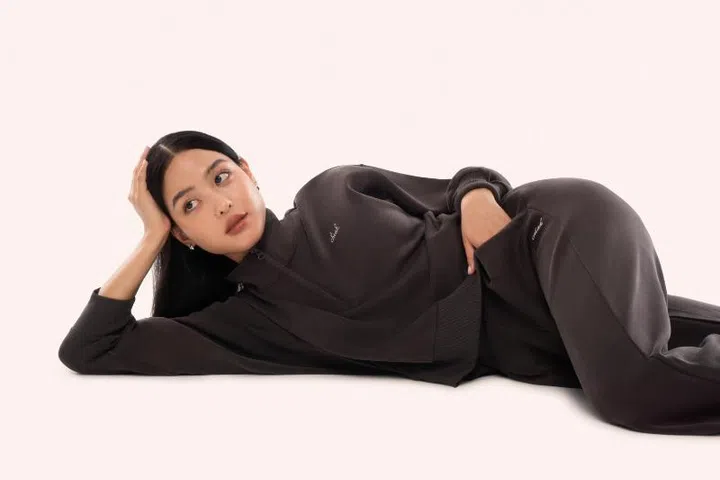
This shift coincided with something else: a newfound taste for local labels. Where once our wardrobes were dictated by Lululemon and Nike, a growing number of Singaporean founders stepped in to design for us. Fabrics had to be breathable, naturally, but so did the cuts: the weight of a waistband, the height of a seam, the shape of a flare—these were frontline decisions.
It helps that the regional market is booming. The APAC premium activewear segment generated over US$22.3 billion in 2024, accounting for more than 20 percent of the global market according to a study by Grand View Horizon.
Related article: Yoga Studios In Singapore, According To Region
From Gym Gear to Lifestyle Uniform
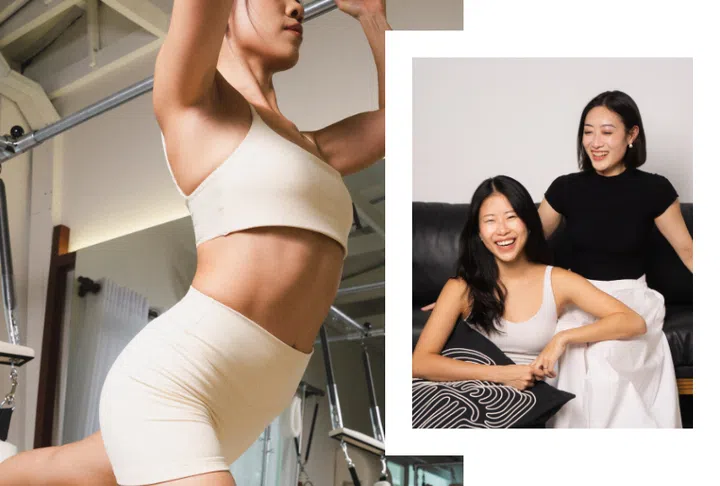
From left: A matching set from Cheak’s birthday collection. Founders of the local brand Cheak, Tiffany Chng and Olivia Yiong.
Cheak is one such label. It started with Tiffany Chng and Olivia Yiong, who were working in the business district and spending their lunch breaks toggling between salad bowls and studio classes. As former ClassPass employees, they knew the stats: Singapore had one of the highest fitness penetration rates in the region. “We could see that people here took fitness seriously,” says Chng.
That insight—and the reality of lugging three outfits a day—eventually seeded what would become Cheak. “We were always carrying heavy bags with multiple outfits,” Chng recalls. “There was a gap for activewear that could truly take you from studio to street.” What began as a pandemic project has grown into one of Singapore’s buzziest activewear brands. Their recently opened flagship at ION Orchard cements what many already suspected: local sportswear has legs, both literally and commercially.
But Cheak’s success isn’t just about clever cuts or pastel colourways. “Our fabrics are lighter, more breathable and cooling,” says Yiong. “And we design for real Asian bodies, which doesn’t just mean shrinking everything. It means fitting on actual Asian female bodies.”
Ken Tan, founder of Lunablys, knows the importance of nuance. What started as a cycling hobby turned into a dive into technical design. “I couldn’t find anything that worked well in this weather,” he says. “So I started testing everything.” He explains that they “work with fabrics that are dense enough to not be sheer, but still soft and breathable. That’s the baseline.”
Related article: 40 Singapore Fashion Brands To Know And Shop Now
Activewear is a Social Signifier

Eugena Bey, founder of BE. Studios
But good design alone isn’t what turned these clothes into cultural markers. The real shift came when activewear started showing up everywhere. Pilates instructor Eugena Bey—who runs BE. Studios and lives in black leggings—describes activewear as a shorthand for being switched-on and stylish without trying too hard. “Someone goes from class to brunch to the mall in the same outfit,” she says. “It’s not lazy dressing, it’s how we live now.”
Even the psychology has shifted. These days, putting on a sports bra is as much a prep to sweat as it is a mindset. “Activewear makes me want to move. It gets me out of my funk,” says singer-songwriter Hashy Yusof. “Honestly, I live in it.” Yusof recently co-designed a capsule collection with Vivre Activewear. “I don’t look like your typical fitness girlie. But that was the point: showing that activewear isn’t about looking one way. It’s about showing up for yourself.”
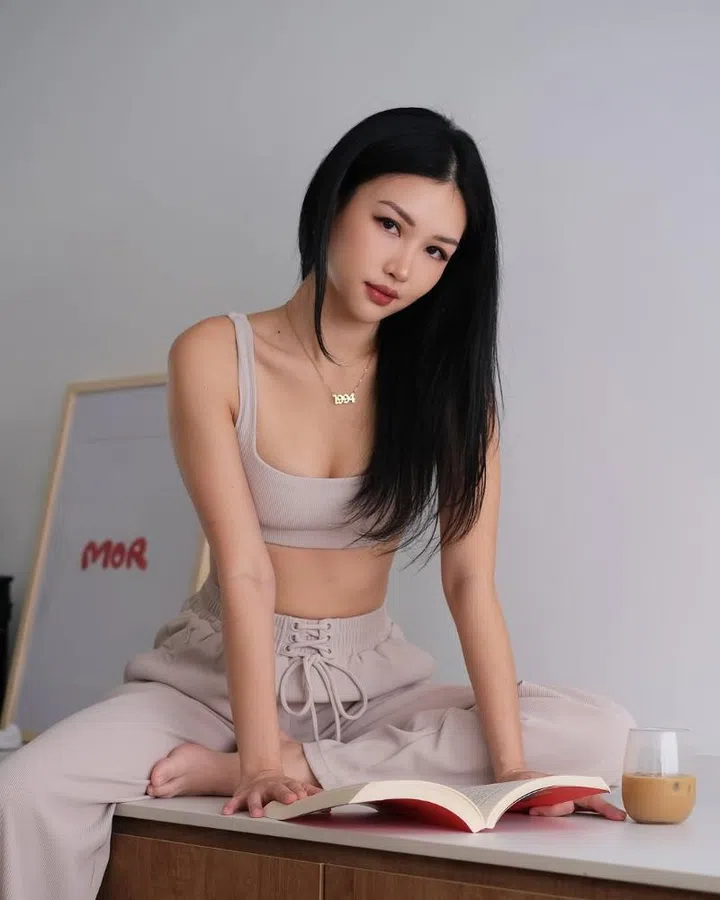
Hashy Yusof, wearing pieces from a collection that she designed in collaboration with Vivre Activewear.
Related article: 9 Designer Apple Watch Straps To Jazz Up Your Wrist
Perhaps that’s why Singapore has become fertile ground for home-grown activewear. The city breeds routine, but in recent years, that rigidity has been re-channelled into ritual. The non-negotiables now include breathwork, Pilates, run clubs and mindfulness apps. As wellness becomes central to how we define ourselves, what we wear to do those things matters more. That demand has diversified the scene.
Where earlier brands were built for spin and HIIT, newer players are leaning into softer aesthetics. “We’re seeing more people lean into walking, mindfulness, even recovery,” says Tan. “So we’re designing pieces that feel good even when you’re not moving fast. Not everything needs to be high-impact.”
That same logic is guiding Cheak’s next phase. “We’ve started expanding into lifestyle,” says Yiong. “Work pants with stretch. Travel pieces. Basically anything you can wear from MRT to meeting without feeling like a gym rat.”
Still, as with any trend that succeeds, saturation looms. Online marketplaces are flooded with fast-fashion sports bras that fray in two washes. Global names still dominate much of the luxury segment.
“The barrier to entry is low. The barrier to scale? That’s harder,” says Chng. “It’s easy to launch, but you need a point of view. It’s tempting to try and serve everyone—Pilates girls, HIIT bros, yoga mums, run-club boys. But unless you know exactly who you’re speaking to, you end up speaking to no one.”
That clarity is what will separate the players from the pretenders. What Singapore offers isn’t just a product. It’s a scene, and one grounded in community, cultural fluency, and a clear-eyed view of what it means to feel good in your body, and in your clothes.