
By Windy Aulia - published
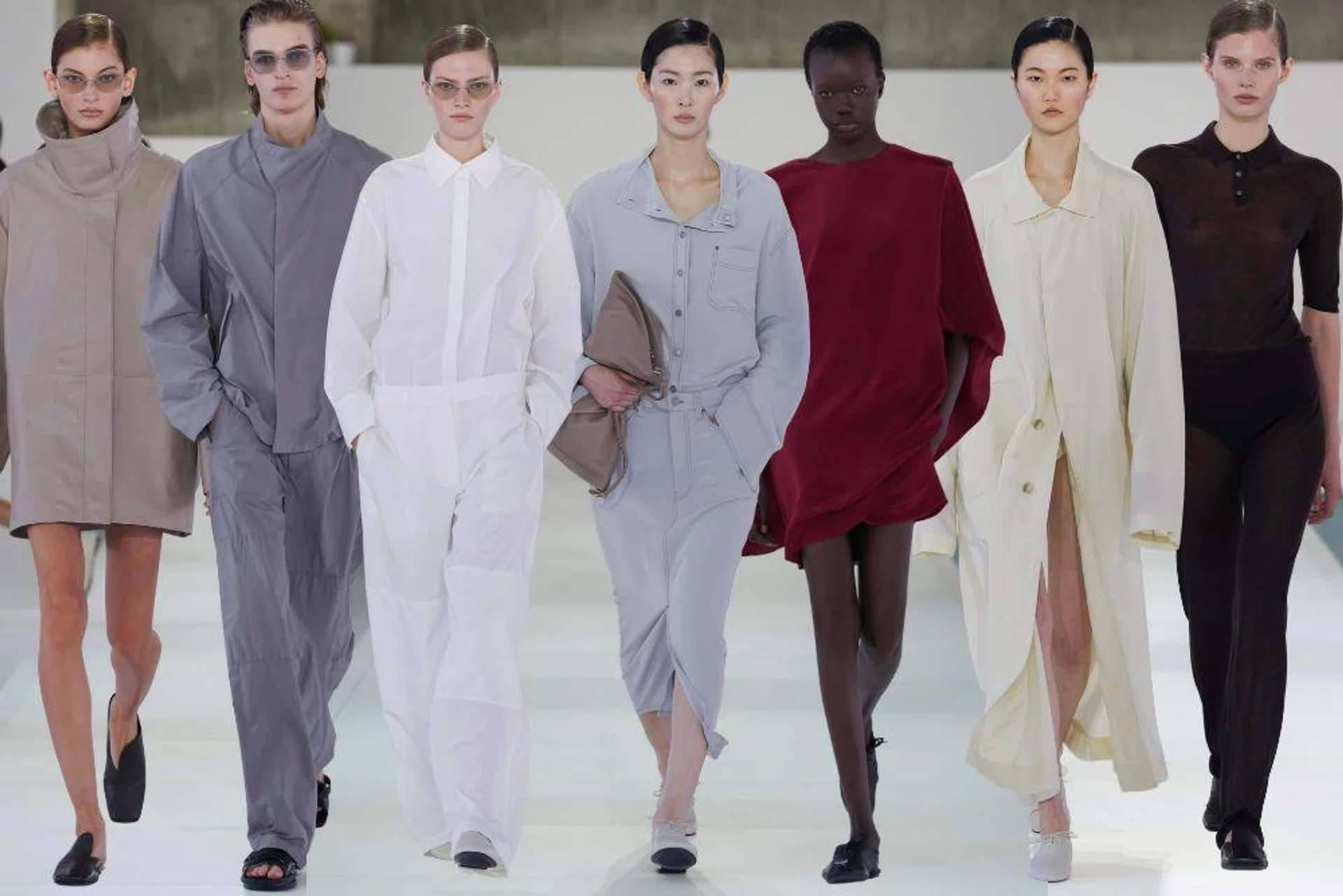
The spring/summer 2026 show by COS in Seoul felt less like a conventional runway presentation and more like a carefully calibrated showcase of the understanding of modernity. It was a statement, because COS has long occupied a space defined by restraint and accessibility in the ever-evolving fashion landscape.
If last year’s marble quarry in Athens explored the purist’s idea of classicism in art and design, then this year’s choice of venue of an abandoned swimming pool in Seoul suggested a quiet but unmistakable shift toward greater aesthetic ambitions. It also read as the brand’s acknowledgement of the buzzing city not just as a backdrop but also Asia, in general, as an active participant in shaping the contemporary trends.
Related article: Carolyn Bessette Kennedy’s Looks Are The Perfect Everyday Uniform, Here’s How To Recreate Them For Singapore
Speaking post-show at the brand’s appointed showroom in the middle of Seoul’s upscale and artsy Hannam-dong, COS’ design director, Karin Gustafsson, talked more about why Seoul was chosen. She explained, “There’s so many cities that we would like to be in, but I think the starting point of the collection (with its cinematic references, like the hero and heroine in American Gigolo, played by Richard Gere and Lauren Hutton, mixed with ’90s minimalism) felt like it needed a contrast backdrop. And this particular location, with the (abandoned) swimming pool, gave the collection what it needed. Seoul, as a city, is also full of culture. With Seoul, there’s always a sense of history but also modernity.”
Seoul’s duality as a city is felt through in the collection. The clothes seemed to negotiate constantly between structure and softness, control and release, familiarity and subtle disruption. It was a broader dialogue rather than a standalone seasonal offering.
Related article: The Best Work Sneakers To Wear To The Office, According To BAZAAR Editors
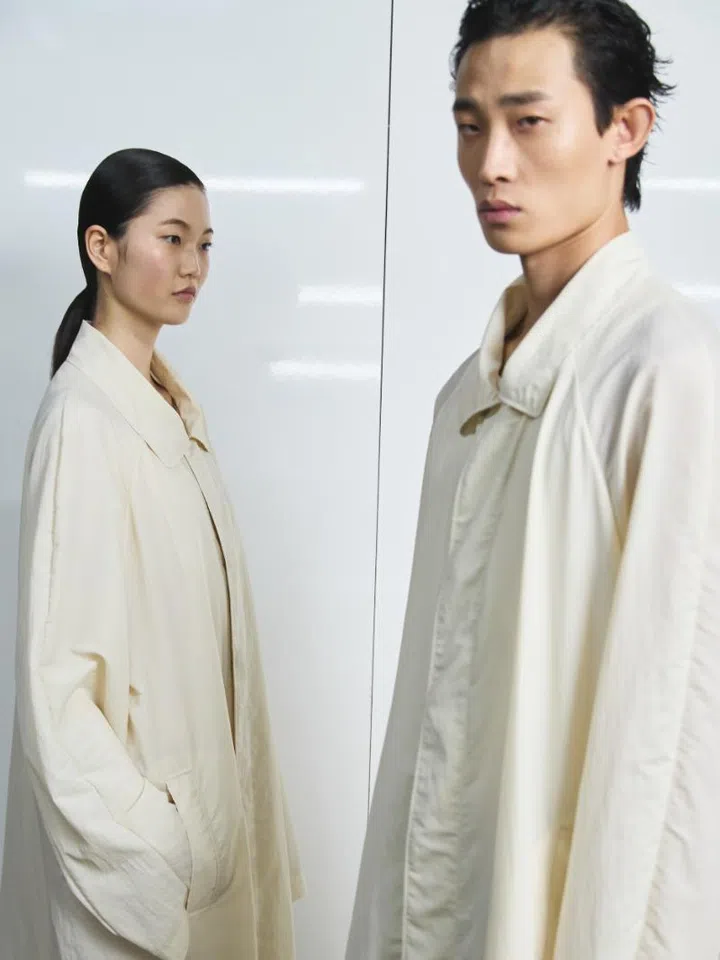
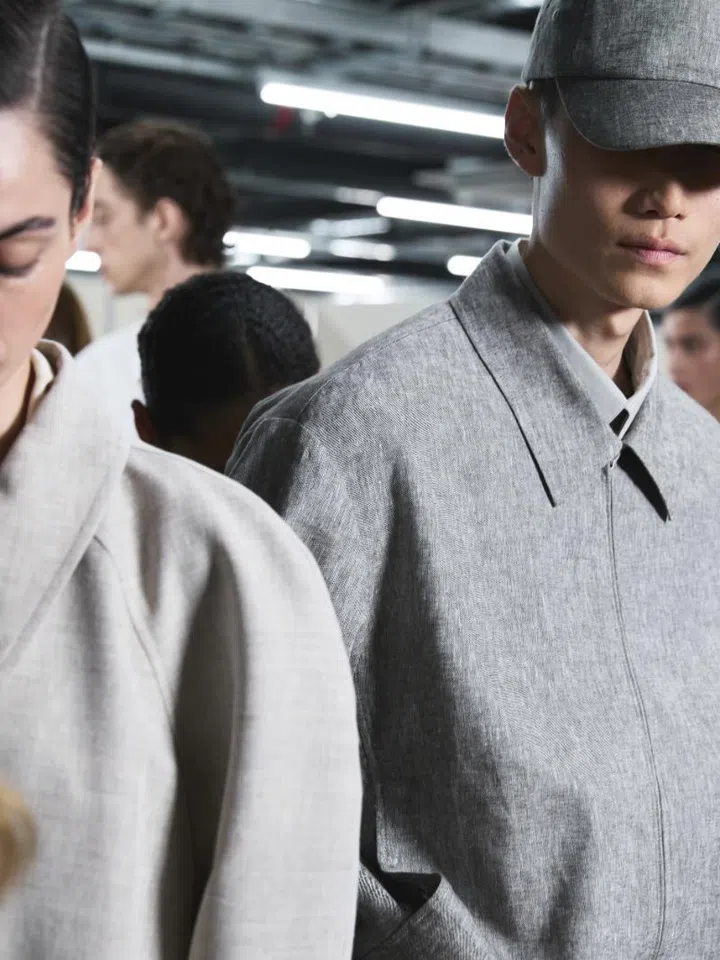
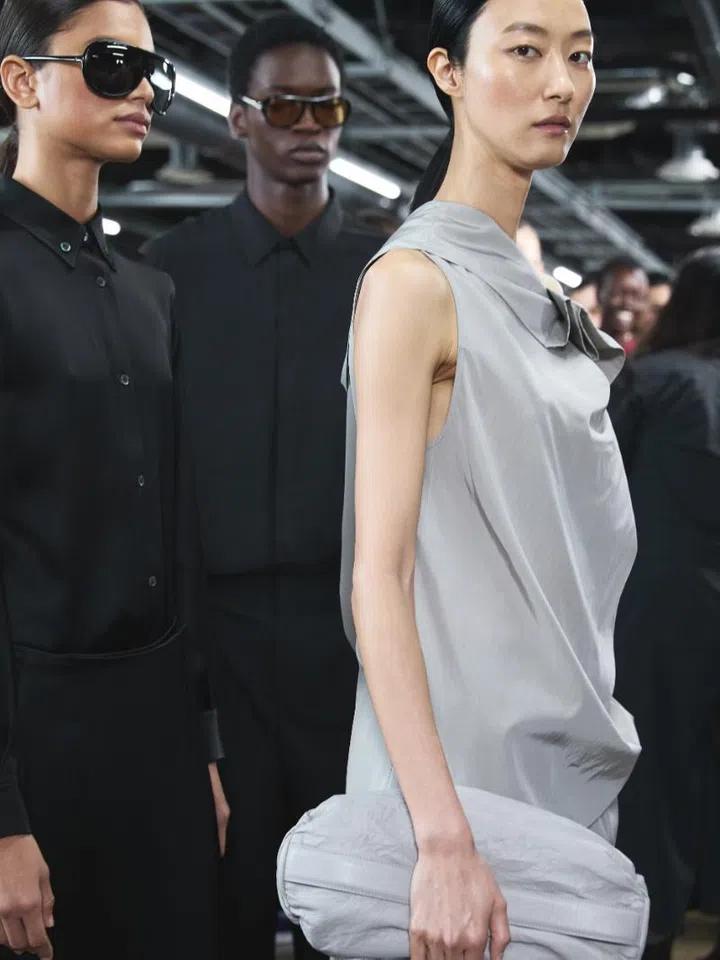
What stood out most was how the collection leaned into a specific kind of minimalism. Nothing felt overly decorative yet everything appeared considered. The silhouettes evoked the sharp confidence of late twentieth-century tailoring, with broad shoulders, elongated lines, and coats that seemed to carve space around the body. The fabric choices created garments that held their shape but never felt rigid. The movement of the clothes was clearly part of the design language, whether in the slight sway of a wide trousers and culottes, or the controlled drape of a lightweight outer layer that caught the air just enough to feel alive without becoming dramatic.
There was also an interesting tension in how the collection approached wearability, because although many of the looks could easily translate into everyday wardrobes, they carried just enough exaggeration. There were extended sleeves, an unexpected proportion, a slightly offbeat colour pairing or opacity play, which felt intentional, acknowledging the need for the audience to know that COS no longer wants pure neutrality yet still values the clarity and discipline that the brand is known for. So instead of abandoning minimalism, the collection made it more complex; adding depth through texture, proportion, and layering rather than through obvious embellishment, which made the clothes feel richer the longer you looked at them, even if at first glance they appeared deceptively simple.
Related article: 12 Work-Friendly Tank Tops Under $50 That Are Far From Basic
Colour played a subtle but important role in this effect, as the palette stayed largely within the realm of neutrals—creams, greys, deep browns—but introduced moments of saturation that felt deliberate rather than expressive for their own sake, like a deep oxblood or a flash of blue that anchored a look without overwhelming it.
Perhaps the most compelling aspect of the show, though, was how it positioned COS within a global context. As a brand that is rooted in urban modernism, COS choosing Seoul was not only about tapping into a new market but about aligning with a different kind of creative energy; one that is fast-moving, visually literate, and highly attuned to the interplay between digital and physical expression. Yet rather than chasing spectacles, COS chose to focus on precision, atmosphere and presenting a vision of modern dressing that feels more thoughtful and authentic. After all, it ultimately suggested that that perfect life in a movie can also be materialised in the real world.