
By Aaron Kok - published
The first note was off.
Not wildly. Just enough for you to register that it wasn’t quite right, and just enough to remind you that perfection wasn’t the point. Before a single model stepped onto the Maison Margiela runway, the House had already made its thesis clear.
Related article: Ins And Outs: Here Are All The Major Designer Changes In Fashion
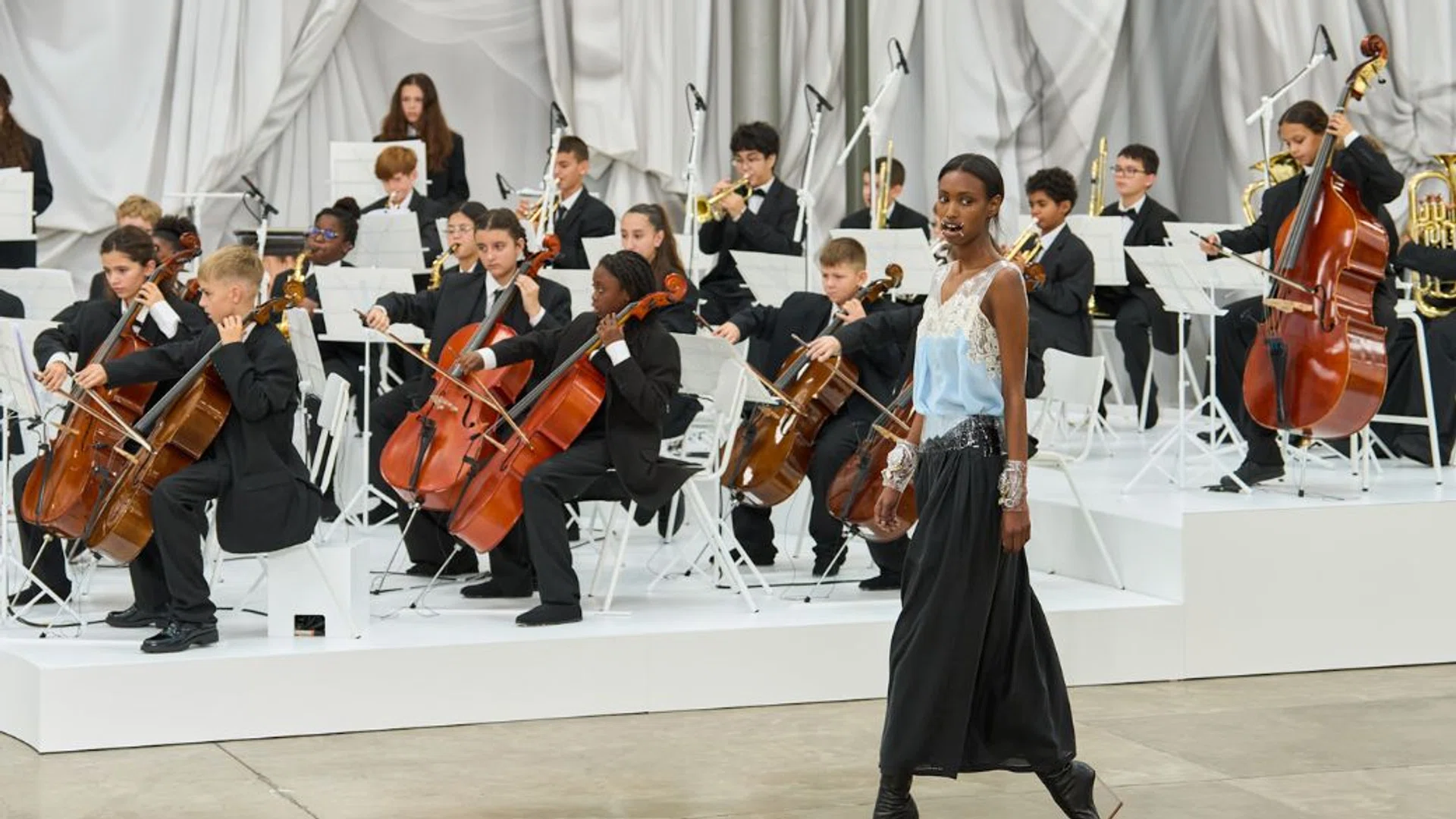
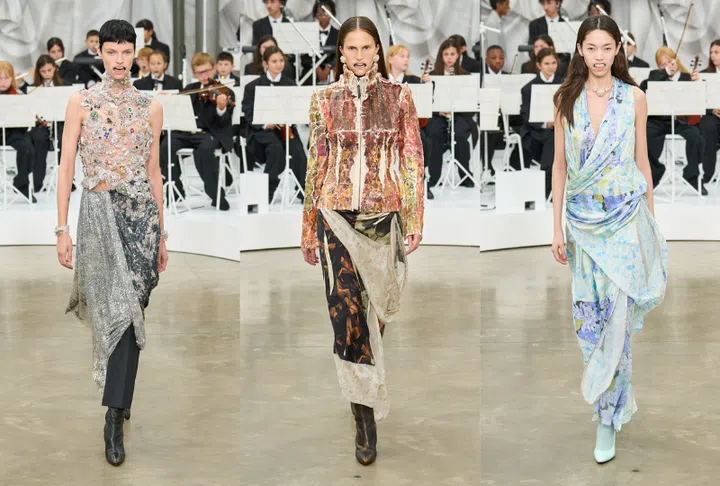
Sixty-one children, clad in oversized tuxedos and borrowed shoes, took to a raised platform and began playing a setlist of classical greats—Beethoven, Strauss, Prokofiev—with an innocent abandon that made it joyful to watch. A missed note here, a lagging tempo there. This was by no means finessed or precise in its technique, but the room held its breath because somehow, it was beautiful.
That dissonance—between what is expected and what is delivered—ran like a live wire through Glenn Martens’ spring/summer 2026 co-ed collection for Maison Margiela. In many ways, it felt like the ultimate homage to the House’s spirit: anti-perfection, anti-tradition, but always with a conceptual rigor that elevates chaos into couture.
Related article: Dissecting The Fashion At Prada’s Spring Summer 2026 Show
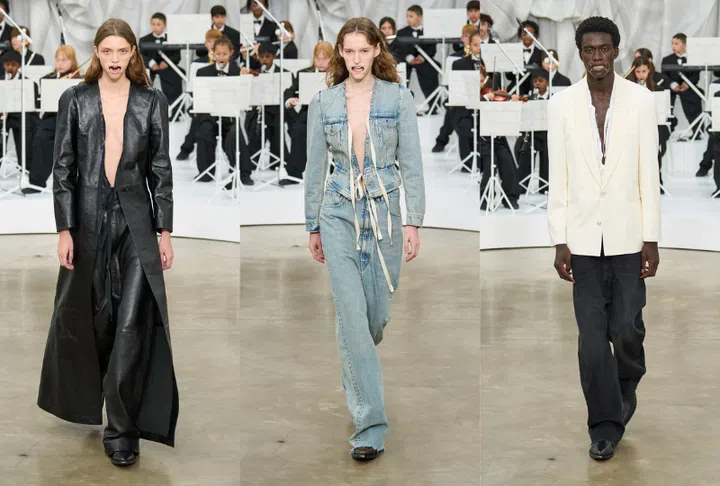
The show opened with Martens’ reinterpretation of classic tailoring. Tuxedo waistcoats were cut away to reveal skin and frayed edges; a reminder of humanity amidst the noise. There was a kind of surgical curiosity in how the garments were assembled—sharp darts, exaggerated armholes, and pant legs that dropped dramatically low in the crotch to elongate the silhouette. These suits weren’t just made for the sake of making. Instead, they were interrogated, re-edited, and made strange again.
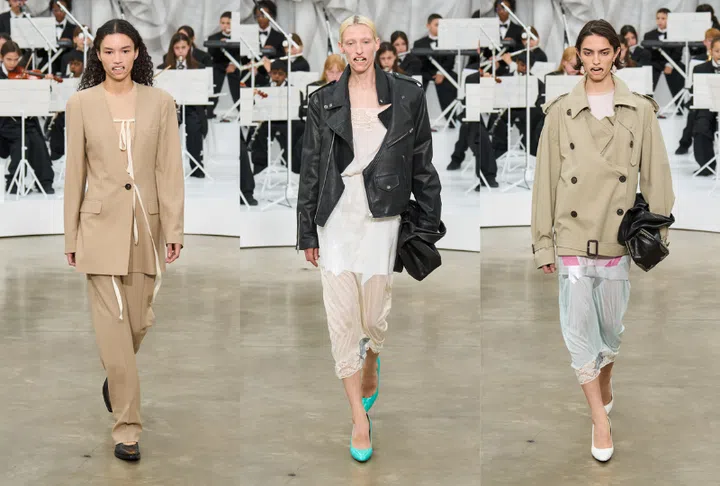
Even more striking was Martens’ decision to apply these codes across unlikely materials: the traditional tux became reimagined in denim, worn-out leather, and even sheer lining fabric. A long slip dress—borrowed from a past life of boudoirs and bias cuts—was now forcibly affixed over tape-like straps, roughly gathered and cinched with haphazard seams. The effect was raw, almost aggressive, but unmistakably poetic: as if here was the creation of a child trying on a makeshift gown found in their mother’s closet. It captured a kind of untrained joy.
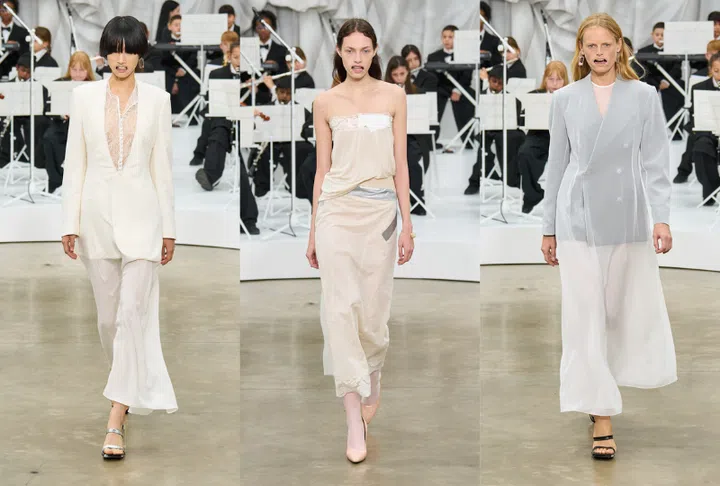
That joy pulsed throughout the collection in subtle ways. A paper-like knitwear recalled peeling floral wallpaper, lifting directly from the House’s Artisanal 2025 experiments. There were silk dresses printed with scans of actual flowers, the patterns applied to mirror the folds and creases of the body underneath. In Martens’ hands, even florals looked like they were decaying in real-time, their beauty all the more potent for their fragility.
Plasticisation—a technique Martens introduced in the Maison’s previous Artisanal season—also returned, and with it, a slight sense of irony. A tailored jacket once destined for a boardroom is now covered in shiny plastic, turning it into something destined for a storm somewhere. Meanwhile, maxi skirts and fragile silk dresses are cinched with plastic-appearing tape as if they were being held together by something so quotidian most of us could find it in our hardware kits.
Related article: Ferragamo Reframed The 1920s For Its Spring/Summer 2026 Collection
But it wasn’t all visual spectacle. Some of the show’s most intelligent proposals were deceptively quiet: trench coats with tuxedo lapels that could be folded and hidden; blouses with necklines sliced and looped like lab coats; slip dresses layered with sheer linings that completely obscured the tailoring beneath. These weren’t just clothes—they were thought experiments, proposals for how fashion can be felt more than flaunted.
Throughout, models wore mouthpieces that kept their orifices agape and implanted a kind of four stitch motif that is recognisable as the brand’s own logo. It rendered each expression identical—mute, restrained, eerily poetic, and it continued the legacy of the Margiela’s love for anonymity. Where the children onstage had played with unfiltered expression, the models offered the opposite: a silent procession of fashion as idea rather than unique identity.
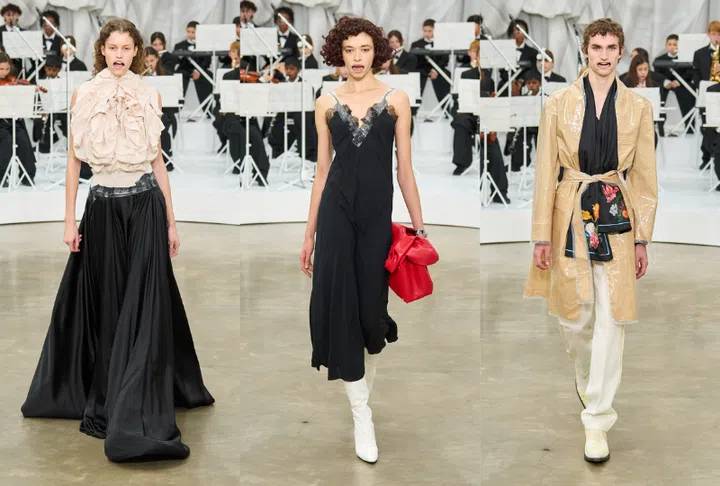
In the end, Martens’ offering felt like a meditation on the duality of instinct and intellect. The orchestra of children became a metaphor for the Maison itself: imperfect, instinctive, and irreverent—but deeply moving in its refusal to conform. To get it wrong here is to get it right. To misstep is to be seen. It asked you to listen closely—to the missed notes, the wrong cuts, the uneven hems. And in doing so, it reminded us that beauty doesn’t always arrive on key. Sometimes, it enters offbeat, oversized, and full of feeling.