
Genevieve Peggy Jeffs On Her Love Of Maximalist Fashion, Heritage And Headpieces
The philanthropist reflects on her love of fashion, Peranakan heritage and the personal memories that shaped her unmistakable style.
By Brandon Chia - published
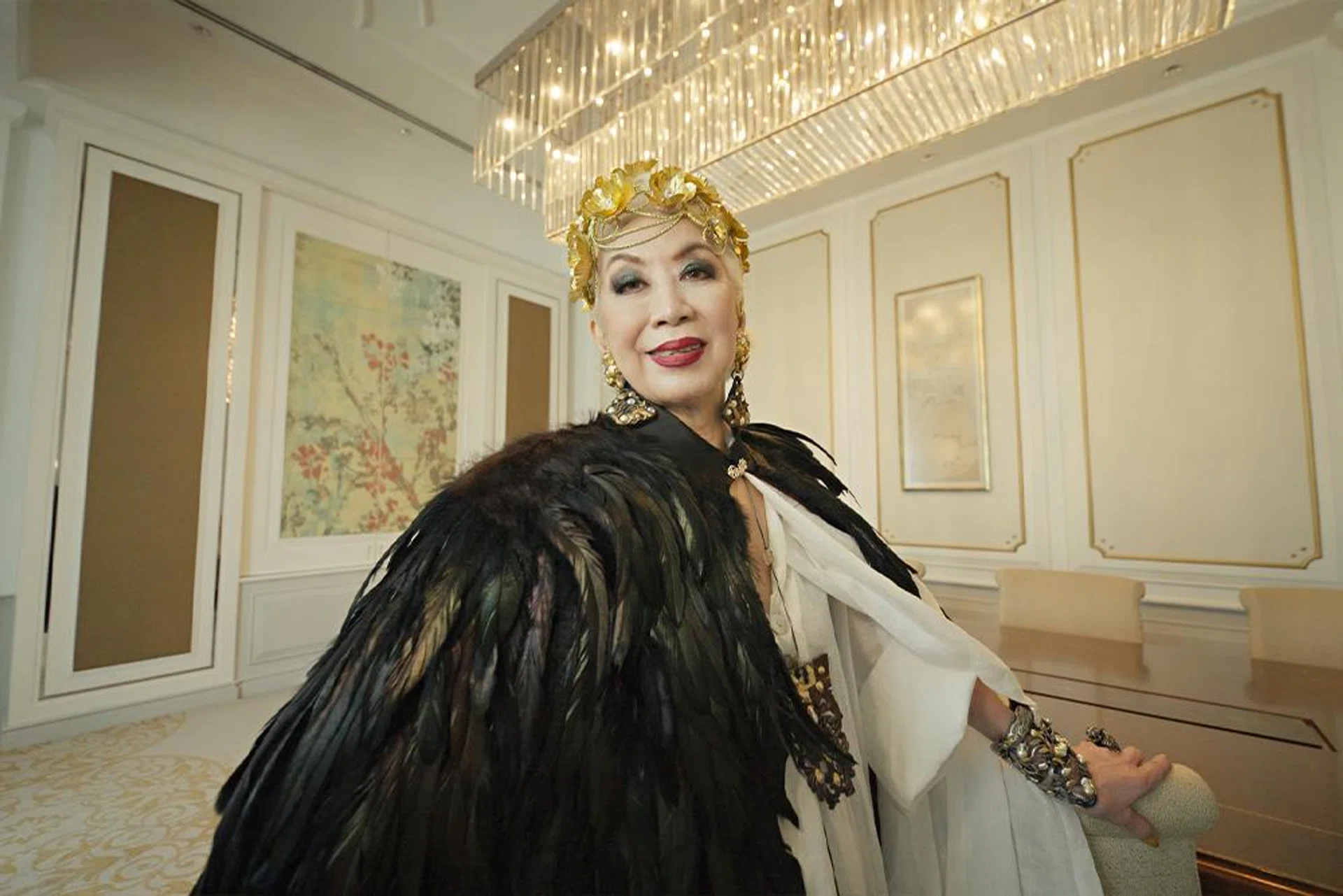
There are people who wear clothes, and there are people who make an entrance—Genevieve Peggy Jeffs belongs firmly to the latter category.
As the current President of the Peranakan Association Singapore, Jeffs is the first female president of the association in its 126-year history. For Jeffs, fashion has never been separate from culture. In her role, she champions Peranakan heritage while bringing a distinctly modern eye to the community. “I think I’ve changed the Peranakan community a bit because I’m modern, I dress more loudly,” she shares, referring to her love of colour, design and the kebayas she wears. “The ladies are looking and watching what I wear and they like it.”
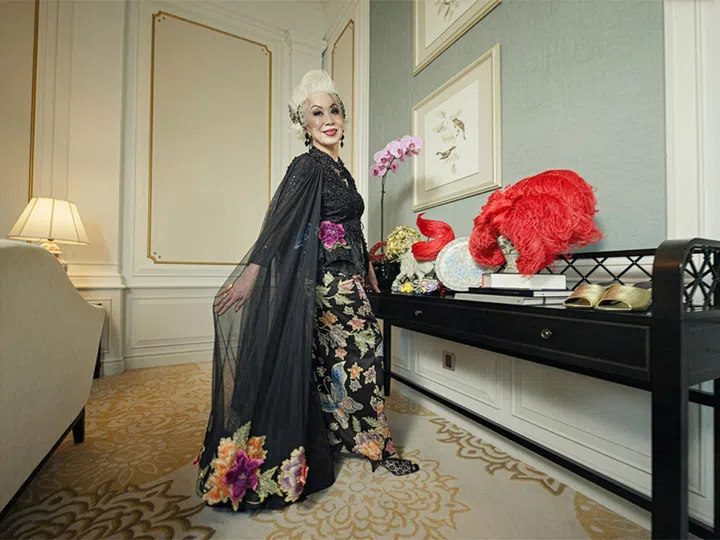
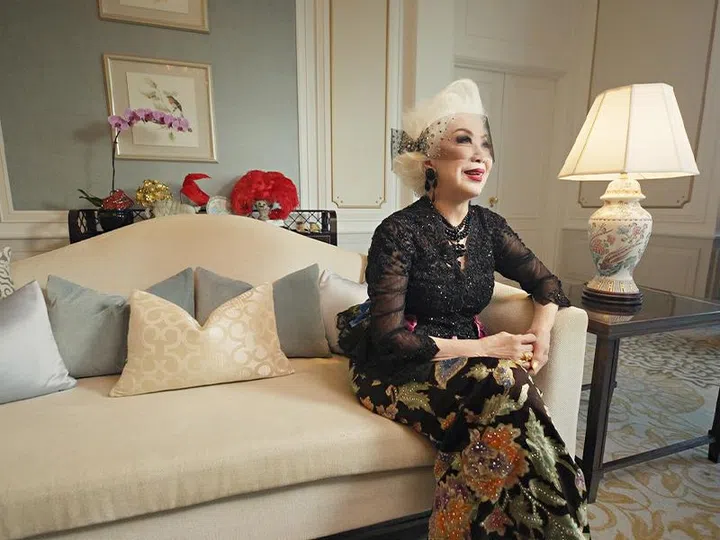
Genevieve Peggy Jeffs wearing a custom sarong kebaya and cape, with a variety of head pieces from her collection.
Related article: Fann Wong On Life Beyond The Silver Screen And Fashion As Expression
Her wardrobe is as vivid as her life story: a red wedding gown, sculptural headpieces, vintage kimonos, running a boutique in London in the 2000s, and so much more sit alongside her commitment to cultural preservation and volunteer work.
Beyond chairing the Peranakan Association Singapore gala this year, Jeffs also chairs events for the Singapore Red Cross, including its benefit gala and the International Bazaar, where embassies are invited to showcase their countries’ products.
In conversation with Harper’s BAZAAR Singapore, Jeffs reflects on the people and the moments that shaped her style and why, for her, fashion has always lived in individuality.
When did you first fall in love with fashion?
I fell in love with fashion when I was very young—around six, seven or eight years old. My older sister, who [is] 10 years older and one of the top models in Singapore at the time, would always take me along when she went out and would dress me up. She learnt sewing, knitting and embroidery, and she would make dresses and can-can skirts with big pockets—I love big pockets—which were very fashionable then.
My paternal grandmother from Indonesia was also very fashionable. When I saw her, she was often in modern clothes. She was Dutch-educated, so she dressed in a more Westernised way rather than always wearing sarong kebayas. From a young age, I was always looking at how these women dressed.
What, or whom, formed your most impactful fashion-related memory?
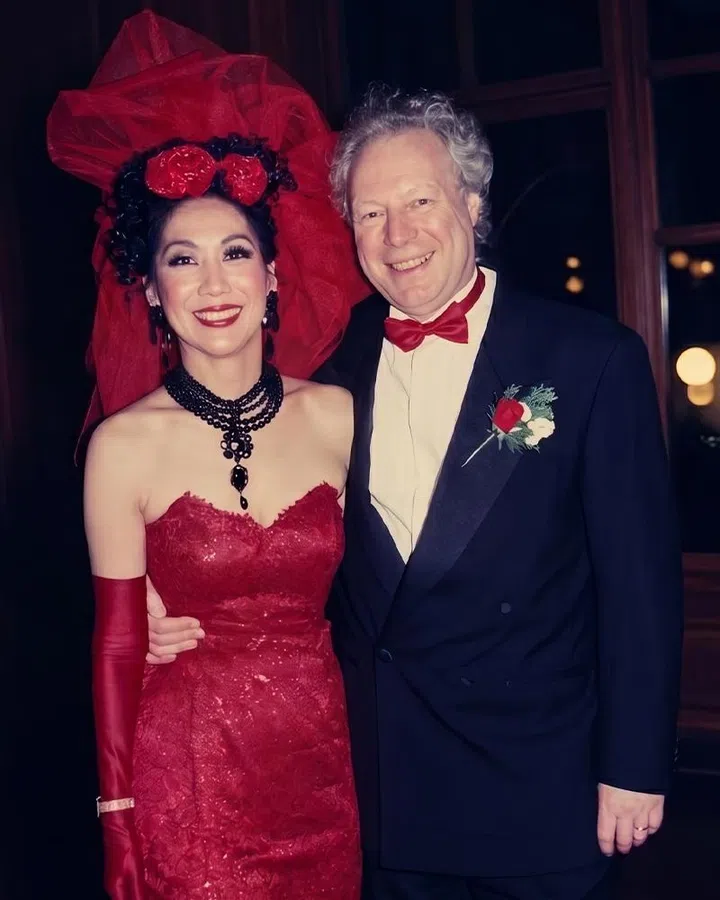
Genevieve Peggy Jeffs and her husband Anthony John Jeffs on their wedding day in 1996.
My second wedding to my husband, who has since passed away. I wanted to surprise everyone, so I did not tell anybody what I was wearing and when I walked in, the guests were shocked because everything was red.
I love red; the whole gown was red and strapless, the veil was red lace, the shoes were red and instead of holding flowers, I carried a big red feather fan—even my false eyelashes were red. It was a full commitment to the colour.
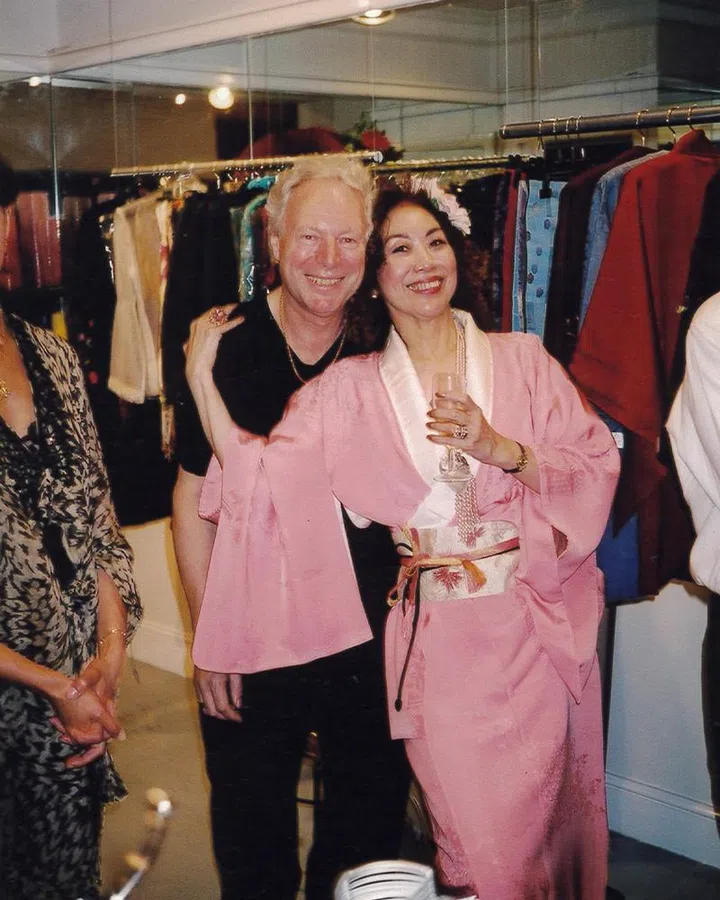
Genevieve Peggy Jeffs and Anthony John Jeffs pictured together at her clothing store, Indochine, in London during the early 2000s.
My husband was always very quiet, but I think through the years, he saw how I always dressed differently and enjoyed it. Being British, he was not fussy about what I wore and he would let me dress how I liked.
Related article: Mae Tan On Circular Fashion And Dressing With Intention
Harper’s BAZAAR Singapore celebrates its 25th anniversary this year, and our tagline is “Where Fashion Lives”. Where does fashion live for you?
Fashion lives in being different. It lives in not copying other people.
For me, fashion has always been about expressing something unusual. Even when I was younger, I liked clothes that were loud and colourful. It developed naturally, in the way a person grows into who they are and I have always liked things that stand out.
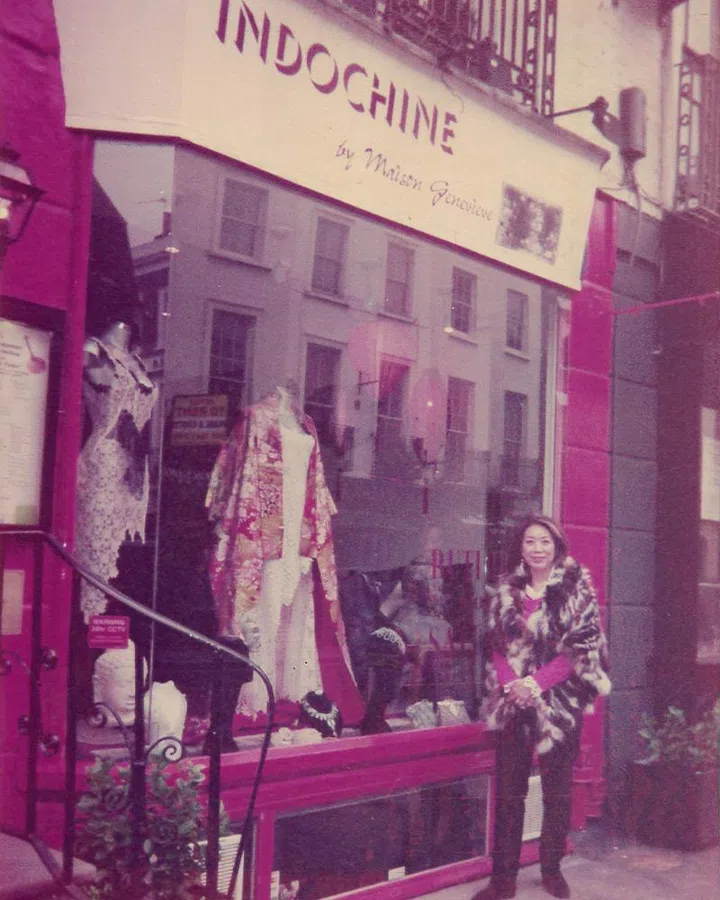
Genevieve Peggy Jeffs in front of her clothing store, Indochine, in London in the early 2000s.
When I opened my boutique, Indochine, in London, even the decoration reflected that. I had antiques, colourful lanterns and cushions, not necessarily to sell, but to create a feeling. Customers would walk in and see something different. There was even a daybed for them to sit on, surrounded by colour and texture.
That is where fashion lives for me—in personality, in culture, in the unexpected and in the courage to be seen.
How would you describe your style?
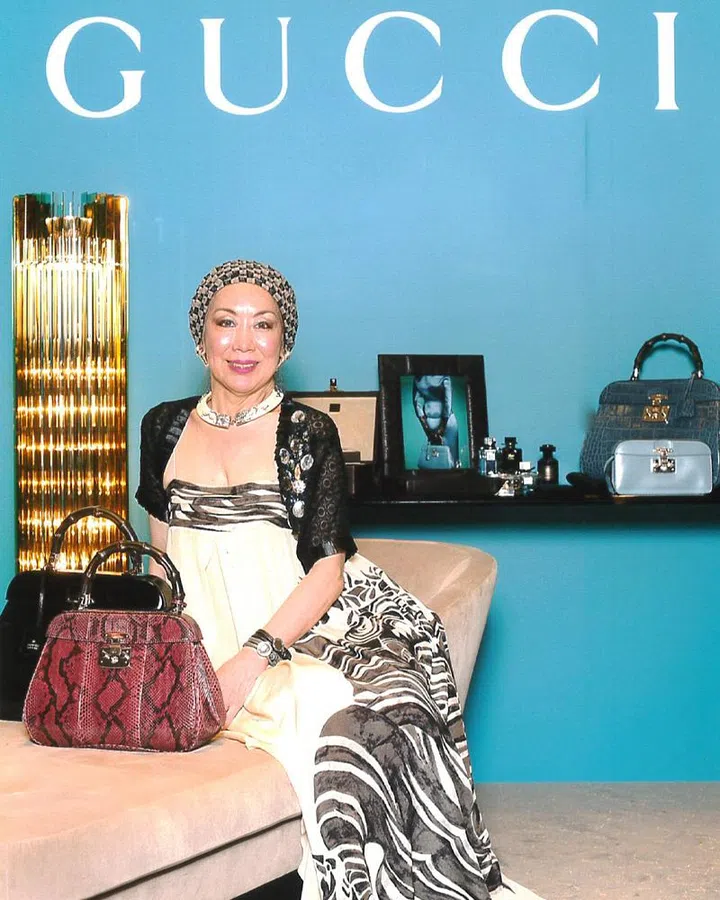
Genevieve Peggy Jeffs wears a headdress with an animal print dress at a Gucci event in Singapore.
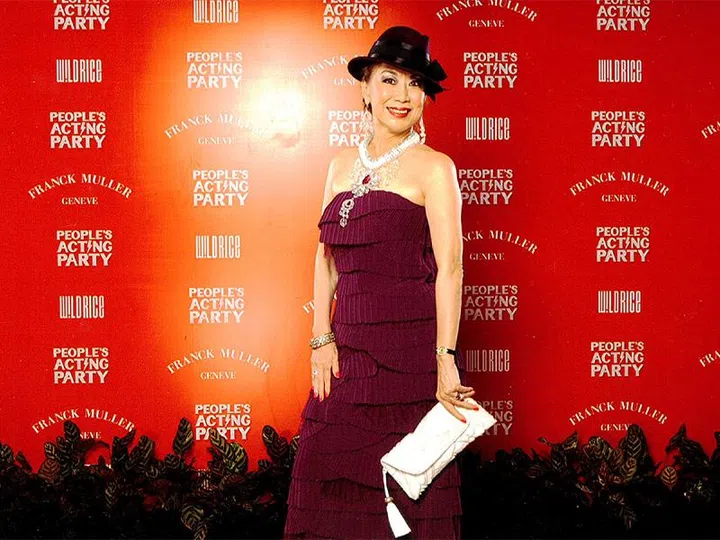
Genevieve Peggy Jeffs wears a black fedora with feathers and a red ruffle dress at a Wild Rice production premiere.
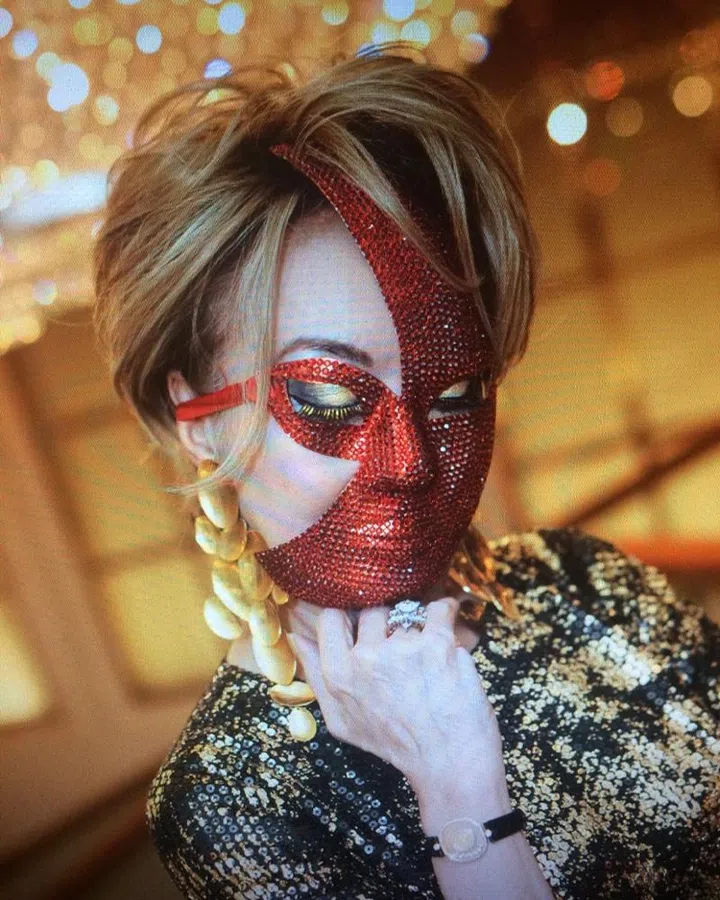
Genevieve Peggy Jeffs wears a Swarovski crystal mask for a ball in Signapore.
I would say it is a bit bohemian, but maximalist is the more accurate word. It has to be unusual. I do not like to copy. Once, for a masked ball, I found a crystal-studded mask, and I asked what other colours they had. In the end, I bought all the colours so nobody else could buy the same one because Singapore is so small.
That is how I would describe myself: I want something different that no one else has.
Related article: Ashley Chiam And Parveen Hassanbhai On Finding Their Fashion Tribe
The first issue of Harper’s BAZAAR Singapore was published in November 2001. What were you doing then, and how was your style different as compared to now?
In 2001, I was already married and travelling in and out of London before I eventually moved there and opened my boutique, which I ran for four years before returning to Singapore in 2006.
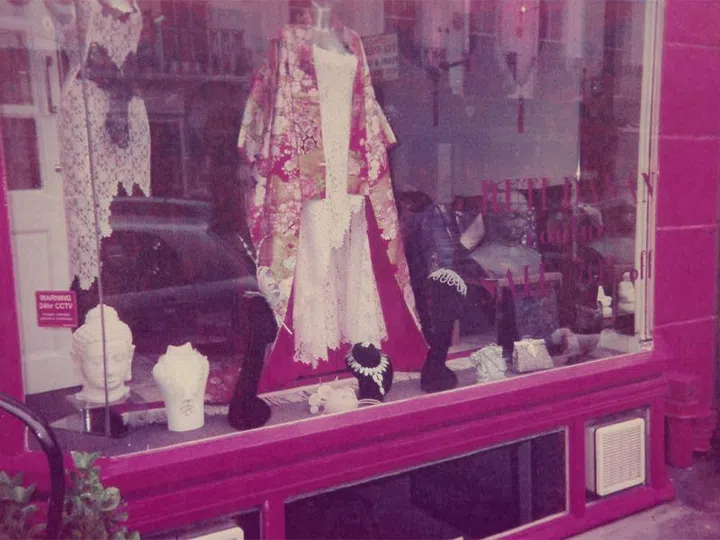
Kimono dress and jewellery in the storefront of Indochine.
The boutique carried clothing and other pieces from Southeast Asia. I sold handbags, Kashmiri shawls, vintage kimonos and wedding kimonos. Kimonos sold very well then, especially because they had a strong influence on fashion at the time, partly due to John Galliano as creative director at Dior.
I enjoyed that period very much. During the summer, many clients from the Middle East would come to London and they would visit the boutique. Some women bought dramatic pieces not only for weddings, but also to attend weddings—they wanted to show up at these events.
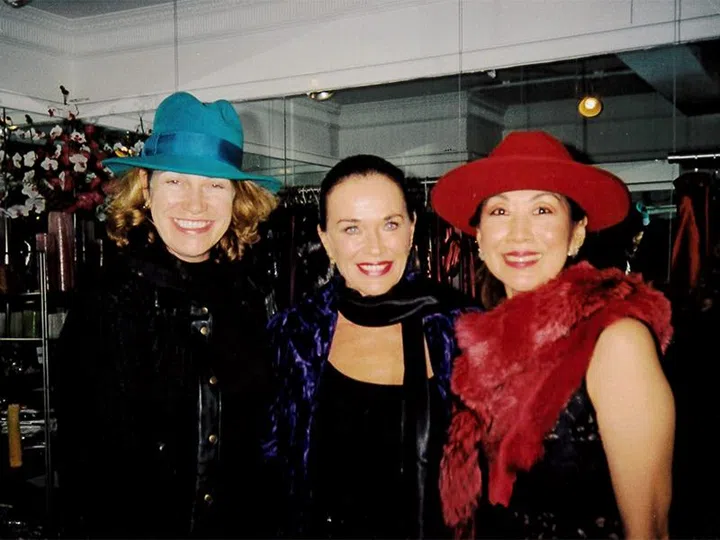
Genevieve Peggy Jeffs pictured with clients in her clothing store, Indochine, in London during the early 2000s.
Actually, my style then was already maximalist, but perhaps it has become even more defined now, as that sense of drama has developed. I think I have always liked loud things, but now I know exactly what I like and what feels like me.
I always think about what is unusual and what will complete the look. I have always liked hats, and that eventually developed into a love for headdresses.
Even before London, I wore hats, but Singapore had limited options. When I travelled to London or Paris, I would buy them. Later, I also realised that wearing a hat or headpiece meant I did not always have to go to the hairdresser’s before a function. If I were late for an appointment and did not want to deal with the stress of doing my hair, I could just put on a hat and go.
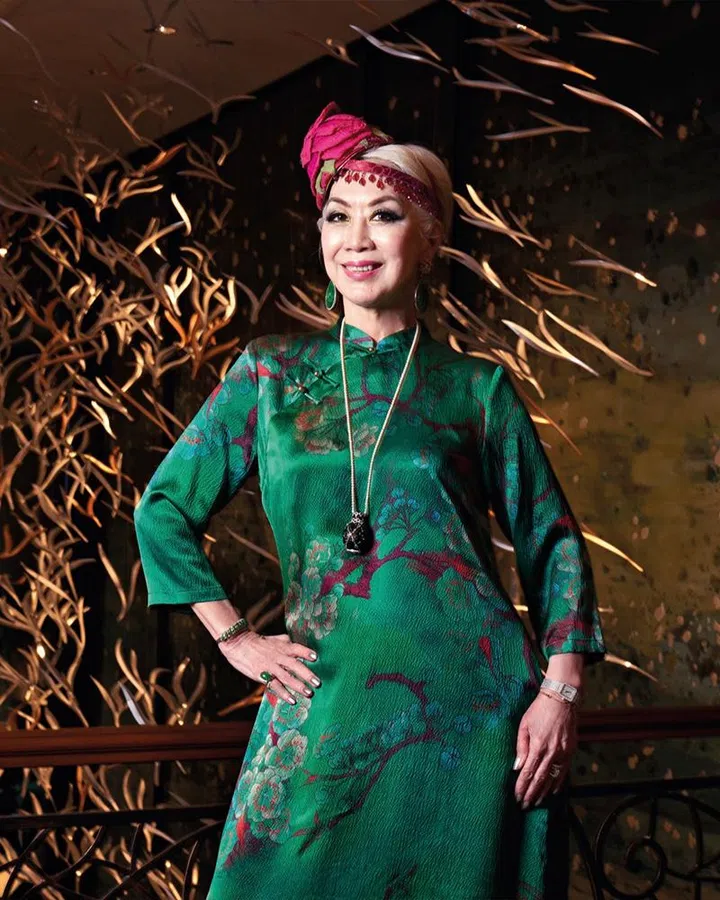
Genevieve Peggy Jeffs wearing a pink fascinator with a cheongsam dress at a gala in Singapore.
For me, dressing is about the whole picture—sometimes it is a mask, sometimes it is a headpiece, sometimes it is colour and how it becomes part of the outfit. I have even had my whole face painted with plants and flowers for a masked ball, so that I did not have to wear a mask at all.
Who are the brands and designers that you collect or admire?
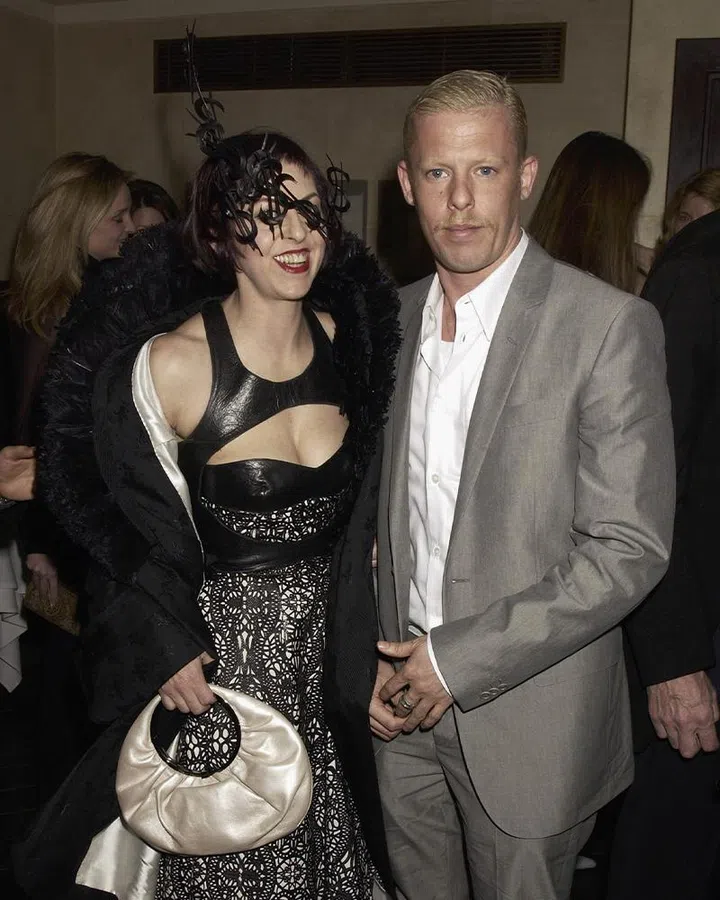
Isabella Blow and Alexander McQueen at a party in 2003.
I admire Isabella Blow. She was not a designer, but she was such an important fashion figure. She dressed up everywhere she went, and she helped make Alexander McQueen famous. I admire people like that, people who understand the power of dressing.
Alexander McQueen is one designer I really admire. He was a visionary. In London, I came across clothes by a designer who had worked for McQueen, and everything was made by hand with so much craft. I once wore one of her pieces to a Red Cross gala in London. It was like a military coat with gold thread, but made for a woman, with one side almost like a skirt. It was fantastic.
When I was younger, I also bought a lot of Christian Dior because my friend was a manager there. I bought everything—underwear, plates, handbags, shoes, even the uncomfortable ones—because I wanted to support my friend. My husband even asked me: “No other brand to buy, is it?”
Related article: Aimee Cheng-Bradshaw And Iman Fandi On Growing Up in Front Of The Lens, Self-Discovery And More
What projects are you currently busy with, and what excites you in the near future?
This year, I am busy with the gala for the Peranakan Association Singapore. As president, there is a lot of work involved, but I also believe in letting younger people take over when the time is right.
Next year, I will be chairing the Red Cross event in 2027. Volunteer work has been part of my life for a long time. I do not have a profession in the usual sense; my life has been about volunteer work.
Editor-in-Chief: Kenneth Goh
Creative Director: Windy Aulia
Digital Director: Annabelle Fernandez
Producer: Brandon Chia
Photographer: Scott Tan
Hair: Grego Oh, using Revlon Professional Singapore
Makeup: Rina Sim, using Hermès Beauty
Fashion: Genevieve’s own.
Location: Frasers House, a Luxury Collection Hotel, Singapore