
How Two Sisters Are Giving Their Family’s Heirloom Jewellery New Life
Raised in a family rooted in the diamond trade, Riddhi and Ekta Hathiramani collect jewellery not as trophies, but as living pieces of memory.
By Brandon Chia - published
Some families pass down recipes, while others pass down photographs, furniture or even books. In the Hathiramani family, it is jewellery. For sisters Riddhi and Ekta Hathiramani, who grew up in a home rooted in the diamond and jewellery trade, that meant a bangle worn at a wedding, earrings gifted for the birth of a daughter and preserved mine-cut diamonds because someone knew better than to recut them for modern tastes.
These pieces were never treated as relics. They were thoughtfully crafted, safeguarded and worn. What makes the sisters’ collections compelling is not simply that they are inherited, but that they continue to evolve. A jewel once reserved for formal occasions now sits easily with jeans. A family stone becomes a pinky signet ring. An Art Deco-inspired piece is worn with contemporary ease. In their hands, heirlooms are not frozen in time; they are given another life.
Related article: This Designer Turns Her Precious Memories Into Stunning Jewellery Collections
All In The Family
Riddhi’s collection has largely grown through inheritance, shaped by pieces that have moved through her family before finding their way to her. What draws her in is not novelty, but a sense of permanence: designs that resist being pinned to a decade or trend. “The sort of piece that feels as relevant at 25 as it would at 75,” she says.
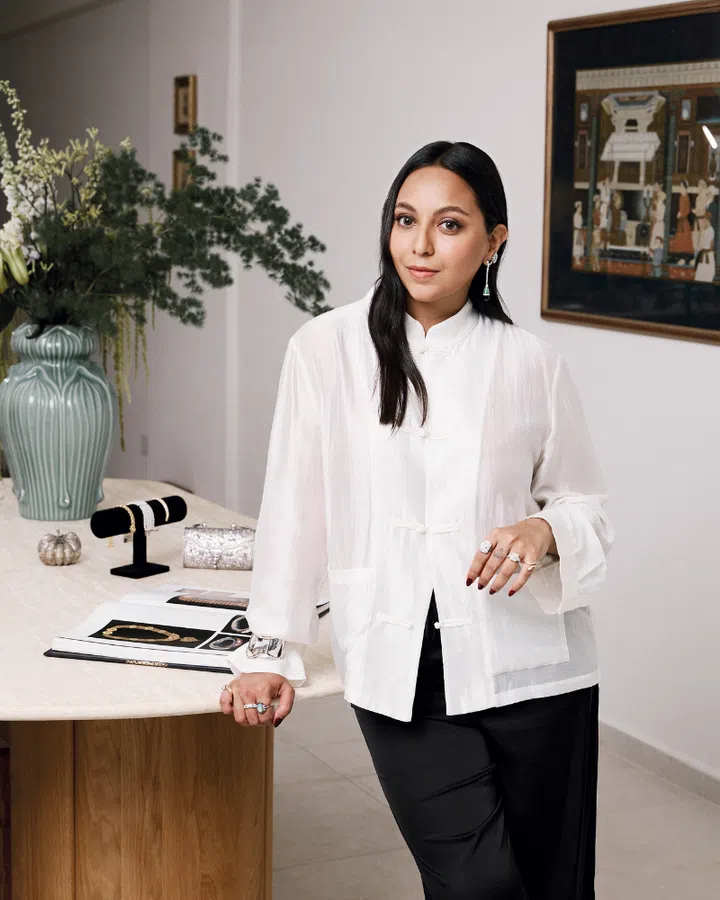
Riddhi Hathiramani wears a mix of bespoke jewellery passed down from her parents and modern pieces such as a Tiffany & Co. Elsa Peretti Bone cuff in silver. Top and pants, Riddhi’s own.
“Even at around eight years old, I had apparently singled out a Cartier watch that I said I would love to have one day,” Riddhi recalls. “I think there has always been a slightly old-soul sensibility to what I find beautiful.”
Ekta’s collection is guided by a similar appreciation for heritage and how pieces can live in a modern wardrobe. Like her sister, her collection started with gifts from her parents and heirlooms connected to her grandparents. Contemporary jewellery still appeals to her, but the pieces she returns to most are those with emotional power.
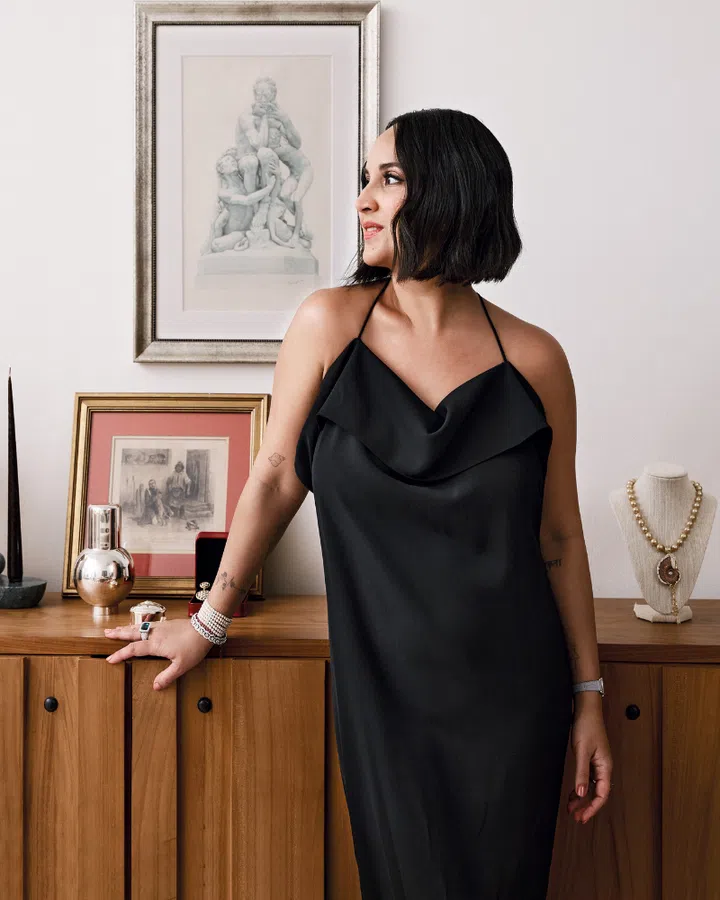
Ekta Hathiramani wears custom jewellery such as a tourmaline ring with a diamond-paved band, a vintage six-strand pearl bracelet and a Piaget watch. Dress, Ekta’s own.
“What I love most is that heirloom jewels carry a sense of history and sentiment while still feeling relevant and wearable with my modern wardrobe today,” she says. “To me, the beauty of fine jewellery lies not only in its craftsmanship, but also in its ability to connect generations.”
Riddhi’s most meaningful piece of jewellery does not announce itself loudly. It is an 18K gold tension-setting bangle with three rows of diamonds, first worn by her paternal grandmother at her parents’ wedding. Riddhi never met this grandmother, who died when her father was still young, making this piece deeply intimate.
Years later, when her father found the bangle again, it was pristine as ever: the diamonds still in place and the design intact. It was then gifted to Riddhi after her civil wedding ceremony in 2025. “It brings up a very strong sense of guardianship,” she says. “To think that it was once worn by a woman I never met, and that it has now been passed down to me with its history intact, creates a sense of responsibility to honour both the piece and her.”
Related article: This Antique Jewellery Collector’s Archive Is Filled With Symbolism, Stories And Serious Staying Power
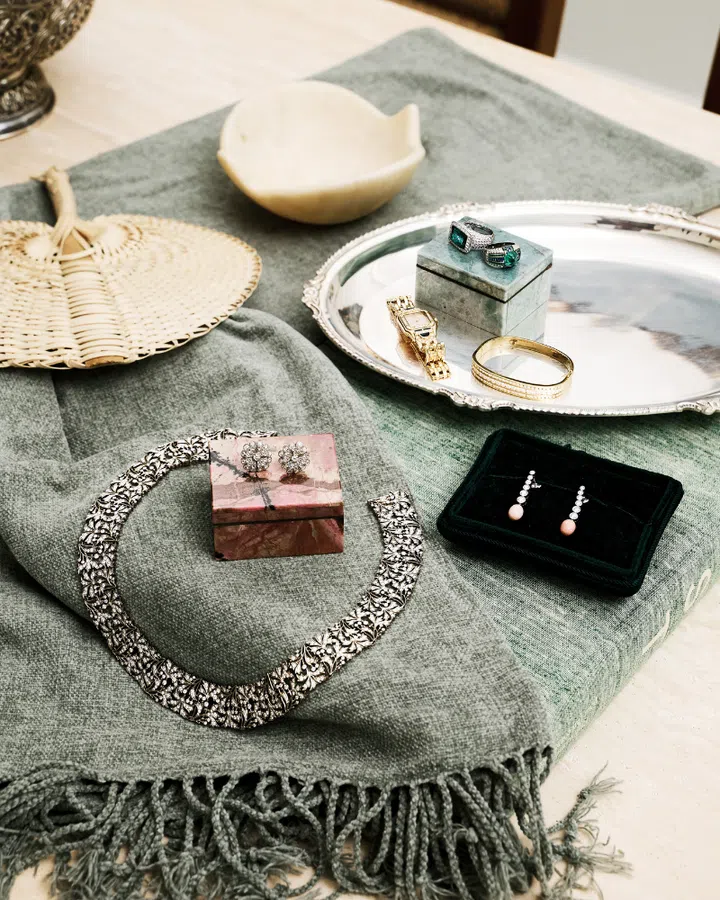
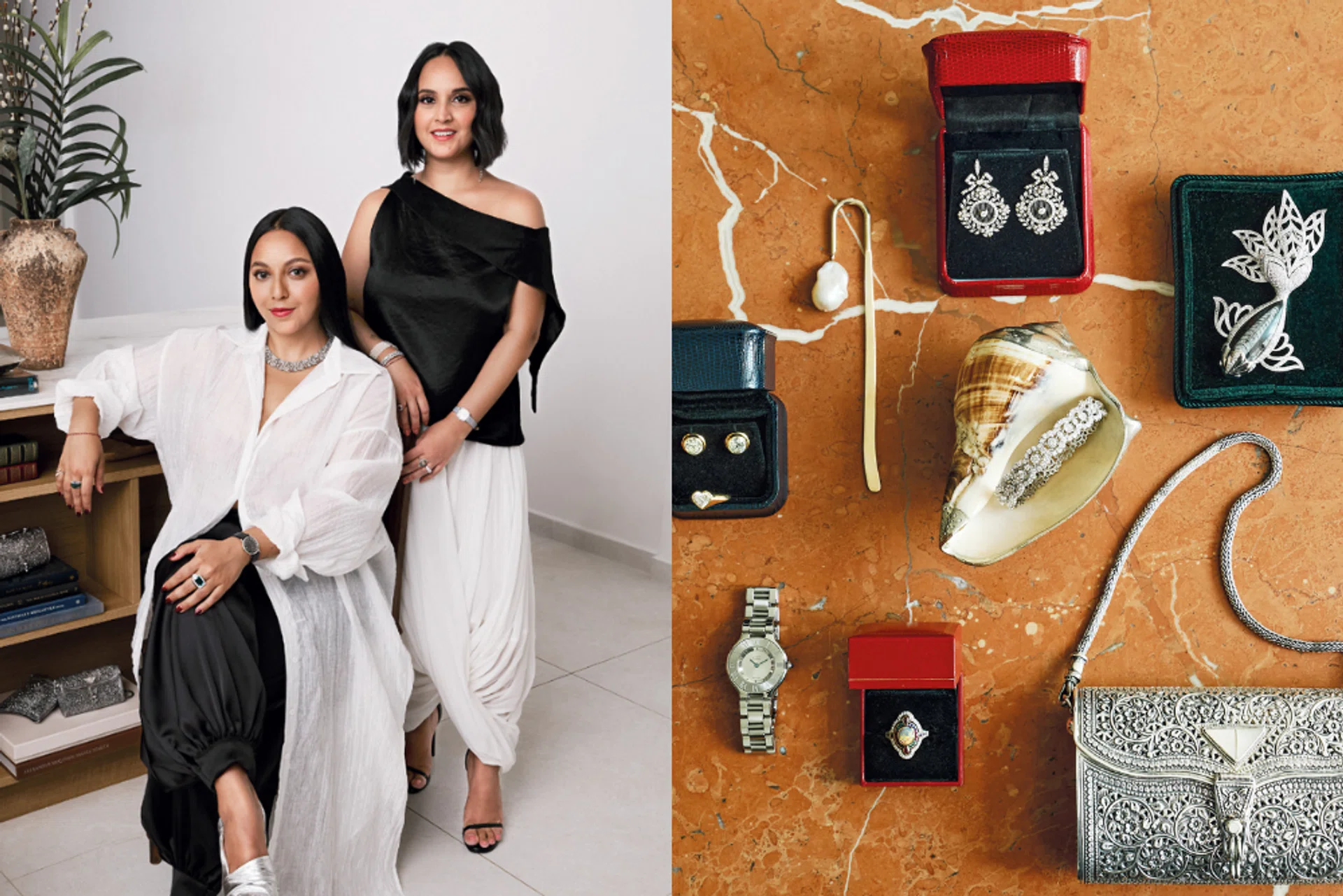
The sisters’ collection includes intricately crafted necklaces, bracelets, rings, brooches and earrings, such as incredibly rare conch pearl Tiffany & Co. creations, and a mix of Cartier and Piaget watches.
Among the jewels closest to Ekta’s heart are Edwardian-inspired diamond earrings that once belonged to her mother and were given to her after the birth of her daughter, earlier this year. She had grown up seeing them on her mother, which made receiving them feel less like acquiring a new piece and more like stepping into a familiar memory.
“What makes them especially precious is knowing that one day I will pass them on to my daughter, continuing their journey through the generations,” she points out.
There is also an Art Deco-style opal ring from her mother’s collection, set in yellow gold and accentuated with diamonds, rubies, blue sapphires and emeralds. “Its craftsmanship is unlike much you see today,” says Ekta. “It’s one of those pieces that always sparks conversation and perfectly reflects my love for jewellery with character.”
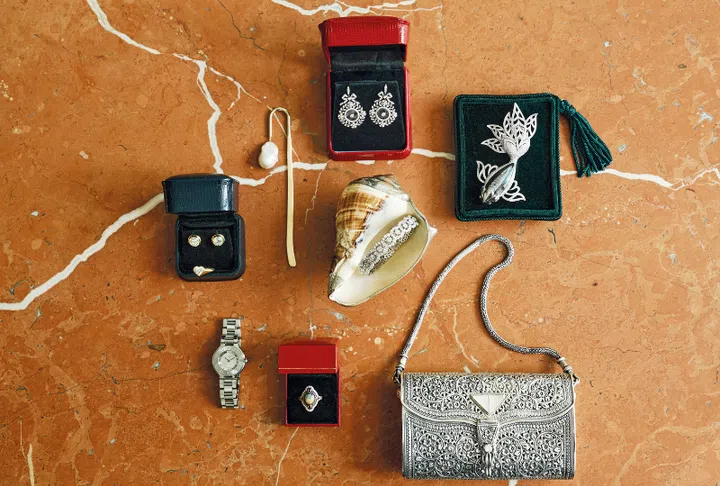
Every piece of jewellery and watch holds a significant memory for the sisters, stretching back to their childhood when they used to visit their father’s office till today with a pair of earrings (top) gifted to Ekta by her mother to commemorate the birth of her daughter earlier this year.
A Cartier watch from her late maternal grandfather also carries a different kind of tenderness. He gave it to her when she graduated from high school; more than 20 years on, it has become both a daily reminder and a vintage piece in its own right.
Some pieces in the family reveal another kind of instinct: conviction. Ekta remembers a pair of old mine-cut diamond earrings that once belonged to one of her father’s business clients. The stones could have been reshaped into something newer and more commercially appealing, but her father saw value in their irregularity and age. Instead of allowing them to be recut, he bought them for her mother and kept them as they were.
Old Jewels, New Rules
That instinct also shapes the way the sisters wear jewellery now. For Riddhi, her collection has changed not necessarily what she wears, but what she allows herself to wear. When she was younger, she often felt that certain pieces required an occasion, or perhaps a version of herself she had not yet stepped into. “I often kept them aside for ‘someday’, and I’ve had to remind myself that someday is now,” she says.
Riddhi has also had to rethink the role of these jewels. Instead of waiting for the perfect setting, she lets them meet the reality of her life now: archival pieces worn with contemporary clothing. “It’s become about loosening the original rules they were designed within and letting them evolve into something that feels more personal and more reflective of how we live now,” she explains.
Ekta feels the same pull. Fine jewellery was once something they thought had to be saved for special occasions. Now, she wears it whenever and however she wants. “There is also something incredibly satisfying about wearing a jewel that has lived several lives before yours and styling it in a way that feels entirely your own yet relevant today.”
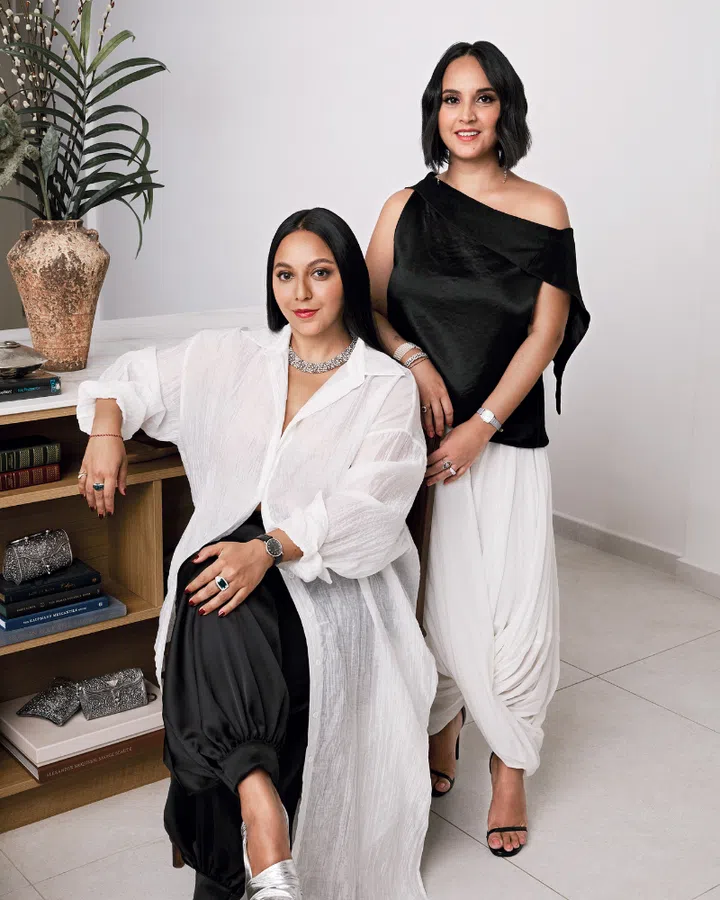
Sisters Riddhi (left) and Ekta Hathiramani wear jewellery and watches from their personal collections, including bespoke pieces from their father’s business and borrowed pieces from their mother that have yet to be passed down.
Related article: The Rise Of Gen Z Watch Collectors And Their Love For Traditional Timepieces
The same balance between preservation and reinvention extends to the family business. Riddhi is not formally involved—her own career is in design—but the line between family, work and creativity is naturally fluid. Her contributions often begin with personal designs—pieces made first for herself, which later strike a chord with clients. “I think that’s what makes a family business so special: roles aren’t rigidly defined, and it operates almost like a living system,” she notes.
Ekta’s role took shape at a moment when jewellery businesses were beginning to speak to clients differently. As social media became increasingly influential, she saw a chance to bring the family’s craftsmanship, stories and point of view into a more contemporary space. Her contribution has been less about changing what the business stands for and more about finding new ways to communicate its values.
“What I enjoy most is honouring the craftsmanship and values that have defined our family business,” she expresses, “while helping it evolve for a new generation.”
The industry around them has changed too. Clients arrive more informed, asking sharper questions about grading, provenance, certification and craft. Desire is no longer driven by status alone; increasingly, people want pieces that feel specific to them, with a story that can hold its own against the stone.
Even the rise of lab-grown diamonds has shifted the conversation. It has made fine jewellery more accessible and opened up creative possibilities, but it has also sharpened the emotional distinction between technological brilliance and natural rarity. In a landscape where perfection can be produced, provenance, time and individuality take on a different kind of charge.
For Riddhi and Ekta, the future of fine jewellery still comes back to meaning. Their advice to budding collectors is to move slowly, build relationships with trusted jewellers and understand your own taste before chasing what is fashionable. “Truly personal collections aren’t built overnight; they are shaped by life’s milestones and the memories attached to them,” says Ekta.
As Riddhi puts it: “I think that’s the beauty of heirloom jewellery: it outlives us. These are objects that will eventually be worn by daughters of daughters, long after all of us are gone. In a way, we are simply passing them between lifetimes.”
Photography: Athirah Annissa
Art Direction: Sheryl Seah and Alice Chua
Hair: Grego using Revlon Professional
Makeup: Rina Sim using Clé De Peau Beauté