
A Visit To Jaeger-LeCoultre’s Manufacture Revealed What Makes Its Luxury Watches Worth The Investment
Harper’s BAZAAR Singapore travels to the Vallée de Joux in Switzerland to see what makes renowned watchmaker Jaeger-LeCoultre tick.
By Renee Batchelor - published
The drive from Geneva to the Vallée de Joux is a relatively quick 70-minute affair, taking us from the city to the serene countryside through winding roads. The scenery outside is breathtaking; there are views of snow-capped mountains in the distance, endless green valleys and vast lakes. It is easy to see why Antoine LeCoultre’s ancestors settled in this peaceful spot, specifically co-founding the village of Le Sentier, some 48km from Geneva in the 16th century. This is also where LeCoultre began his namesake Maison.

The view in the Vallée de Joux.
Related article: Kim Woo Bin On His Favourite Jaeger-LeCoultre Collection And Staying In the Present
Since then, it has been a fixture in the Vallée de Joux, where within the walls of the Manufacture Jaeger-LeCoultre, are secrets to thousands of movements, patents and inventions for countless watches, clocks and artefacts of haute horology.
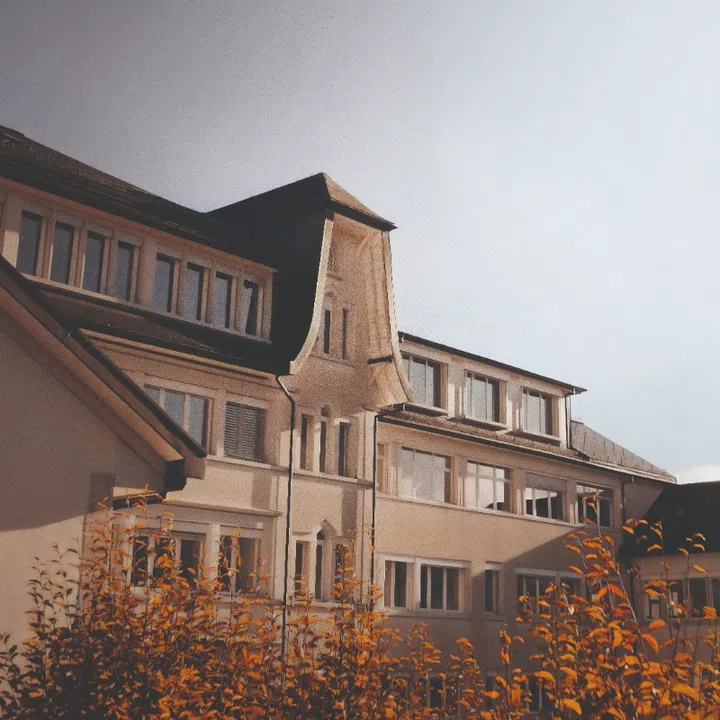
The Jaeger-LeCoulter Manufacture that was first established in 1833.
For those in the know, Jaeger-LeCoultre is one of most renowned names in the horological world, earning it the much-deserved moniker “the watchmaker of watchmakers”. And it’s easy to see why as I take a peek into its historical annals. In one of the manufacture’s upper floors is a Heritage Gallery where such artefacts are kept, including a ledger with entries dating back to 1902 listing all the brands and customers the Maison has supplied to.
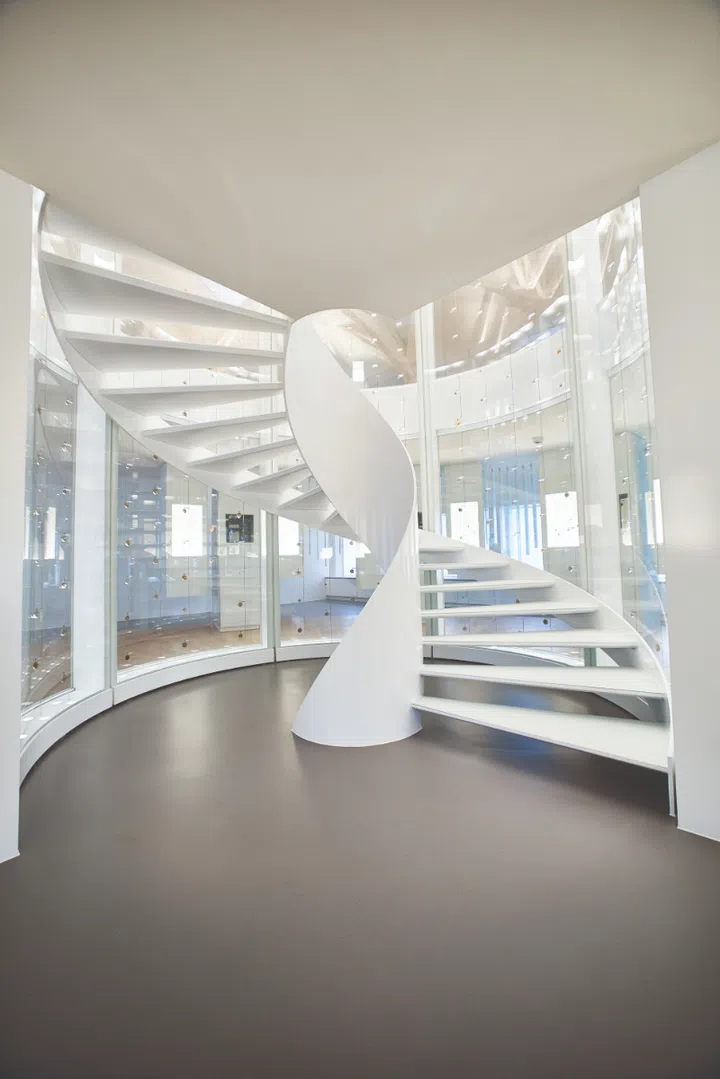
The wall of calibres in the Jaeger-LeCoultre Heritage Gallery.
In the list you’ll see familiar names like Audemars Piguet and Patek Philippe; such was the brand’s renown when it came to crafting the finest movements. In another space, dubbed the Wall of Calibres, thousands of them are mounted on a curved glass structure that frames a winding staircase, a mind-blowing representation of the over 1,300 calibres the brand has created over the years—well above the industry average when it comes to innovation.
The history of this expertise dates even further back than the brand’s creation in 1833. During the 17th century, watchmaking was beginning to spread throughout the Swiss Jura region. But the Vallée de Joux in particular came to specialise in the field of Grandes Complications, one of the noblest of the watchmaking arts. As this remote area of Switzerland began to produce all of the industry’s ultra-complicated watch movements, it became and still remains the worldwide hub of Haute Horlogerie.
Related article: The Newest And Hottest From The World Of Watches
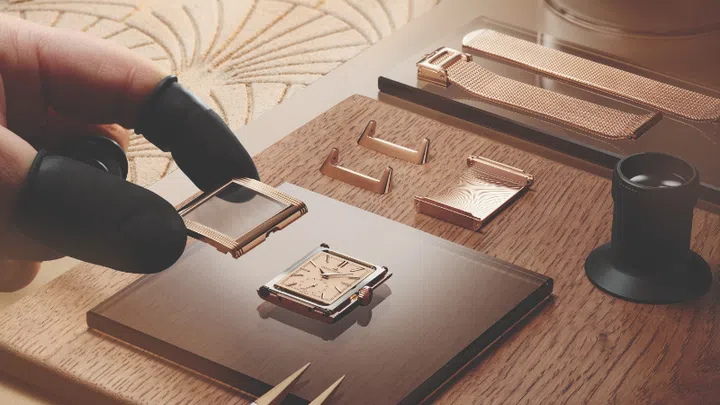
Assembling a Reverso case.
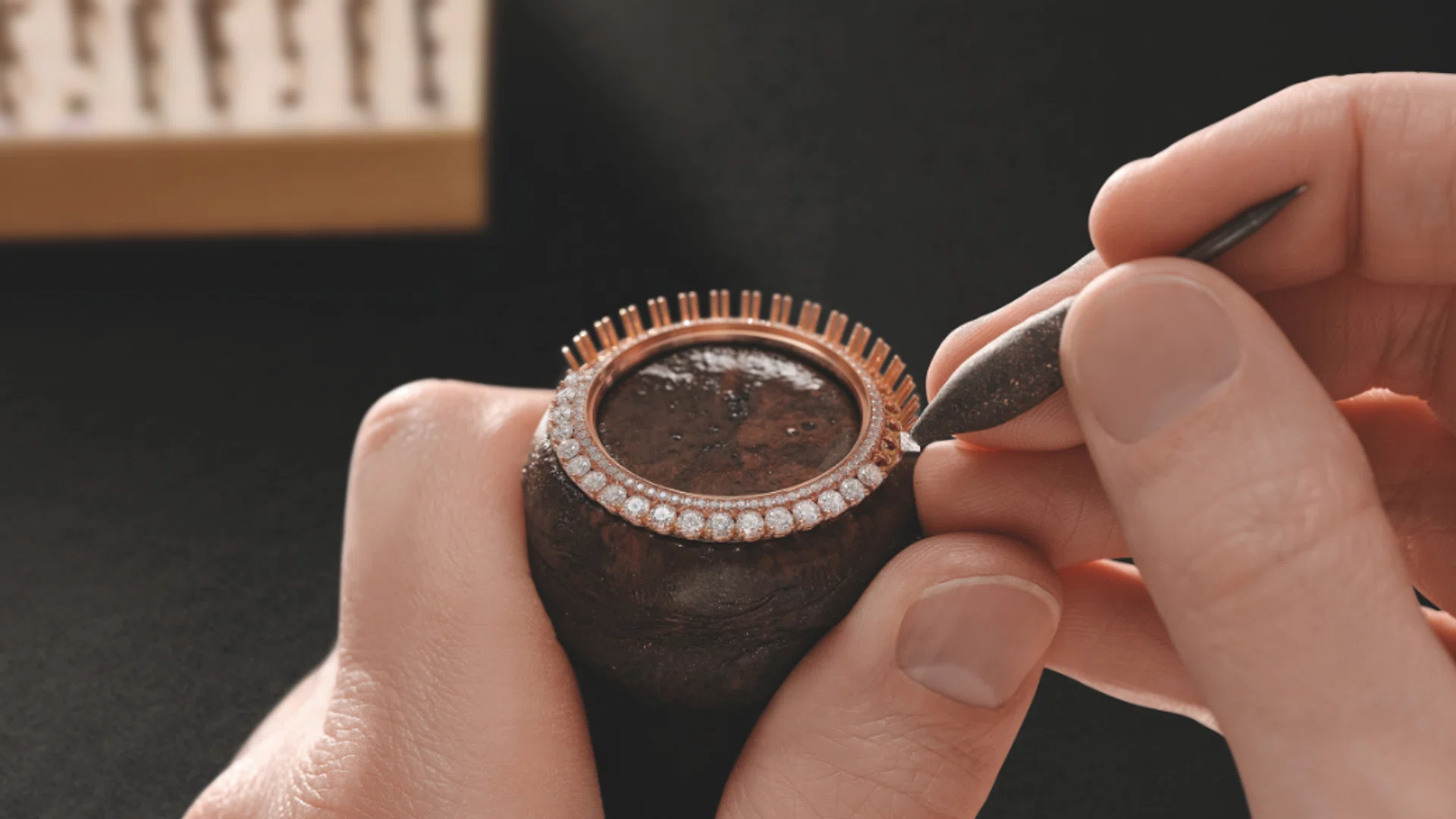
As I tour the manufacture, it becomes apparent the role that time plays in the art of Jaeger-LeCoultre’s watchmaking. Beyond the obvious—that is, creating time-telling instruments—all of the steps that it takes to craft a masterpiece from scratch is an exercise in patience, expertise and almost meditative stillness. Jaeger-LeCoultre is one of the only watchmakers that truly does everything in-house. From the movement creation, to the polishing of the cases to the complex work of the enamelling and gem-setting department, each watchmaker in the Jaeger-LeCoultre family is a master of their craft.
The steady hands and superhuman concentration that it takes to be a watchmaker perhaps explains the calm of the setting, with a view of the nearby Lac de Joux from the highest floors of the main building. Life here is slow and steady, much like the heartbeat of a watch movement. In the winter, I am told, some of the watchmakers even ski back to their nearby houses, a truly idyllic work-life existence. I am playfully asked if I would ever consider watchmaking as a career, but as I attempted to assemble a Reverso case in a workshop that day at the Atelier d’Antoine—the Maison’s educational initiative—I quickly realised I lacked the fine motor skills for such a career.
Related article: The Best New Watches At Watches And Wonders 2025
This year at the Watches and Wonders fair in Geneva, the brand put focus on the Reverso, one of the most iconic and game-changing watches in the industry. First created in 1931 for polo players, the watch featured a reversible case that could be flipped to protect the glass and dial from breakage. From the initial Monoface Reverso, Duoface, triple and even quadruple face Reversos have been developed. The Reverso has since taken on mythic proportions and a multitude of iterations and this year, there were exceptional references that solidified the continuing relevance of this timepiece.
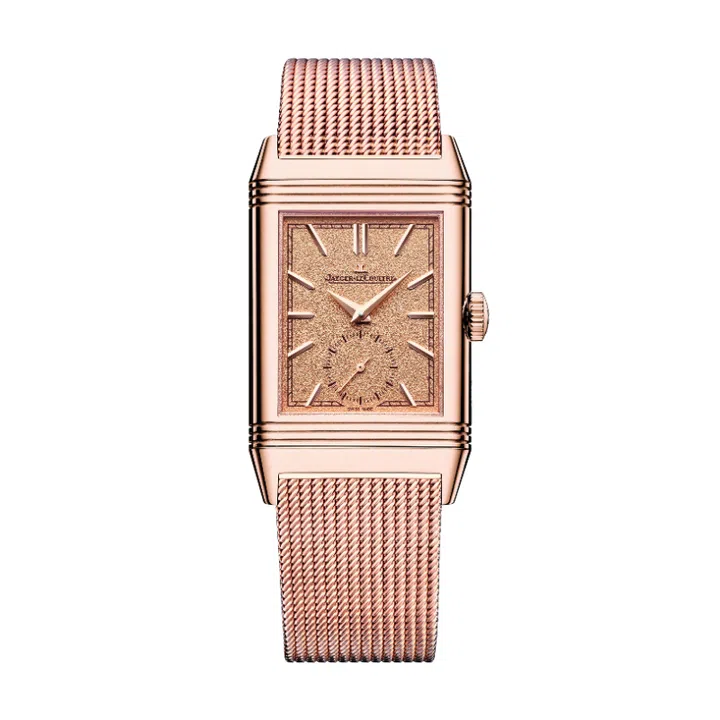
The Reverso Tribute Monoface ‘Or Deco’ in pink gold.
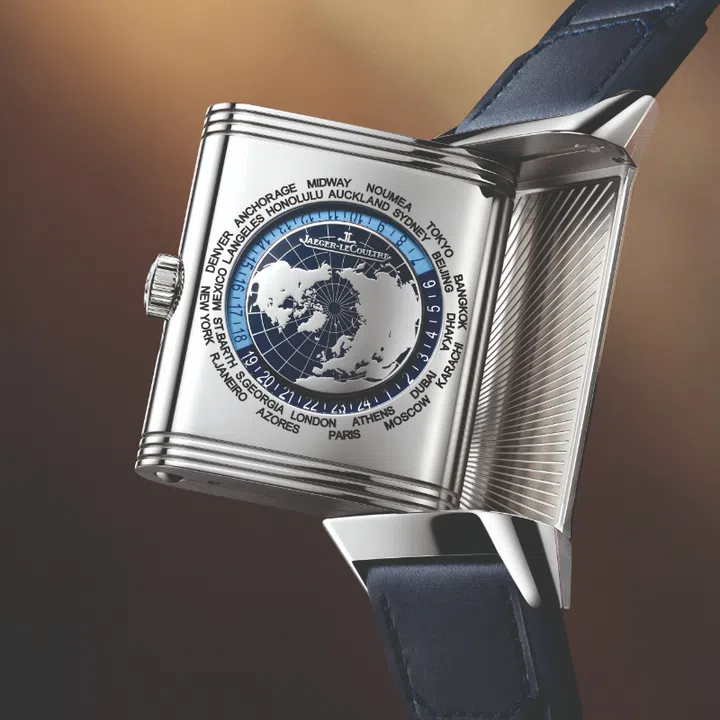
The Jaeger-LeCoultre Reverso Tribute Geographic.
One of the most beloved and talked about watches at the fair was the Reverso Tribute Monoface ‘Or Deco’ in pink gold with a Milanese mesh bracelet, giving the watch a distinctly vintage allure. The Reverso Tribute Geographic meanwhile borrowed from the first models from 1931, and on the reverse side features a world time complication time disc that rotates while the city names are engraved on the case—a clever innovation that epitomises the Reverso’s out-of-the-box spirit.
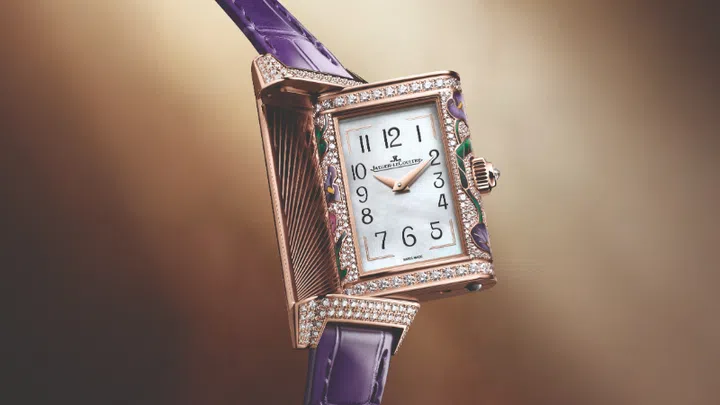
The Reverso One Precious Flowers boasts exquisite gem-setting and Grand Feu Champlevé enamelling.
Elsewhere, high jewellery pieces like the Reverso One Precious Flowers take over 130 hours to perfect in the Maison’s Métiers Rares workshop. It combines complex techniques like Grand Feu Champlevé enamelling, as well diamond grain and snow-setting for a gloriously refined masterpiece on the wrist. Creating these tiny works of art and constantly striving for bigger breakthroughs (and smaller movements), is what has driven this nearly 200-year old Maison over its many years, and is what will continue making it an innovator for many more years to come.