A Guide to the Rarest Stones In the World

An illustrated glossary for the jewellery fanatic.

A Guide to the Rarest Stones In the World

An illustrated glossary for the jewellery fanatic.
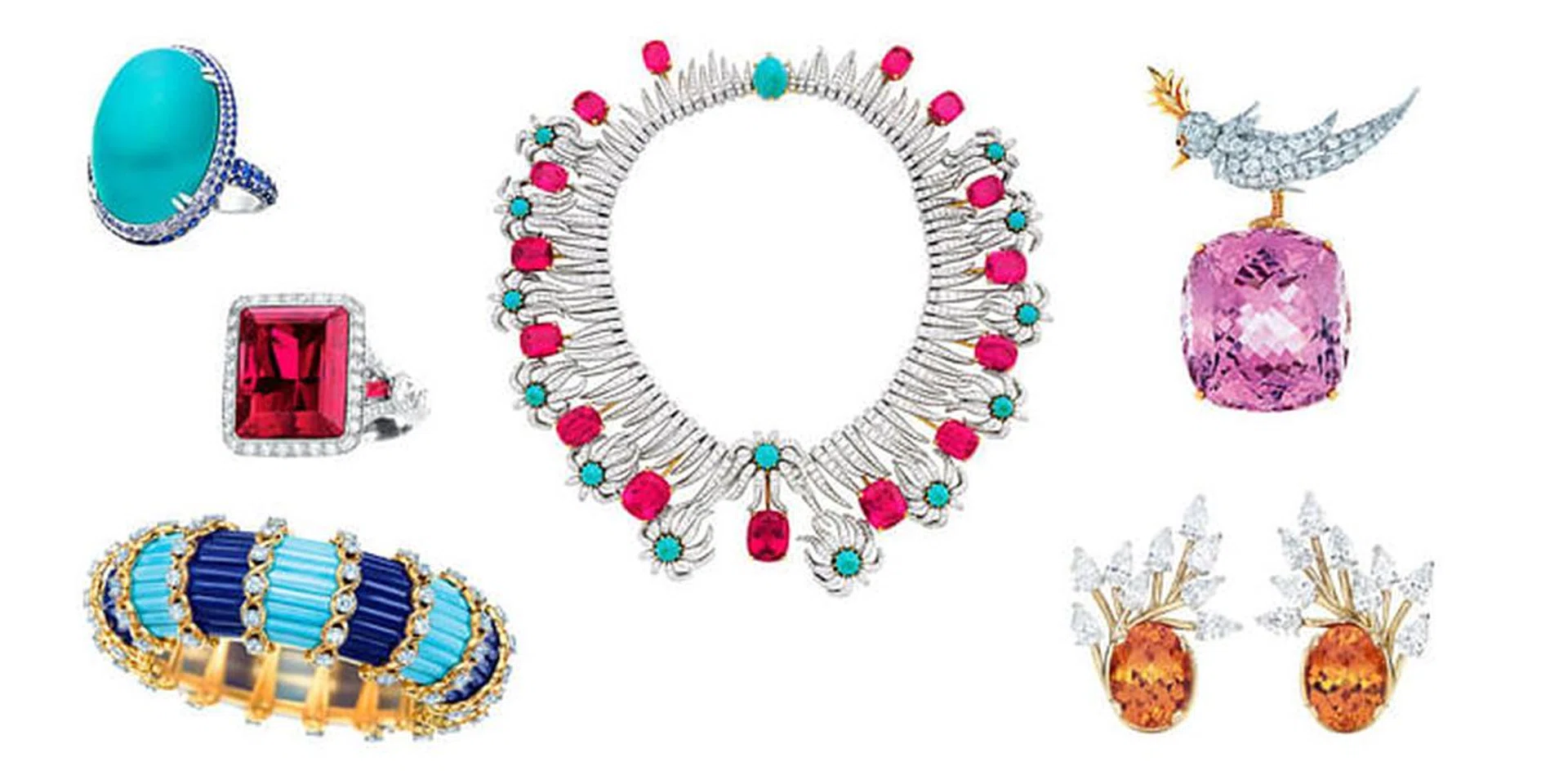
From: Town and Country Magazine

AGATE

[AG-it] n. Named by the ancient Greeks and found at the site of the Palace of Knossos, this variety of chalcedony is formed from layers of quartz. Among its alleged properties is the ability to cure insomnia and discern the truth.
1 of 23

A Guide to the Rarest Stones In the World

ALEXANDRITE

[al-ex-AN-drite] n. A variety of chrysoberyl named after Czar Alexander II because of its origins (the Ural Mountains) and colours (imperial red and green). Noted for its ability to change colour depending on the light source; it appears emerald green in daylight, raspberry red in incandescent light. The more dramatic the colour change, the rarer—the more valuable—the stone. It was also the subject of the 19th-century page-turner Alexandrite: Mysterious Interpretation of a True Fact.
2 of 23

A Guide to the Rarest Stones In the World

BLUE TOPAZ

BLUE TOPAZ [BLU TOE-paz] n. The etymology of topaz is unclear; some say the stone was first mined in Topazios, an island in the Red Sea. Natural blue topaz is very rare, though light blue varieties are found in Texas, where it happens to be the state stone.
3 of 23

A Guide to the Rarest Stones In the World

CHRYSOBERYL

[CRIS-a-ber-el] n. Mined primarily in Brazil and found in hues of yellow, pale green, and brown. The cat's-eye variety is highly prized, especially for its "milk and honey" effect: The stone's white and gold colours switch as the light moves.
4 of 23

A Guide to the Rarest Stones In the World

CHRYSOCOLLA

[cris-a-COLL-a] n. A smooth, greenish-blue quartz first used by "father of botany" Theophrastus in 315 B.C., presumably for his treatise On Stones, an indispensable guide for lapidaries until the Renaissance.
5 of 23

A Guide to the Rarest Stones In the World

CITRINE

[sit-TREEN] n. Called the Success Stone for its supposed serendipitous properties, this yellow quartz is said to increase good fortune and personal power. Though rare, natural citrines, which range from pale yellow to brown, do exist. A trained eye can spot one by its smoky appearance.
6 of 23

A Guide to the Rarest Stones In the World

IOLITE

[Eye-a-lite] n. From the Greek ios, meaning violet. The stone is also sometimes referred to as water sapphire thanks to its pale blue shades. Iolite was used by the Vikings to protect their eyes from sun glare. Don't try that with your earrings at home.
7 of 23

A Guide to the Rarest Stones In the World

KUNZITE

[KOONZ-ite] n. Pale pink stone discovered in California in 1902 and named for the man who introduced it to the world: Tiffany & Co.'s chief gemologist George F. Kuntz. At just over 100, it's considered young in gemology.
8 of 23

A Guide to the Rarest Stones In the World

LABRADORITE

[LAB-ra-door-ite] n. A blue-gray stone marked by its iridescent play on color. This quality is likely what gave rise to the myth that it fell from the Aurora Borealis. It is so named becasue deposits were first discovered in Labrador. (Claire Danes rocked a labradorite Tiffany & Co. bracele
9 of 23

A Guide to the Rarest Stones In the World

LAPIS LAZULI

[LAP-iss LAZ-a-lee] n. Popular since 6000 B.C., the intensely blue rock is mentioned in the Epic of Gilgamesh. "Sapphires" in the Old Testament may actually be lapis, as sapphires were unknown before the Roman Empire.
10 of 23

A Guide to the Rarest Stones In the World

LAPIS LAZULI

Jacqueline Onassis wearing a lapis lazuli bracelet.
11 of 23

A Guide to the Rarest Stones In the World

MALACHITE

[MAL-a-kite] n. Opaque green stone, often banded. The name comes from the Greek malakos, meaning soft. Used since ancient times for jewels, amulets, or, in the case of Cleopatra, striking green eyeshadow.
12 of 23

A Guide to the Rarest Stones In the World

MANDARIN GARNET

[MAn-da-ren GAR-net] n. Related to the spessartite garnet but distinguished by its fiery orange hue. Found in 1991 in Namibia; the mines are now exhausted. Head to Nigeria instead.
13 of 23

A Guide to the Rarest Stones In the World

MONTANA SAPPHIRE

[mon-TAN-a SAF-ire) n. A strongly saturated medium blue stone that comes out of the earth looking that way. The most prized are form the Yogo Gulch mines in central Montana and are widely believed to be the reason Montana calls itself the Treasure State. This corundum is rarely available larger than one carat, but spectacular specimens were exhibited at world's fairs in Paris, Chicago, and Buffalo between 1889 and 1901. (The sapphires in this moonstone necklace, at the Metropolitan Museum of Art, are from Montana.)
14 of 23

A Guide to the Rarest Stones In the World

PARAIBA TOURMALINE

[pa-ra-EE--ba TUR-ma-lin] n. Electrifyingly blue-green stone discovered by the visionary Heitor Dimas Barbosa, who believed there was treasure in the hills of the Brazilian state of Paraíba and did nonstop digging until he found some, in the late 1980s. The demand was great;the supply soon depleted. A similar variety was discovered in Mozambique.
15 of 23

A Guide to the Rarest Stones In the World

PERIDOT

[PER-a-doh] n. Referred to as "the emerald of the evening" because its rich olive-green colour remains constant in artificial light. Found on the Shrine of the Three Magi in Germany's Cologne Cathedral and, more recently, in Kashmir.
16 of 23

A Guide to the Rarest Stones In the World

RHODONITE

[RO-da-nite] n. The Greek word rhodos, meaning rosy, gives this pink crystal install. Found (often as large specimens) in the mountains of Russia, Sweden, and, occasionally, New Jersey.
17 of 23

A Guide to the Rarest Stones In the World

RUBELLITE

[RU-bel-ite] n. From the latin ruber, meaning red. The stone distinguishes itself from its tourmaline cousins by its level of saturation—the higher the degree, the more likely it will be granted the rubellite appellation. Color behavior is also a defining factor; rubellite display the same deep pinkish red by day and night.
18 of 23

A Guide to the Rarest Stones In the World

RUBELLITE

Carroll Petrie's rubellite and turqoise Hedges and Rows necklace, which shone bright on various black tie evenings. It sold for $905,000 at Christie's last year.
19 of 23

A Guide to the Rarest Stones In the World

SPINEL

[spi-NEL] n. The Black Prince's Ruby, a 170-carat stone in Britain's Imperial State Crown, is in fact a red spinel. Henry V and Richard III wore it into battle with no knowledge of its true origins. The spinel's reddish hue was often confused with that of the ruby until the advent of gemology, in the 18th century. Found in Burma, Afghanistan, and Sri Lanka, and in myriad colors, the deeply saturated red spinel is the most coveted, and, in a twist of fate, is now rare than the ruby.
20 of 23

A Guide to the Rarest Stones In the World

SPINEL

Queen Elizabeth II wears the Imperial State Crown.
21 of 23

A Guide to the Rarest Stones In the World

TANZANITE

[TAN-sa-nite] n. Discovered in the foothills of Mount Kilimanjaro, it was christened by Tiffany & Co. in 1968 with a name derived from its country of origin and only source. Distinguished by its color: a blue with "shares of the midnight sky and flashes of violent."
22 of 23

TSAVORITE

[SAY-va-rite] n. Rare type of garnet noted for its glistening green color. Discovered in Kenya's Tsavo National Park and named, appropriately, by Tiffany & Co. president Henry Platt in 1974.
23 of 23

A Guide to the Rarest Stones In the World


Share this article