
Inside Cartier’s Manufacture: How the Iconic Watchmaker Crafts Its Timepieces
Ahead of Watches and Wonders 2026, BAZAAR went on a tour of Cartier’s Maison Des Métiers D’art and Manufacture in La Chaux-de-Fonds to see what makes the watchmaker tick.

By Renee Batchelor - published
Cartier watches are known for many things. Their unusual and innovative shapes, their wearability, and also for the ecosystem built around these watches: think its archival Privé collections and its well-established repair and restoration services. All of this is not by accident, but by design, and as I head off to La Chaux-de-Fonds, a Swiss city in the canton of Neuchâtel, it is to take a closer look at what exactly makes Cartier tick.
La Chaux-de-Fonds is where two of Cartier’s workshops—the main watchmaking manufacture as well as the Maison des Métiers d’Art—sit, and is one of the Maison’s five watchmaking sites in Switzerland.
Related article: The Best Complications Watches That Deserve A Spot In Your Collection
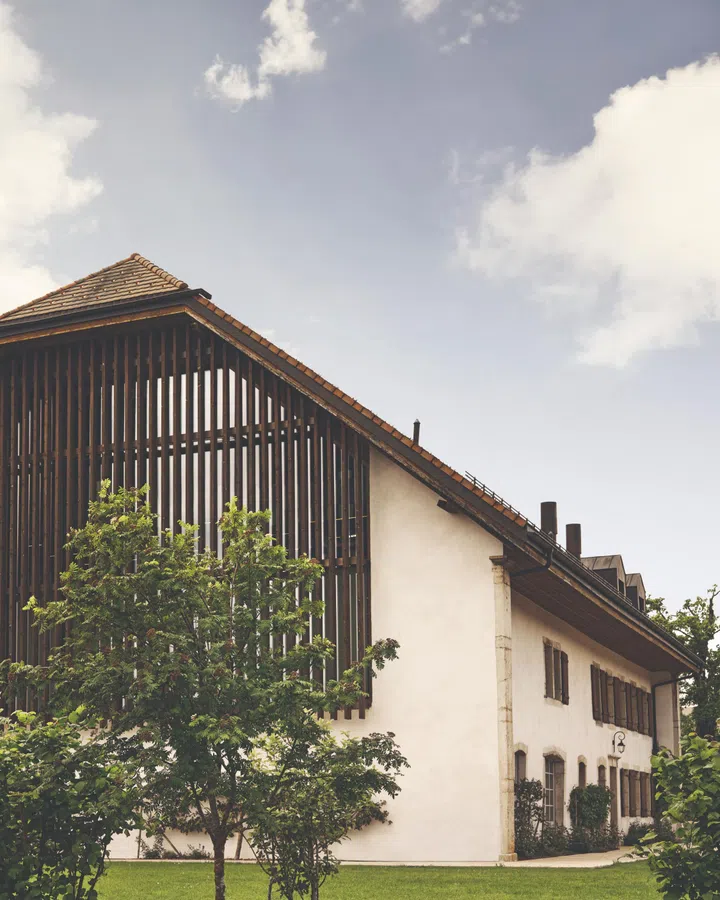
The exterior of the Maison des Métiers d’Art
Founded in 2014, the Maison des Métiers d’Art is housed in a charming, fully restored 17th-century Bernese-style farmhouse, which represents the intermingling of heritage and technology. Inside the bones of a structure built four centuries ago is a highly modern building known as the inner sanctum of Cartier’s watchmaking, where the secrets and crafts of Cartier’s watchmaking heritage are passed from master to apprentice.
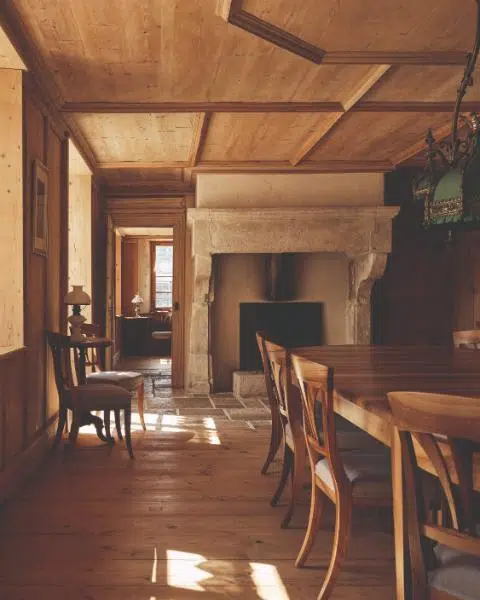
The charm of the original Bernese-style farmhouse is preserved
“The spirit of this place is unique: preserving and sharing artistic crafts that are often forgotten, or rarely practised, in a dynamic where innovation plays a huge role and fuels the Maison’s boundless creativity,” says Karim Drici, chief operating officer of Cartier.
The building itself is sun-lit and airy, thanks to the floor-to-ceiling glass windows and generous pitched wooden roof. But inside, watchmakers and artisans work on modern desks with highly specialised tools and equipment. Some are completing current season pieces, enamelling, gem-setting, or polishing, while others are crafting and assembling upcoming launches.
Related article: All The Luxury Watches That Your Favourite F1 Drivers Are Actually Wearing
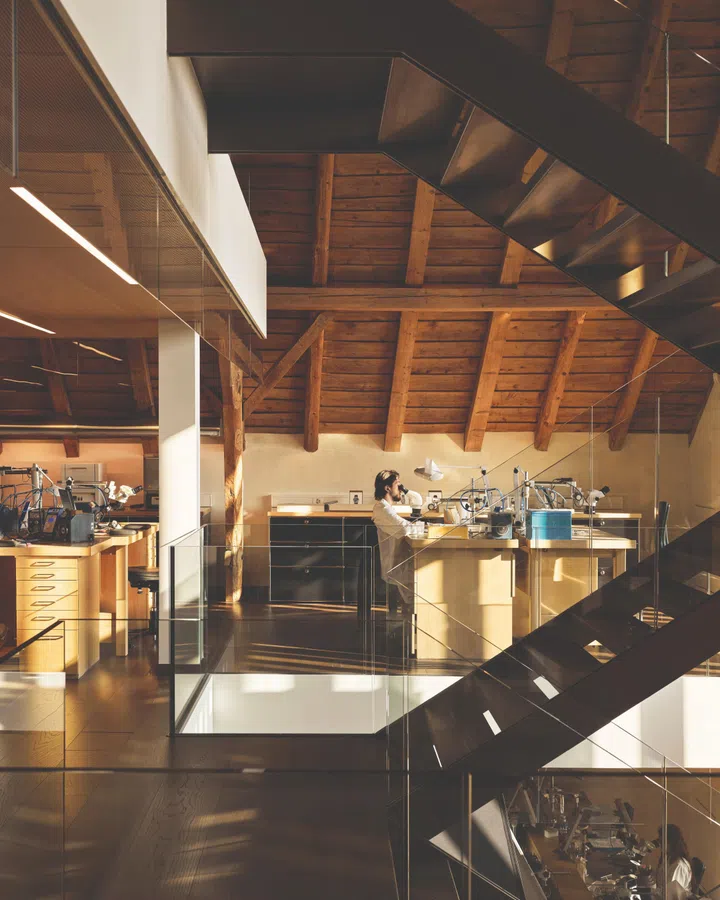
Artisans and watchmakers at the Maison Des Métiers D’art.
For our viewing pleasure, this year’s Tortue Panthère Métiers d’Art watch is presented, from the original sketch, to the bezel, to the dial and case, which uses champlevé enamel techniques to decorate a scene of a panther behind a curtain of rain—creating a dimensional, two-level effect.
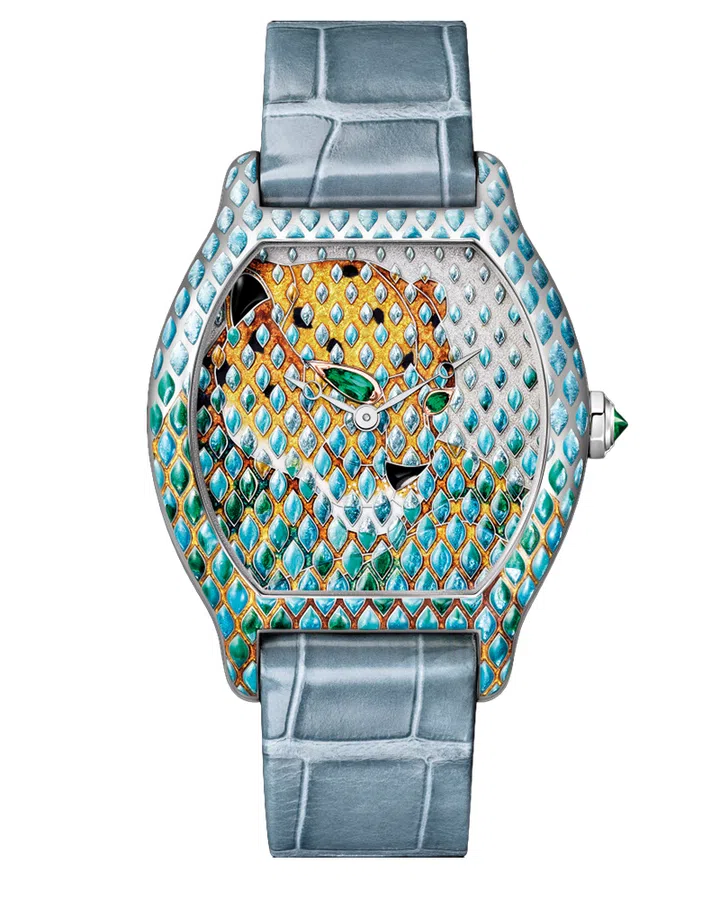
Cartier Tortue Panthère Métiers d’Art watch
To make the raindrops, tiny cavities are carved out by the craftsman and filled with translucent enamel powder, and gold or silver flakes. Here every last detail—such as the meticulous gradients of the colour which uses 15 different tones of enamel—is perfected. The time taken to make each watch? 80 hours to enamel the dial, 50 hours to enamel the case and three hours for gem-setting the eyes alone with either emeralds or tsavorites.
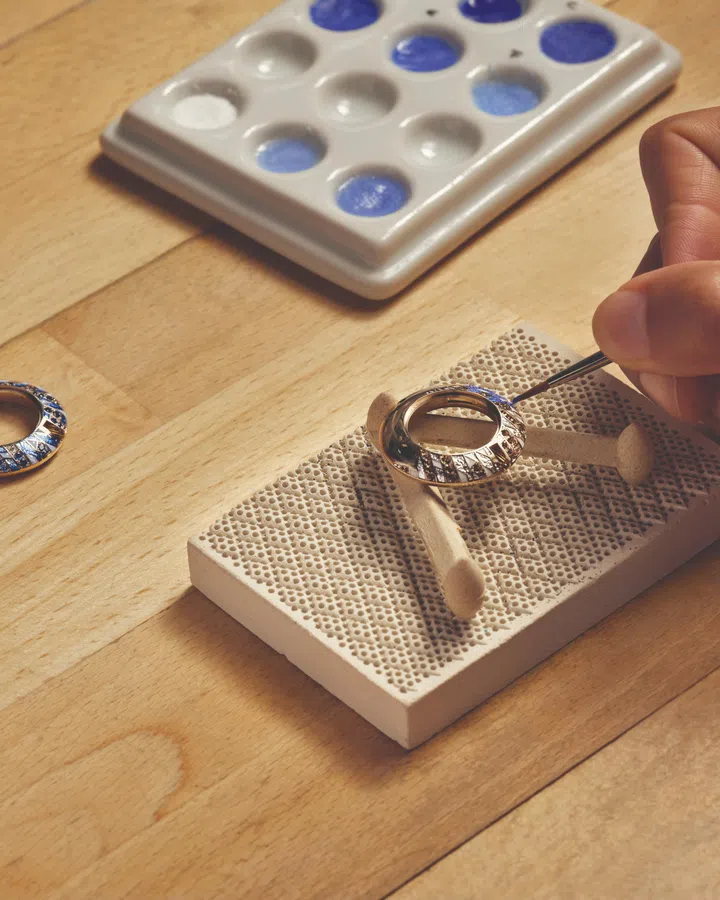
Delicate enamelling work is carried out by skilled artisans
On display at the workshops are materials and swatches from shades of gold to precious stones that serve as both a library reference and inspiration. The materials for the dials can even encompass unusual ones like straw and wood. We get hands-on with prototypes including a cushion-shaped, diamond-studded bracelet and a gold mesh glove with a Baignoire inset—the Clash [Un]Limited Baignoire Mitten Watch. The mesh is supple and drapes almost like a fabric when worn, highlighting the research and innovation that goes into making each creation not just exquisite but wearable.
It’s easy to see the inspiration behind some of Cartier’s most aesthetically innovative pieces, among them this year’s Myst de Cartier that launched a whole new shape unique to watchmaking. Says Pierre Raniero, Cartier’s director of image, style and heritage, “The new Myst de Cartier watch is all about volume and movement. Its design follows in the footsteps of the jewellery watches created under the direction of Jeanne Toussaint in the early 1930s—pieces that were both sculptural and flamboyant.”
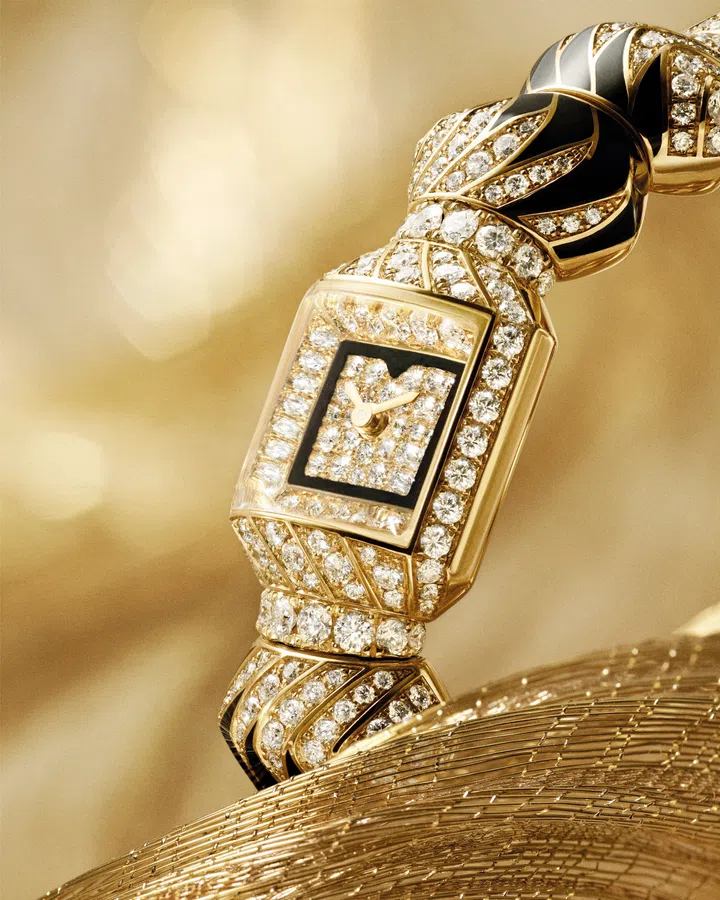
The new Myst de Cartier watch
Related article: The Best High Jewellery Collections Of 2026, From Boucheron To Chaumet
Here in the workshops of the Maison, we catch a glimpse of what went into this creation from the initial sketches, to a 3D wax model of the entire Myst bracelet, to the individual beads that make up the piece. Cartier’s jewellers use stones of different sizes to create a sense of perspective and volume when worn. In addition, the black lacquer that decorates the bracelet of the yellow gold version is hand-painted by an artisan. It takes hours of research and development to achieve something at this level of beauty and technicality. The result? Pure bejewelled poetry.
In the second part of our tour, we head to the manufacture located on the same site. Inside, we get a sense of the skill, specialisation and scale behind each Cartier manufacturing arm. While machines are used in some areas, much of the work from assembly to repair is done by hand. The manufacture also has a team of 20 toolmakers that create specialised tools designed by a dedicated tools department. There is another department just for watch hands that craft and heat them at exact temperatures to achieve the Maison’s signature blued-steel hands.
Restoration and repair is another area where Cartier excels, as a section of the manufacture is dedicated to reviving archival pieces that are flown in from all over the world. While each timepiece from Cartier holds special meaning for its wearer, the fact that the Maison so evidently treasures its own heritage—whether through its archival references or the passing down of specialised techniques—and has built an infrastructure to maintain and extend the longevity of this, is truly where its magic lies.