
Amber Chen Of Tanchen Studio On Expressing Intimacy Through The Art Of Weaving
Textile artist and co-founder of Tanchen Studio Amber Chen gives us an insight into her creative processes and her most recent collaboration with COS.

By Gracia Phang - published
This Lunar New Year, COS has tapped on Shanghai and Singapore-based textile artist Amber Chen to create a series of handwoven works that are currently displayed at selected stores in Beijing, Shenzhen, Malaysia, and Singapore. Chen is also the co-founder of the cult-favourite design collective Tanchen Studio, alongside Sanchia Tan, where textiles, manipulation of materials and tactility is at the core of their products and projects. Touted as an up-and-coming name in the art scene, Chen took up the challenge of creating her largest jacquard works yet while expressing intimacy through the process. Read on as we dig deeper into the artist’s mind.
Related article: Style Files: Garbo Zhu On Artistic Expression
Tell us about your collaboration with COS, and how it represents you as an artist.

My collaboration with COS is a continuation of my ongoing woven series, The Unwrapped-Wrapper, which explores the relationship between everyday experiences such as traditional food wrapping and the sensory impact of everyday life. The artwork details the transformation of textiles from 2D to 3D through jacquard weaving techniques that create intricate structures symbolic of togetherness.
I aim to express intimacy through colour, texture, layering, tactile experience and memory. Family, grief, healing and dependence form an inseparable whole.
The jacquard technique allows the warp threads to emerge in different positions, creating a varied woven structure that results in a rich play of light and shade. Drawn from the auspicious palette of the collection, the series evoke the joyous spirit and deep symbolism of the Lunar New Year.
This collaboration with COS is a true reflection of my artistic philosophy; honouring tradition while constantly reinterpreting it for the present moment. It’s an amazing platform to bring that vision to life in a way that feels authentic and deeply personal.
What are some challenges you faced while working on this project? How has it enriched you as an artist or as a person?

One of the key hurdles was creating a large-scale single repeat jacquard piece for the first time. Jacquard weaving requires immense precision, and scaling up adds another layer of complexity. Luckily, I managed to find a Shanghai local factory with the jacquard loom I needed. Working with a factory also presented its own set of challenges: from aligning artistic vision with their technical processes to ensuring the intricacy of the designs, it took time and effort to find a rhythm that worked for both sides. Multiple rounds of testing were essential to get everything just right.
After the weaving process, finishing the pieces became a critical step—hand stitching the jacquard pieces onto a backing fabric to secure the volume and overall shape, and ensuring the forms stayed consistent after shipping from my Shanghai studio to all four venues: Beijing, Shenzhen, Malaysia, and Singapore.
Each step (testing, sourcing, weaving, and finishing) was time-intensive, and with the project coinciding with the Christmas and end-of-year rush, every moment counted. Despite this, I stayed committed to delivering work that met both with my standards and COS’ vision.
Through this journey, I’ve grown not only as an artist but also as a problem solver. It taught me the value of patience, adaptability, and effective communication. I’ve gained a deeper appreciation for the collaborative nature of large-scale projects and the importance of meticulous planning.
What was the highlight of this project?

It was definitely the opportunity to weave a jacquard piece on a much larger scale that I had ever done before. Typically, my woven works are smaller, more intimate pieces, so being able to create something that allowed for the richness of colour, layers, textures and structures to really come to life in a grand format was incredibly exciting.
Related article: A Fashionable Life: Inside Andre Wu’s Art-Filled Sanctuary
Tell us about Tanchen Studio, and what it represents. What made you want to start Tanchen Studio, alongside Sanchia Tan?

Co-founders of Tanchen Studio, Sanchia Tan and Amber Chen
Tanchen Studio is a design studio that takes textiles as our central element. Through experimentation, we create functional textiles for both use and display. Our explorations typically combine traditional weaving techniques with novel materials, through the definitions of “traditional” and “novel” are always up for debate.
At the heart of it, we research, develop, and design with the intention of showcasing the beauty of materials—any and all materials—in an honest, playful, and approachable way. We treat all our products and commissions as part of an ongoing iterative process, constantly searching for techniques to leverage a material’s best qualities.
The motivation for starting Tanchen was to center weaving as the main practice in our lives, but we also wanted the freedom to explore our interests. The only way we could see this happening was to start our own independent design studio, almost as a sort of laboratory where we could just play around with ideas, and engage in research and dialogue with one another.
What was the first project you and Sanchia worked on together?
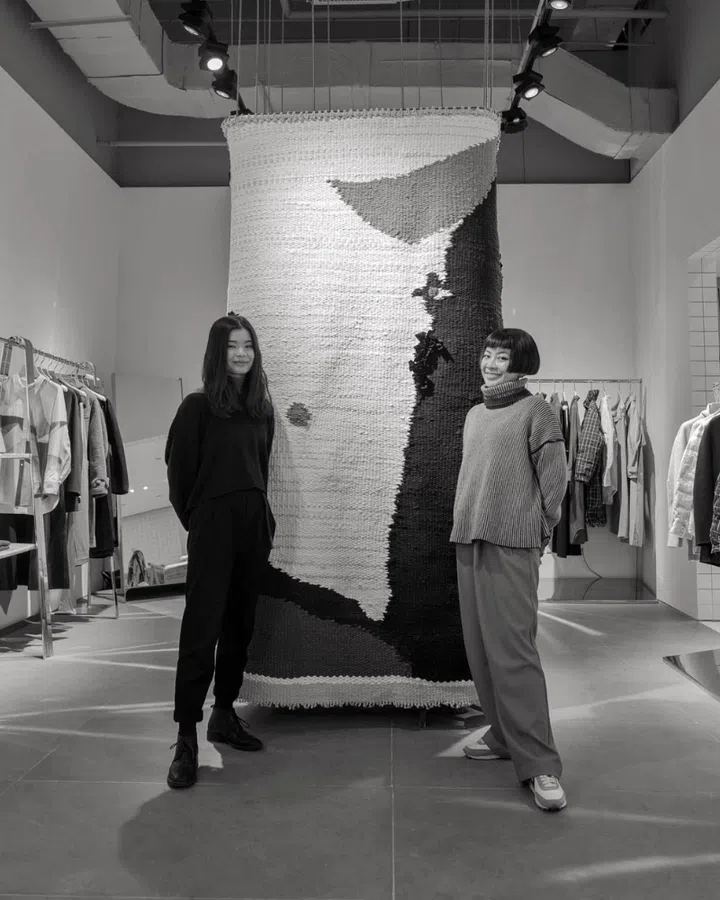
Our first commission was to create a woven tapestry for WHM’s flagship store in Beijing at the end of 2019. Made out of 100kg of their deadstock fabric, the piece doubled up as a changing room while being a visual and tactile point of interest in the space.
Tanchen Studio has a wide range of products and collaborations thus far. Is there one product that you’d say best represents the brand, or is your personal favourite? Why?
In 2023, we were selected to create an art installation for GREEN-HOUSE, using upcycled scrap materials from Mercedes-Benz and returned furniture from Castlery. This was a really fun learning opportunity for us, because many of the materials were different from what we’re used to working with, and it was one of the biggest showcases we’ve done.
Related article: Singaporean Artist Sarah Choo Jing Explores Femininity And Humanity With Valentino-Commissioned ‘Gestures Of Affection’
What is your relationship with fashion like?
My relationship with fashion runs deep and has shaped both my aesthetic sensibilities and the way I approach materiality and detail in art. I studied fashion design at Raffles Design Institute Singapore before moving to London to attend Central Saint Martins, a school renowned for producing some of the most groundbreaking designers in the fashion world. The environment there was incredibly inspiring—it exposed me to unconventional approaches, innovative materials, and an experimental mindset that challenged traditional boundaries.
Fashion has definitely influenced my understanding of aesthetics; how textures, colours, and forms can come together to evoke emotion and narrative. I find that fashion and woven art share a common thread when it comes to creating something both visually striking and tactile. The exploration of material, the fine attention to detail, and the emphasis on craftsmanship in fashion resonate strongly with my work as a textile artist.
What I’ve learned from fashion is the importance of combining functionality with creativity. In both my woven works and in fashion design, it’s about more than just the visual impart; its about how the materials interact with the wearer or viewer, how they feel and how they speak to the individual. The influence of fashion has helped me refine my ability to layer textures and play with structural elements in ways that make my pieces feel multidimensional and alive.
Who are some designers and artist you look up to, and why?
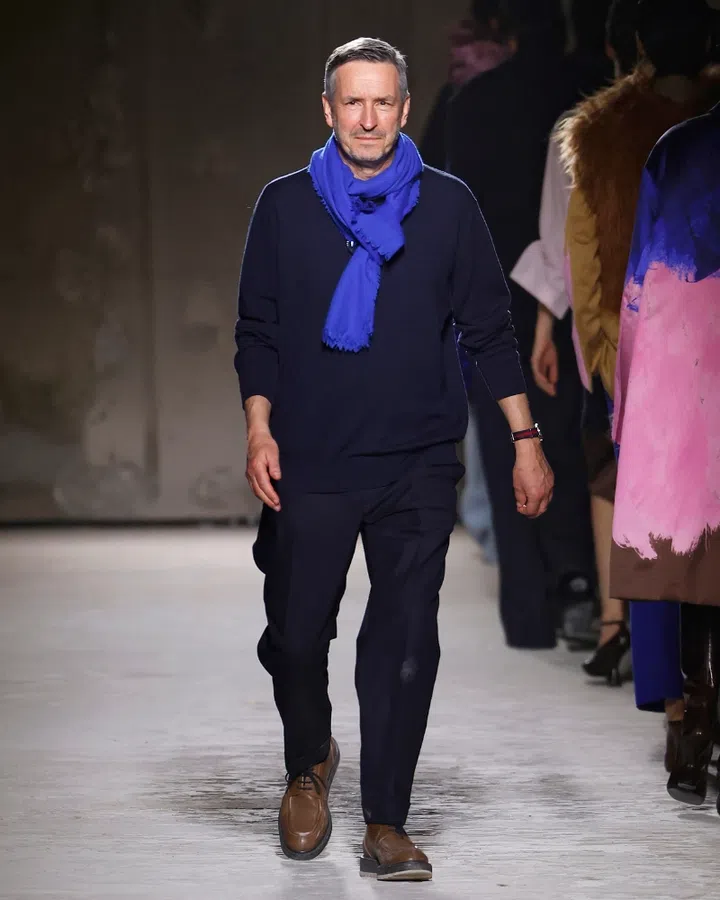
Belgian fashion designer, Dries Van Noten
Dries Van Noten is at the top of my list. His mastery of colours and textures is unparalleled. I’m always struck by how he effortlessly combines bold, unexpected hues and intricate patterns to create such a rich, almost tactile experience in his collections.
I also deeply respect the work of Too Good, a design duo known for their focus on timeless, functional pieces. Their minimalist approach transcends trends, and they create objects and fashion pieces that feel enduring and throughful.
Both of these designers share a commitment to quality and uniqueness, whether through bold experimentation or quiet simplicity, and their work resonates with me on a very personal level.
Describe your personal style in three words.
Timeless, eclectic, and textured.
2025 has just begun. What are you most excited about this year? Any projects we can look forward to?
2025 is shaping up to be an incredibly exciting year! For design, Tanchen Studio is exploring some new territories. We recently went on a material sourcing trip, and it was already such an inspiring experience. I can’t wait to see where this exploration takes us and how we can push the boundaries of design even further.
On the art side, there are several installation projects lined up, which I’m really looking forward to. Each of them brings a unique challenge, and I’m excited to see how they’ll come together. 2025 is a year of experimentation, new discoveries, and stepping into something exciting, uncharted territories!