
How Rolex Continues To Safeguard Marine Life In Nusa Penida
With the Rolex Perpetual Planet Initiative, the watchmaker is on a mission to safeguard our most precious resources, including the Nusa Penida Marine Protected Area in Indonesia.
By Renée Batchelor - published
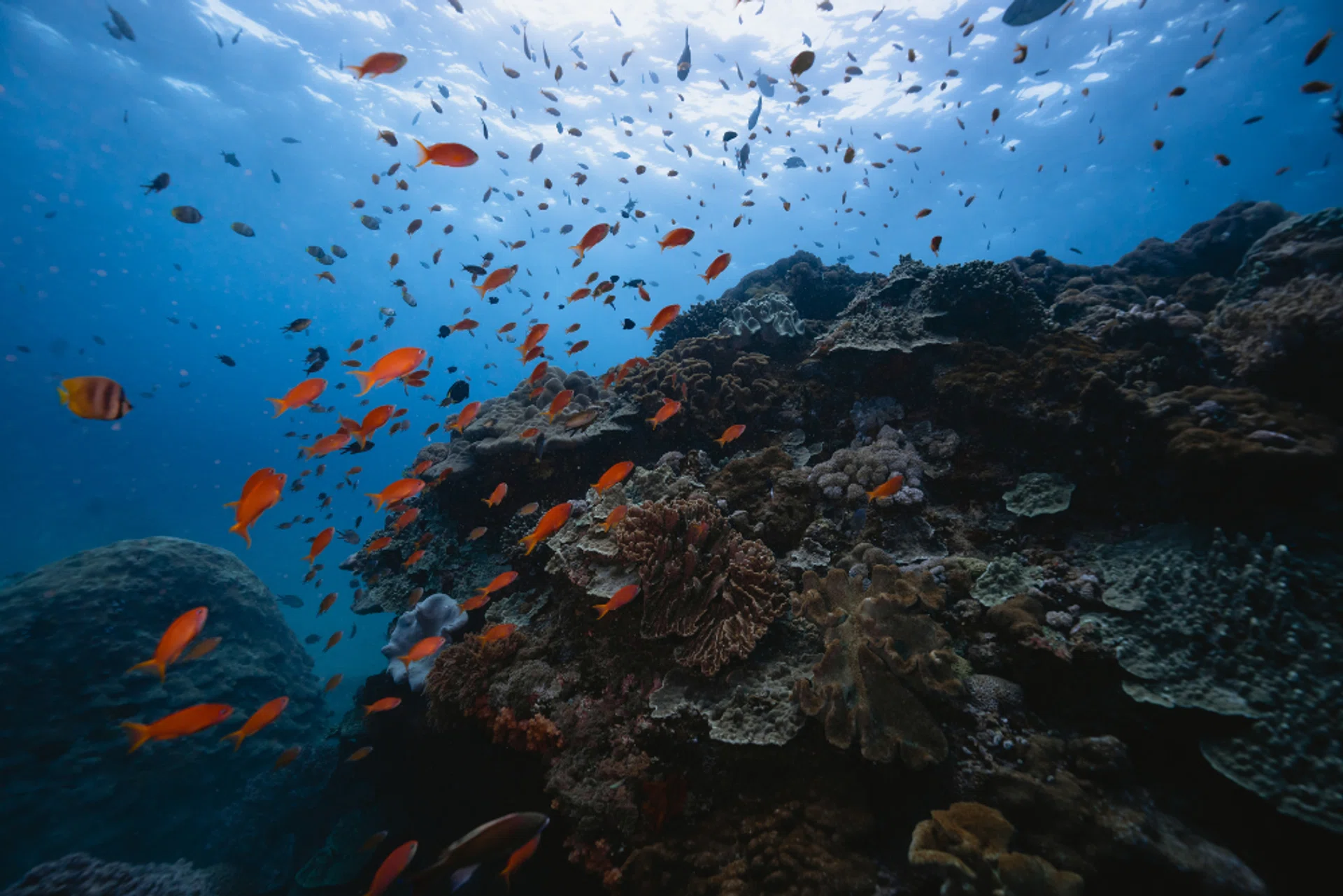
The ocean is one of the most diverse environments on our planet and host to a dizzying array of marine species. Some of the most beautiful oceanic spots in the world lie quite close to our little red dot. Like Nusa Penida, an island near Bali. The Nusa Penida Marine Protected Area (MPA), is an underwater landscape that hosts around 570 species of reef fish, including manta rays and the ocean sunfish, as well as turtles. Nusa Penida is also home to over 300 species of coral—a number that represents over 76 percent of all known coral species in the world. This tourism and ecology hotspot is one that needs to be protected.
Related article: Art Meets Style Meets The Sea At This Hotel In Barcelona
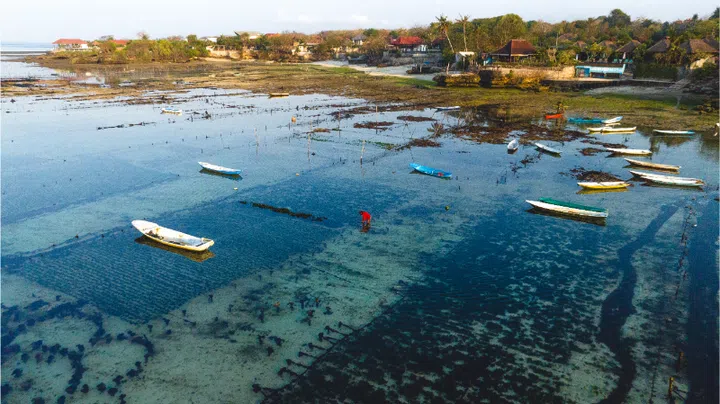
A seaweed farmer works within the Satya Posana Nusa seaweed cultivation area.
It’s unsurprising that hundreds of thousands of visitors flock to the Nusa Penida MPA each year to dive alongside marine life and to capture their stunning beauty on film. Thanks to the ongoing efforts to preserve this environment, the area has been designated a Mission Blue Hope Spot since 2020, and supported by the Rolex Perpetual Planet Initiative alongside its partner Mission Blue.
The Champions of this cause are marine ecologist Rili Djohani and Wira Sanjaya, who work together with the Indonesian people to help maintain the delicate balance between ecology, culture and the economy while ensuring the protection of the local marine ecosystems. Their work is so inspiring as it is a successful case study of how ocean conservation can exist in harmony with local communities and tourism.
Related article: Anantara Mai Khao: Enjoy The Fashion, Sun And Sea, And The Possibility Of A Mojito With Lalisa
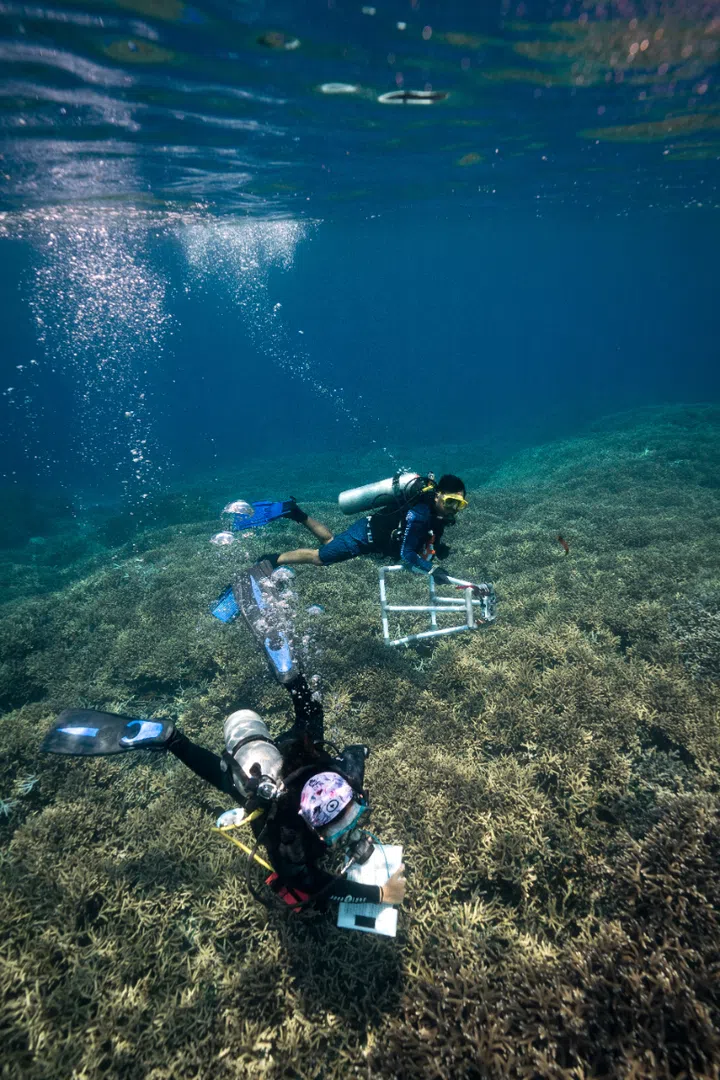
Coral Triangle Center (CTC) team members Tabitha Rudang and Evi Nurul Ihsan diving to monitor the health of coral reefs off the coast of Nusa Lembongan in the Nusa Penida MPA.
For Djohani, the Indonesian waters continue to awe and inspire her. “I’ve dived all over Indonesia, and am always amazed by the beauty under water, the sheer diversity of the corals, the colours, the reef fish, the iconic species; it’s just mind blowing. I realised this is where I belong,” she says.
Thanks in part to her efforts, the MPA was established by Ministerial Decree in 2014. Spanning 20,057 hectares, the area surrounds the Balinese islands of Nusa Penida, Nusa Lembongan, and Nusa Ceningan. Rolex and Mission Blue support the initiative’s Champions Djohani and Sanjaya to spread awareness of the MPA and help the Indonesian government in their goal to protect 30 percent of their waters—around 97.5 million hectares.
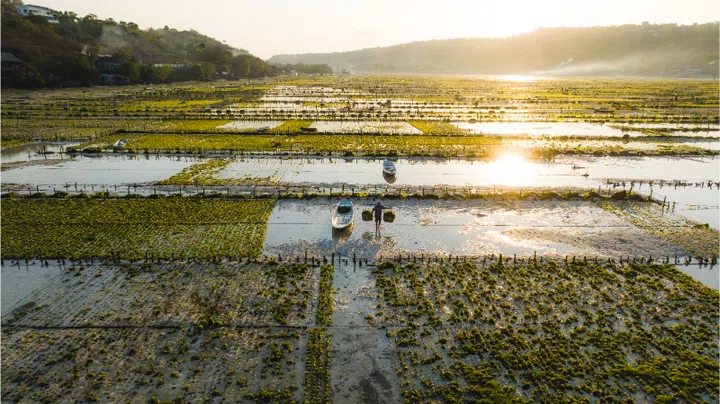
A seaweed farmer carries baskets of harvest.
Djohani’s foundation, the Coral Triangle Center (CTC), works with the Indonesian government and local communities to carve out the MPA into zones that are designated for various purposes including tourism, seaweed farming, fishing, and even as sacred grounds.
Besides marine life, 48,000 residents are also dependent on the marine ecosystems for their livelihoods. Understanding this, the mission of CTC is to ensure that the local population in these three islands are able to live sustainably and support themselves, so that they would in turn, have an incentive and passion to become true guardians of the sea. Besides this key purpose, the CTC also runs outreach activities and carries out conservation training.
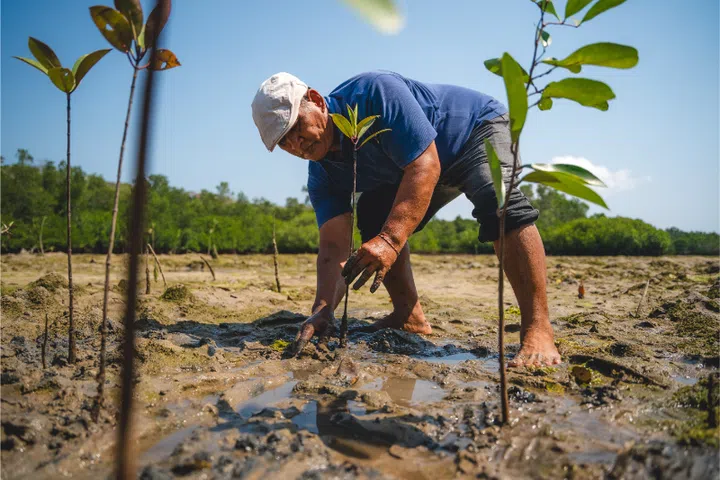
Marine protected area conservation staff member, I Wayan Suwarbawa planting mangroves as part of CTC’s massive mangrove reforestation effort.
The work in the MPA is never done, and today Djohani and Sanjaya’s ongoing project is rehabilitating the mangrove forests, which were cut down for timber. Through education programmes, the CTC has been encouraging communities to help the mangroves thrive again in order to help local biodiversity flourish and protect against rising sea levels. There has been a massive reforestation effort, with the planting of more than 10,000 seedlings.
Related article: This Sustainable Restaurant In Dempsey Hill Is A Breath Of Fresh Air
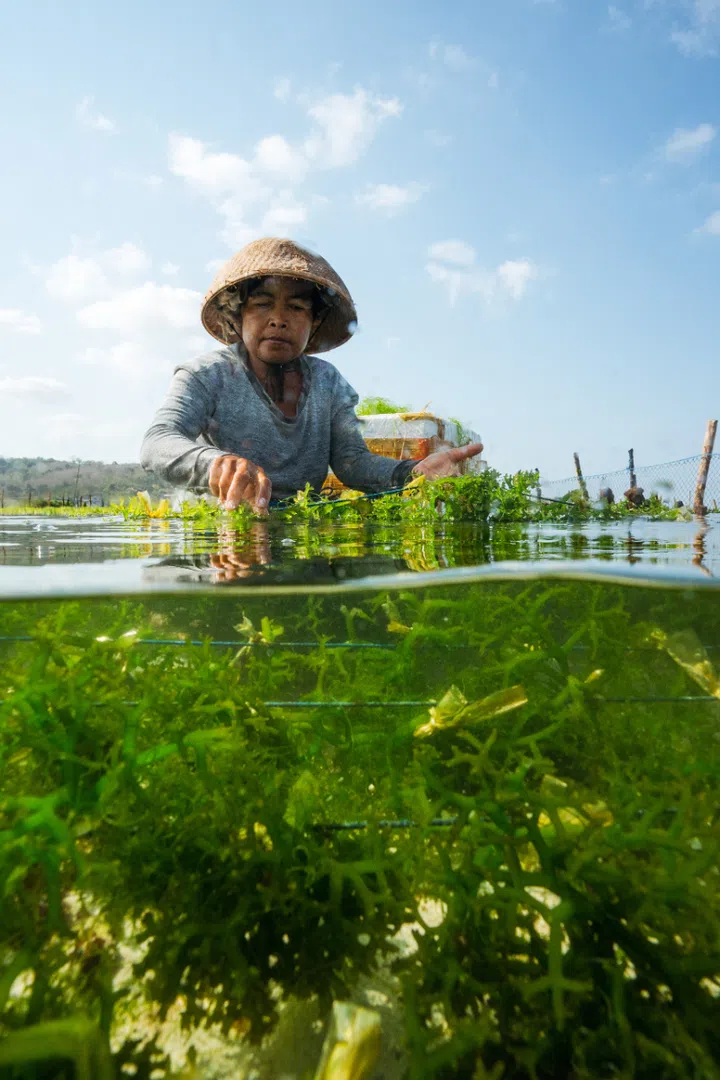
Seaweed farmer Ni Nyoman Seruni harvesting seaweed at the Satya Posana Nusa cultivation area on Nusa Lembongan, Indonesia.
The youths of the island have also been engaged to restore the area’s coral reefs—a vital resource because of its exceptional biodiversity and resilience against climate change and warming waters. The programme has installed more than 400 linked structures directly onto the ocean floor. These act as a support bed upon which new corals can grow. In addition, more than 6,000 corals have been transplanted to help in their renewal, an important point as corals act as the “lungs of the sea” according to Djohani.
Lastly, the CTC team understands the importance of entwining conservation with local culture. Using wayang kulit (shadow puppetry) they have created an ocean-themed performance using well-crafted puppets, showing how an age-old traditional art can be used to engage in contemporary issues. “We perform a lot on the issue of marine pollution and plastics. It really engages the local communities, adults and children alike, to think and talk about what they can contribute towards finding a solution for this problem,” says Djohani.