
Rattan Artisan Ng Si Ying On Preserving Traditional Techniques, Exploring New Possibilities, And More
Ng reimagines rattan through a contemporary lens where tradition, tactility and time converge in a deliberate return to the handmade.
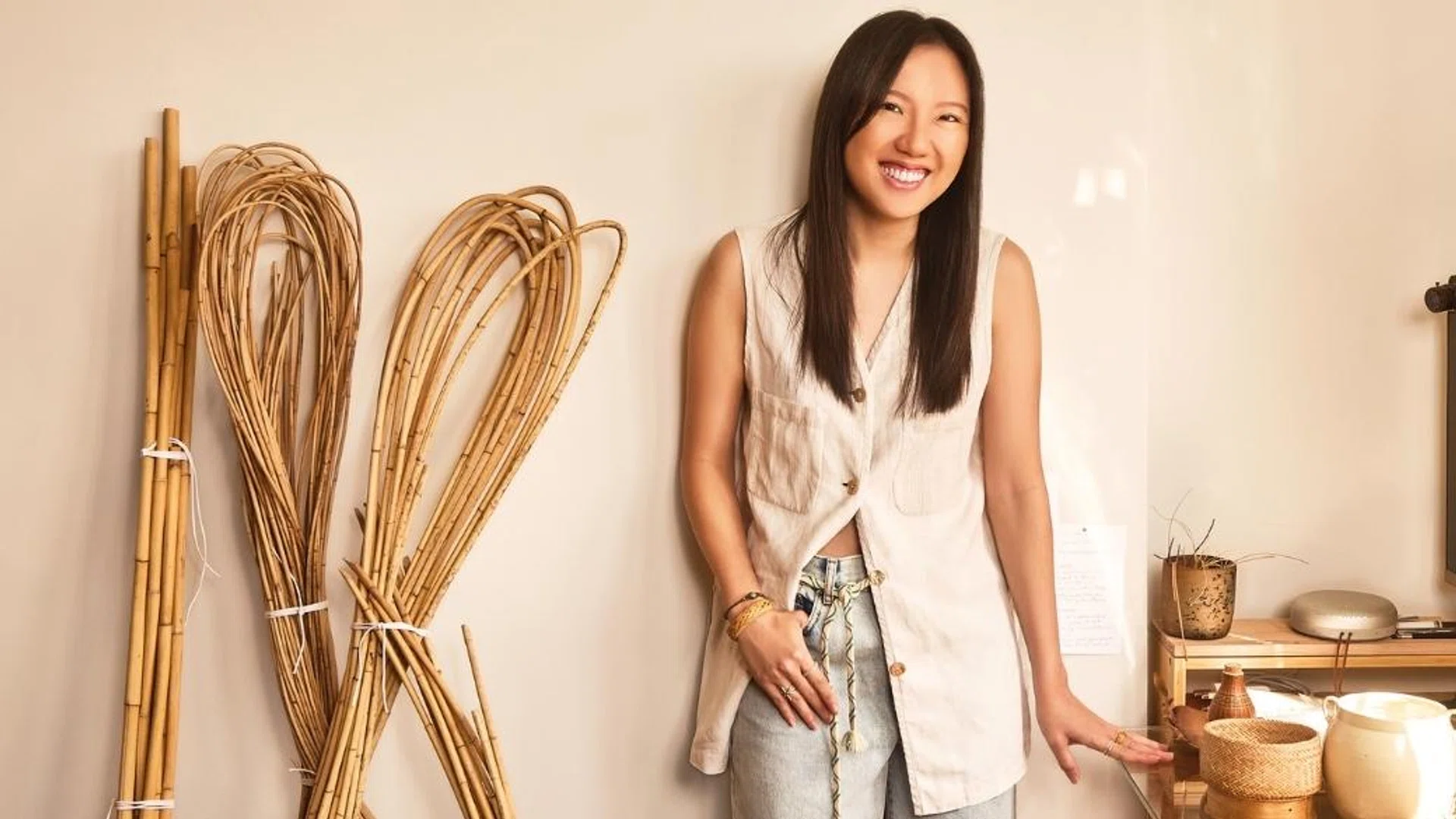
By Larissa Wong - published
In the age of seamless automation and advanced technology, artisan Ng Si Ying, also known as @atinymaker on Instagram, turns to a craft rooted in time, touch and tradition. Working with rattan as her primary medium, and with the help of digital tools, she treats weaving not just as preservation of a timeless craft, but also as a possibility—where inherited techniques evolve through pure instinct, curiosity and experimentation. Each piece she creates surpasses her original vision, tweaked and shaped by flashes of inspiration and the excitement of discovery. In an increasingly hyper-digital world, Ng believes that beauty can still be found in slowness and the enduring language of the handmade.
Read on to learn more about Ng’s creative processes, the endless possibilities of the medium and what the traditional craft looks like in a modern context.
Related article: A Fashionable Life: Inside Tanchen Studio’s Inviting And Serene Store Filled With Handcrafted Objects
Walk us through your creative process—from first spark to the final result.
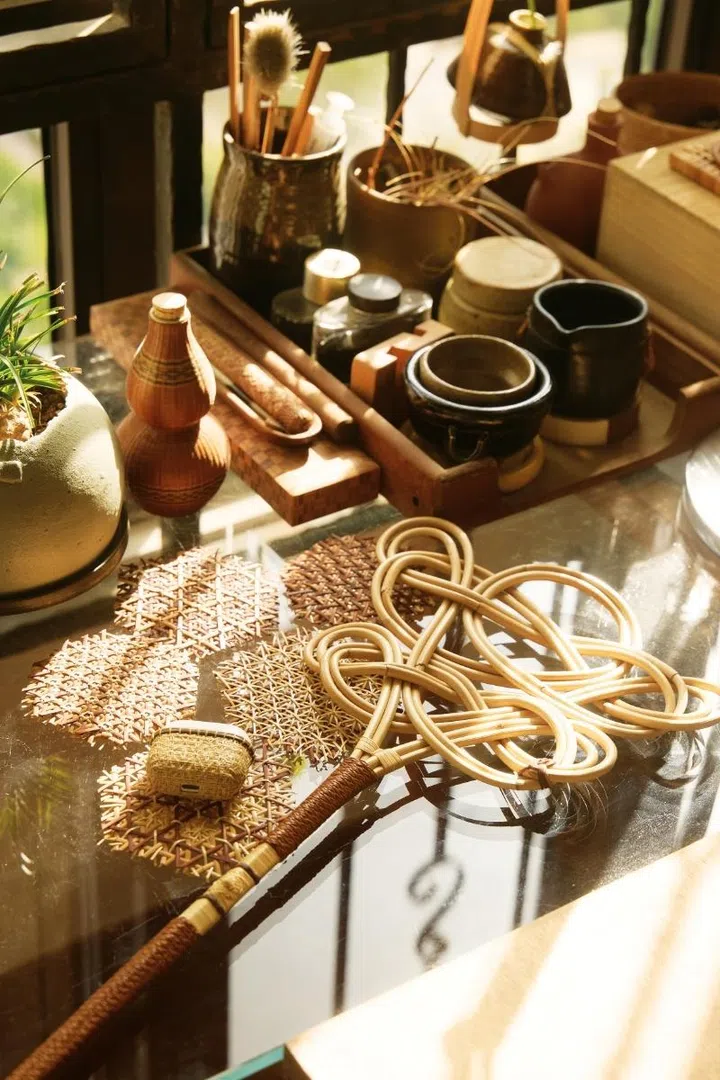
Various weave pattern swatches and one of Ng’s favourite projects, a woven Airpod case.
I try to plan as much as I can before starting each work, but more often than not, it evolves into something unplanned. There is always a messy in-between that’s difficult to articulate, but it’s also the most rewarding part of the process. I approach each piece as a way of learning something new or attempting something I haven’t done before. Because of that, the process is often filled with pauses, contemplation, procrastination, and doubt—but also play, iteration and moments of discovery.
Are there any particular rituals or routines that help you get into a creative state of flow?
I haven’t consciously developed any rituals, but I’ve realised that much of the process happens in my head before I even begin. There’s a kind of “weaving” that takes place throughout the day while walking, commuting, or even in the shower. By the time I sit down to work, the piece has already gone through several quiet iterations.
Who or what shaped your early understanding of and passion for art and creativity?
I don’t think there was a single defining moment, but rather a gradual way of seeing and making. The people I’ve met along the way—teachers, master weavers, and fellow makers—have shaped how I approach craft, with patience, humility, and respect for process.
What drew you to rattan weaving, and how did your journey with this craft begin?
My relationship with rattan began quite coincidentally. I came across it while visiting a rattan shop with a friend, and something about it drew me in. I wasn’t sure why I felt so compelled to learn it at the time, but I was turned away when I first asked. I returned a few more times before I was finally accepted. That became my first real encounter with rattan, and the beginning of everything that followed.
How do you balance staying true to traditional methods, while evolving as a contemporary artist?
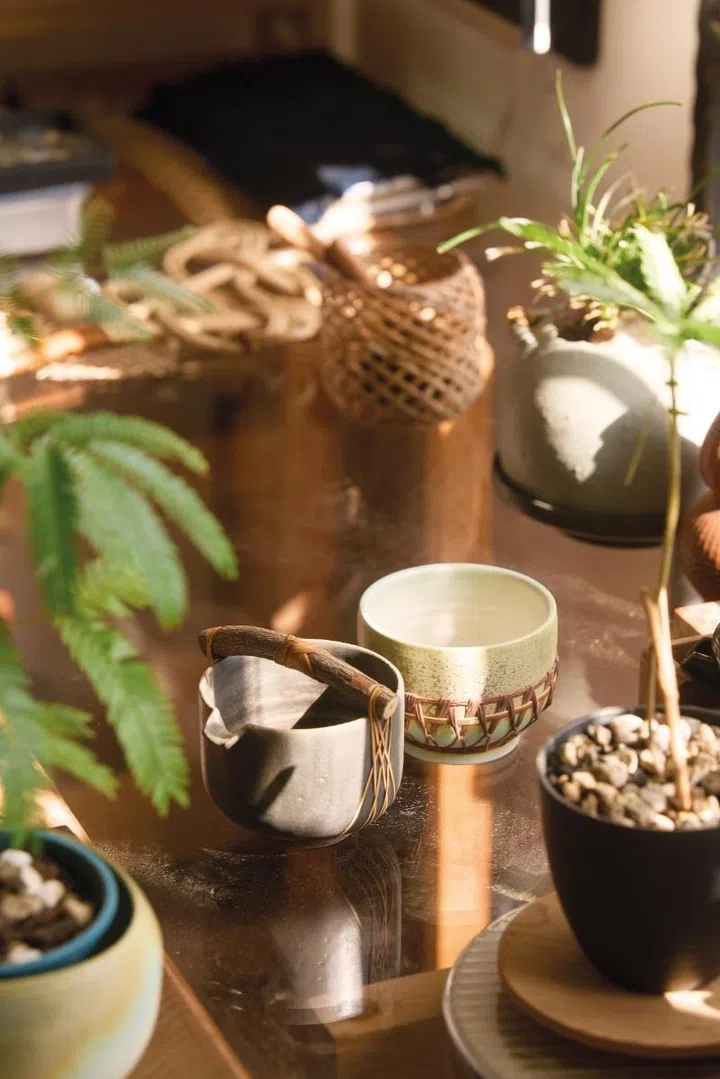
Her own creations: a pair of Chinese ceramic teacups, one with a woven handle and the other with a decorative wrap.
I think tradition gives us a foundation, but it doesn’t confine what we can do. How we live today inevitably shapes what we create and vice versa. At the same time, traditional knowledge holds a depth of understanding that comes from years of refinement. For me, it’s about learning from these methods and allowing them to guide new possibilities.
Related article: “I Find Great Joy In Giving Books New Life”: Loewe Foundation Craft Prize 2026 Finalist Adelene Koh On The Art Of Bookbinding
What is it about this medium that continues to inspire you?
Its possibilities feel endless. The more I work with rattan, the more I realise how much I don’t know, and how much more there is to learn.
How have you evolved as an artist over the years?
I began by restoring rattan chair seats, learning the basics through repetition and repair. Over time, I picked up different weaving techniques through books, videos, and learning trips. Each piece I make is something I’ve never done before, so every work marks a point of growth. It’s been less about reaching a final style, and more about deepening my understanding of the material and what it can become.
Is there a piece you’ve created that feels especially meaningful to you?
Each piece feels meaningful in its own way, as it represents something I was trying to understand at that point in time. I think the AirPods case stands out to many people because it’s an unexpected pairing, combining a traditional material with a contemporary object. Perhaps it also reflects a little on how I approach my work: exploring how rattan can exist in today’s context.
What does rattan weaving look like in a modern context?
To me, rattan in a modern context is less about a fixed form, and more about its potential. It’s a material that can move beyond its traditional uses while still carrying its history. I’m interested in how it can adapt to the way we live today, and how it might shape how we live tomorrow.
Your work is tactile and very hands-on. Does the act of weaving become a form of mindfulness or escape for you?
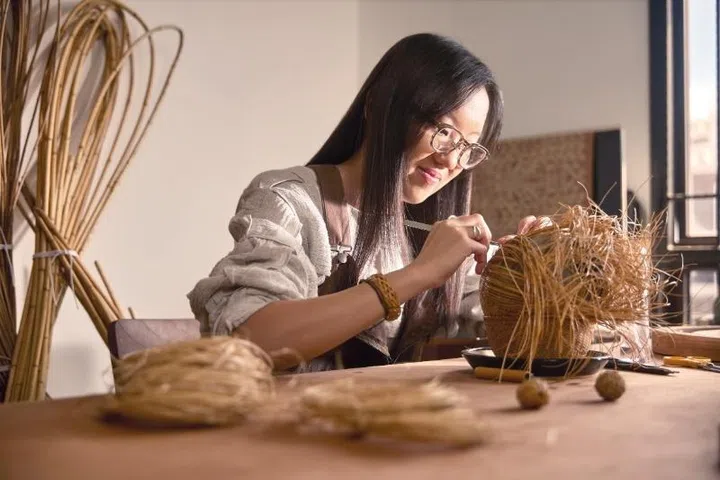
Ng Si Ying weaves an intricate pattern onto a ceramic vase.
It feels quite liberating, as rattan allows me to explore freely within the possibilities of the material. There’s a rhythm to it, and a kind of focus that comes with working by hand. At the same time, it’s not really about escape, but about being fully present in the process.
Related article: Artist Alicia Chow Kirwan On Creating Sustainable Art And Honouring Slowness
In an increasingly hyper-digital world, do you see artisanal handwork like rattan weaving as an antidote or a statement?
I see them as complementary rather than opposing. I use digital tools to plan and test ideas, just as I rely on handwork to realise them. It’s less about choosing one over the other and more about using the right tools for what I want to achieve.
What do you hope people feel or take away when they encounter your work?
More than anything, I hope it invites a sense of curiosity: to look closer, to understand how it’s made, and to imagine what it can become beyond what we already know.