
Why Some People Seem Luckier Than Others, According To Science And Feng Shui
What if luck is not random, but shaped by how you think, behave, and respond to life?
By Arissa Ha - published
Luck is often spoken of as if arriving without warning. It is something that happens to you, not something you take part in. Yet when we asked psychologists and a feng shui practitioner to define luck, a different picture emerged. One that has less to do with fate or fortune, and more to do with how we respond to what life places in front of us in order to create luck.
Psychologist and author of The Luck Factor, Richard Wiseman, suggests that people who describe themselves as lucky are not experiencing fewer setbacks or more favourable circumstances. Instead, they behave differently. They notice more, recover faster, and remain open when things do not go according to plan.
Related article: Chinese Zodiac 2026 Predictions: What Will The Year Of The Fire Horse Bring?
Luck Begins With Interpretation

When people label themselves as lucky or unlucky, the distinction is rarely about what happens to them. As Sara-Ann Lee, clinical psychologist at The Psychology Practice, explains, “These labels do not necessarily reflect the objective characteristics of these events, but rather, primarily reflect how events are perceived, interpreted and given meaning.”
Individuals who see themselves as lucky tend to interpret outcomes as manageable and influenced by their own actions, viewing setbacks as temporary or modifiable. Those who feel unlucky often interpret similar events as pervasive, enduring, or beyond their control. Over time, this difference in interpretation shapes emotional response and future behaviour, reinforcing the belief itself.
Behaviour Creates Exposure

Clinically, luck is better understood not as chance, but as the by-product of engagement. While chance cannot be eliminated, outcomes are shaped by how people respond to uncertainty, risk and setback. Ooi Sze Jin, founder and psychologist at A Kind Place, puts it plainly: “Luck is largely a pattern of thoughts and behaviours. Opportunities exist all around us. Whether we notice them and whether we’re open to letting them into our lives determines whether we ‘create’ luck or not.”
People who feel lucky tend to be more socially engaged and receptive to unfamiliar situations. They are not necessarily chasing opportunity, but they are present enough to recognise it. Those who feel unlucky often narrow their focus, becoming overly fixated on a single desired outcome, which can cause them to miss alternative paths unfolding around them.
This closely mirrors Wiseman’s findings that lucky people maximise chance opportunities, trust intuition, expect good fortune and reframe misfortune. Not because they assume everything will work out, but because they continue to participate even when it might not.
Related article: Faye Peraya Is On A Winning Streak
When Stress Makes Luck Disappear

High levels of anxiety and mental overload narrow attention towards perceived threats and mistakes, making people more likely to notice what goes wrong and overlook what goes right. Under stress, cognition, memory and decision- making all suffer.
Ooi describes how everyday stress can spiral into a narrative of bad luck, because the mind is primed to scan for confirmation. Anticipating failure often leads to avoidance and early disengagement, reinforcing the belief that things never go one’s way. Expecting success, by contrast, encourages confidence and persistence, increasing the likelihood of a favourable outcome.
Luck, As Viewed Through Feng Shui
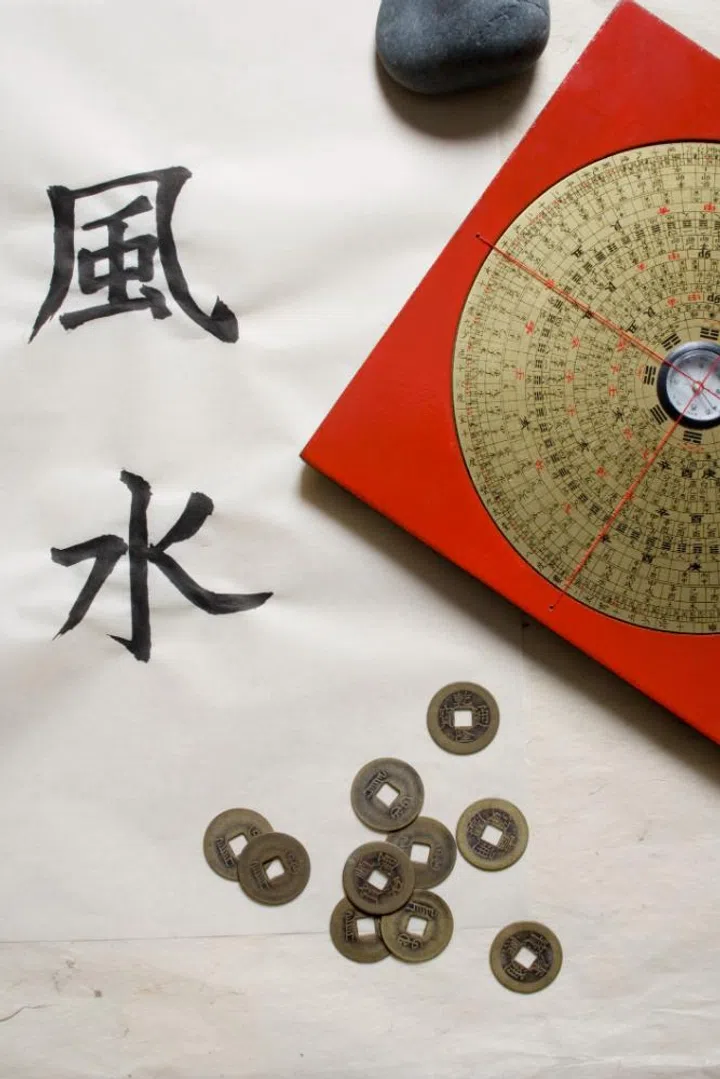
This behavioural understanding of luck finds a parallel in the views of Sean Chan, principal consultant at Sean Chan Chinese Metaphysics Consulting Group, whose approach challenges popular assumptions about feng shui and fortune.
For Chan, the Western notion of luck is fundamentally misaligned with Chinese metaphysics (or what we commonly refer to as feng shui) . “‘Luck’ implies that a random, positive, arbitrary event happens to you and it happens out of nowhere. The ‘yun’ (运) we speak of in Chinese astrology is better described as ‘thought-and-action’.”
He distinguishes between destiny (命运) and agency, explaining that while certain aspects of life are fixed, how one responds to them is not. “命(ming) is the cards you’re dealt with, and 运 is how you choose to play it and it is the part you can control.”
What about lucky charms or trinkets? “I personally don’t believe in their efficacy at all. The only credit I give to such items is that they gives a very short, temporary psychological boost.” Any perceived power, he argues, is projected by the mind rather than inherent in objects. What truly influences fortune is intention followed by action.
Setbacks, in his view, are not signs of bad luck but natural cycles. “Setbacks are like our personal winters. If we slow down, prepare and survive them; we will always emerge stronger and happier when spring comes.” This echoes psychological understandings of resilience, where faster recovery allows for more attempts, and more attempts increase the likelihood of success.
Luck as Readiness, not Reward
Across psychology and metaphysics, a shared conclusion emerges. Luck is not something to be summoned, worn or purchased. It is cultivated through awareness, emotional regulation, openness, and sustained engagement with life.
Lee cautions against dismissing luck entirely as a concept, noting that it can create space for uncertainty that feels open rather than threatening. When held alongside agency, luck allows for hope and curiosity without undermining responsibility.
Luck, then, is less a force that acts upon us than a lens through which we move, shaped daily by what we notice and how we respond. Or, as Chan distills it simply, “If you can remind yourself to be grateful every day, you’d be well on your way to creating good luck.”