
Inside the Monk Mode Movement Changing How Men Live
In a world of chaos, some men are turning to this social media-fuelled trend as a form of peace. But is monk mode healing or hiding?
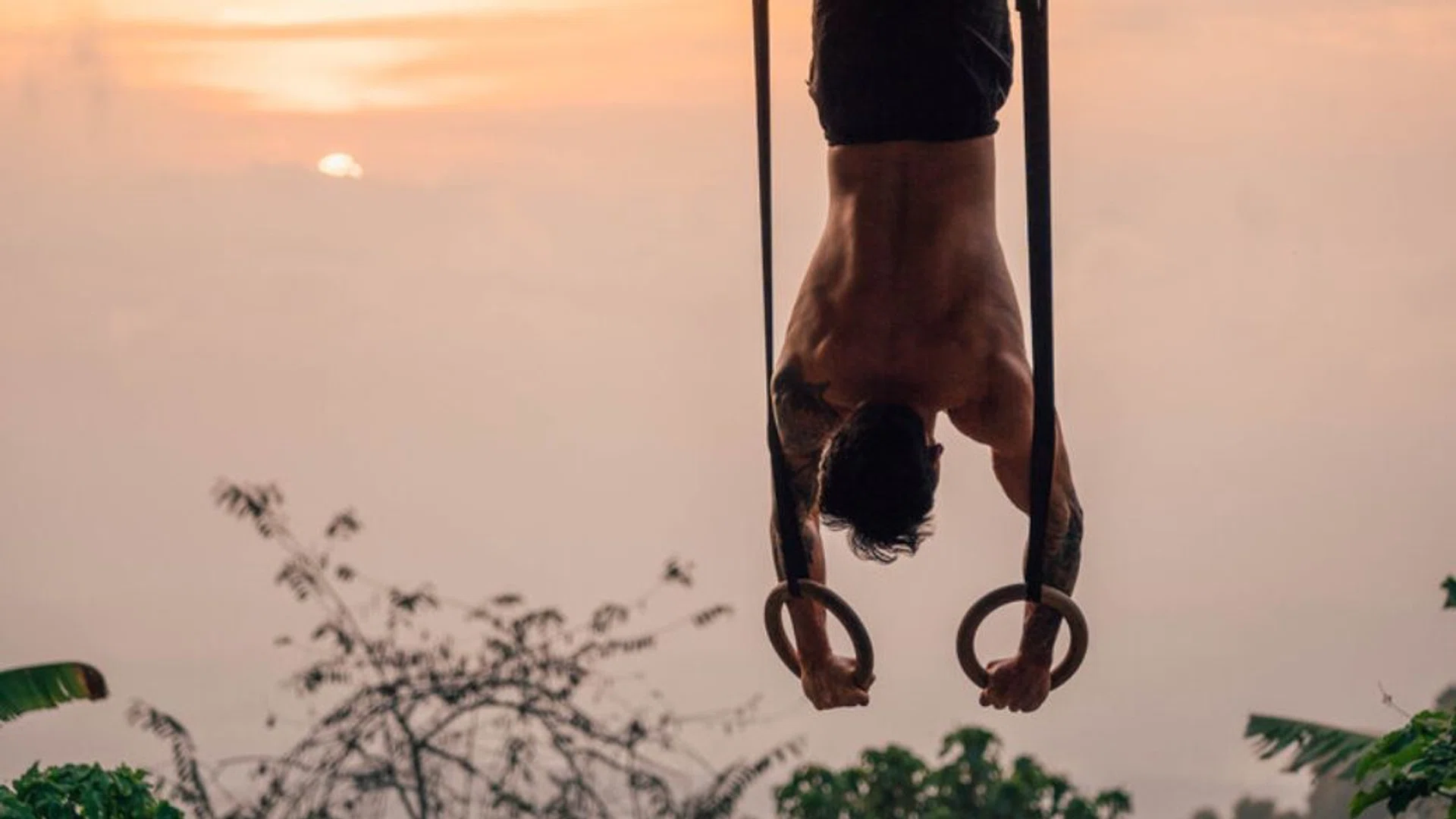
By Aaron Kok - published
There’s a certain kind of man who keeps his life on a leash. He wakes before sunrise, eats with intention, dresses in a strict palette of black, grey and beige. His home is bare. His habits are tight. His goals are non-negotiable. Online, he’s part of a swelling movement that calls this way of living “monk mode”.
Defined by abstinence and driven by optimisation, monk mode has transcended its early existence on social media as a fleeting lifestyle trend, and become something of a personal operating system for a new age of men. Dating, alcohol and idle scrolling are now replaced by gym, goals, and a voluntarily austere lifestyle. What began in the corners of Reddit has become a full-blown aesthetic, amplified by TikToks, YouTube vlogs, and a culture increasingly obsessed with control. But beneath its clean lines and cold plunges lies something more fragile: a state of masculinity in search of meaning.
“I first came across monk mode during the pandemic, when I felt stuck in life,” shares content creator Tommy Park, who has spoken about the movement on his social channels. “It gave me a way to reclaim control over my time and energy, and channel it towards goals that mattered.” For Park, monk mode was never about punishment; it was about clarity. “In our world, it’s never been easier to succeed, but also never easier to be distracted,” he explains. “Removing the noise allowed me to focus.”
Related article: When Did Streetwear Get So Grown Up?
Rewriting the Status Quo
If monk mode once existed as a temporary detox, it has now crystallised into something more permanent, albeit more performative at times as well. Across TikTok and YouTube, it’s easy to find creators documenting their monastic regimens with an outspoken sense of pride: the absence of pleasure dressed up as purpose, where abstinence becomes a badge, and discipline is enmeshed with a new identity.
The monk mode lifestyle doesn’t operate in isolation. Instead, it builds on decades of male conditioning that equates worth with output. In that sense, it’s a rebranding of “bro culture”, just dressed in new gym clothes. And it’s no surprise that the same audience who once lionised hustle culture and gym gains have shifted their gaze to monk mode. The packaging has changed, but the message remains the same: control yourself before the world controls you.
“There’s a part of me that understands the appeal,” says Nathan McCallum, a creator whose appearance and physique has often been held up as the male ideal. “I started working out because I loved ’90s action heroes. But I’ve never done it to prove I’m more of a man. The problem is when people take your image and use it as evidence for a version of masculinity you don’t subscribe to.”
Despite his V-shaped back and heavy-lifting frame, McCallum has always taken a more expansive view. In reality, he’s just as comfortable talking about the nail polish that he wears—he shows me his neon pink and yellow nails over our Zoom chat—as he is about bench pressing tips. He wears his softness with the same ease as his strength. “We need to break away from this idea that being a man is about being the toughest or the most stoic,” he says. “It’s about being able to express who you are and not needing permission to do it.”

The content creator Noah presents a balanced view of masculine wellness, often sharing his thoughts on gym routines as well as tips on mental health and positive ways of embracing masculinity.
That sentiment is echoed by fellow creator and mononymously-known Noah, whose own feed offers a gentle counterpoint to monk mode’s harder edges. “There’s nothing wrong with wanting discipline,” he says. “But monk mode often becomes about adopting an identity, instead of doing the deeper work of asking: what do I actually want for myself?”
Noah is no stranger to that identity. With his deep voice, gym-honed and inked frame, he knows he fits the brief of what most monk mode devotees would aspire to, but the content creator also recognises the movement’s limitations. “Being a man today isn’t about fitting into a template,” he says. “It’s about living by values that matter to you, even if they look different from what the algorithm says is masculine.”
Related article: Men With Style: Mark Ong, Artist, Designer And Founder Of SBTG
Monk Mode, or Manic Mode?
The algorithm, of course, is always watching. “Social media has completely reshaped how men think they should be,” says Ooi Sze Jin, psychologist and founder of mental health practice A Kind Place. “These platforms amplify the loudest, most extreme voices. Men are getting their role models from Reddit or TikTok instead of real-life mentors.”
And those voices aren’t always helpful.
“They come in anxious and burnt out, convinced they’re not disciplined enough, not productive enough, not good enough,” says Ooi of her clients. “It becomes a vicious cycle. The very thing that’s supposed to help them ends up making them feel worse.”
Estee Ling, director and co-founder of Sol Therapy, agrees. She calls monk mode a form of psychological armouring. “It often starts from a desire to feel safe. But the more you rely on structure to hold your identity together, the more fragile it actually becomes.”
It’s no surprise that monk mode has taken root in a time defined by crisis. Economic precarity, digital overwhelm, extremism, radicalism, a planet in peril—there’s a sense that the old certainties no longer hold. And in the absence of traditional identity markers, young men are looking for new scripts. Some turn to therapy. Others do breathwork and biohacking. And some, to monk mode.

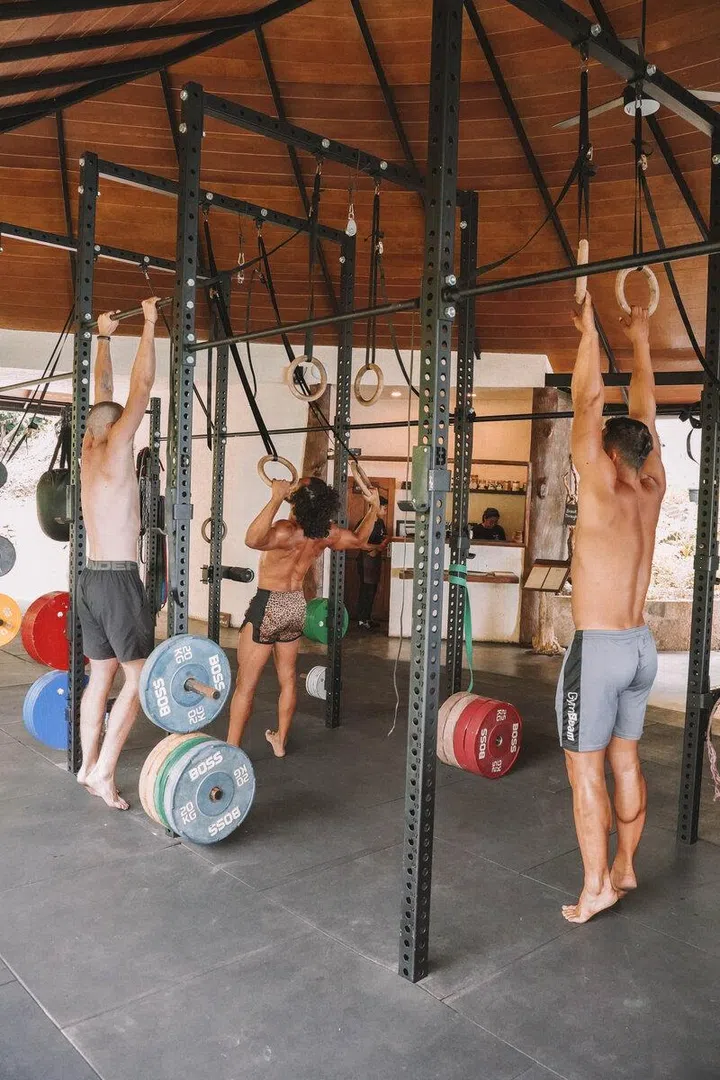
At Bali Time Chamber, men are encouraged to check-in without distractions, so that they can leave a better version of themselves.
In Asia, that search is increasingly turning physical. Male-only retreats are sprouting across the region, with programmes designed to strip away distraction and instill discipline. At Bali Time Chamber, a luxury wellness facility in Indonesia, the pitch is seductively enticing: “Go full monk mode here and emerge as a new man.”
The itinerary reads like a manual for ascetic transformation: early wake-ups, clean meals, no tech, and enough structured solitude to make a hermit blush. But the environment, while healing for some, can also play into the same pressures men face in daily life: to be hyper-productive, hyper-optimised and hyper-masculine.
Related article: Why Man Bags Are Back And Bigger Than Ever
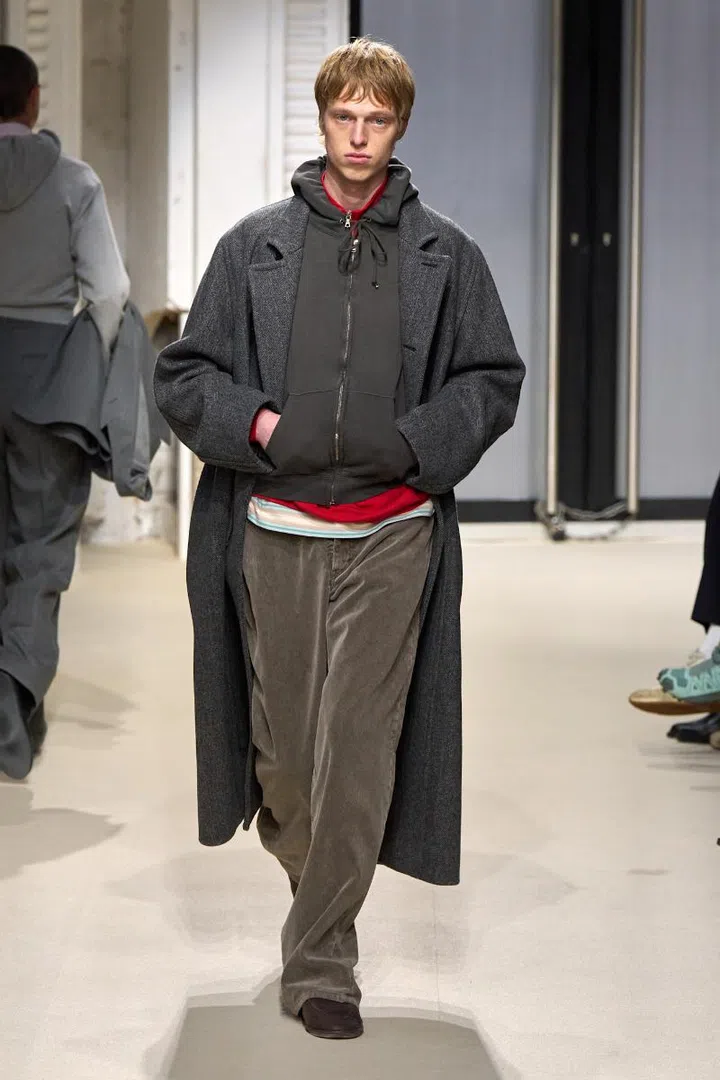
Brands like Auralee have championed the idea of stripping away unnecessary details and distractions, which have boded well with disciples of monk mode.
Fashion, inevitably, has responded in kind. The monk mode wardrobe—if there is such a thing—is a masterclass in restraint. Clean lines, neutral palettes, sans logos, and no noise. Labels like Lemaire, The Row and Auralee have long championed this quiet authority, and it is style, stripped of spectacle.
Even athleisure has adapted. Gone are the oversized graphics and neon trims. In their place: slate-toned hoodies, sculptural sneakers, and tanks that whisper “I lift more than you do” rather than shout it. It’s an aesthetic that signals control, discipline, and above all, effortlessness.
But restraint can be performative on the surface, and for men raised on protein powder and performance metrics, monk mode offers yet more rules to follow.
“There’s nothing wrong with wanting to be better,” surmises Noah. “But not if you’re doing it for an audience.”
Related article: Welcome To The Age Of Bro-Tox
Monk Mode 2.0
So what’s the alternative? If not monk mode, then what?
Maybe it looks a little messier, embracing being less productivity-centred and more humanistic. Maybe it’s not about rejecting discipline, but reframing it beyond becoming another form of emotional, mental and physical armour, and seeing it as an alignment of all the aspects instead. Perhaps, it’s less about a complete rejection of emotion, but a conscious structure that makes space for it.
Monk mode, when done with intention, can be powerful. But like all things, it asks one’s honesty beyond the rigour.
“True healing requires presence,” says Ling. “Not just perfect routines, but the ability to sit with yourself, to feel what you’re feeling, and to connect with others.”
“Resilience isn’t built through perfection,” adds Ooi. “It’s built through self-compassion, through flexibility and the ability to live fully as you are, rather than just as the version of you who gets likes.”
In the end, monk mode isn’t the problem or the catalyst—rigidity and the subscription of this culture for the sake of social acceptance is. Maybe the most powerful form of self-discipline might be learning when to hold structure, and when to let it go.