
Ludi Lin Is Thinking Beyond The Action Hero
As Hollywood slowly expands its idea of Asian representation, Ludi Lin is asking for more stories, more range and less tokenism.
By Aaron Kok - published
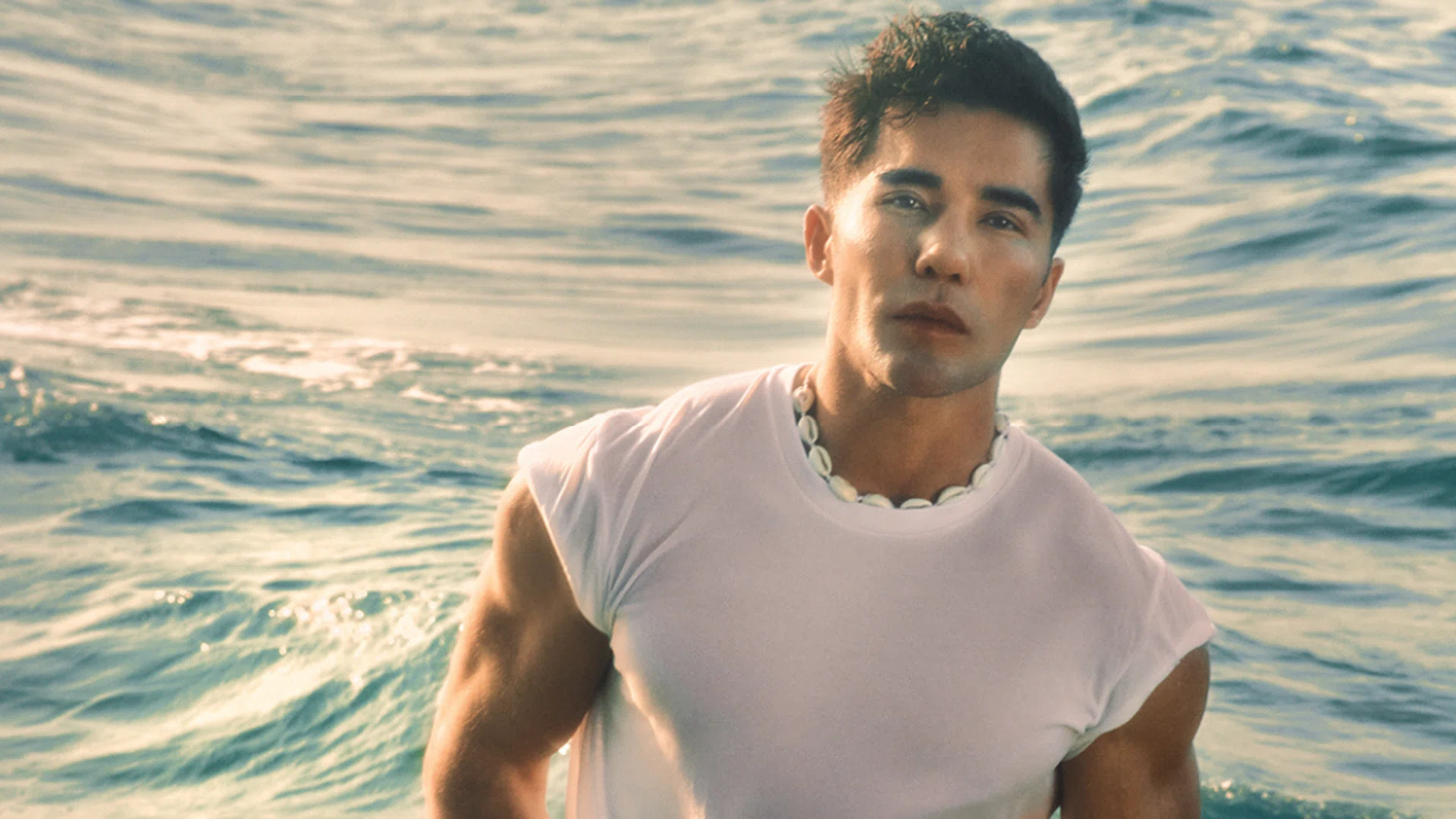
By mid-afternoon at East Coast Park, the sun turns democratic. It spares no one, not the crew huddled behind garment bags, nor the beachgoers drifting past with mild curiosity, and certainly not Ludi Lin, who is standing by the shore in full shoot mode while the Singapore heat beats down relentlessly and without apology.
There is something slightly absurd about watching a Hollywood actor dive into choppy seawater for the sake of a picture, yet Lin moves through it with an ease that is difficult to fake. Between takes, he chats with the crew. Sometimes he simply stands back, sunglasses on, taking in the sea breeze.
Lin, best known to many as Liu Kang in Mortal Kombat and Zack in Power Rangers, has built a career on roles that demand physical discipline, screen presence and the ability to look convincing while the world explodes around you. He is obviously fit, yet in person, he is not encased in the self-serious armour one sometimes expects from actors who have been turned into action figures, literally or spiritually.
For a Hollywood name, he is surprisingly regular, and this is meant as a compliment. There is no aura management nor celebrity performance. Instead, he is warm, thoughtful and slightly wry, with a calmness that feels infectious. Lin’s life, like his career, has moved across borders. Born in China, raised across Hong Kong, Australia and North America, he now finds himself based largely in Vancouver, though Los Angeles remains part of the professional orbit.
Related article: Gemini Norawit Plays “Guess The Sound”: Singapore Edition
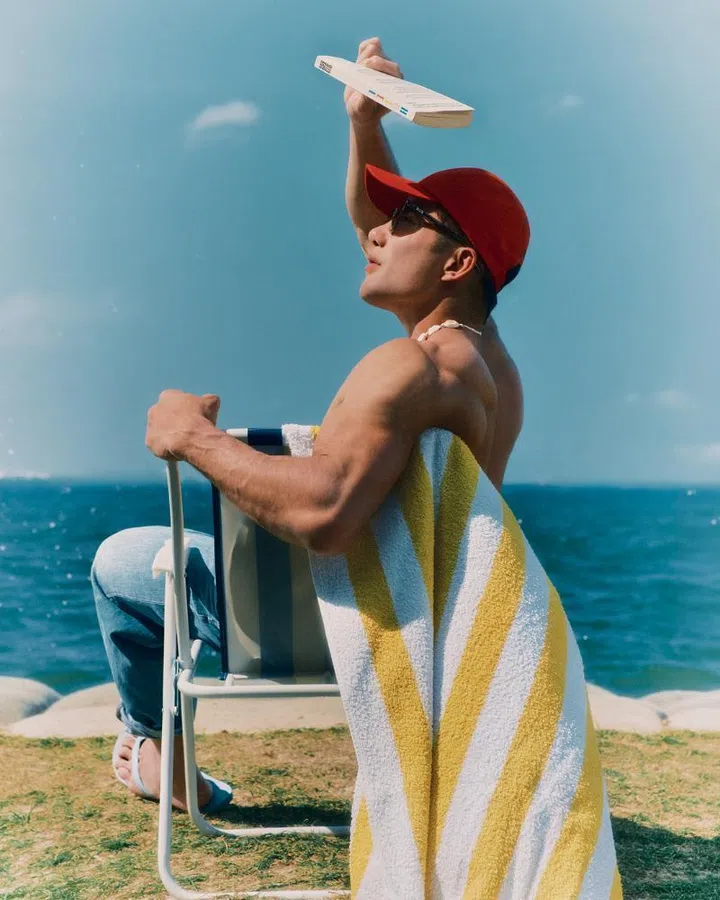
Jeans, Brunello Cucinelli. Cap, Polo Ralph Lauren. Sunglasses, Gentle Monster. Sandals, Prada. Necklace (worn throughout), stylist’s own.
Across Worlds
For Lin, identity has never been a fixed point on a map, but something accumulated through time. “The more places, the more cultures I experience, the more I can actually transcend this idea of race,” he says. “For me, my identity is less based on my race, but in the cultures I have lived in.” He is Chinese, of course, but he identifies as much with Chinese culture as he does with the cultures he has resided in and absorbed. “I’m not just defined by one specific culture that I’m born into. They’re all part of me.”
His earliest encounters with performance were not exactly glamorous. Growing up in China, Lin remembers watching war movies, where his first hook into cinema developed. Later, in Hong Kong, he discovered the comic genius of Stephen Chow and watched his films obsessively, usually to his mother’s dismay. “My mum would hate them because she thought it was just nonsense,” he recalls. Still, he was fascinated by her own operatic transformation in a local troupe. Acting felt remote then, almost too far away to imagine as a life. “It doesn’t seem like the possibility even entered my mind that acting could be a career,” he says.
The irony is that he fell in love with acting because he found it difficult. At university, when he began taking theatre classes more seriously, a simple scene refused to feel natural, leaving him exposed in a way that was uncomfortable enough to become a bigger draw. Acting became a problem he wanted to solve. “Even today, I feel like acting is something that I can work on forever and still not fully master. I’m always pursuing ‘better’.”
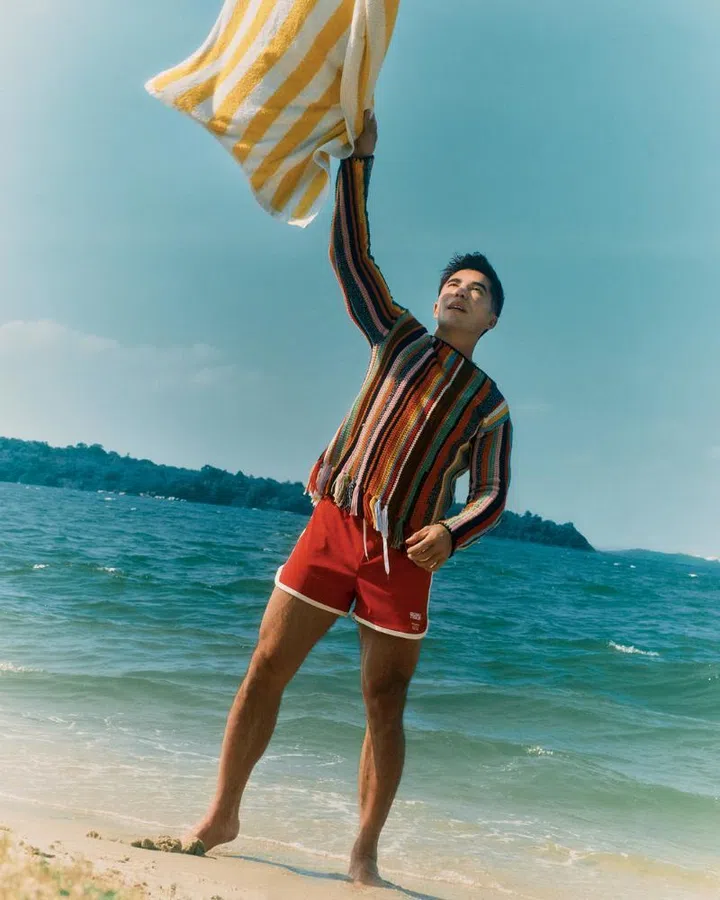
Knit, Prada. Shorts, Onitsuka Tiger.
Related article: Bright Vachirawit Is In A League Of His Own
This is revealing by all counts: the body can be trained, but the harder work is emotional. He has always known he could move, yet what unsettled him was the requirement to feel open and accessible in front of other people.
“I found I had all these emotional blocks in myself,” he shares. “I couldn’t get myself to a place where I’m touched emotionally.” Acting gave him a reason to unlock that, though he is careful around the language of therapy. He does not want to romanticise acting class as some magical emotional laundromat, but he sees acting as “a positive force” in his life. “I don’t need acting in order to live,” he says in a matter-of-fact tone. “But I act as a part of my life because I enjoy it. It makes my life better.”
One of the biggest gambles of his career came in 2012 when he moved to Beijing to work. Though he had grown up in China, his Mandarin carried a southern twang, so he had to learn a more standardised Northern pronunciation. It was a leap of faith that helped his career in unexpected ways, from Monster Hunt’s box-office success to the momentum of moving between Asia and North America. “During those years, I always had something going on,” he says. He landed his first major studio role in Power Rangers while he was in Asia.
Earlier in May, Lin returned as Liu Kang in Mortal Kombat II. The sequel brought with it the expectations of a massive fan base that knows the source material keenly. For Lin, stepping back into the role was familiar and freeing. “It felt like rewearing an old pair of shoes,” he muses. Enough time had passed between films for him and the director to discuss how Liu Kang might have changed, allowing him to adjust the character’s presence and deepen his martial arts style.
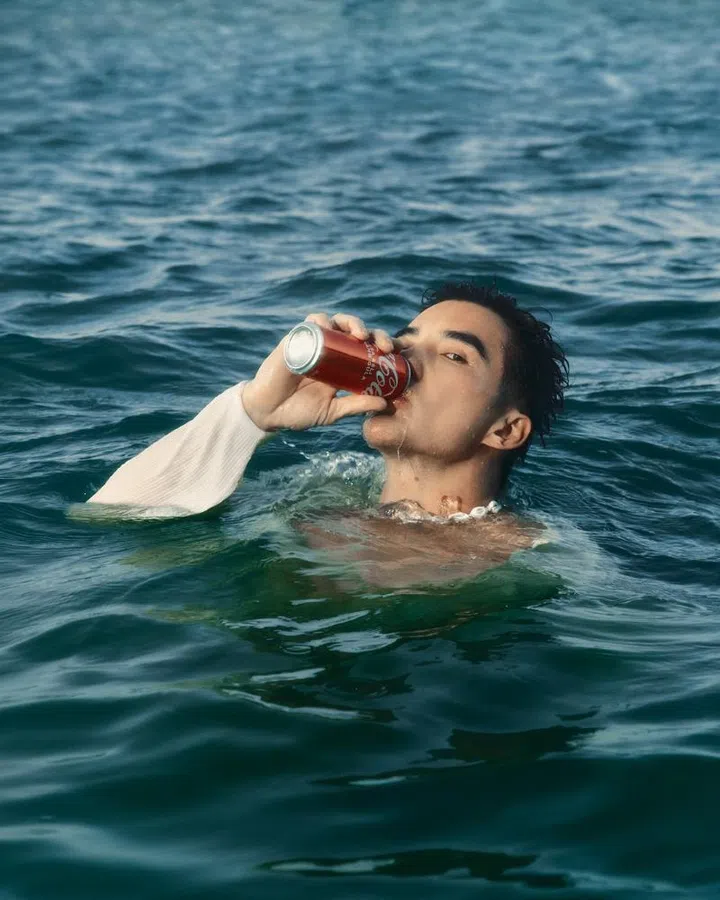
Cardigan, Brunello Cucinelli.
Related article: Love, Actually: Anne Curtis And Jericho Rosales On Turning Heartbreak Into Art
Beyond The Fight
Still, Lin is clear that action is only one part of the work. Many audiences first encountered him through physically demanding roles, and the industry has a habit of flattening bodies into brands. If you can fight on screen, suddenly everyone would like you to keep fighting ad infinitum. Lin understands the value of physical performance, but he resists being reduced to it. “For me, whether it’s an action-oriented role or any other role, the beginning of building this character always starts with his emotions,” he emphasises.
This is why his upcoming slate feels telling: there is Eternity, a romance thriller; Finding Theo, a drama; and Reunion, a recently-released comedy. Lin compares taking on non-action roles to training at the gym: beyond the widely-used action star muscles, he wants to work the other acting bones that let him explore texture, awkwardness, tenderness, timing and emotional messiness.
In Asia, he says, he was able to do that through indie films and more varied material. “I feel like there’s so much creativity in Asia that’s not already put into boxes,” he says. Hollywood, by comparison, can feel intensely data-driven. “People say ‘Asian’, but Asia is not a monolith,” he states. “Even within Southeast Asia, the culture is distinctly different as you move throughout the region.”
It is one of the central tensions of Lin’s career. He is an Asian actor working globally in an industry that increasingly understands representation, while still often treating Asia as a single flavour profile. Progress has been real, but uneven, symbolic and sometimes exhausting. His concern is the scarcity mindset around it.
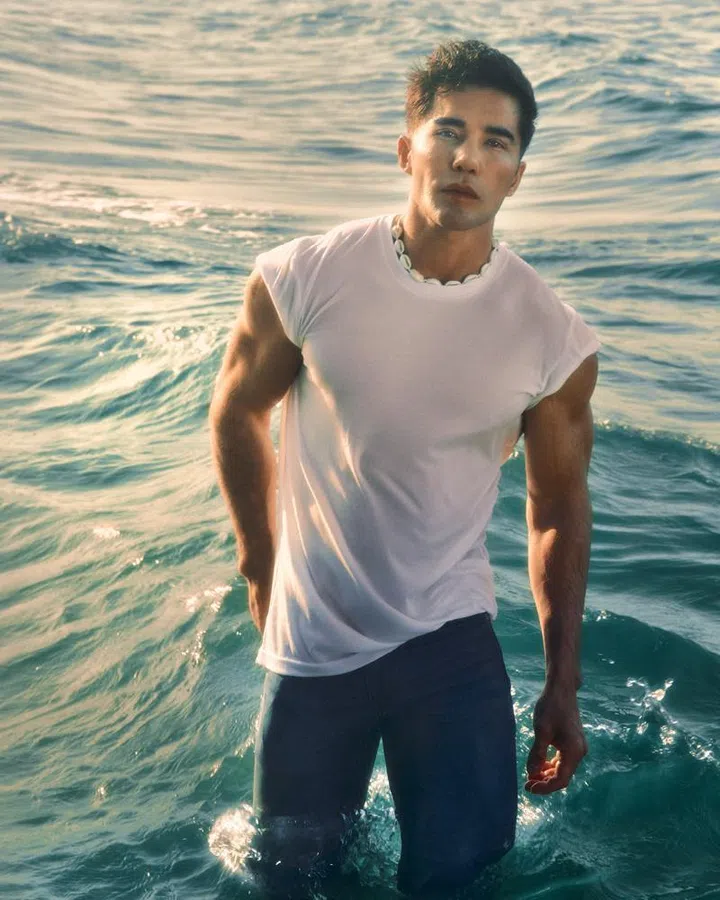
T-shirt; jeans, Levi’s.
Related article: The Quiet Confidence Of Mika Hashizume
“The day we stop pointing to one Asian project as the linchpin that has changed representation is the day that we have true representation,” he remarks. Hollywood, he argues, often allows one Asian-oriented project to occupy the spotlight at a time. One project becomes the tribute that everyone rallies around because everyone understands how rare the opportunity is. “It’s a bit like The Hunger Games for Asian representation,” he muses. “We can only have one title in the game at one time.”
It is a funny line that also rings painfully accurate. One film or show is asked to represent a continent, becoming a synonym for a billion different lives. For Lin, true representation means volume and variety: more projects, more actors with Asian characters allowing moral range, cultural specificity and narrative diversity.
When he chooses projects now, the instinct begins with writing. “The only hard acting is bad writing,” he says, quoting something he once heard. Good writing, he believes, lets everything flow. He looks for sincerity in a role, for a sense that the character has been thought through and written with enough depth to go beyond what he calls “plug and play Asian characters”.
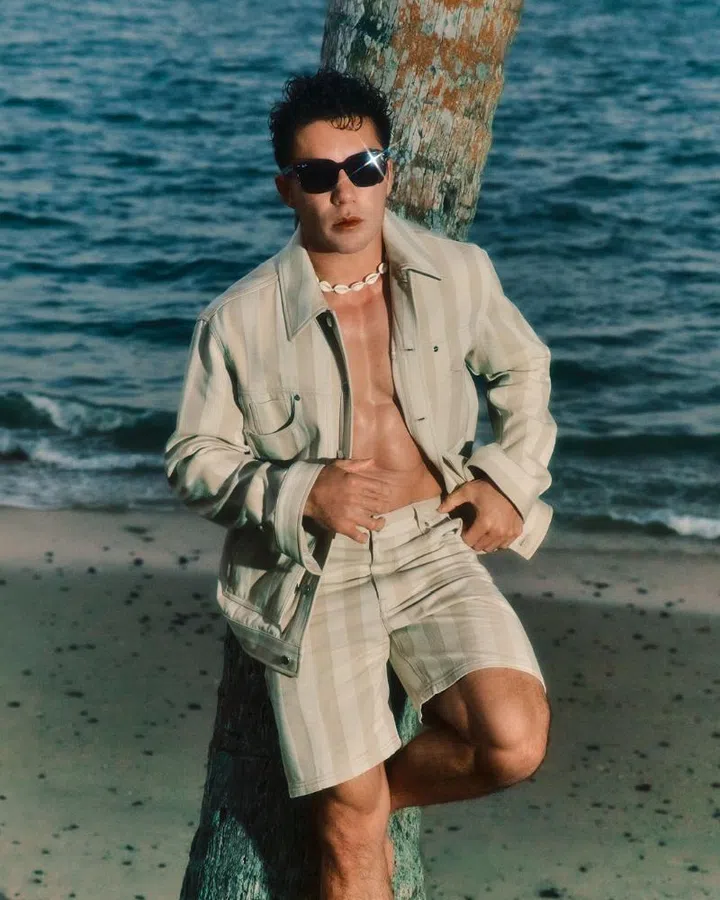
Jacket; shorts, Fendi. Sunglasses, Ray-Ban.
Related article: “Family Puts Me Back In A Feeling Of Groundedness”: Eric Chou On Family, Fame And His Next Chapter
Near the end of our conversation, I ask what his younger self would make of him now. Lin pauses, then says he does not think that boy would recognise him. “I don’t think he would believe that I’m even a human being,” he says wryly. There are too many things about his present life that would have seemed unimaginable then: his athleticism, the fact that he earns a living playing superheroes and warriors, that he has a team behind him, that people believe in him. “Even my mum’s proud of me,” he jokes.
Then he says something with disarming sincerity. “I’m not anyone special,” he states. “I started out as a chubby Asian kid who didn’t even speak English, born in mainland China. I didn’t even speak Mandarin and my first language was my hometown dialect. Now I’m acting globally in Hollywood movies in English. That’s just so crazy to me.”
It is crazy, when he puts it that way, but it is not magic. It is years of movement, discipline, reinvention and very unglamorous waiting between takes and jobs, and waiting for an industry to make space for work that does not calcify around one singular version of him.
Still, Lin does not sound like someone waiting for permission. His next chapter is both simple and wildly ambitious: to keep creating movies as an Asian actor, and to eventually help tell the stories he spent years trying to find his way into. “I always see goals as just the direction,” he highlights. For him, that direction has never really changed. The point remains: to move between worlds without being flattened by any one of them.
By the time the shoot wraps, everyone is a little sun-fatigued, but Lin somehow still seems cheery. The action hero is there in the discipline and gung ho-ness, but so is the actor drawn to difficulty, still thinking about what it means to be seen fully.
Editor-in-Chief: Kenneth Goh
Photography: Shawn Paul Tan
Styling: Aaron Kok
Hair: Michael Chiew/ Hairform using Goldwell
Grooming: Wee Ming using Dior Beauty
Photographer’s assistant: Chay Wei Kang
Stylist’s assistant: Laila Mishazira