
Can Technology Help Us Shop Better?
The future of shopping is not just faster checkout. It is better timing, sharper discovery and fewer regrettable purchases.
By Aaron Kok - published
Remember the early, hopeful days of online shopping? The promise was an endless stream of new goodies brought to you by the internet, with promo codes abounding and shipping faster than a blink.
Yet for all its promises of ease, online shopping has become remarkably good at making a want feel like work. Between the first open browser tab and the umpteenth “back in stock” email, shopping has become another chore, only with better shoes. In practice, it gave us 14 nearly identical black trousers, an expired sale code, and a cart abandoned because, by the time we reached checkout, the dopamine has fizzled out.
Fashion loves abundance. It thrives on novelty, reinvention, and wanting something you did not know existed five minutes ago. Yet the mechanics of modern e-commerce have begun to test even the most devoted enthusiast. We are expected to discover on one platform, compare it on another, check sizing somewhere else, hunt for reviews, watch prices, and decode shipping policies. It is entirely possible to love clothes and still feel stranded by the process of buying them.
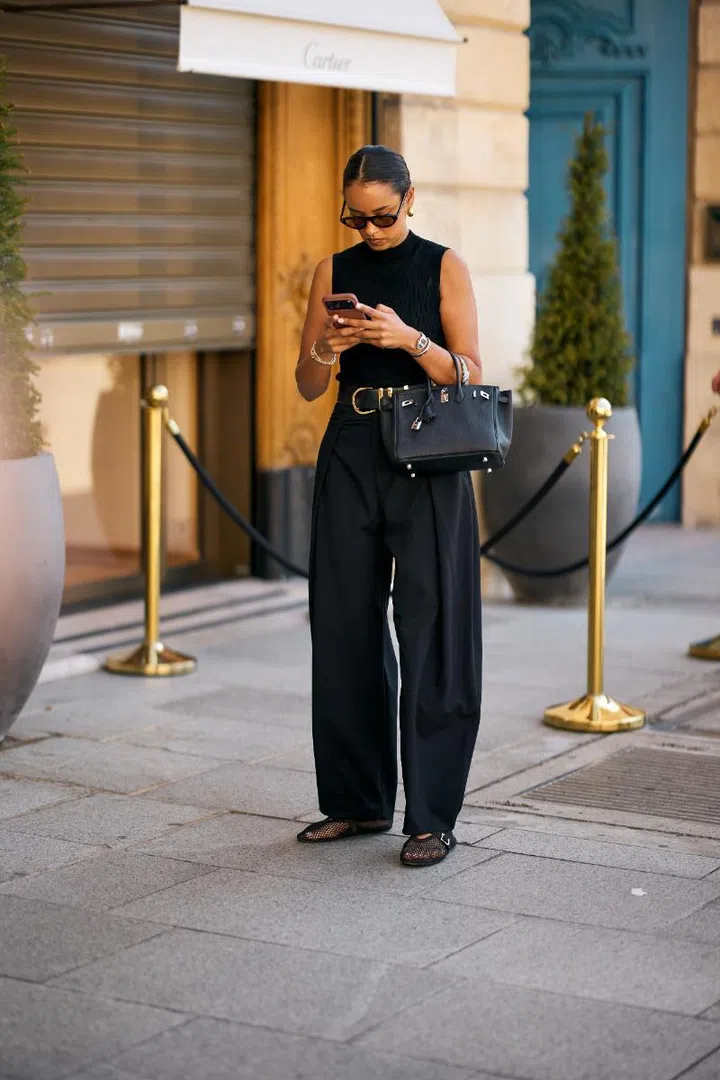
The promise of smarter shopping is not buying faster, but buying with fewer second thoughts.
Related article: We’re Officially In Our Veggie Era
The Search Bar Gets Smarter
This is where the new generation of tech starts to make sense. Tools like personal mall apps, AI shopping agents, virtual try-ons, and peer-to-peer platforms promise to turn this sprawling mess into something tailored, responsive and intelligent. The appeal is not simply speed, but the possibility of shopping with more confidence, more control and fewer regrettable decisions.
Eugene Macey, partner, APAC Digital, AI & Customer Practice Leader at Simon-Kucher—a consulting firm that works with luxury brands to drive sustainable growth—sees the traditional purchase funnel being redrawn beyond recognition. “Discovery, comparison, and transaction used to happen in different places: a magazine, a website, a store visit, then purchase,” he points out. “Today, those steps are increasingly happening in the same environment, often inside a social platform, marketplace, or through an AI-assisted journey.”
A shopper now spots a dress on TikTok, checks fit using an AI tool, and eventually buys it. The route is no longer linear; it is chaotic, but deeply familiar to anyone who has ever gone looking for “that top” from a video with only a screenshot and faith.
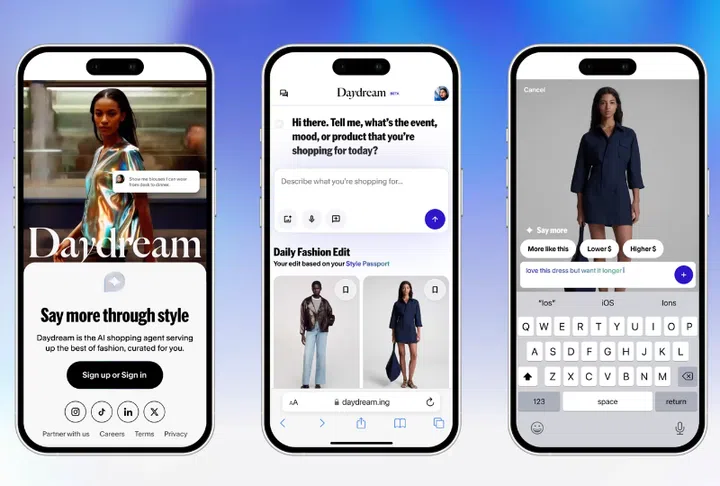
Daydream aims to create a more dynamic shopping experience that allows users to find what they’re searching for better and quicker.
Related article: ITZY’s Yeji Is The New Face Of Roger Vivier’s Most Iconic Silhouettes
The friction also often begins with language. Traditional search has always been slightly exclusionary to fashion because it expects shoppers to know exactly what they are looking for. Fashion rarely works that way; we search by instinctive ‘filters’ like occasion, fantasy, weather or mood. “Black dress size 8” gets results, but “something elegant for a tropical wedding but not too bridesmaid-ish, breathable material” is closer to how people actually think.
That gap is where platforms like Daydream are positioning themselves. Launched publicly as a chat-based AI shopping agent built exclusively for fashion, Daydream replaces rigid filters and dropdown menus with natural language and images. The platform’s “Style Passport” builds a profile around a user’s fit preferences, brand affinities, and price sensitivity, meaning two people can ask the same question and receive different recommendations.
Daydream’s appeal lies in acknowledging that “occasion-wear” means different things depending on whether the event is a wedding in Italy or a corporate function where the room says “venture capitalist formal gala”. By leaning into visual-first shopping, it allows users to search directly from screenshots of street style, editorial images or saved social media posts.
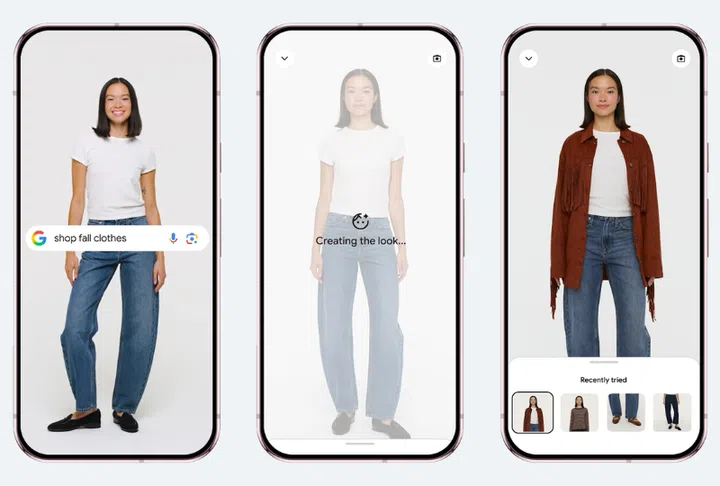
Launched a few months prior within the region, Google’s Try On function allows you to envision yourself in clothing more accurately before you check out.
Related article: The Ferragamo Hug East-West Bag Merges Archival Values With A Modern Attitude
Google is approaching the same problem from a much larger orbit. People shop more than a billion times a day across Google, and its Shopping Graph contains over 60 billion product listings, updated by the billions every hour. This staggering scale underscores modern shopping’s main issue: it is not a lack of things, but the challenge of efficiently organising and interacting with them.
“The AI era isn’t just reshaping how we search, it’s going to change the way we shop,” says Sapna Chadha, vice president for Southeast Asia & South Asia Frontier at Google. “We are moving from a world of simple search engines to an era of intelligent thought partners. Instead of traditional keywords, shoppers treat the search bar as an ongoing conversation.”
Instead of searching for a generic item, a shopper can now ask for a lightweight blazer in sage green under a specific budget, interacting with the search bar not unlike speaking to a competent sales associate within a boutique. Google’s recently-launched “Try-On” feature pushes this further by bringing an AI fitting room to the screen. Users can tap a “try it on” icon, upload a full-length selfie, and see how apparel drapes, folds, and stretches as it would in reality.
Related article: Slim Sneakers Are Trending, But Are They Comfy? A BAZAAR Editor Finds Out
This matters because standard e-commerce models often make shopping an act of generous imagination, leaving buyers wondering whether a garment will fit their actual shape or if it’s just their optimism at work. While a virtual try-on is no substitute for fabric against skin, it narrows the space between desire and disappointment, building buyer confidence and reducing remorse and product returns.
Google’s research shows that 80 percent of users in Southeast Asia find that tools like AI Overviews help them make faster, more confident choices. In that vein, online shopping anxiety is fundamentally a confidence problem: Is this worth the price? Will it arrive in time? Does the colour look different in person? The better the technology answers these questions, the less shopping relies on guesswork. However, Macey offers a more measured perspective. Smarter technology can help consumers become more intentional, but it can also intensify impulse buying.
Algorithmic feeds and one-click checkouts compress the distance between wanting and buying. “The question is what commercial outcome it is optimised for,” Macey notes. “If the goal is simply conversion, technology may drive more consumption. If the goal is lifetime value, trust and loyalty, it can support more intentional buying.”
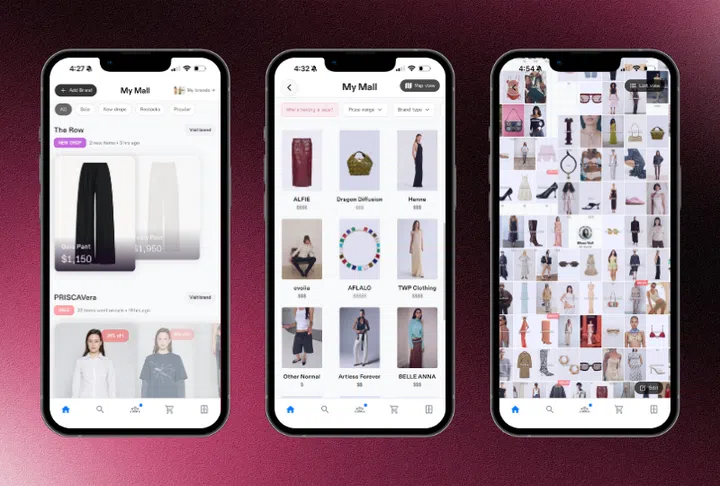
The Mall lets shoppers build a personalised digital mall of favourite brands, with sales, restocks and drops gathered in one place.
Related article: Game, Set, Slay: Fashion’s Most Iconic Sports Moments
Building a Personal Mall
Taking a different route, The Mall focuses less on discovery and more on organisation. Founded by Sreya Halder and Eliana Konsker, the app allows shoppers to build a customised digital mall from any brand on earth, consolidating real-time alerts for sales, restocks and drops in one place.
“The noise is definitely the problem,” says Konsker. “We’re on our favourite brands’ email lists, we follow them on Instagram, we’ve bookmarked their site. But the emails go to spam or the algorithm decides whether you see or miss their post. You’re doing everything right, and yet you’re still the last to know.”
The Mall revives the logic of the physical mall, where you have clear favourites and automatic skips, inside a digital landscape. Consumers build their retail universe once, and the brands work around them, putting the shopper at the centre of the relationship for the first time.
A self-built shopping universe creates a relevance based on deliberate choice, moving the conversation past how technology helps us buy faster to whether it helps us buy better and with more awareness of what ownership actually means.
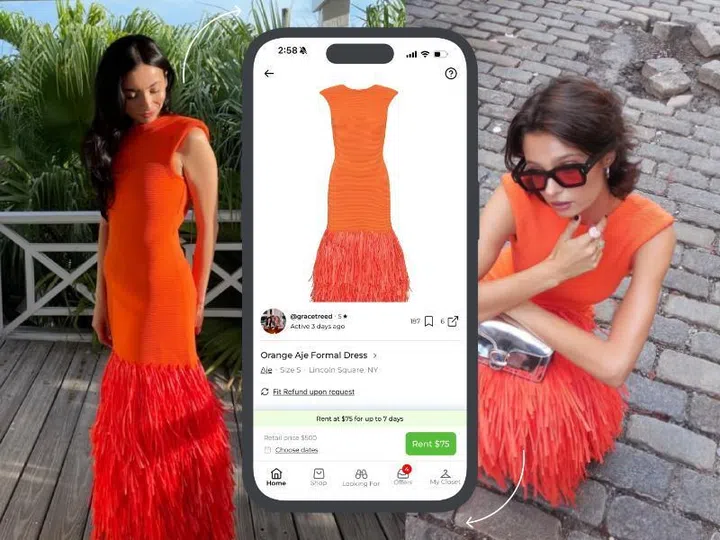
Pickle turns fashion rental into a closet-sharing economy, letting users borrow, buy and monetise pieces from real wardrobes.
Related article: 15 White Maxi Skirts To Add To Your Wardrobe
The New Meaning of Ownership
This shift also introduces a negotiable view of ownership, which is something that a platform like Pickle understands well. Pickle is a peer-to-peer fashion rental and resale marketplace that expands shopping beyond traditional purchasing. It offers access to over 450,000 items sourced directly from the closets of fashion enthusiasts, stylists and collectors. Users can rent pieces for a set duration or buy them outright, while owners can monetise their under-utilised wardrobes.
“For decades, fashion operated on a pretty simple assumption: if you wanted access to something, you had to buy it,” says Julia O’Mara, co-founder and COO of Pickle. “What technology is changing is not people’s love of fashion, but the ways they can participate in it.” A modern consumer might buy everyday basics, rent a vacation wardrobe, and purchase vintage secondhand and all of these coexist within the same closet. This flexibility is highly practical for occasion dressing or testing fleeting trends without committing hundreds of dollars.
As O’Mara notes, sustainable behavior scales best when it aligns with economic and lifestyle sense. Instead of asking, “Do I want this?” shoppers are increasingly asking, “Do I want to own this?”
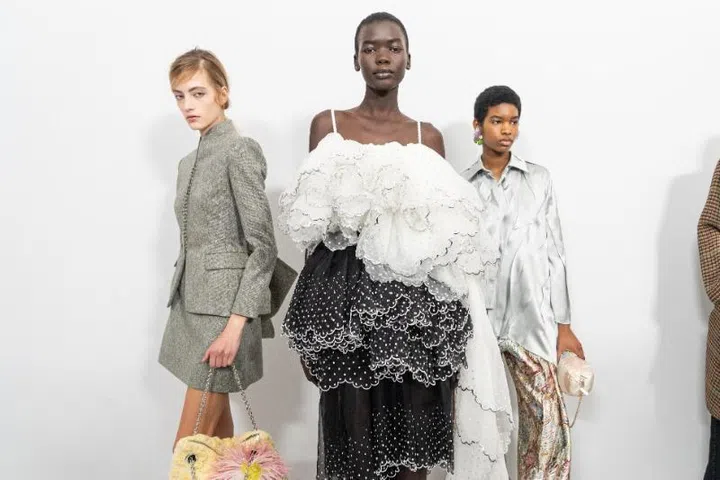
With AI search, virtual fitting rooms and peer-to-peer rental, fashion shopping is becoming more strategic and user-focused.
Related article: Why Fashion Is Rethinking Glamour Now
Futurist Anne Lise Kjaer, founder of Kjaer Global and author of The Trend Management Toolkit: A Practical Guide to the Future, sees fashion shopping moving between two opposing mindsets: one that embraces abundance and speed, and another focused on “soulful minimalism” the pursuit of fewer, better things with lasting emotional and practical value.
“Shopping will become less about acquisition and more about conscious curation,” Kjaer adds. “The future wardrobe will reflect our values, not simply our purchases.” She views technology as an instrument of stewardship. She envisions AI wardrobe assistants and predictive styling platforms that assess longevity, versatility and cost-perwear.
Instead of pushing an immediate recommendation, these tools could ask whether you already own a similar item, or if renting, repairing or reselling makes more sense. Personalisation, in this view, is about better judgment rather than more recommendations.
Developing better judgment is the true luxury in a retail landscape engineered for urgency. The most valuable fashion technologies will be those that help a buyer separate genuine desire from digital distraction.
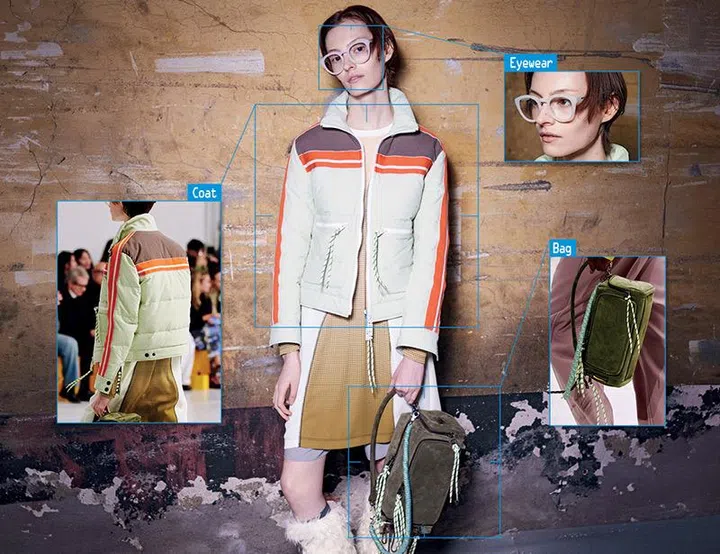
Onitsuka Tiger fall/winter 2026
Related article: Capri Pants Are Having A Very Chic Comeback, Here Are 15 Pairs To Shop Now
Of course, the industry has its own incentives. Eucel Maximo, a partner at management consulting firm YCP, points out that the same tools helping you find exactly what you want can easily surface “10 more things you didn’t know you wanted”.
Smart search aids intention, but marketing inherently exists to manufacture demand. It will happily identify the jacket from your screenshot, then politely suggest the matching shoes or a new lipstick.
This tension is where the future of shopping becomes uniquely human. Technology can provide sharper routes through abundance, but the responsibility remains a shared custody between platforms and shoppers. The ultimate goal of fashion tech is not to eliminate the joy of accidental discovery, but to protect it from becoming exhausting.
In fashion, wanting will always be part of the fun and thrill, but perhaps, the future is simply learning how to want well, and want smarter.