
The Last Emperor: Remembering Valentino Garavani
From scarlet gowns to silver screens, Valentino gave us glamour at its most divine.
By Aaron Kok - published
On 19 January, 2026, the legendary Italian fashion designer Valentino Garavani—known simply around the world as Valentino—died peacefully at his home in Rome at the age of 93. His passing marks the end of a singular and bygone era within haute couture, one defined by an unwavering devotion to beauty, craftsmanship, and an unforgettable shade of red that became synonymous with romantic glamour.
Born Valentino Clemente Ludovico Garavani in 1932, in Voghera, Italy, he developed an early fascination with fashion that would shape his life’s work. After studying at the École des Beaux‑Arts and the Chambre Syndicale in Paris, he apprenticed with acclaimed designers, including Jean Dessès and Guy Laroche, before returning to Rome to launch his own house in 1960 alongside his lifelong partner and business collaborator, Giancarlo Giammetti.
Related article: Dream Maker: Valentino’s Pierpaolo Piccioli In Conversation With EIC Kenneth Goh
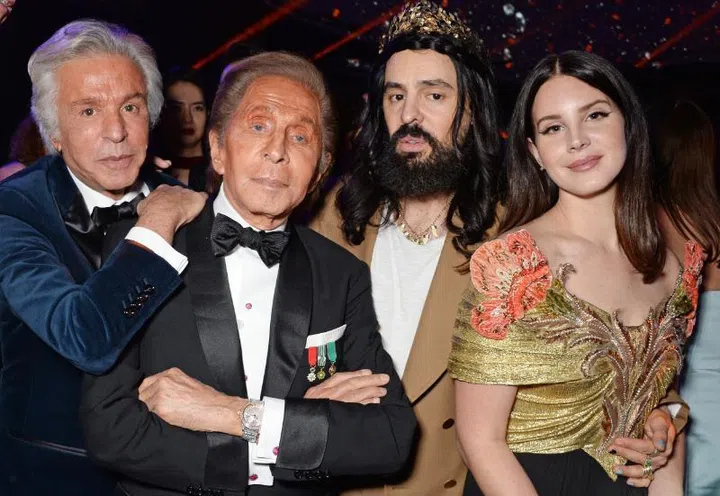
From left: Giancarlo Giammetti, Valentino Garavani, the brand’s present-day creative director Alessandro Michele and Lana Del Rey.
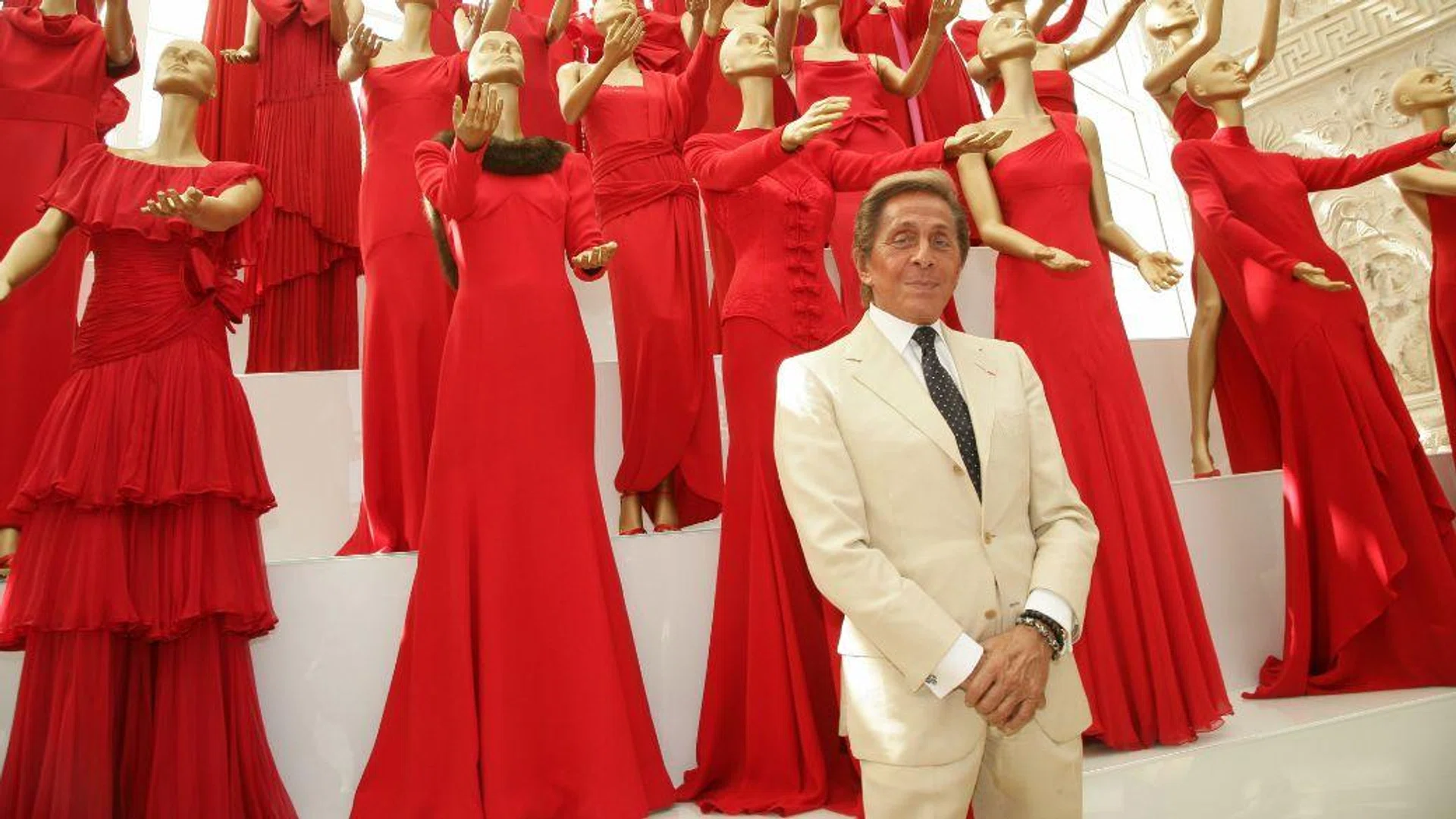
Valentino’s rise was swift. His earliest collections were noted for their refinement, but it was his introduction of a particular shade of carmine‑scarlet—soon immortalised as “Valentino red”—that helped distinguish his work on the global stage. First worn in a draped tulle cocktail dress in 1959, the colour became a staple of his brand’s identity and a marker of glamour in a world obsessed with star power.
“I think a woman dressed in red is always wonderful, she is the perfect image of a heroine,” Valentino once wrote in Rosso, a book released in 2022 and dedicated to his signature hue.
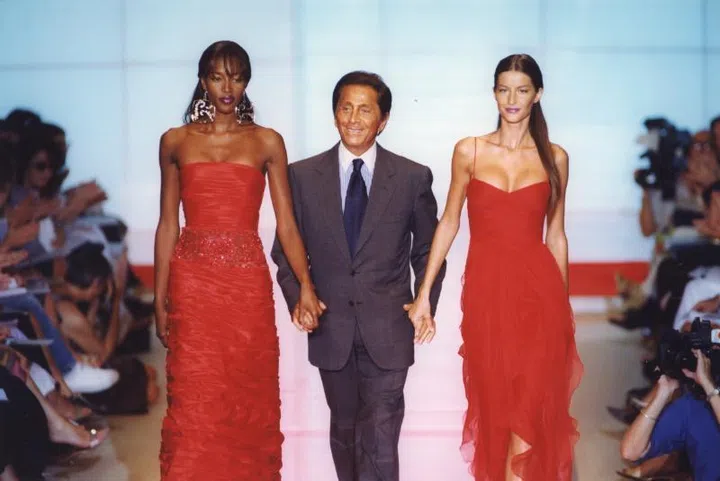
Valentino takes his at the end of his couture show in 1999, together with supermodels Naomi Campbell and Gisele Bündchen.
Over the following five decades, Valentino became a favourite among royalty, celebrities and fashion’s glittering pack. His atelier gowns and couture creations graced countless red carpets and high‑profile events. Iconic figures such as Elizabeth Taylor, Jacqueline Kennedy Onassis, Princess Diana and Julia Roberts all wore Valentino during career‑defining moments, attesting to his influence across generations of style and celebrity culture.
Despite the ever‑shifting tides of fashion trends, Valentino remained steadfast in his vision. He once encapsulated his philosophy succinctly: “I know what women want. They want to be beautiful.” This simple belief—that fashion was a means to elevate the wearer’s sense of self—was central to his creative ethos and helped forge a deeply emotional connection between the brand and its clientele.
Related article: Freen, Film, And View On Personal Style And Emotional Keepsakes
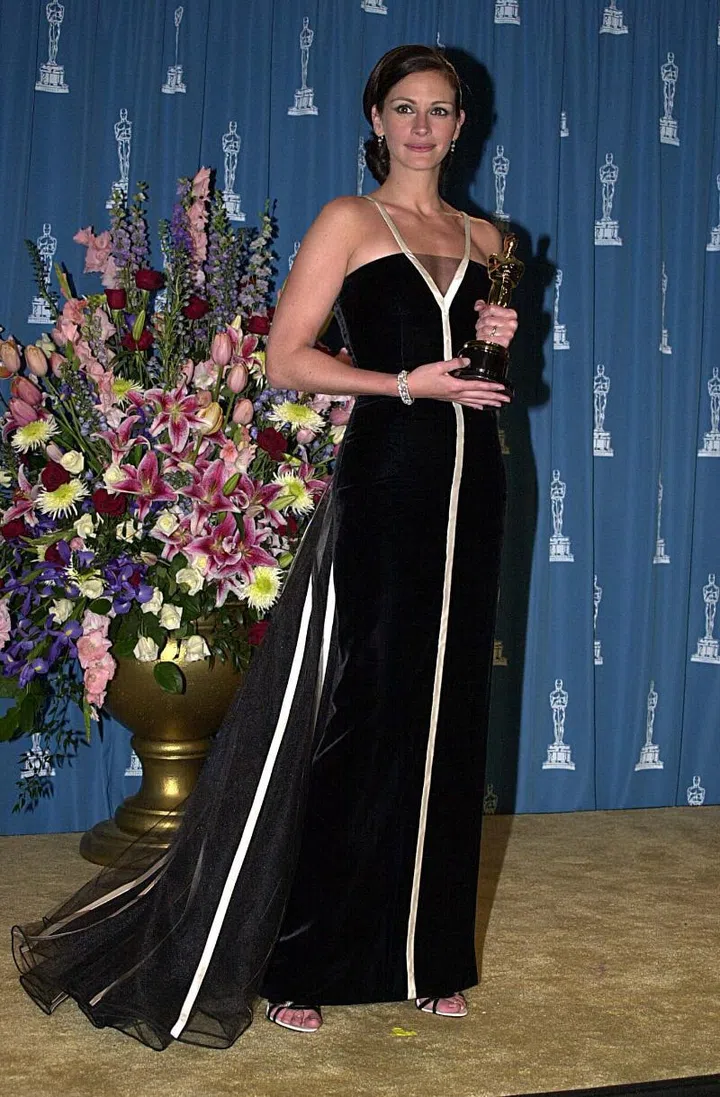
Julia Roberts wore a black-and-white Valentino gown when she won the Academy Award for her performance in Erin Brockovic, in 2001.
Valentino’s work was not merely about visual splendour; it was rooted in a reverence for tradition and craftsmanship. His couture houses in Rome became synonymous with meticulous tailoring, sumptuous fabrics, and silhouettes that celebrated femininity without contrivance. He once said, “Simplicity is the essence of elegance,” a mantra that grounded even his most opulent designs in timeless sophistication.
His influence extended beyond the atelier walls. Valentino helped elevate Italian fashion onto the international stage, earning the admiration of peers and critics alike. Over the years, he received numerous accolades from fashion councils and institutions around the world, acknowledging his role in shaping modern haute couture.
In 1998, Valentino and Giammetti sold the company they had built together, but his active presence in the industry continued until his retirement following his final haute couture show in 2008. Even in retirement, his name and aesthetic remained touchstones for designers, stylists and devotees of elegant dressing.
Related article: A Constellation Of Love And Hope At Valentino
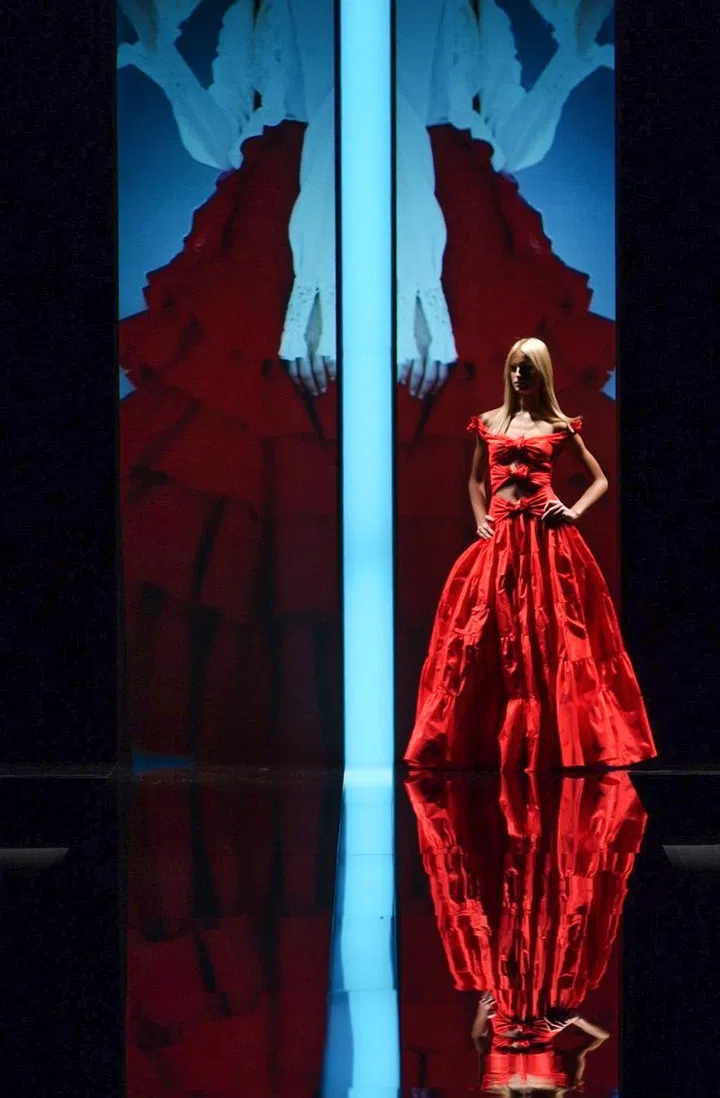
The designer has made “Valentino red”—seen here on a model at the end of his spring/summer 2002 show—his shorthand for glamour, passion and beauty.
Valentino’s legacy is multifaceted: a house that continues to dress the world’s most luminous figures, a colour instantly recognised as an emblem of passion and allure, and a philosophy that placed beauty at the centre of fashion’s purpose. In an industry often driven by fleeting trends, he remained a steadfast advocate for elegance, quality and emotional resonance.
As the world reflects on the life of Valentino Garavani, one truth endures: he did not just simply design clothes. Instead, here was a couturier who cultivated a dream: stitched in scarlet, tailored with devotion, and worn by those who sought not just to look beautiful, but to feel so.