
More Than A Dress: Why Some Red-Carpet Looks Live Forever
From Rihanna’s Guo Pei cape to Zendaya’s Mugler robot suit, why do some red-carpet looks become fashion history?
By Aaron Kok - published
There is a strange thing that happens when a truly great red-carpet look enters the world. For a few seconds, everything around it becomes secondary. The step-and-repeat fades into the backdrop. The screaming photographers become white noise. The event itself, whether it is a premiere or an awards show, suddenly exists in service of the image.
Then the internet gets to work.
Within minutes, the look is clipped, posted, ranked, memed, debated, defended and dragged. By breakfast the next morning, it has either disappeared into the great digital landfill of “content” or begun its second life as something more durable: a reference, a moodboard staple or, in rare but always hoped-for cases, a part of fashion history. That, really, is when the dress stops being just a dress.
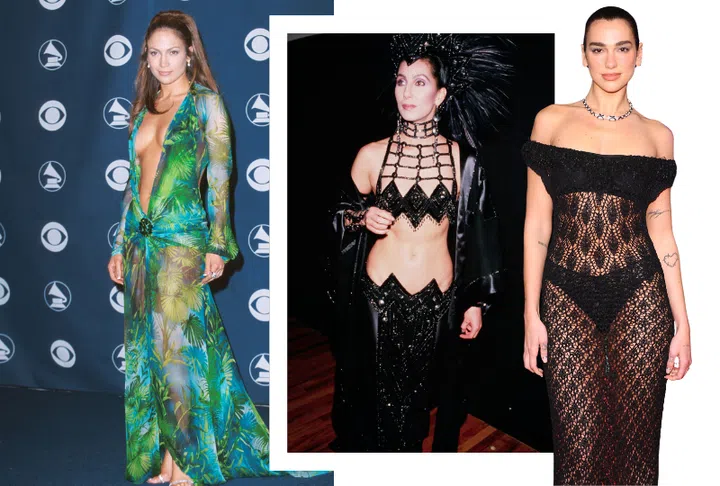
Body-flaunting styles—from Jennifer Lopez in Versace, Cher in Bob Mackie and Dua Lipa in Chanel—have always stolen the spotlight.
The red carpet has always been absurd, which is partly why it works. It asks grown adults to get out of cars in clothes that often require choreography, infrastructure and a little bit of prayer. It turns a staircase into a stage, and an odd silhouette into a headline. At its worst, it can feel like a very expensive queue. At its best, the red carpet is fashion’s most efficient myth-making machine.
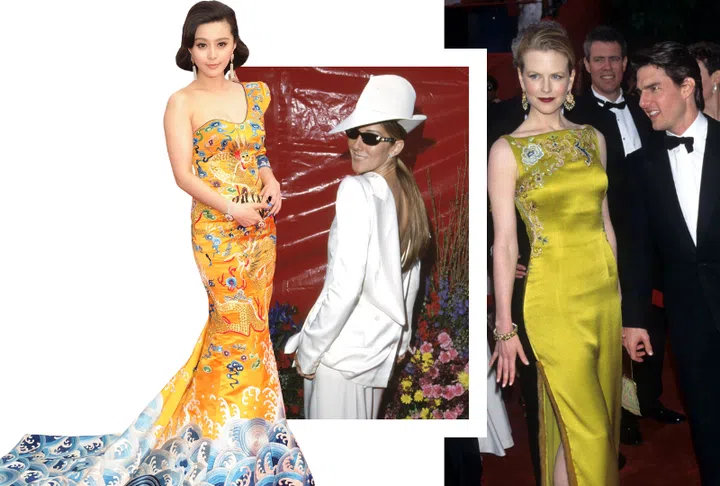
Some of the most iconic red carpet looks include Fan Bingbing’s oriental gown by Laurence Xu, Celine Dion’s tuxedo worn backwards, and Nicole Kidman’s slip dress designed by John Galliano during his tenure at Dior
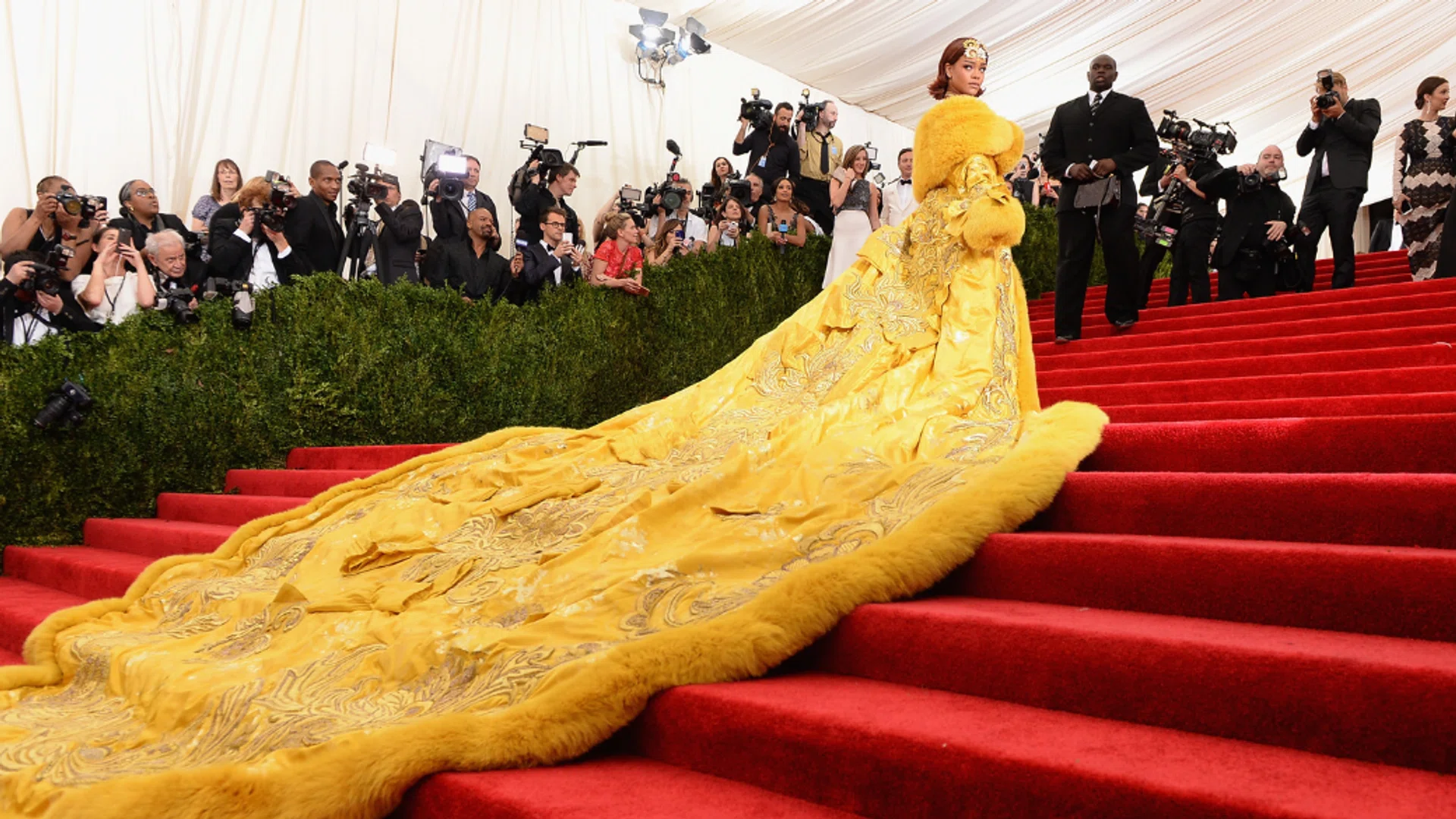
We remember Rihanna at the 2015 Met Gala in Guo Pei’s imperial yellow cape, its vast embroidered train unfurling across the museum steps with the calm authority of a modern-day dowager arriving. We still talk about Zendaya at the London premiere of Dune: Part Two in archival Thierry Mugler, looking like a Kubrick-dreamt apparition that came to life. Nicole Kidman at the 1997 Oscars in John Galliano’s chartreuse Dior gown remains endlessly referred to as one of her best looks, thanks to a colour so audacious that it seemed to glow against the decade’s prevailing tastes. We call back to Fan Bingbing at Cannes in 2010 in a dragon gown that turned the European festival circuit into a stage for Chinese visual grandeur.
These looks endure because they arrive at exactly the right temperature. They are beautiful, yes, but beauty alone is a common baseline on the red carpet. It is the polite opening handshake. The looks that last bring something more volatile into the room: tension, timing, symbolism, personality, risk. They make an image feel like an event.
Fashion curator Elizabeth Miller sees the distinction as one between “disruption versus compliance.” A memorable look, she says, can be a masterclass in aesthetics. It photographs well, flatters the wearer, satisfies the styling brief and nods neatly to the current trend cycle. A culturally significant look, however, does something more unruly. It “rewrites the rules or shifts a cultural narrative.” It creates what she calls a “before and after” inflection point.
Related article: Fann Wong On Life Beyond The Silver Screen And Fashion As Expression
Refusing to Behave
Red-carpet history is full of technically perfect gowns that now feel anonymous. The hair was correct, the jewels were tasteful, and the dress did what it was told to do. Then it vanished. There is nothing wrong with that, of course, because not every garment is contractually obliged to enter the canon. Sometimes a nice dress can simply be a nice dress and go home.
Still, the looks that persist usually misbehave a little.
Rihanna’s Guo Pei cape is the obvious example because it was almost comically resistant to subtlety. It was not interested in whispering elegance into the room. It needed space, patience and real muscle to heave it up the Met Gala’s long flight of stairs. At the time, Guo Pei’s work was still not as widely recognised by Western audiences as the European houses that typically dominated the gala’s fashion conversation. On Rihanna, the cape became scale as statement and a reminder that couture history does not begin and end in Paris or Milan.
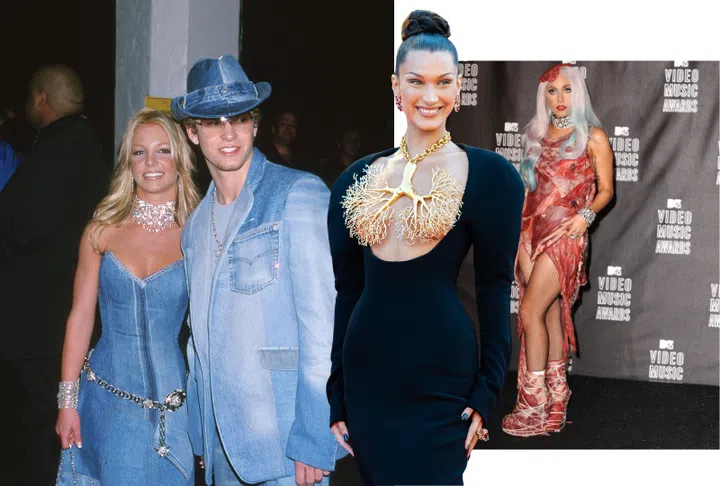
Whether it’s Britney Spears and Justin Timberlake in head-to-toe denim, Bella Hadid with a capillary-inspired neckpiece from Schiaparelli or Lady Gaga in her infamous meat dress, humour and shock has always catapulted red-carpet looks into infamy.
Miller describes the look as culturally significant because it forced a largely Eurocentric fashion industry to reckon with “the staggering weight of Chinese couture and the Chinese fashion industry.” In her reading, it became “a monument to craftsmanship and a reclamation of space.” That is a useful way to understand why the image still lives. It was not merely large. It took up space with real intention.
The same can be said of Kidman’s chartreuse Dior gown at the 1997 Oscars. On paper, it sounds like a risk: acidic green, embroidered silk with a chinoiserie flourish, designed by Galliano in the early heat of his Dior tenure. On Kidman, it became a visual jolt because Hollywood was still enamoured with sleek minimalism, safe glamour and quiet eveningwear. Then came this strange, luminous gown, romantic and historical and slightly poisonous in the best possible way.
Related article: Ashley Chiam And Parveen Hassanbhai On Finding Their Fashion Tribe
Miller calls it a “visual shock to the system” that introduced “high-octane, historical romanticism” back into Hollywood. That phrase gets to the heart of it. Kidman’s gown is remembered for how it interrupted the room. It changed the conversation around what a serious actress could wear to the Oscars, and what a red carpet could do for a fashion house.
This is the alchemy of a lasting red-carpet image: provenance, context and subject falling into place. The right garment, on the right wearer, within the right cultural moment. Shift one element and the spell collapses.
Celebrity stylist Danyul Brown, whose who has dressed the likes of Audrey Nuna, Amelia Gray and Lisa Rinna, puts it clearly. A beautiful look, he says, demands attention, but a memorable one “tells a story, reveals something about the person wearing it, and creates a moment people remember long after the event is over.” For Brown, beauty is almost the bonus. The real goal is creating “a visual moment that becomes part of their legacy.”
Writing Modern Folklore
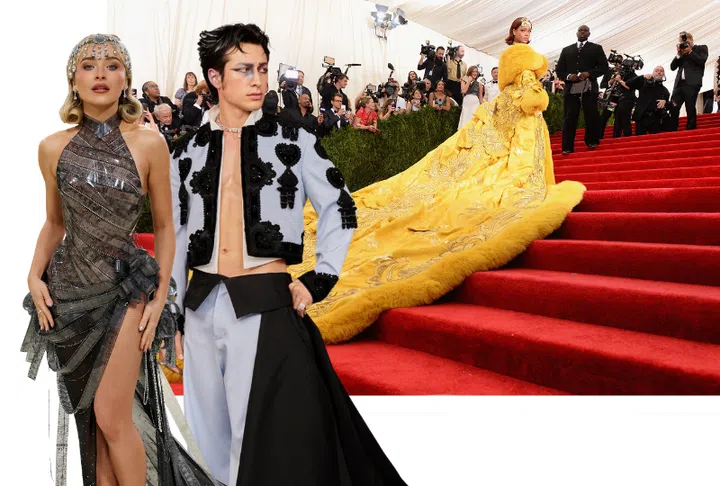
The Met Gala is a favourite pit stop for celebs to make a fashionable splash, as seen with Sabrina Carpenter’s Dior dress constructed out of film strips, Hudson Williams’ matador-inspired suit or Rihanna’s now-iconic Guo Pei robe.
Fashion loves an archive, but the red carpet has its own strange archive system. It is not housed only in museums or brand vaults. It lives in screenshots, stan accounts, TikTok edits, anniversary roundups, Pinterest boards, Instagram carousels and the collective memory of people who have never watched a full awards ceremony in their lives.
A teenager today does not need to have seen the 1996 Oscars to know Sharon Stone wore a white Gap shirt on the red carpet. They may have encountered these images first as a TikTok video, then as references on Pinterest, then as history in a list somewhere. That is how red-carpet fashion becomes modern folklore: it gets passed down, retold and reinterpreted.
And this is why symbolism matters. Without it, a gown can remain exquisitely made and emotionally inert. With symbolism, it becomes a text. It asks to be decoded. Zendaya’s robot suit worked because it operated on several frequencies at once: it served the film’s futuristic world, paid homage to fashion history, and in its own way addressed the current cultural obsession with technology.
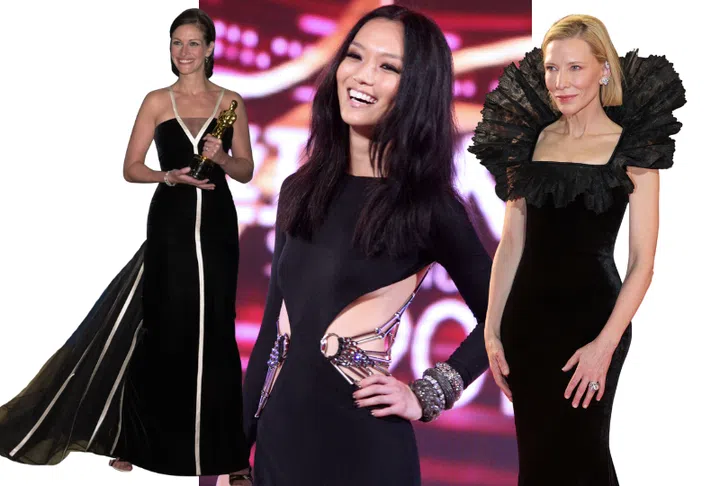
Black may be a safe colour, but it packs no less of an impact. Case in point: Julia Roberts in classic Valentino, Joanne Peh in scintillating Gucci, and Cate Blanchett in an architectural Louis Vuitton number.
The same instinct sits behind the rise of method dressing, a phrase that has been applied with great enthusiasm and varying degrees of accuracy to every press tour with a colour palette. At its sharpest, method dressing turns a promotional wardrobe into a narrative system. Margot Robbie’s Barbie tour, styled by Andrew Mukamal, succeeded because it was not merely “wear pink, sell movie.” It drew from actual Barbie references, fashion history and a knowing sense of play. The looks became a travelling exhibition before the book made that idea literal.
Miller sees method dressing as a shift from passive appreciation to “active decoding, because the audience is invited to participate in the puzzle”. There is, naturally, a trap as method dressing without taste can become theme-park cosplay. The best examples of method dressing often leave room for seduction, humour and fashion literacy. It gives the audience something to chew on, then trusts them to have teeth.
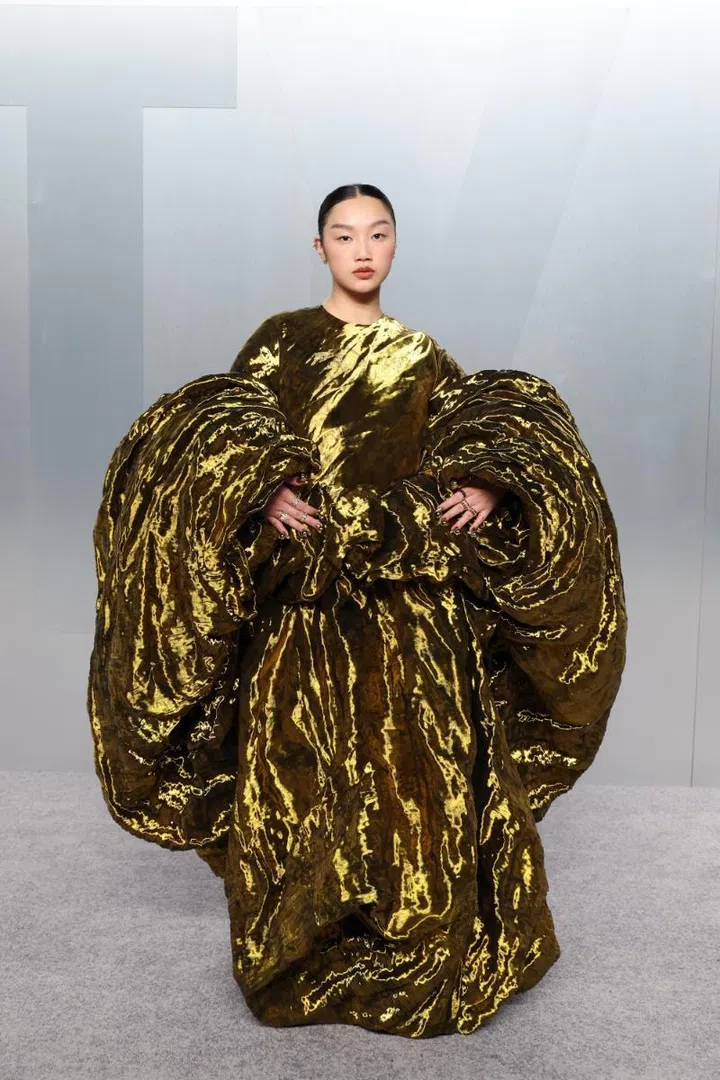
Audrey Nuna in a gilded Maison Margiela gown, styled by Danyul Brown.
Brown makes a similar point from the stylist’s side. The red carpet now moves at ridiculous speed, yet he does not think the goal has changed. A look still needs a clear point of view and a story if it is going to cut through.
“When I’m styling, I’m thinking beyond the first photograph,” Brown tells us. “I’m thinking about whether people will still be talking about the look a week, a month, or even a year later. The most successful looks spark conversation, emotion, and cultural relevance. That’s where real impact lives.”
Related article: Mae Tan On Circular Fashion And Dressing With Intention
Why Myth Still Matters
We are living through a period of what Miller calls “visual amnesia.” The phrase feels painfully accurate. Every day, the internet serves up an endless conveyor belt of images, each demanding half a second of feeling before the next one arrives.
Against this speed, the iconic red-carpet look offers friction. It asks you to stop, rewards a second look and, crucially, a second thought. The red carpet is one of the few remaining fashion spaces where impracticality is still the point. In daily life, we tend to dress for weather, office visibility, public transport, dinner reservations and the possibility that we may need to walk more than seven minutes. The red carpet has no such obligations. It permits a kind of grandeur that would be deranged anywhere else, which is precisely the pleasure.
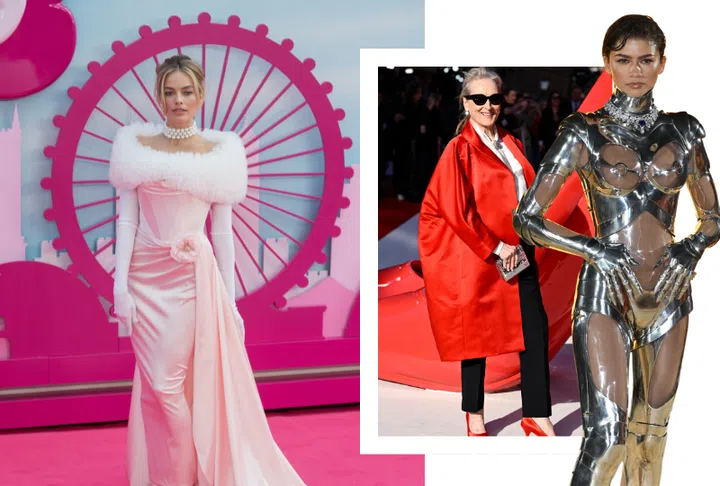
Method dressing has become expected from many film stars. The movement first gained popularity with Margot Robbie on the Barbie movie press tour, and was echoed by Zendaya’s gag-worthy robotic turn for Dune: Part Two. Today, celebrities like Meryl Streep continue the practice of method dressing, adding a layer of fun to the whole red-carpet exercise.
Related article: Genevieve Peggy Jeffs On Her Love Of Maximalist Fashion, Heritage And Headpieces
That pleasure matters because fashion is constantly being asked to justify itself. Is it sustainable? Is it commercial? Is it inclusive? Is it functional? Is it relatable? These are necessary questions, but they can also make fashion feel like it has to arrive with a quantifiable purpose. The red carpet reminds us that fashion’s power has always included fantasy and theatre.
Maybe it’s this alignment that drives the same names—Rihanna, Lady Gaga, and so on—to return again and again in red-carpet conversations. These are not simply celebrities who have worn beautiful clothes, but more than this, they work with teams who understand that the refd carpet is a language.
Perhaps that is why the red carpet remains one of fashion’s great living stages. Trends pass through it, brands invest in it, careers are made from it and audiences turn up to watch the performance and pretend, with varying levels of honesty, that they are above caring. Because it’s where a dress stops being just a dress, and a star becomes a little more mythic. The image travels further than anyone expected. Perhaps years later, someone sees it for the first time on a screen, pauses mid-scroll and understands, instantly, why it mattered.