
By Aaron Kok - published
At Chanel, the past is everywhere, so how does one create a collection that keeps history moving forward?
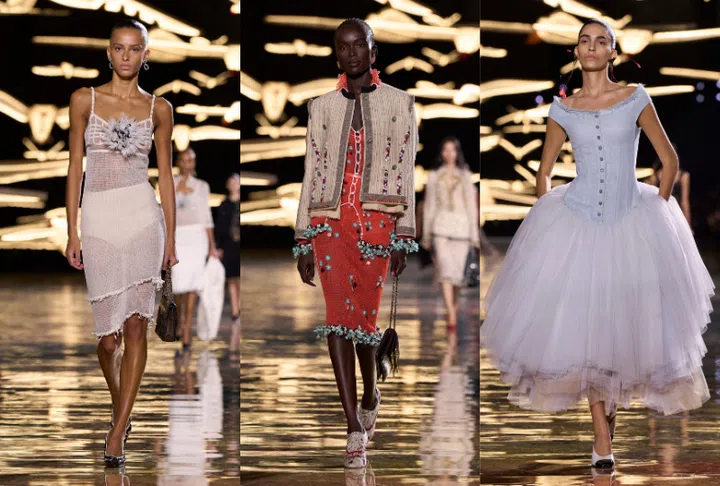
For spring/summer 2027, Matthieu Blazy began with an object that could possibly and literally have been left untouched for more than seven decades. Gabrielle Chanel’s own 2.55 handbag, pulled from the Maison archives and carried by model Dyanira Hurbuscher. With it came a gauzy white slip of a dress with a feathery rosette blooming across the bust. One was history preserved; the other, history stripped back to skin. Together, they set out Blazy’s proposition for the season: Chanel’s archive is not a museum, but it is a wardrobe, and wardrobes only make sense when people keep wearing them.
Related article: Bottega Veneta Embraces The In-Betweens
The collection—the third chapter of Blazy’s ongoing “La Conversation”—took its title “Different Faces of the Same Coin” from the idea that a woman accumulates versions of herself over a lifetime. Gabrielle was the case study: Blazy traced her from the young woman hemmed in by Edwardian dress, through her experiments with men’s clothes, to the designer who eventually turned the suit into one of fashion’s great instruments of freedom. The point was metamorphosis, as if the clothing we wear remembers where we have been, even after we have changed.
Related article: It’s Blue Sky Thinking At Dior Spring/Summer 2027
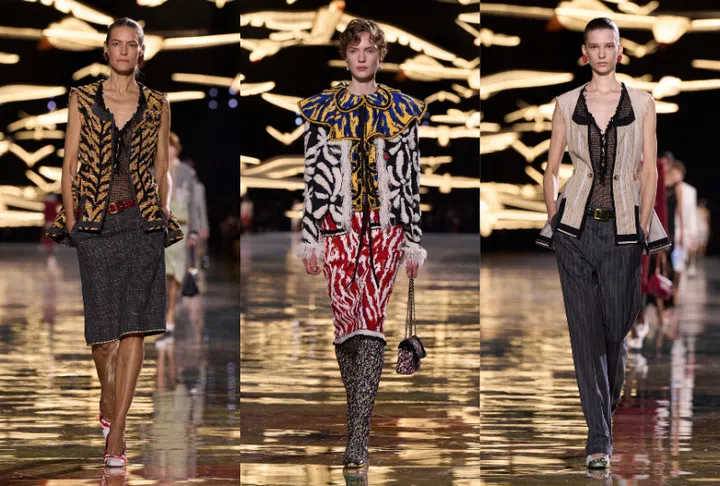
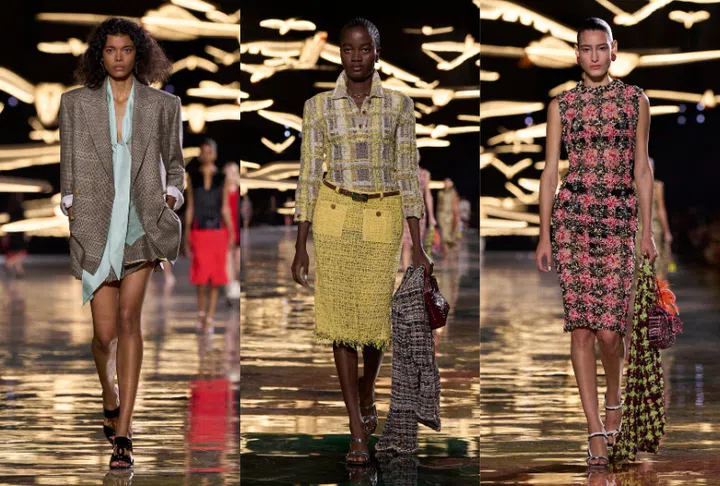
Those memories surfaced as fragments throughout the show. Corsetry appeared as shadowy lines of boning and ribbon trims. Peplums, ruffled collars and curved bodices left traces of old propriety across clothes that otherwise felt loose and immediate. Drop-waisted skirts in bouclé and wool were paired with tiny tops and tanks. An animalistic gilet was pulled sharply into an hourglass waist. Elsewhere, a crisp ivory coatdress was punctuated with mismatched gold buttons, while one delightfully unruly ensemble stacked three competing patterns across top, skirt and boots. Chanel has many rules, yet Blazy seems most interested in what happens when they start rubbing against one another in defiance.
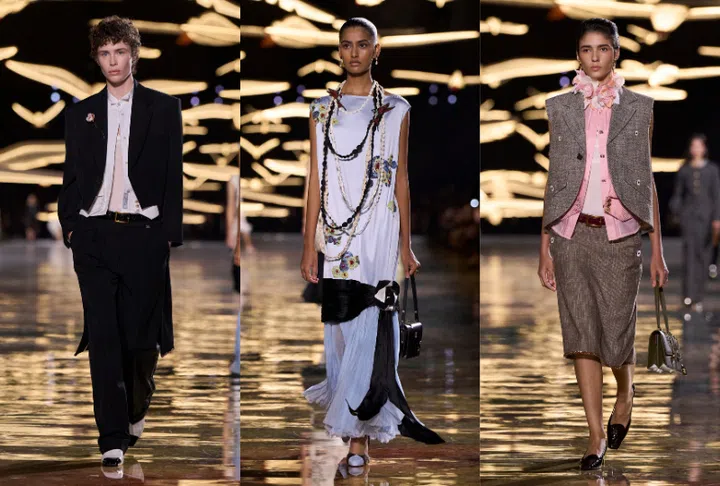
The menswear-inspired looks gave him another pressure point. Raw-edged formal jackets were cut into gilets, trousers slouched beneath pearl-embroidered corsetry, and tailoring completed Blazy’s exploration of the push-and-pull between masculine and feminine. That tension has become one of Blazy’s strongest instincts at the brand because he understands that Chanel’s revolution was never simply about borrowing from men. It was about taking the ease, authority and physical freedom coded as “for the boys”, then making them available to women.
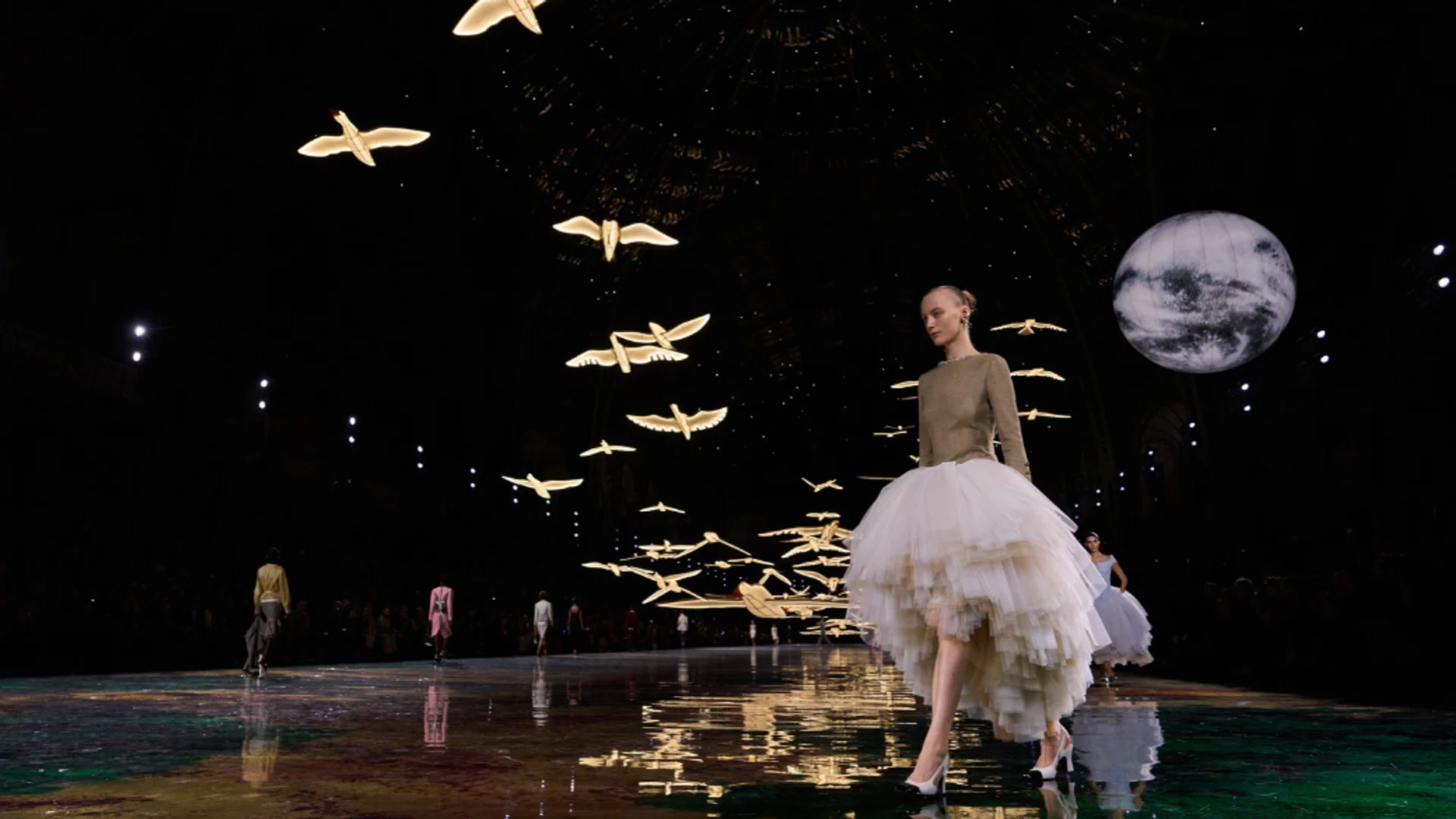
Still, Blazy has a taste for fashion that can wink. There were frothy dancer tutus, a harlequin collar in blue and orange, densely decorated jackets and enough cap-toe heels to suggest that even a Chanel icon can sustain endless mutation. Overhead, 95 illuminated birds crossed the Grand Palais, inspired by the swifts and swallows—avian creatures that represent freedom and hope—Blazy watches near the river in Calabria where he holidays. The symbolism was obvious, perhaps, but the clothes saved it from sentimentality. They actually looked capable of flight.
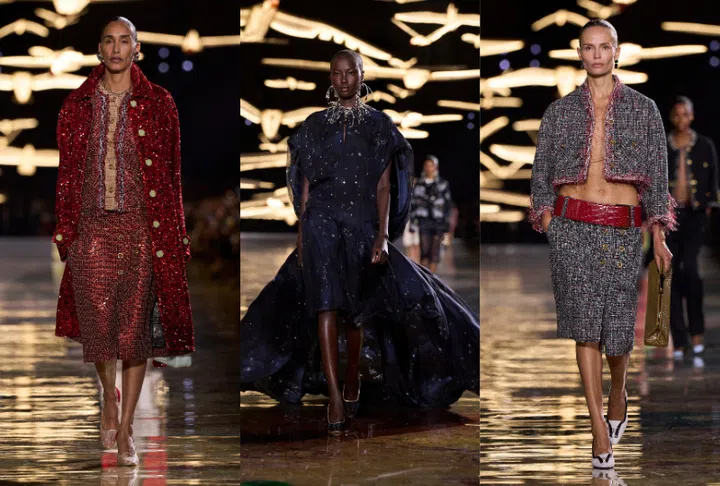
The most beautiful passage translated the changing sky into fabric. Layers of printed silk transparencies billowed like cloud formations moving through morning, golden hour and nightfall, ending in a constellation-scattered dress on Anok Yai. Here, the atelier’s virtuosity served something more atmospheric than demonstrative. The technical feat almost disappeared into movement, which is exactly the point. At Chanel, craft has often been a spectacle of accumulation, and Blazy is increasingly interested in how much work can go into making something feel effortless.
Related article: Anthony Vaccarello’s Love Letter To Saint Laurent Is Written In Gold
That thinking reached its clearest conclusion in the new “smocked tweed”, developed to stretch and move with the body. It looked like the most orthodox Chanel proposition on paper, yet behaved more like performance wear. A zesty yellow knitted two-piece similarly carried its technique lightly, the result of newly developed yarns and recalibrated machines that allowed embroidery to become part of the knit itself. This is Blazy’s version of sportswear at Chanel, no trainers required and clothes ready to keep up.
By the time Hurbuscher returned in the final look with Gabrielle’s 2.55 once more, the circle had closed without feeling tidy. The woman at the end was connected to the woman at the beginning, but she was not identical to her. Nicole Kidman’s readings from Virginia Woolf’s Orlando and To the Lighthouse on the soundtrack only sharpened the idea of selves accumulating across time.
A year into his tenure, Blazy no longer needs to prove that he understands Chanel. His SS27 oeuvre asks the more compelling question of what that understanding can unlock. His answer lies in a House elastic enough to hold contradiction: old bags and new fabrics, corsets and T-shirts, grand craft and physical ease, Gabrielle and whoever comes after her. Fashion changes because women do and Chanel, under Blazy, is keeping that pace well.