
By Aaron Kok - published
There is a particular freedom that comes when a designer stops asking what a House is supposed to be and starts asking what its clothes are supposed to do. At Dior, Jonathan Anderson appears to have arrived at precisely that point. For spring/summer 2027, he put some of the brand’s most protected shapes through a summer breeze and watched what moved.
Related article: At Gucci Spring/Summer 2027, The Clothes Come With Characters
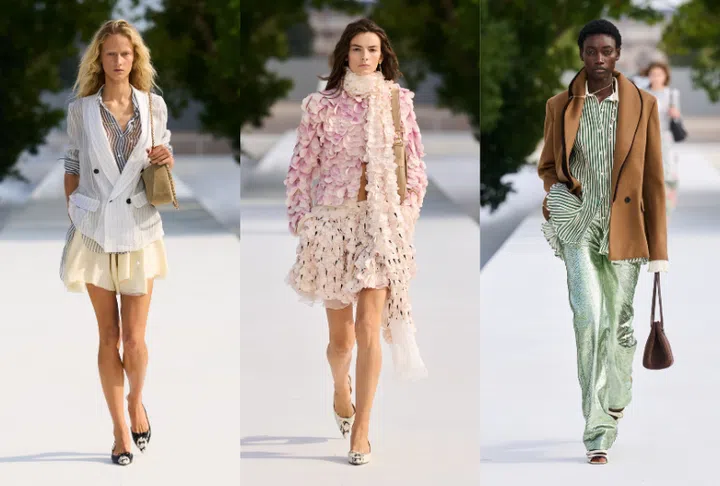
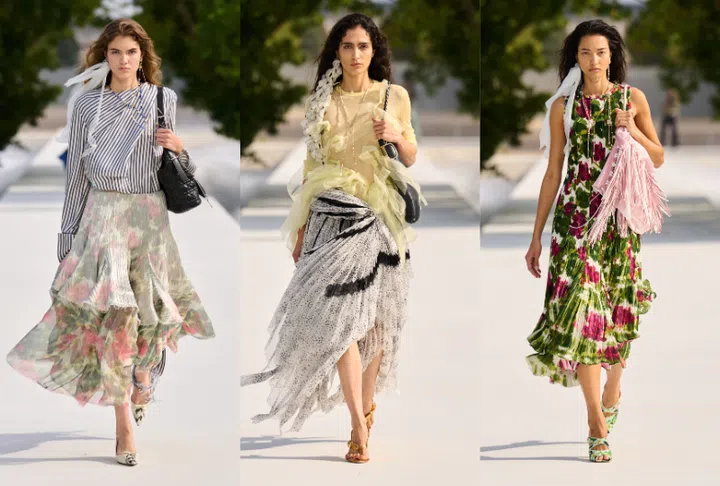
It feels especially timely. Across the season, fashion has been turning back towards the wardrobe: clothes with jobs, repeatable value, and designed for the varied lives that don them. Anderson buys into that pragmatism, while refusing the false choice between function and fantasy. His Dior woman can have both. She can wear a blue-and-white striped blouse with a low-slung pleated skirt in the afternoon, then turn up after dark in a pink confection of pleated tulle that appears to have wandered out of an 18th-century painting.
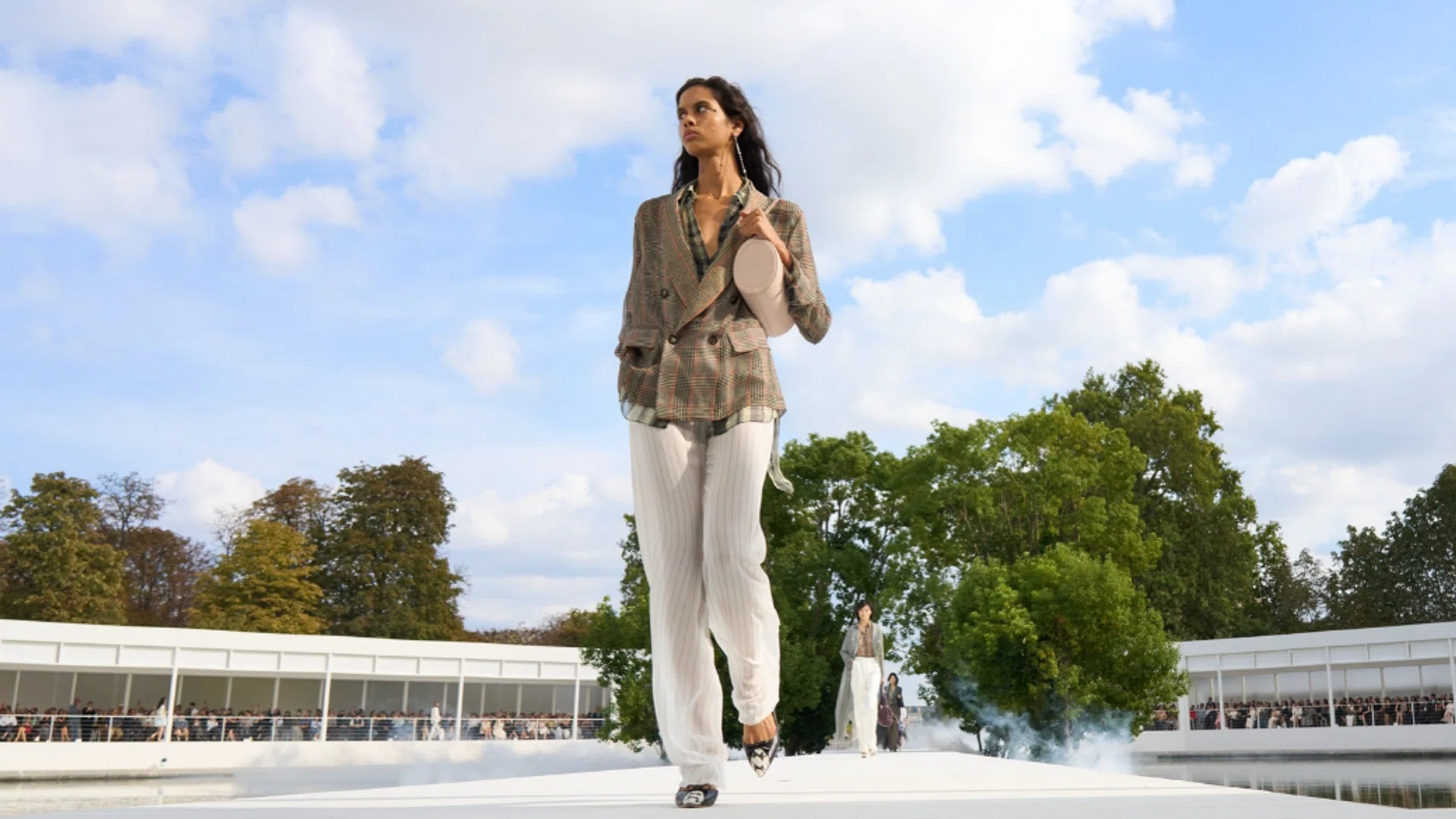
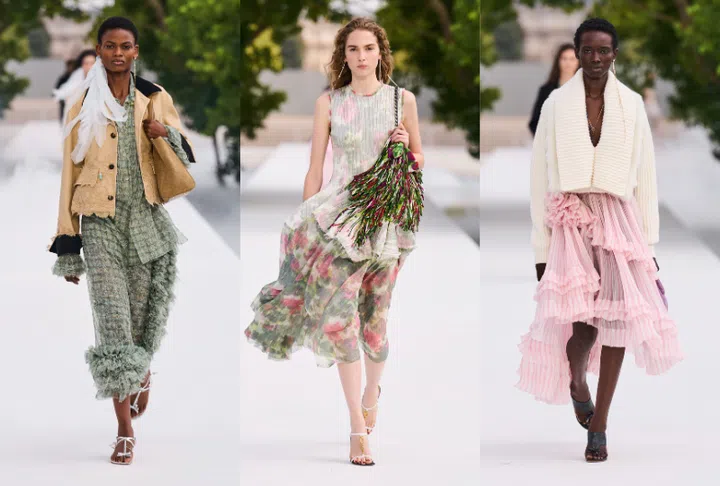
The collection began, fittingly, with disappearance. Dior’s archetypal structure was rendered nearly weightless as a sheer jacket came with a tiny ivory circle skirt built from layers of chiffon, while familiar pinstripes, tartans and Prince of Wales checks were translated into translucent fabrics that moved rather than held.
Related article: Fendi Spring/Summer 2027 Gets Under The Skin
The Bar jacket, a garment practically synonymous with controlled silhouette, became less architecture than atmosphere. This was the show’s central proposition: what happens when tailleur is treated as flou, when tailoring behaves like dressmaking? Even the press notes repeatedly question just how light a garment can become, and from the apparent looks of it, the answer is “very much”.
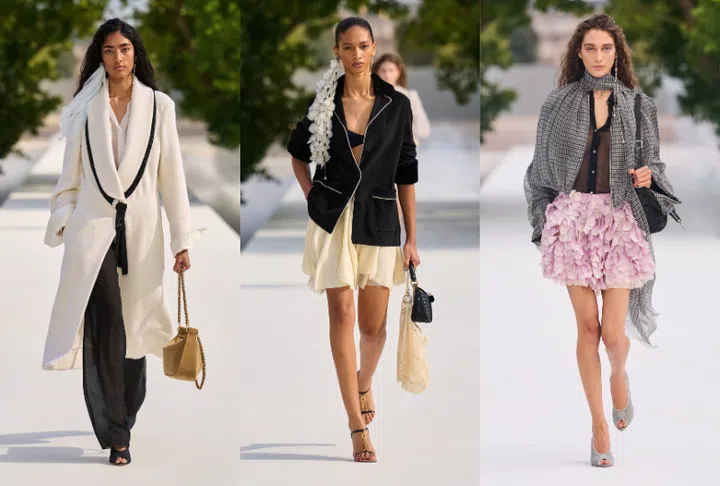
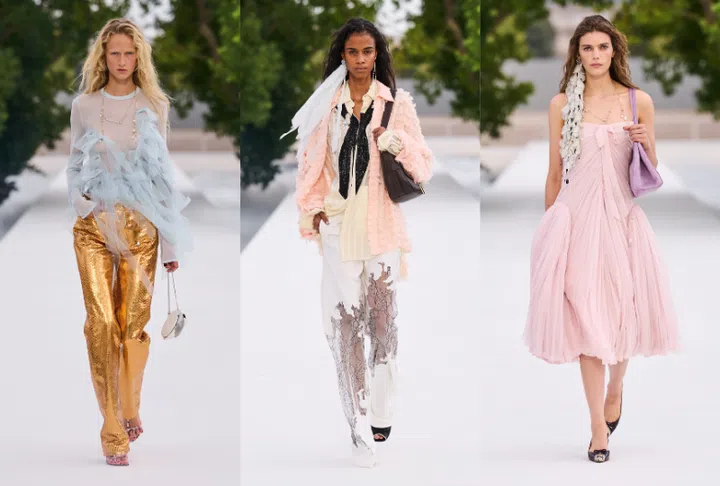
Skirts skimmed the body in whisper-thin pleats and Chantilly lace; jackets were softened, blurred and occasionally engulfed in hand-cut petals. A cropped floral jacket and miniskirt looked almost aerated, while pastel blossoms accumulated elsewhere into frothy, hydrangea-like surfaces. Even the more recognisably “Dior” shapes had been gently disturbed. The corolla silhouette returned, but its volumes slipped off-centre, stiffness interrupted by gauzy underlayers.
Related article: An Ode To The Skirt At Prada Spring/Summer 2027
That loosening also extended to the idea of who gets to inhabit Dior. There were shawl-collared jackets with the slouch of bedroom clothes, crisp shirting, khaki utility notes, gleaming metallic trousers and immaculate black tailoring. One severe black coat cut through the sweetness incisively, and in the grander view, the effect was less a singular “Dior woman” than a wardrobe of infinitely possible selves: romantic one minute, practical the next, grand when required, slightly undone whenever she pleases.
Anderson’s earlier Dior outings could sometimes feel like encounters with an archive, each historical object picked up, examined and playfully displaced. Here, the relationship felt more instinctive. The references remained legible, particularly the jutting hips of the 1952 La Cigale dress reworked in sugar-pink pleated tulle, and Maison’s houndstooth rendered ghostly and sheer. But heritage no longer seemed to be the point of the exercise. It was simply material to the imagined lives at play here.
Related article: Ralph Lauren Collection Spring 2027 Is A New Season In Blue
The accessories made that attitude explicit. Delicate chains meandered across torsos, more tangled tech than precious jewellery. Single earrings descended like floral garlands, and the Saddle returned without being treated like a museum relic.
Nature supplied the season’s poetic scaffolding. Earlier this week, guests received invitation boxes containing a pair of wénwán walnuts, referring to the longstanding Chinese practice of rolling them in one’s hand so their surfaces gradually develop a patina. Anderson’s predilection with storytelling often starts from the invites themselves, and he builds a chorus that crescendos as the final model hits the runway. Here, he seems to be fixed on the idea of time and the magical touch of a human hand. The metaphor could have become precious, instead, it sharpened the clothes as the forms already contain the possibility of becoming something else.
Related article: Coach Spring 2027 Is A Birthday Party 85 Years In The Making
That might also describe Anderson’s Dior, certainly because this outing felt like a release of pressure. The House’s famous femininity remained, but its waist could breathe, its flowers could scatter just as its tailoring could collapse into chiffon. In a season so preoccupied with the usefulness of clothes, Anderson offered a persuasive reminder that function need not mean austerity. There is plenty of hanger space for enchantment too.