
By Aaron Kok - published
In Jonathan Anderson’s sophomore outing for Dior’s menswear line, the boys are alright—if by alright you mean rebellious, rococo, and slightly rowdy in the best way.
Still riding the momentum of his debut menswear show and on the cusp of unveiling his first haute couture collection for the House, Anderson staged a deliciously defiant spectacle that felt less like a runway and more like a revel. Prep met punk, couture collided with club kid, and somewhere in between, Dior’s legacy was unbuttoned and rewired with subversive tenderness.
Related article: Fashion Week Favourites With BAZAAR Singapore’s Editors
The inspiration? A chance encounter Christian Dior had with Paul Poiret—or rather, a commemorative plaque honouring him outside the Dior boutique on Avenue Montaigne. It’s the kind of poetic coincidence fashion loves to mythologise, but Anderson takes it earnestly. If last season leaned on the discipline of Christian Dior’s tailoring codes, this one loosened the stays.
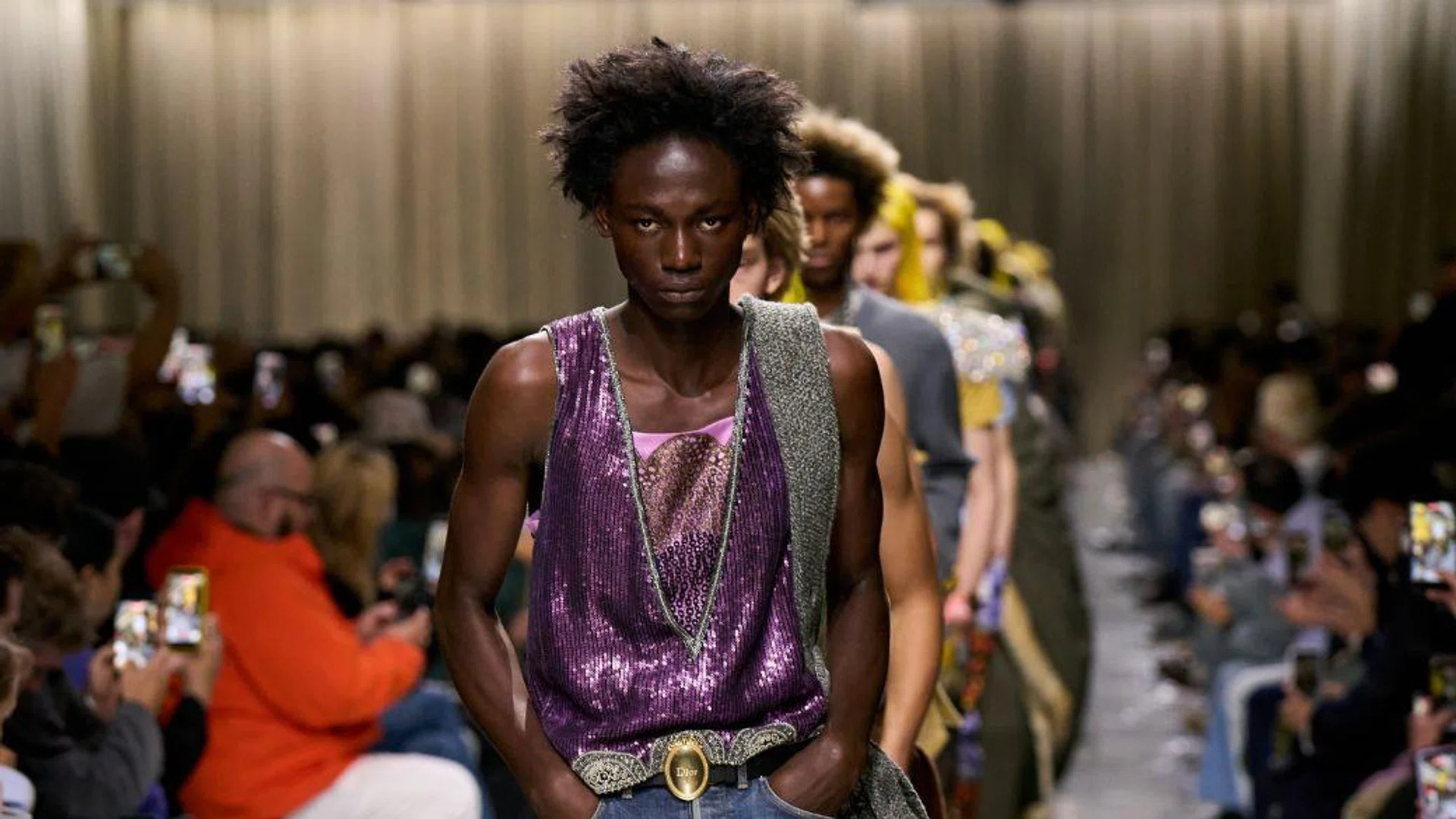
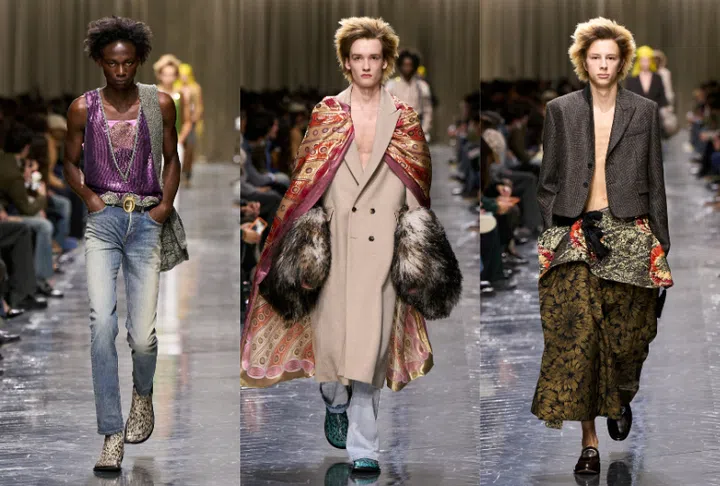
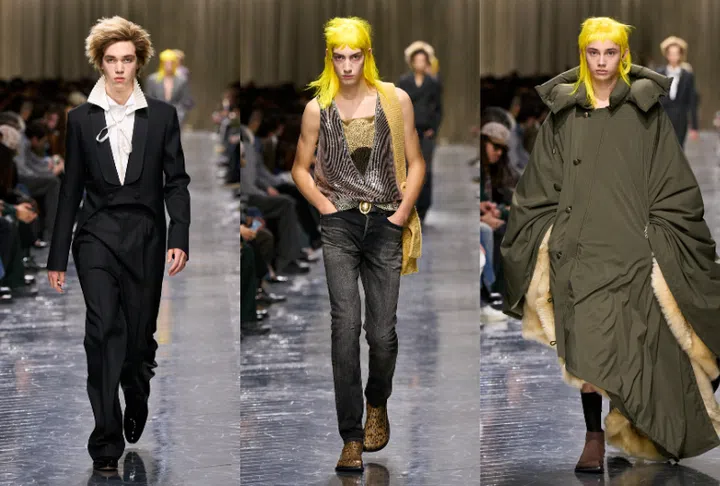
His young protagonists, imagined as flâneurs of the present-day, seemed to have stumbled upon Poiret’s spirit and pulled it on over a pair of skinny jeans. Literally: the opening looks were sequin-laden tank tops echoing Poiret’s vintage flapper dress patterns, paired insouciantly with denim and Cuban-heeled boots. Like boys who found their grandmother’s jazz-age gown and decided to make it a band tee.
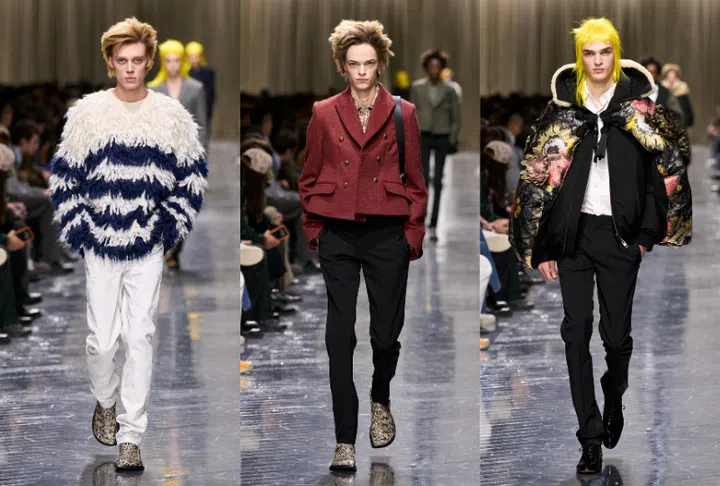
The New Romantic spirit hovered throughout: bright yellow bangs or buoyant mullets à la Pam Hogg and Culture Club, ruff collars like a rebellious Henry VIII, and proportions that teetered between princely and petulant. Tailcoats were rendered in tactile cable knits. Bar jackets, cropped high under the armpits and shrunken into submission, were done in distressed denim and houndstooth. Shearling lapels exploded into flamboyant operatic cuffs, framing the body like a rococo painting. It was dramatic, theatrical, a little unhinged—and exactly what today’s menswear scene needed.
Related article: Pharrell Williams Is Building His Own Niche With His Louis Vuitton Fall/Winter 2026 Menswear Collection
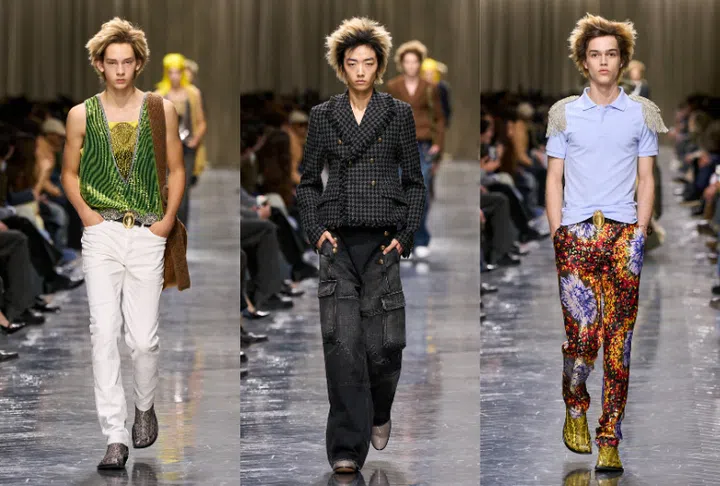
Anderson has always been an exceptional stylist of tension: here, it was posh versus punk, dandy versus drifter, utility versus ornament. A classic bomber jacket would blossom into a brocade cape. Military coats puffed out at the back like opera cloaks. Slim trousers—often in jacquard woven with Poiret’s original motifs—were cut to graze the ankle, worn with D-shaped loafers that nodded to Dior’s curved codes. There were moments of near absurdity (asymmetric skirts, gravity-defying silhouettes, ankle-grazing sweaters) balanced by deeply wearable pieces: cropped wool suits with gently tilted shoulders, satchels slung like schoolboys, sculpted coats with military precision.
But beyond the garments, there was a quiet (or perhaps loud) provocation: What does menswear want to be now? Anderson’s answer isn’t about conforming to taste, but expanding the spectrum of possibility. His silhouettes toy with extremes, going elongated and lean one moment, to cocooning and oversized the next. Fabrications draw from costume history, yet remain grounded in modern construction. A gossamer jacquard cape trails behind a trenchcoat like a castle banner; a parka sprouts 3D flowers like a dream-state mutation of Dior florals.
Related article: “You Need To Understand It, To Preserve It”: Pierre-Louis Vuitton On Why Craft And History Still Matter
There’s a magnetic styling intelligence at play—one that resists immediate comprehension but rewards second glances. Sequinned epaulettes on ribbed polo knits, velvet jackets piped in thick passementerie, long cardigans worn as robes, long johns tucked into boots like a prep-school punk. The collection doesn’t plead for mass appeal, but when deconstructed, many pieces prove surprisingly commercial: a tweed pant here, a shearling jacket there, a glitter-knit sweater softened by slouch.
Of course, the real subtext of the show is timing. This was Anderson’s second menswear collection for Dior, but his third show for the house in under a year, with haute couture looming in mere days. Yet nothing about this outing felt rushed. If anything, it pulsed with a conviction that Dior, under his hand, is not a house of rigidity but one of radical grace. “Dior is not going to be a predictable silhouette,” Anderson said in the post-show scrum. And thank god for that.
Because in a season where many designers chased wearability with all the caution of a tax accountant, Anderson dared to ask: What if getting dressed felt like a party again? Not a gala, but a hazy night at a dingy club, where defiance is glittered in sequins and gender is just another silhouette to blur. In his collection, he proposes a world: one where the aristocrat has a punk phase, the rebel has read Proust, and the boy wearing the jacquard cape might just be the one to save menswear from itself.