
By Aaron Kok - published
Luxury fashion has always had a slightly awkward relationship with the fact that, eventually, somebody has to buy the clothes. Runway shows prefer mythology, campaigns sell fantasy, but stores? Stores are where desire finally acquires a price tag. Gucci has never been especially shy about that last part, which made Demna’s decision to stage his spring/summer 2027 show inside a fantasy Gucci boutique feel less like set dressing than a statement of intent.
Related article: All The Must-Know Celebrity Campaigns Of 2026
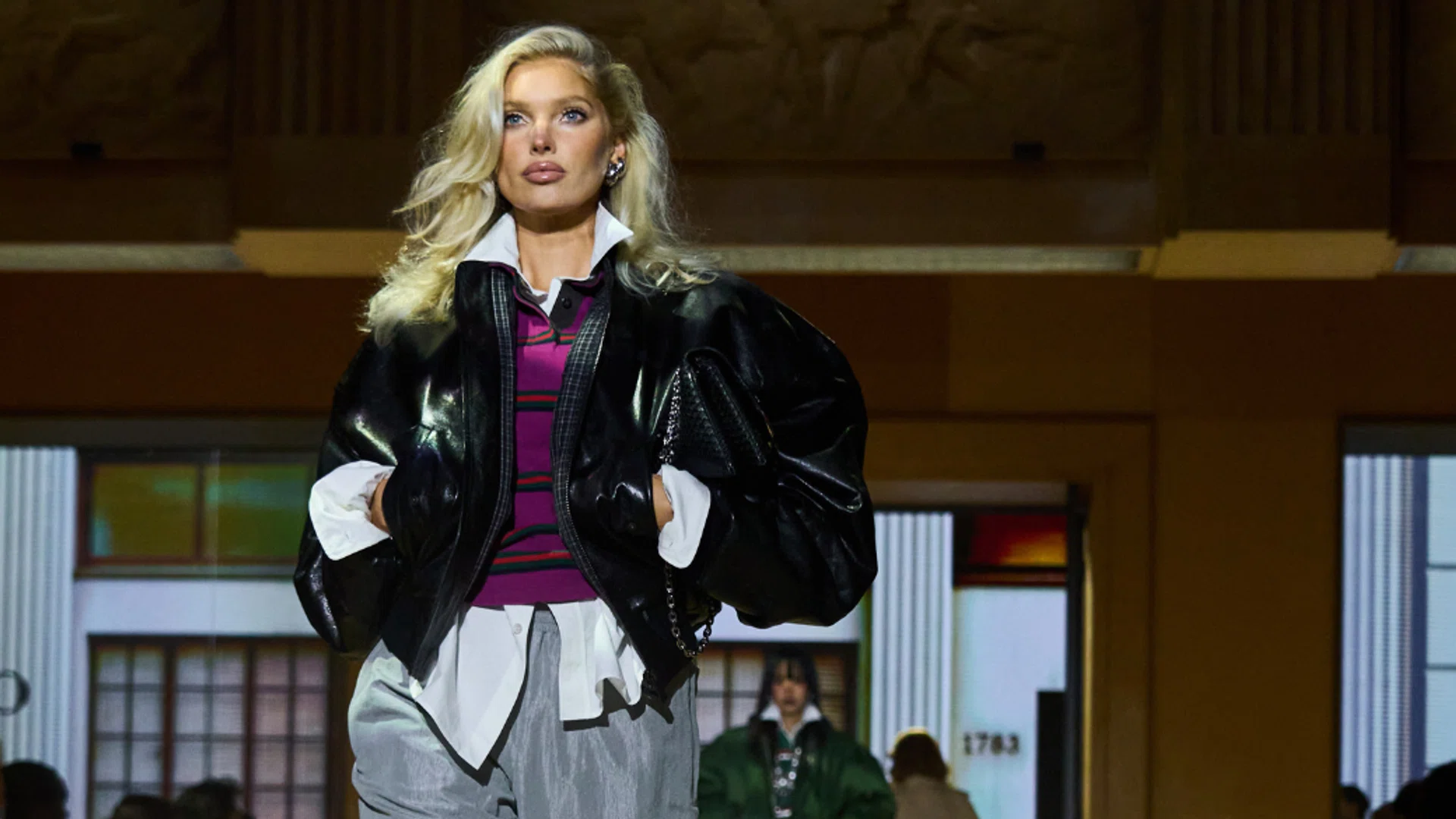
The space was rendered with unnerving completeness: marble walls, velvet seating, rails of clothes and shelves lined with accessories, all built to resemble the House’s future retail environment, and through it came a cast of models presenting a collection as much as they could have been customers who had wandered in and decided to become the merchandise. It was retail theatre, or perhaps luxury LARPing. Either way, the premise was clear: Gucci’s most enduring product is the promise that you can don something new and turn into a new character.
Demna has spent his first year at the House circling that idea. In his show letter, he writes of Gucci as a desire to “belong to a more glamorous world”, one built on the friction between propriety and sensuality. SS27 finally gave that thought a population. There was the horse-riding princesses, the Milanese sciura in their wind-defying coifs and chic coats, the occasional prep-school brat, the nightclub siren, the old-moneyed gentleman and the socialite whose family tree perhaps becomes less convincing the more closely you inspect it. Gucci, here, was an entire waiting room of personalities with fabulous handbags.
Related article: Demna Gives A Lesson In Sex Education At Gucci Fall/Winter 2026
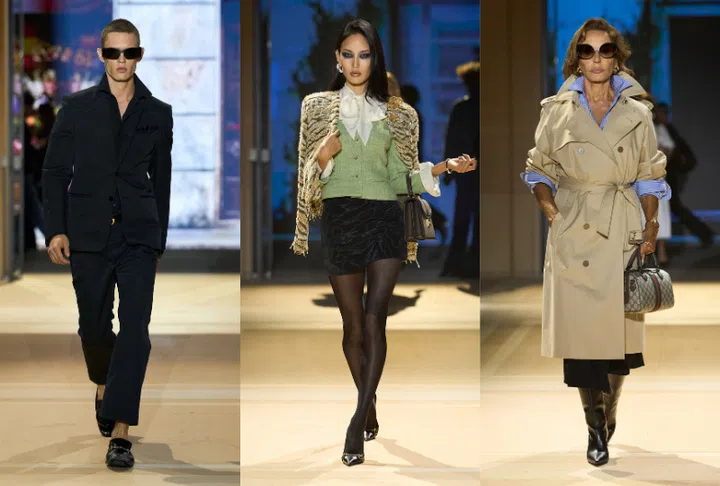
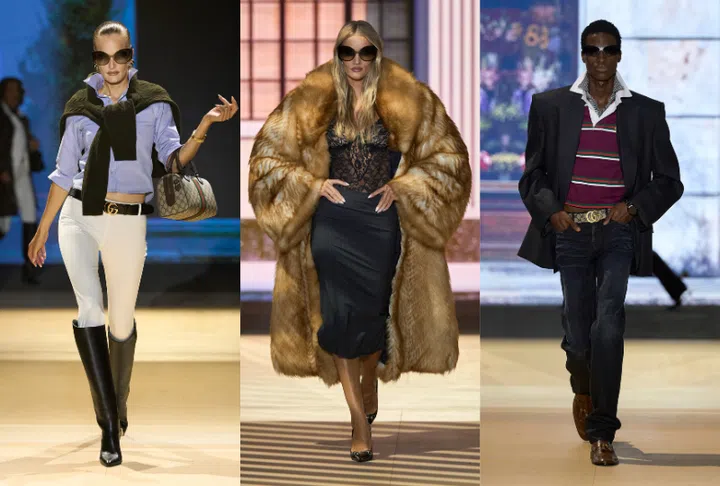
The womenswear opened with the House’s equestrian codes rendered almost clinically polished. A fitted three-button riding jacket came with tiny silver horsebits at the lapels, paired with impossibly tight white breeches and tall riding boots. From there came the bourgeois contingent: crisp trenches, precise coats, shirt dresses and immaculate tailoring, worn with the kind of self-possession that suggests one has never queued for anything in one’s life.
Related article: Fendi Spring/Summer 2027 Gets Under The Skin
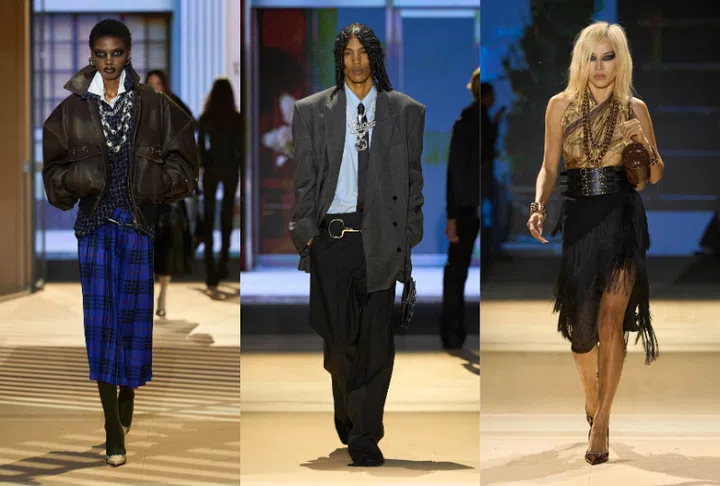
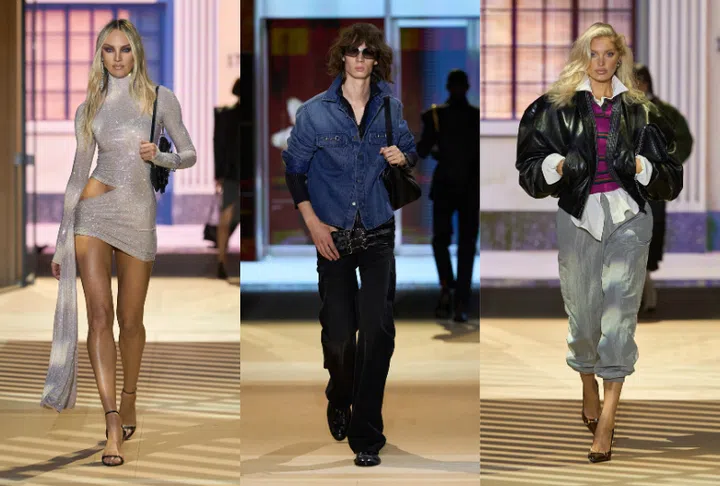
Then, as act one was over, the succeeding looks tore up the primness. Tartan kilts were blown up with giant horsebit hardware and rugby shirts arrived with collars popped, bomber jackets swelled around the body, and low-slung jeans were held up by belts bristling with multiple buckles, while heavy chains were piled against one’s clavicles. Demna’s tailoring found a similar tension: shoulders were peaked, waists pulled inward, jackets cut closer than the monumental shapes associated with his Balenciaga years. The silhouette was controlled, even proper, but there was always something slightly antagonistic in the styling.
Menswear played the same game with a different wardrobe. Cropped trousers, bare ankles and loafers summoned the late-’80s and early-’90s Gucci man, somewhere between inherited privilege and practiced nonchalance. Against the more Gothic tailoring and elongated proportions, that almost aggressively-bourgeois ease felt surprisingly fresh. Demna has spent much of his career interrogating taste from the outside. Here, he seemed amused by the challenge of dressing the man who owns the country house.
Related article: What To Wear To Work: A Guide To Decoding Office Dress Codes
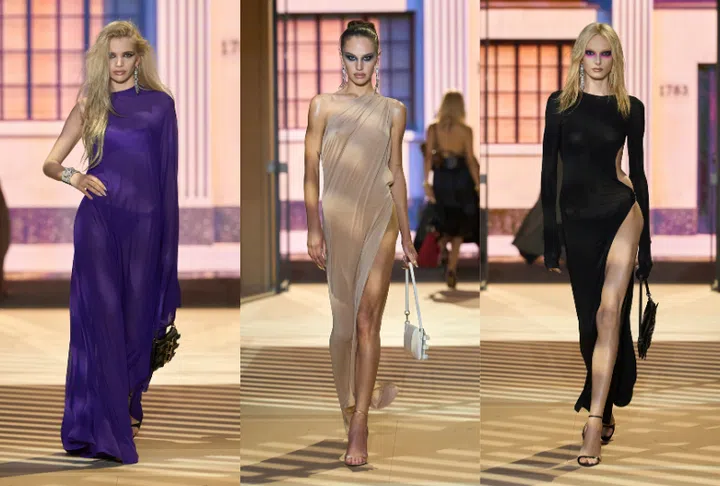
The eveningwear pushed that fantasy into more overt seduction. Slinky jersey dresses recalled the body-conscious ease of Tom Ford-era Gucci, while sharply cut black dresses and champagne-toned draping gave glamour a less decorous front. The final gown, slung over one shoulder and held in place by a teardrop-shaped metal weight, was clever: engineering disguised as nonchalance. It looked precarious, which is often when glamour becomes most convincing.
What made the show work was its refusal to tidy Gucci into a singular idea. Luxury houses currently love speaking about codes, whereas Demna’s Gucci is more sociological. He seems interested in who wears the codes, why they want them and what fantasy of themselves they are purchasing in the process.
Related article: All The Fashion News You Need To Know Right Now
That explains the strange coherence of a collection that moved between riding clubs, European drawing rooms, boarding schools and after-dark hole-in-the-walls where decadence and sweat mix. These people should have very little in common, yet put them inside a Gucci store and suddenly they belong to the same universe.
And perhaps that is the point, given that Gucci has always sold glamour as a kind of access, even when the definitions of glamour change. Demna understands that the modern luxury customer want options. Today, an heiress, and tomorrow, a delinquent in a kilt or an opera diva in jersey. The store is open. Pick a character.