
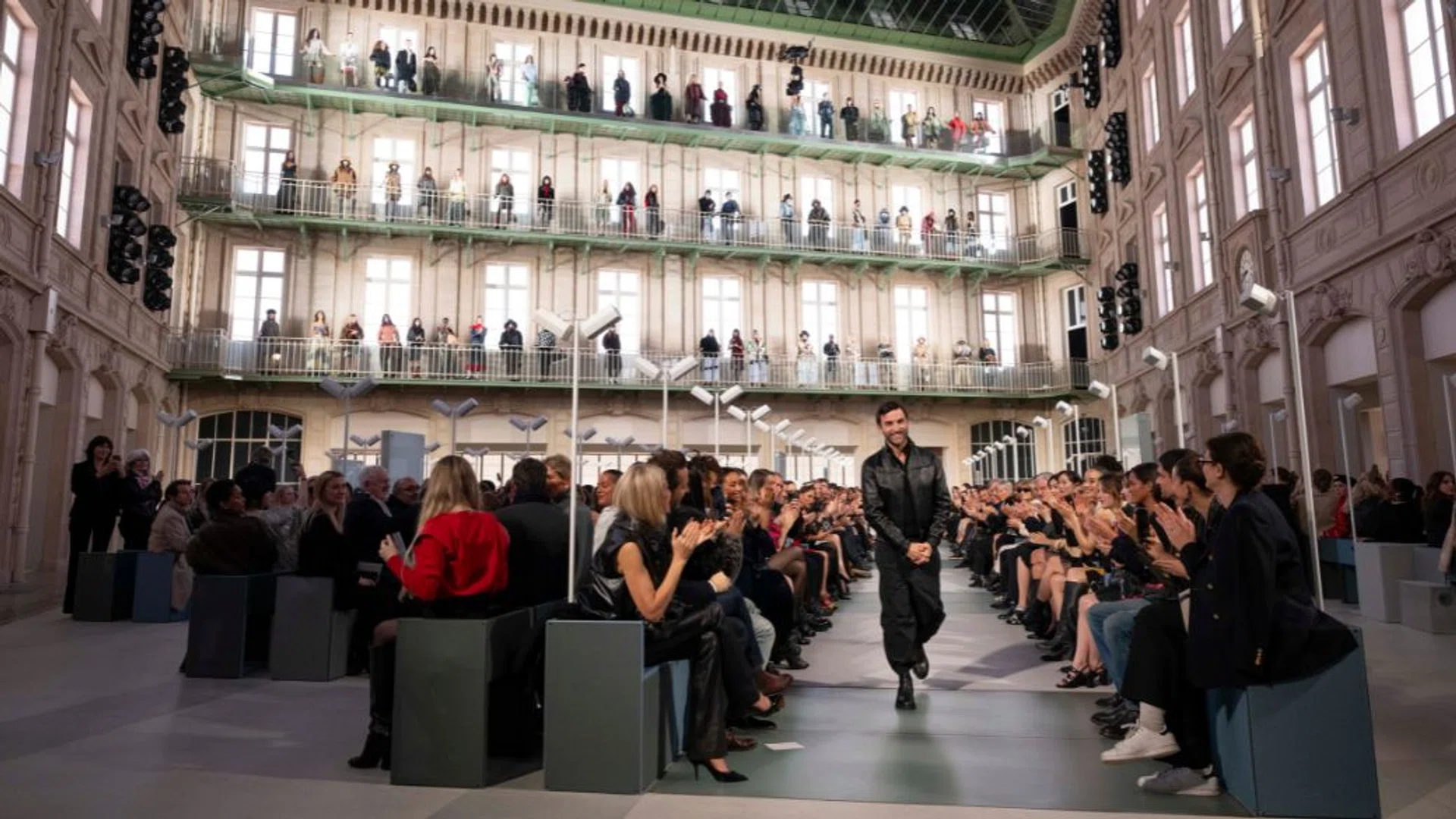
By Windy Aulia - published
It’s hard to mask my fascination and personal fervour towards the great talent that is Nicolas Ghesquière. From the time I witnessed his very first collection for Louis Vuitton to many other subsequent shows, including his recent 10th year celebration for the House, Ghesquiere’s creative direction for Louis Vuitton, in my opinion, not only makes a great statement each season, but always transports me to different places or even dimensions.
He shared—in person, I must add—after his debut show for Louis Vuitton’s fall 2014 collection, that he started at the House by getting some insights from the women in his studio on what they actually want to wear (listening skills, check)—which essentially meant that he took us into the inner sanctum of his creative space. Then he, physically as well as metaphorically, took us to many places: the out-of-this-world amazing Bob Hope estate in Palm Springs that’s shaped like a UFO for the cruise 2016 show, as well as Rio de Janeiro (cruise 2017), Place Vendôme (spring 2017), Kyoto (cruise 2018), New York’s TWA Flight Center at JFK Airport (cruise 2020), and the Louvre many a time, the list goes on and on. He took us to the past with the spring 2018 collection and its mid-18th century damask jacket (paired with loose silk shantung shorts, mind you) and the fall 2020 collection and its cross-century panniers. Or, also many a time, he took us to the future, like with Louis Vuitton’s spring 2016 collection and its Tron and Manga references.
Related article: La Beauté Louis Vuitton: Pat McGrath Leads A New Luxury Beauty Chapter
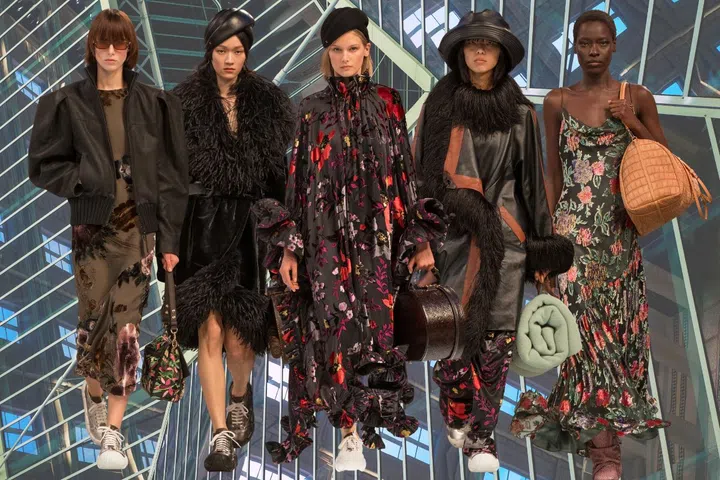
The 'First Class' passengers looks at the Louis Vuitton fall/winter 2025 show with the highlights on feather and Shibori silk technique
By now, we should catch the drift, there’s always a place or a moment in time in the way Nicolas Ghesquière approaches any Louis Vuitton collection. So why did he choose a train station this time around?
Notably, the location for Louis Vuitton’s fall/winter 2025 show was kept under wraps until the last minute that the invited editors were required to take a scheduled shuttle bus to arrive at the location. As it turned out, the secret location was L’Étoile du Nord, the former headquarters of a train company that predates the national railway of France. The show was kept small, approximately 300 guests only, which is intimate by Louis Vuitton standards. The set was meant to be the platform of a train station, which in Ghesquière’s imaginative mind, served as the perfect backdrop for a multitude of emotions, of “adventure and enchantment”, as the show notes explained.
Think about those times when, cinematically, a concourse has been used to heightened the plot: Harry Potter, for example, uses Hogwart Express’s platform 9¾ to connect between the real world and the wizard world, The Hunger Games uses the train stations to symbolise different districts and classes of society, Casablanca uses a train station in Paris in the pivotal scene that sets the stage for the film’s iconic romance and themes of sacrifice, while Murder on the Orient Express filled the cars with eccentric and puzzling casts as they went through stations to provide different stages of an unfolding mystery.
Related article: Louis Vuitton x Murakami Chapter 2 Celebrates Japan’s Cherry Blossom Season
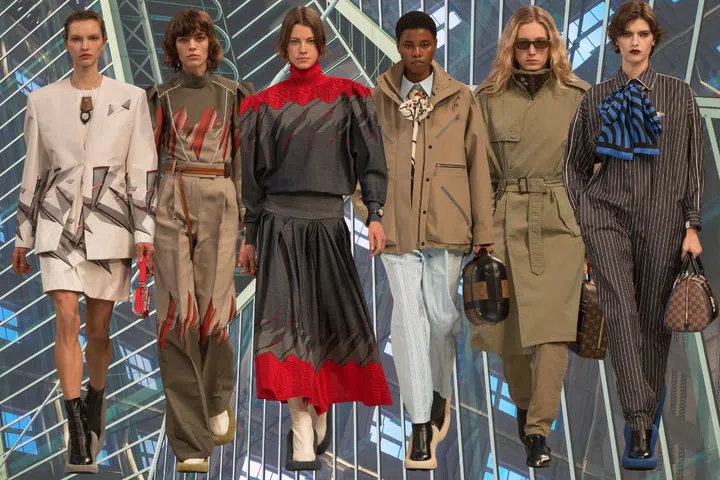
The utilitarian looks from Louis Vuitton fall/winter 2025 with print that resembles a European train's seat upholstery and work wear
And in true Ghesquière fashion, he didn’t lean towards the literal train platform à la Louis Vuitton’s iconic fall 2012 show, he took us through a different route altogether. The closest to a train motif used in Louis Vuitton’s fall/winter 2025 collection was in fact only a collaboration with the legendary electro group Kraftwerk, whose cover of the iconic album Trans-Europe Express can be found on some looks, emblematic of this collection.
Instead, Ghesquière worked like a movie director and filled the platform with many different characters, whom we can identify from what they’re wearing. We could see the first class passengers with their marabou-feathered velvet coats and leather jackets (looks 12, 14 and 17) along with their eclectic carriage mates in their beautiful Shibori silk floral dresses (looks 15, 18, 19 and 20) that perhaps they had picked up from exotic sojourns.
How about those passengers in checks (looks 7, 8 and 10)? They look like they had styled their picnic throws rather than wearing stylish Scottish kilts, but they definitely looked a little more utilitarian. Then there were the ladies who look like they are chic clerks with their pussybow blouses, jumpsuits, trench coats and briefcases (looks 35, 36, 37) on their way to 9-5 shifts. We also saw some high-level executives in their tailored uniforms of tailored suit sets and what looked like an intarsia knit with a pattern that resembles the seat’s upholstery of European trains (looks 30, 31, 32, 33).
Related article: All The Asian Stars At Fall/Winter Fashion Week 2025
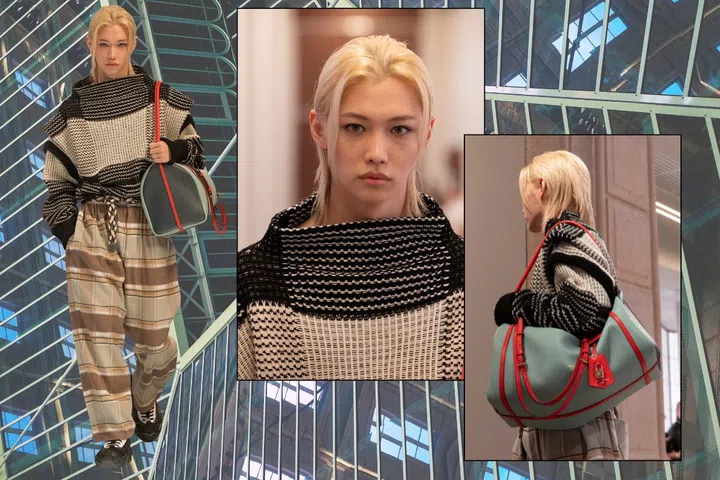
Felix of StrayKids on the runway of Louis Vuitton fall/winter 2025 show
But my favourites are the looks where they resemble travelling troubadours, with their modern take on a redingote in double cashmere or waxed canvas, leather neck patches and double bum bags (looks 22 and 23). They may look like they’re just extras in the Louis Vuitton fall/winter 2025 mise-en-scène, but they truly act like important cameos—the other important cameo was the elfin K-pop star Felix of Stray Kids fame, who walked the runway for the brand for the second time.
Evidently, there were more characters at the Louis Vuitton fall/winter 2025 stage. Some were more apparent than the others, but regardless, they were all beautiful in their own rights. With 61 exits on the runway, Ghesquière managed to build a compelling story about love, melancholy, the enthusiasm of departure or the comfort of return, all through the narrative of fashion. With such excitement on the platform, who needs the train after all?