
By Aaron Kok - published
There is something deliciously unexpected about the idea of Tod’s doing sexy.
For seasons, the Milanese house has been shorthand for a certain species of restraint: Gomminos, impeccable trenches, leather so buttery it practically whispers. Incognito chic’s favourite cousin, if you will. But for fall/winter 2026, Matteo Tamburini pivots the conversation towards something more sensuous, more corporeal. Tod’s, it seems, has rediscovered the back.
The show space itself telegraphed the thesis. Under stark spotlights, artisans worked live at tables—hands cutting leather for a Gommino, painting silk scarves, folding a hand fan. Here, laid before showgoers, was a performance of craft as resistance. As the press release frames it, this is Tod’s reaffirming its “artisanal intelligence,” a heritage rooted in quality and expertise. In a season where “craft” has become a murmured mantra across Milan, Tamburini goes beyond just referencing it; he toys with it, pushes it and stages it. In the dawn of AI acceleration, the magic of humanity becomes radical again.
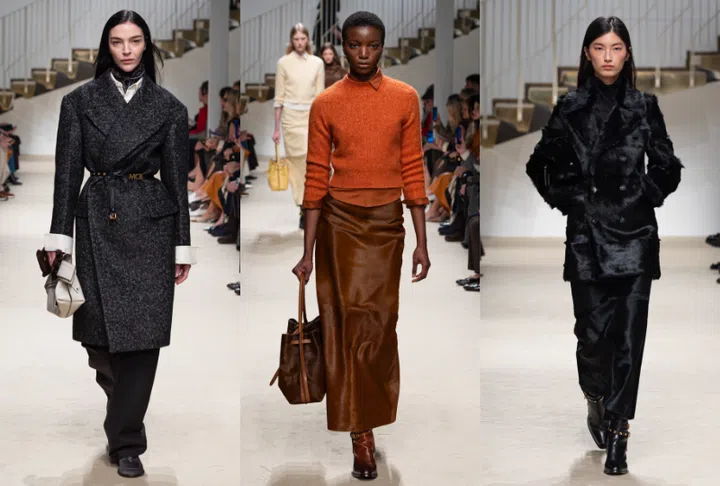
From this setting, the clothes emerge as a meditation on protection and time. Big jackets wrap the body like portable architecture. Blankets morph into accessories to be carried with your Di Bag in case of a sudden gust. Capes—angular, some in smooth ponyskin or in wool cashmere—hover with presence but without heaviness. The volumes are generous, enveloping, almost sculptural, yet they never tip into theatricality. These are real clothes for real life to face real events, but refined to a whispering pitch.
Related article: Maria Grazia Chiuri Introduces The New Spirit Of Fendi For Its Fall/Winter 2026 Collection
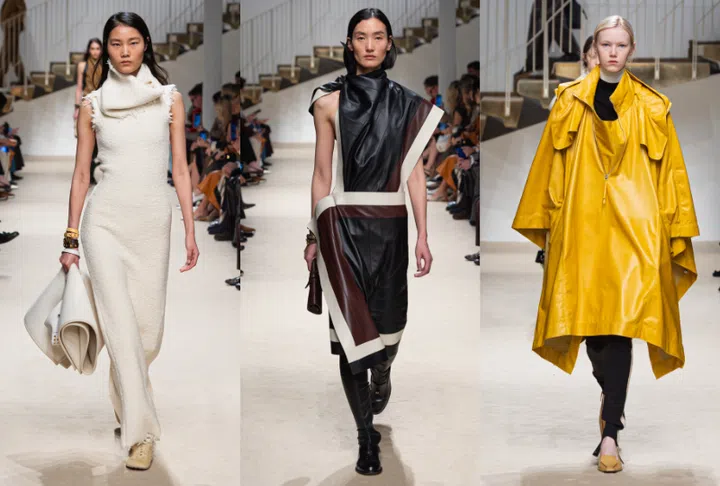
Leather, of course, is the protagonist. But it is not the lacquered, armour-like leather of fashion fantasy. It is crushed, washed, aged. A cropped leather blazer looks as if it has already lived with you for years, and elsewhere, a superlight leather utility coat is engineered to acquire a natural patina over time, honouring the idea that beauty accrues, rather than arrives fully formed. The house’s Pashmy leather—light, silky calf, worked to enhance chromatic depth—appears across outerwear and skirts, embodying the tension between material refinement and functionality. It feels decadently soft, indecent even.
And then, the reveal.
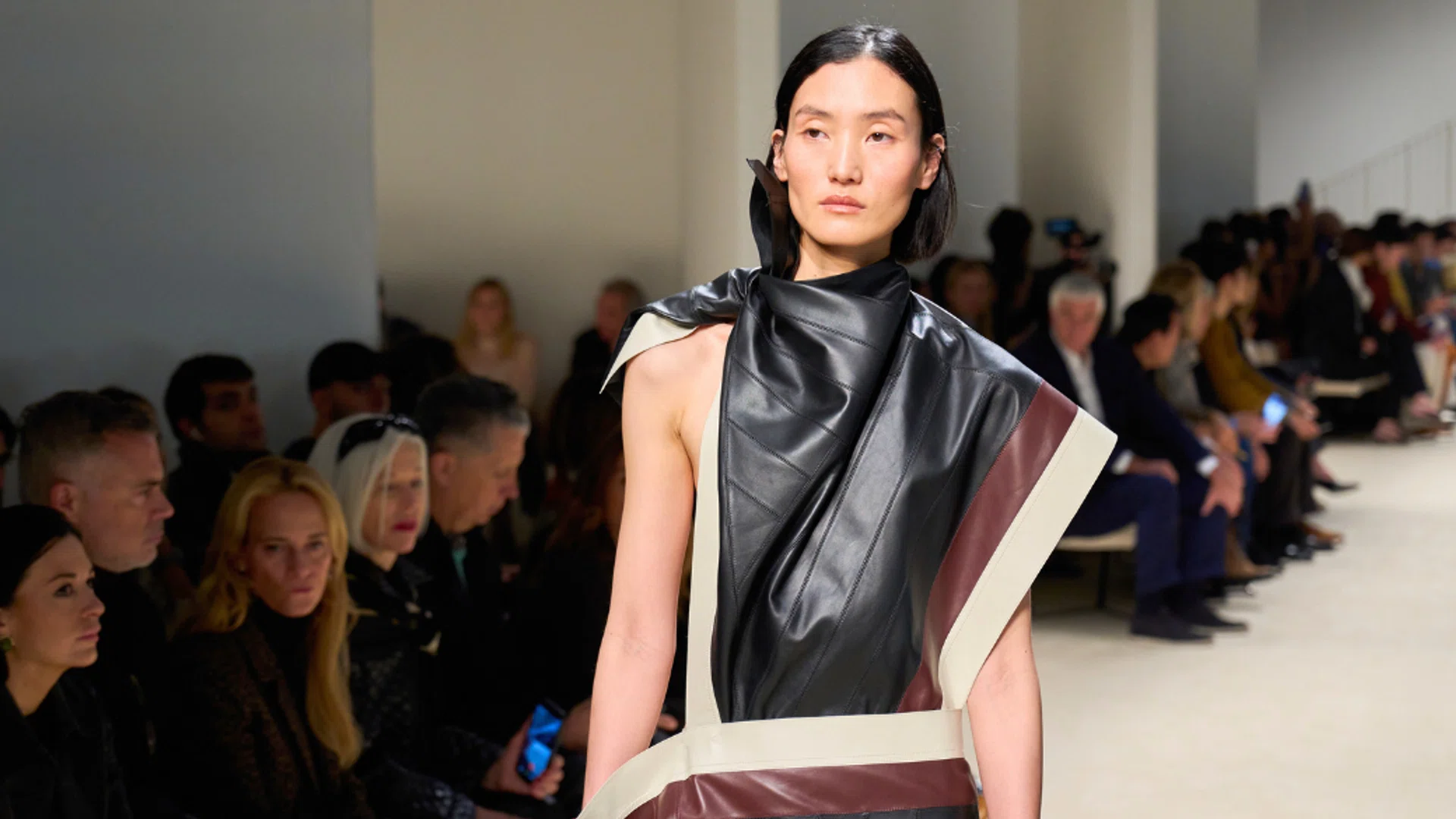
A series of origami-like leather foulard dresses that wrap asymmetrically around the torso, only to leave the back entirely bare: protection in front, vulnerability behind. A study in duality. In a similar vein, slender handkerchief skirts and form-grazing gauzy knits counterbalance the collection’s sculptural outer layers, creating a push-pull between shelter and exposure. Sensuality here is disciplined. It does not scream; it suggests.
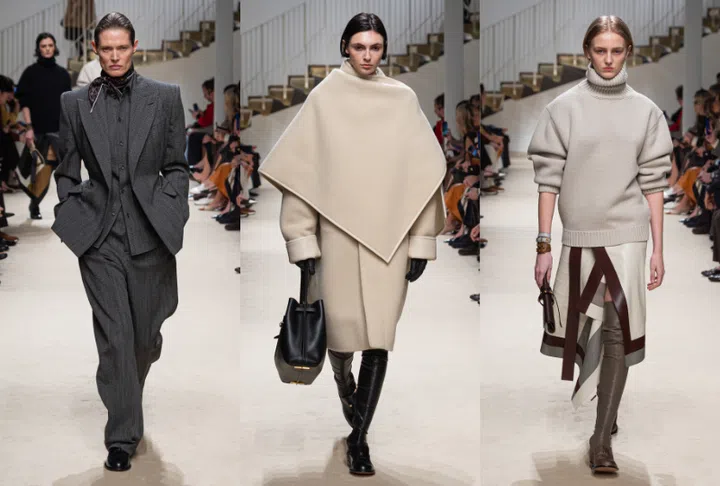
Tailoring is another site of this negotiation. Blazers are cut broad at the shoulder, their lines slightly sloped on the shoulder, but come equipped with slim leather straps at the back to cinch—or not. It is an act of control. There is a 1990s inflection to some of the power dresses, but Tamburini’s hand keeps them from sliding into hazy nostalgia. Instead, they feel calibrated, intentional.
The palette grounds everything. Burnt caramel, ginger, chocolate—rich natural tones that echo saddlery and earth—are offset by crisp black-and-white graphic accents. Snowy landscapes, inspired by Daido Moriyama’s stark photography, drift across leather and shearling.
Related article: Matteo Tamburini On His Vision For Tod’s, And How He Plans To Explore The Essence Of The Brand
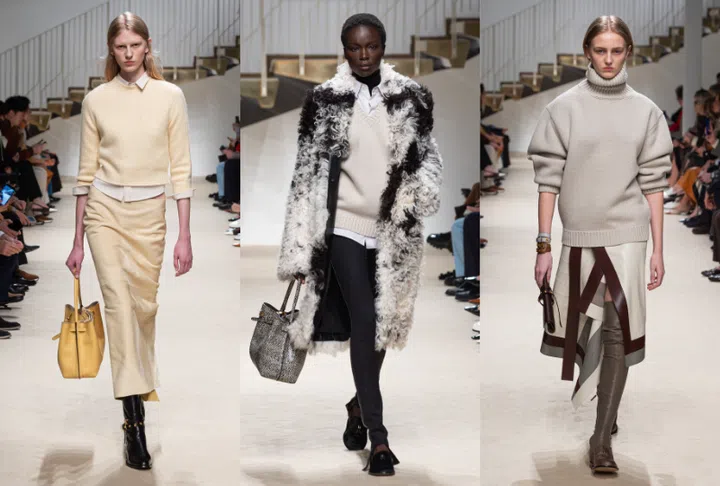
Accessories, as ever at Tod’s, anchor the narrative. The loafer returns with a new rounded toe, rendered in supple leather or pony, plain or animal-printed. Ankle boots are sharpened with saddlery straps; Gommino sneakers arrive in ultra-flexible suede, that perennial handshake between tradition and modernity. Thigh-high, second-skin boots—sinewy and sculpted—inject a flash of insouciant cool into the otherwise grounded wardrobe.
But perhaps the most pointed gesture lies in the lettering. Slim belts cinching trenches and jackets are adorned with tiny metal initials of the models, allowing each wearer to compose their own monogram. In a world where online communication flattens identity into pixels, this is personalization as assertion. “I am here,” it seems to say.
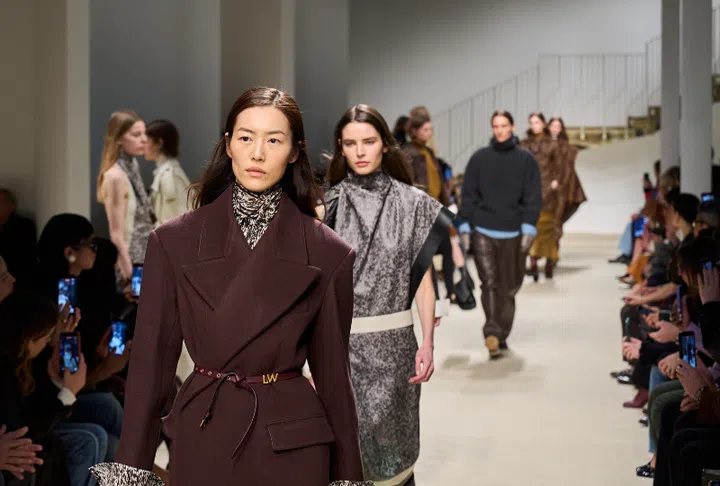
And ultimately, Tamburini is not interested in spectacle. For him, it seems, it is about the body and what it needs now: shelter, tactility, proof of time spent. The clothes propose that protection can be sensual, that craft can be contemporary, and that leather—when treated with reverence—can be both armour and skin. So, Tod’s doing sexy? Yes. But in the most Italian way possible: controlled, intelligent, and grounded in the uncompromising reality of material.