
Peek Into The Art Of Dial-making At Franck Muller’s Factory In Les Bois, Switzerland
From painting numerals to gem setting, witness the intricacies of how a Franck Muller dial is crafted, up close and personal.
By Brandon Chia - published
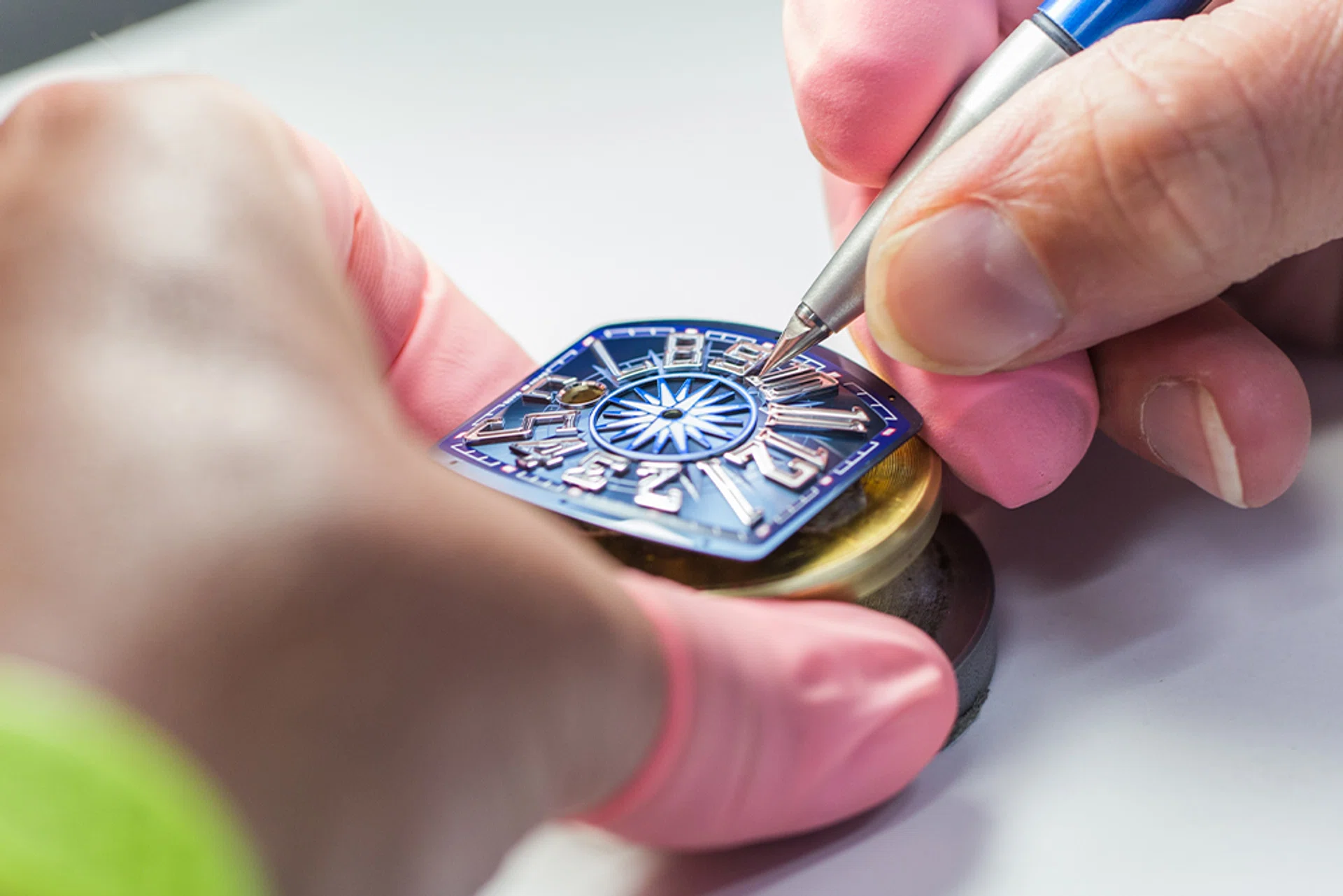
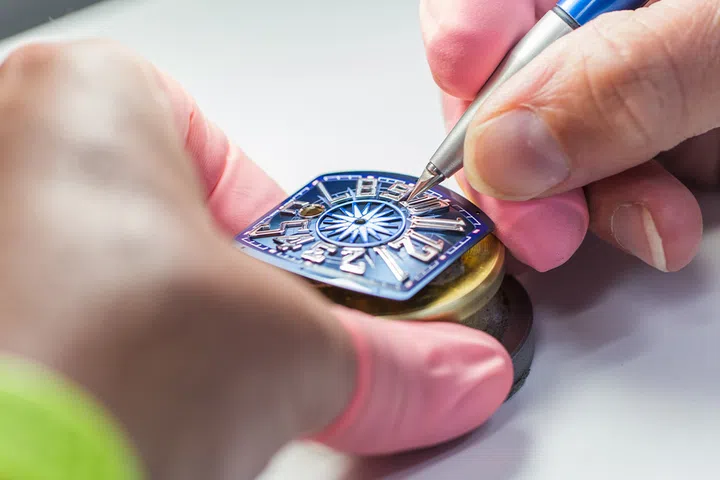
Slow deep breaths, foot hovering confidently on the air pump pedal and beads of sweat rolling down my back—I was ready to embark on the most nerve-wracking test I’ve taken in years: hand-painting numerals on a dial at Franck Muller’s factory in Les Bois, Switzerland.
Related article: Franck Muller Dazzles With The New Round Skeleton Baguette 31 Watches
As I peered into the eyepiece of the microscope, I realised that I had made one fatal error: ordering a latte at lunch. My laser focus could not compensate for the caffeine-induced trembling of my hands, resulting in paint splotches outside the boundaries of the number ‘5’.
Despite the reassurances of a seasoned professional at the watchmaker’s dial factory, tucked away in the mountainside of a quaint Swiss town, I knew that this dial would not pass the brand’s quality control measures. And I would have felt worse about my performance, had I not been informed that half of all the dials made would ultimately be rejected.
To put things into perspective: Franck Muller produces roughly 150,000 dials a year across all collections, totalling up to 750 design variations, including novelties from this year’s World Presentation of Haute Horlogerie (WPHH).
Aesthetics may seem superficial compared to the technological advancements of movements, which tend to dominate conversations between collectors. But it is the watch’s face that grasps our attention and piques our interest before we take a closer look beneath at the beating heart.
The Design Process Begins: Laser Engraving And Stamping The Brass Plates
Every dial starts with the desired design fully rendered. The specifications of each component—from the engravings to the finishes, the colours, the type of numerals and the gems—are then mapped out for the respective experts to realise.
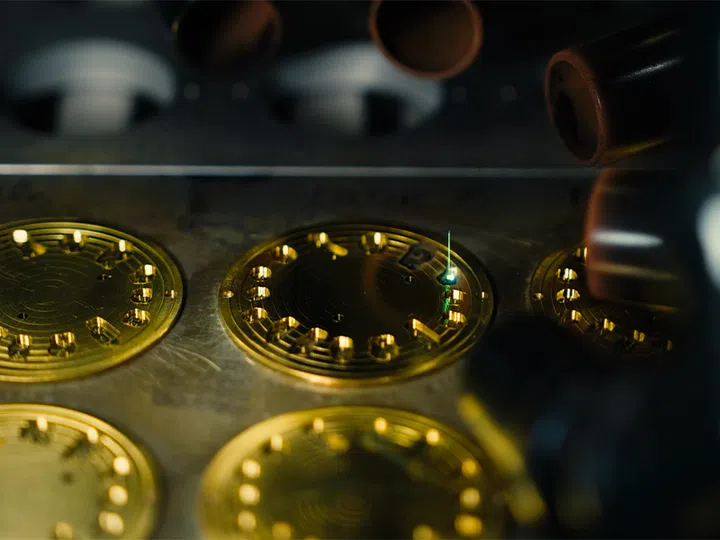
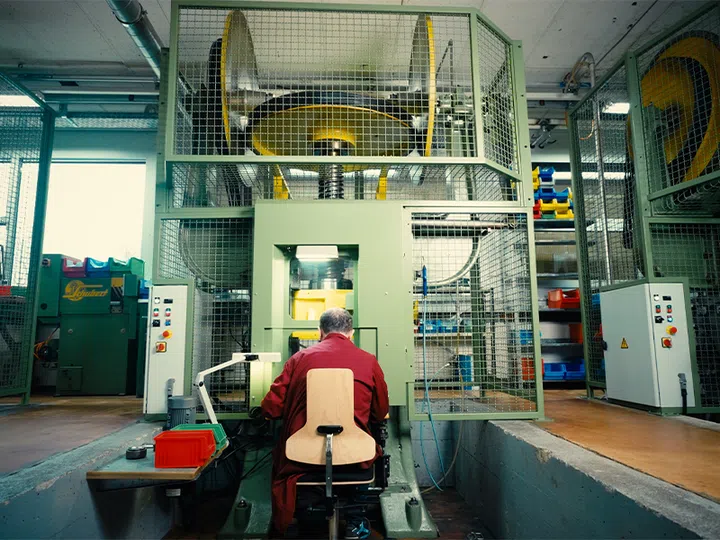
Laser engraving machines etch patterns and limited-edition motifs on brass plates to serve as moulds. These are then fitted on stamping machines that apply 180 tons of pressure to emboss more brass plates, which will rest in a 240-degrees Celsius oven, and the process repeats four to eight times depending on the complexity of the design.
The Decorations: Polishing, Shaping, Painting And Appliques
The punching station is next, where the plates are cut to fit the cases they belong in, like the brand’s signature tonneau shape. The base of the dials move on to several departments to be polished, curved, painted, or all of the above.
Take for example the new Vanguard Sfumato Slim watches, which feature a sunray dial with a soft ombre finish that is painted with layers of lacquer in different directions to create a dreamy vignette effect as the darker edges draw the eye inward to the lighter centre.
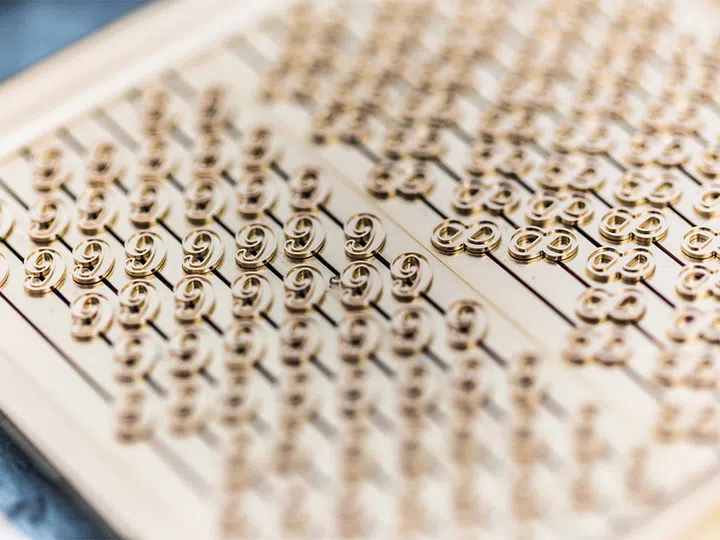
Further decorations come in the form of applied indexes and numerals crafted out of metal, some of which need to be curved as well to sit flush on the dial, which is an expensive detail as one scratch would make it unusable.
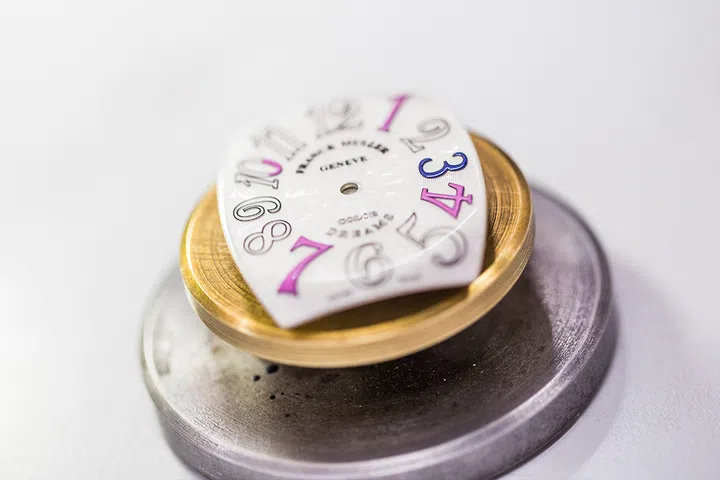
Of course, there are numerals and indexes filled with photoluminescent pigments and hand-painted versions. Franck Muller’s latest artist collaboration with French artist Jisbar is a prime example of how the dial and the painted numerals depicting his most significant creations can truly be a work of art.
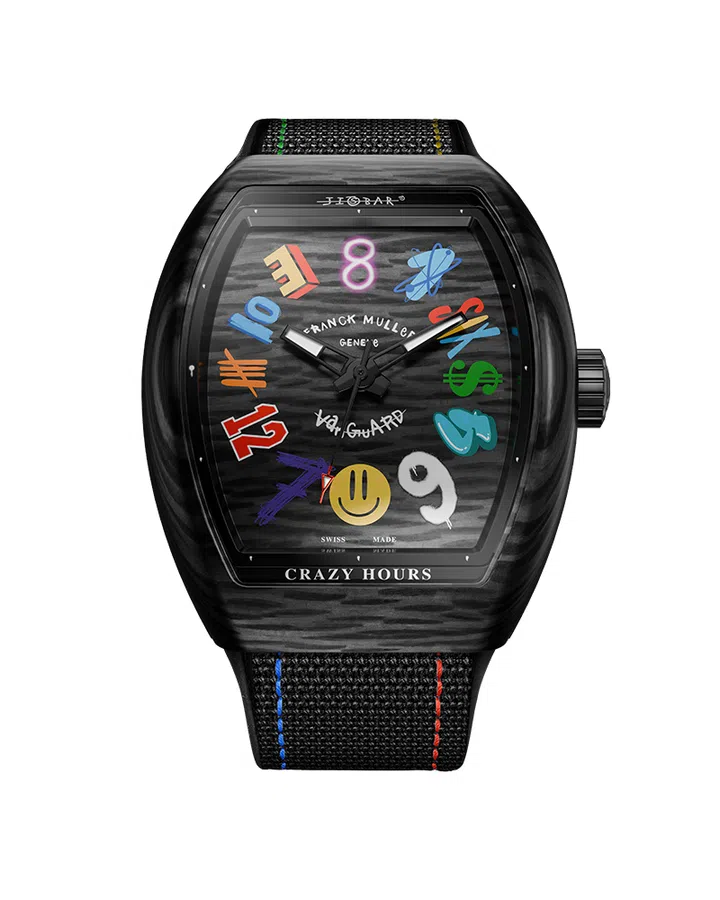
“Jisbar revisits the dial and numerals of one of Franck Muller’s boldest and most emblematic collections, infusing it with his visual universe while preserving the conceptual essence of this extraordinary complication,” says Nicholas Rudaz, CEO of Franck Muller Geneva.
The Crazy Hours Jisbar comes in five finishes—carbon, steel, titanium, black titanium and rose gold—limited to 50 numbered pieces. Each watch will also come with an accompanying artwork by the artist.
Related article: The Hottest Snake-Themed Watches In 2025
Bedazzling Craftsmanship: High Jewellery Gem-setting Techniques
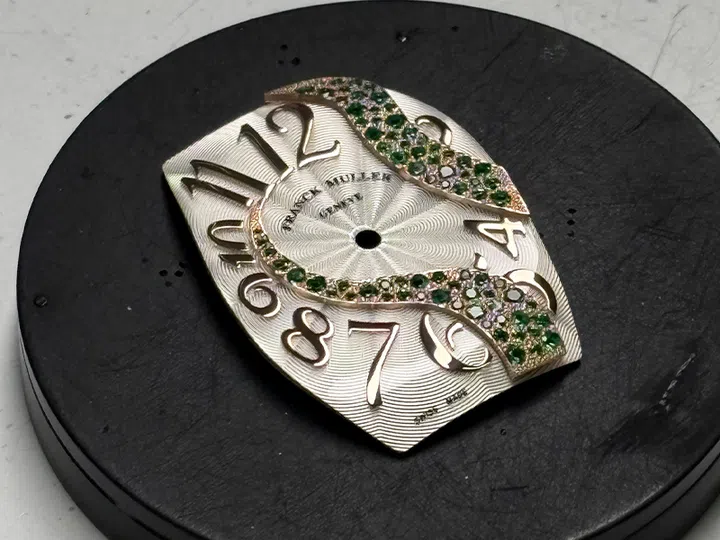
The factory tour covered most of the grounds, but a couple of secrets were left unseen. While we watched a master gem-setter at work, securing emeralds to the reptile featured on the Silhouette CX Snake released earlier this year, we received a verbal explanation of why the new Vanguard Curvex Cut Flower novelties were so special.
These high jewellery timepieces in rose or white gold feature a skeletonised dial with bridges taking the form of stems and blooms made of precious stones such as diamond, ruby, sapphire and emerald.
The bejewelled petals are crafted using the patented Curvex Cut by Franck Muller, where each stone has 73 facets to create a sense of depth, softness and an organic movement.
Related article: Five Jewellery Watches With Stunning Complications To Marvel At
The other set of jewellery watches that we missed at the factory are the Round Triple Mystery references, a dazzling highlight from the brand’s WPHH launches. This evolution from the Double Mystery model adds a third rotating disc at the centre of the dial, displaying the passing seconds.
This disc is crafted from aluminium and inspired by a spirograph pattern that is more than a mere mesmerising feature. The skeleonised component is extremely lightweight—0.052 grams with the arrow indicator—allowing it to use as little energy as possible and avoid disrupting the movement’s performance and accuracy.
Spectacular Innovations: The Introduction Of The Vibrant Bauxite Alloy
Franck Muller’s innovative spirit is also clearly seen with the Vanguard Royal Bauxite novelties. These watches sport a skeletonised dial and case crafted from a special aluminium alloy, affording greater scratch-resistance, and the material takes on even brighter colours through anodisation and chemical treatments.
There is no doubt that I won’t be working within the walls of Franck Muller’s dial factory anytime soon, especially when I can barely paint a number, let alone polish or set a gem like the experts do on some of these novelties.
But I did leave with a newfound appreciation for the artistry of dial-making, especially for brands like Franck Muller, which handles every aspect in-house.