
‘Culinary Class Wars’ Season 2: We Break Down Everything That Happened From Episodes 1 - 13
A recap of the entire season, through the lens of one obsessed BAZAAR writer.
By Nicole Ng - published
Gather around, Culinary Class Wars maniacs, we have a winner to crown! The season finale of Netflix’s hit show Culinary Class Wars season two finally premiered, and we watched as the final two chefs battled it out to each create their ultimate dish.
Like its predecessor, the second season was gripping and full of tension at every turn, and we were hit with plot twist upon plot twist as the episodes progressed.
Here’s your quick recap for everything that’s happened so far: Two White Spoon chefs from the previous run made a surprise return in episode one—Chef Choi Kang-rok (eliminated in a team challenge, you might remember him for his catchphrase “It’s me, perilla oil.”) and Chef Kim Do-yun (eliminated in a face off with ‘Side Dish chef’, he went viral for his Zen approach to cooking with headphones on). Later on, we saw spins on crowd-favourite challenges like the team battle and the infamous ‘Infinite Cooking Hell’ round.
Yet some things remained. Both judges stayed the same: affable restaurateur Paik Jong-won, and Ahn Sung-jae, who intimidated many chefs last season with his precise and ruthless standards.
Below, the chef that took the W in Culinary Class Wars season two, and an in-depth guide to everything else that happened over the 13 episodes.
Warning: Spoilers ahead.
Related article: Everything We Know About ‘Single’s Inferno’ Season 5 So Far
Episode 13: ‘A One-of-a-Kind Dish For Me’
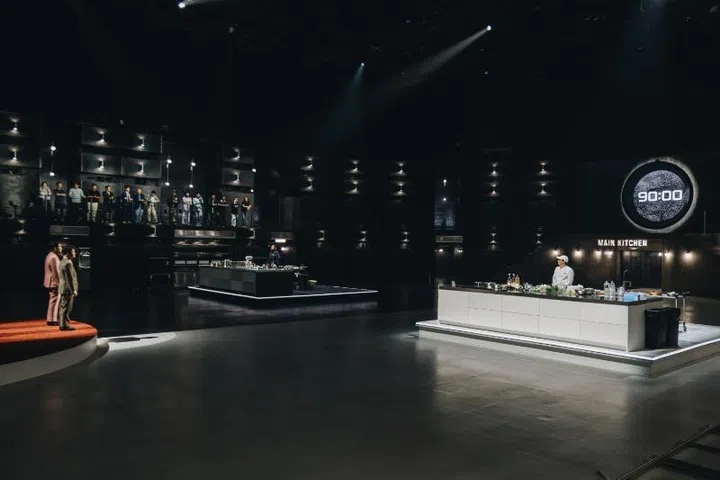
Picking up where the show left off last episode, Black Spoon chef Culinary Monster’s carrot dessert dish won by a narrow margin for its innovativeness, and White Spoon chef Hou Deok-juk was eliminated.
It’s worth noting that Culinary Monster was the only contestant to have survived every challenge this season, from the first Black Spoon elimination round to the Infinite Cooking Hell battle. White Spoon chef Choi Kang-rok was able to advance past the Infinite Cooking Hell challenge and into the finals as he placed first in the Infinite Cooking Heaven battle.
As with Black Spoon finalist Kwon Sung-jun (Napoli Matfia) from last season, Culinary Monster’s real name was revealed to be Lee Ha-sung.
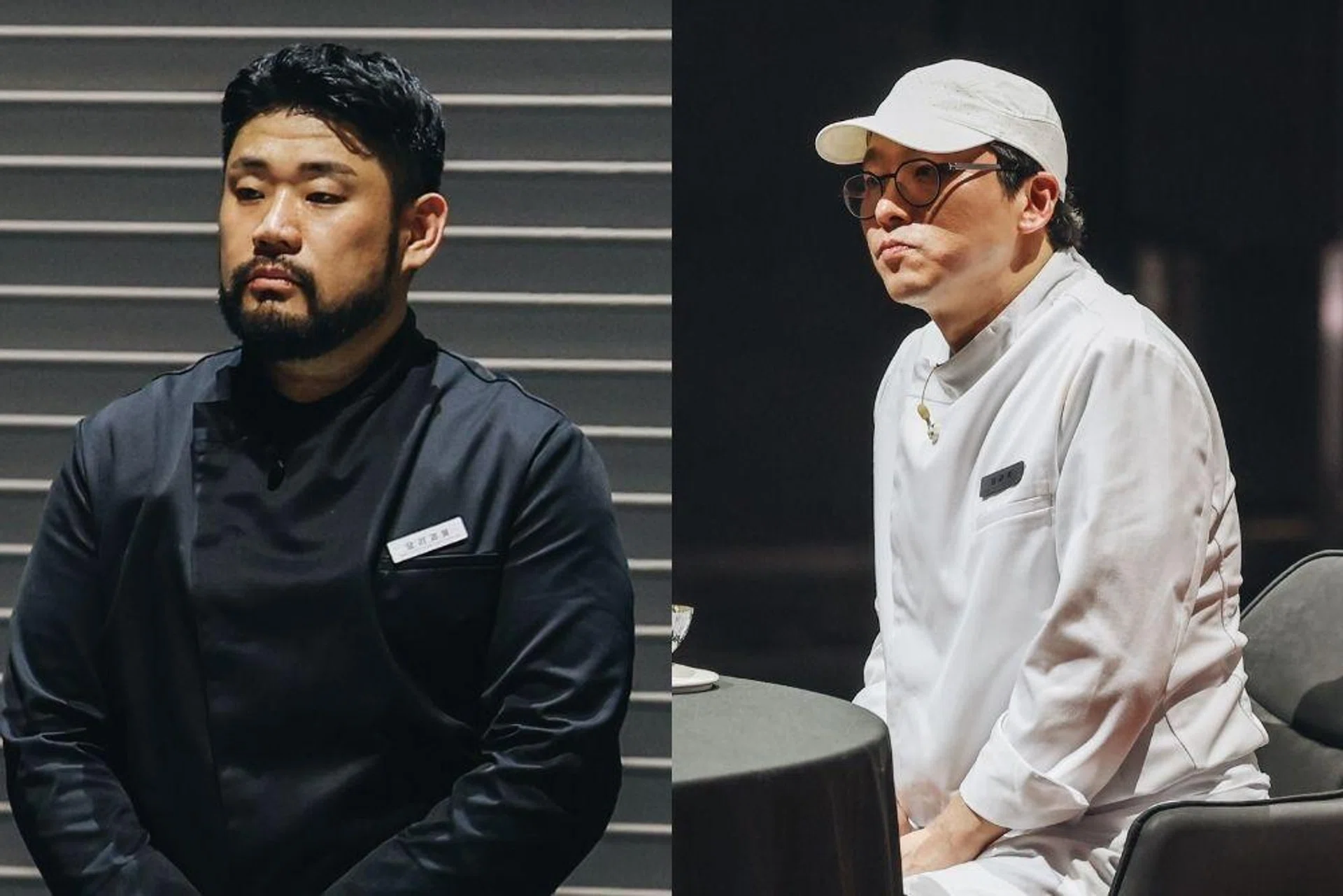
Chef Lee joined Chef Choi in the last round, which was themed ‘A One-of-a-Kind Dish For Me’, inspired by chefs spending their lives cooking for others but rarely themselves. Both chefs had 90 minutes to produce a dish they personally wanted to have, and there would only be a winner when the judges arrive at a unanimous decision.
Chef Lee Ha-sung’s dish
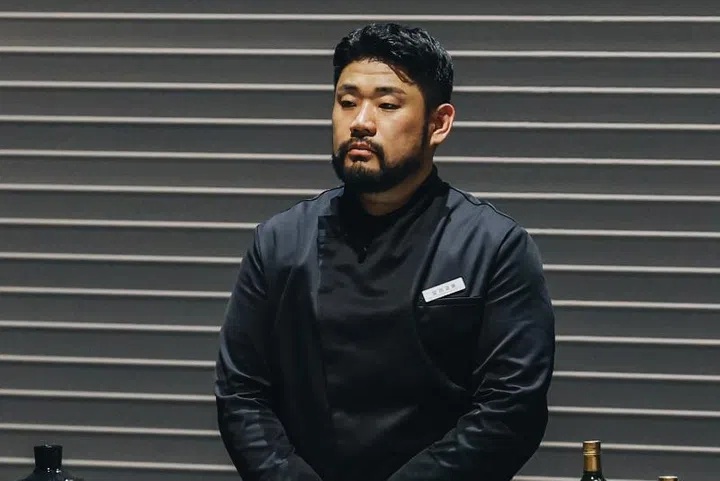
As expected of the unpredictable Chef Lee, who previously presented the judges with simple porridge and asparagus dishes, he prepared the traditional Korean dish of sundaeguk (blood sausages in broth) with a fine-dining touch by reconstructing it into three separate elements. He served salted shrimp and sundae, seasoned with Korean mint and Sichuan pepper, on top of a salad made from intestines alongside a bowl of fried pork skin and broth.
Sitting at the table with the judges (as opposed to serving them while standing in the last season), Chef Lee explained that sundaeguk was exceptionally nostalgic for him because it reminded him of his father rewarding him with the soup dish after trips to the Korean bathhouse, which he disliked as a child. For the Black Spoon chef, who had spent most of his time pursuing his career in U.S. and Europe-based restaurants like The French Laundry and constantly struggled with cultural barriers since he turned 21, sundaeguk was a dish he most wanted to have whenever he went home.
The chef also divulged that he is preparing to launch his first restaurant, and while little other details were revealed on the show, his new restaurant seems to be called Oyatte, a fine dining joint in New York City that is rumoured to open in the later half of the year.
Chef Choi Kang-rok’s dish
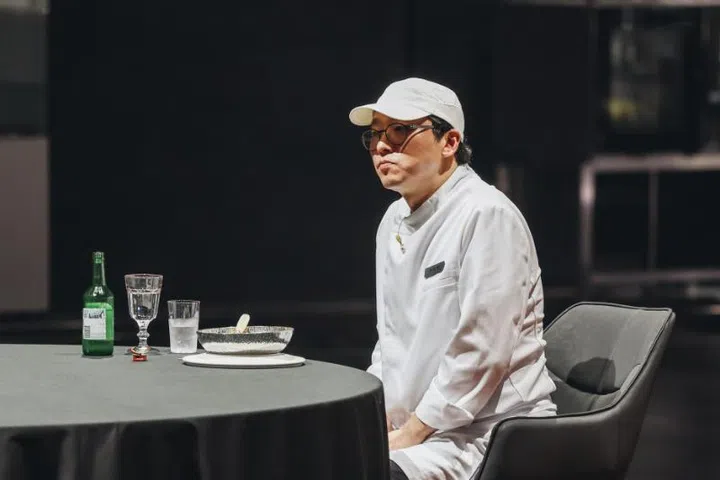
Chef Choi’s dish, a broth-based dish with sesame tofu and urchin roe wrapped in pumpkin leaves, may look much simpler, but the process of making the tofu from scratch took 20 minutes of whipping sesame paste and starch, which drew the concern of onlooking contestants from the previous episodes. The chef shared that he had a fond memory of watching the soft tofu melt in hot broth when he had the dish years back, and wanted to challenge himself to recreate it with the time given to remind himself to persevere when things are difficult. The broth was served with soju, notably known in Korean pop culture to be an alcoholic drink you’d casusally indulge in with your friends or colleagues after work.
Things took another turn when Chef Choi confessed that he felt like his reputation for braised dishes (earning him nicknames like the ‘Lord of Braising’ and ‘Serial Braiser’ that stayed years after he won Masterchef Korea season two in 2013) was a front, and that it never reflected his true self. Explaining that braising is something he does for others, he wanted to create something else for himself that would bring him comfort, as the only dish he’d ever made for himself was instant noodles. Making this tofu dish paired with soju was his way of letting himself rest for a day.
The results
While it was clearly a difficult decision for the judges, both picked Chef Choi to be this season’s winner. On winning, the White Spoon chef, who previously said that he doesn’t consider himself to be a standout chef but rather a regular one that got to where he is because of luck, explained that he’d like to think of his victory as one that he received on behalf of all his fellow chefs.
Episodes 10 to 12: Infinite Cooking Heaven and Infinite Cooking Hell
One-on-One Life-or-Death Match
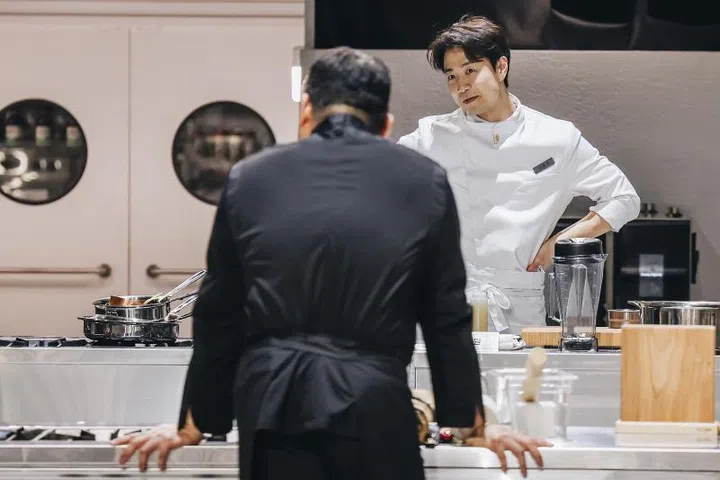
Before the new challenges began, the winner of the battle between White Spoon chef Son Jong-won and Black Spoon chef Culinary Monster was revealed, and it was Culinary Monster who won with his dumpling dish in sabayon sauce. While there was initially a tie, with Chef Paik voting for Chef Son and Chef Anh voting for Culinary Monster, they eventually chose Culinary Monster, based on Chef Anh’s reasoning that he highlighted the individual ingredients better.
Infinite Cooking Heaven

Culinary Class Wars really said “Infinite Cooking Hell, flip it around, Infinite Cooking Heaven”. A play on the tofu-themed Infinite Cooking Hell challenge from last season, this was a round where the chefs were free to make any number of dishes they wanted within three hours.
The seven contestants were surprised with a staggering array of meats, vegetables, seasoning and other ingredients to do their best with (opposed to cooking with tofu every round), and were to be judged by Chefs Paik and Anh with scores out of a hundred. In order to win this challenge and be advanced to the finals, the winning chef would have to attain the best sum of scores.
This challenge saw many antics. There was White Spoon chef Im Sung-geun, whose strategy was to prepare as many dishes as he could, and to be the first one to finish preparing a dish, a method that worked in his favour when he was teamed with Black Spoon chef Brewmaster Yun. He was outscored by White Spoon chef Venerable Sunjae, who prepared a vegetable stir-fry, and later White Spoon chef Hou Deok-juk topped the chart with sea cucumbers stuffed with bird’s nest. We also saw chefs like White Spoon chef Choi Kang-rok and Brewmaster Yun who preferred working on just one dish, which paid off, considering Brewmaster Yun’s dish of homemade tteokbokki with handmade rice cakes placed first towards the end with 180 points.
Ultimately, Chef Choi Kang-rok won the challenge with his mushizushi (steamed sushi dish originating from Kyoto) with abalone, skate liver, asparagus and more, which isn’t surprising considering his expertise in Japanese cuisine. He scored 185 points in this round, with 90 points coming from Chef Anh, who explained that that was his version of a ‘perfect score’.
Infinite Cooking Hell

We were hit with another twist—that being the return of the Infinite Cooking Hell, and this time, with carrot as the main ingredient instead of tofu. In case you need a refresher, the rules are that each of the six competing chefs (Black Spoon chefs Brewmaster Yun and Culinary Monster, along with White Spoon chefs Im Sung-geun, Hou Deok-juk, Venerable Sunjae and Jung Ho-young) had to produce a dish using the main ingredient in 30 minutes, and one contestant will be eliminated each round until there is one survivor left. The survivor will compete with Chef Choi Kang-rok in the final.
Judging based on the criteria of how well the carrots have been highlighted in the dish, creativity and execution, Chefs Paik and Anh first eliminated Chef Im Sung-geun, who made carrot japchae (stir-fried noodles and vegetables), but failed to spotlight the carrot flavour enough. For a similar reason, Venerable Sunjae was ousted with a carrot jeon (fried pancake) and pickled carrots, and Brewmaster Yun was eliminated with a carrot version of a Spanish tortilla.
While it was a fierce battle between the last three chefs, with Culinary Monster serving up a carrot soup, Chef Hou Deok-juk presenting a carrot jjajangmyeon (noodles with black bean sauce) and Chef Jung Ho-young making an egg roll with carrot, Chef Jung was eliminated in the fourth round.
The last round saw a face-off between an experienced and highly respected master and an up-and-coming chef who had truly proved himself as a contender for the final prize. While we were left on yet another cliffhanger, Chef Hou made soyang, a traditional style of dish, with minced shrimp added to carrot slices, while Culinary Monster served a dessert made from leftover Brioche bread soaked in a carrot syrup he made, layered with Ricotta cheese, oranges, fried ginger strips and more carrots.
Related article: The Buzziest New Restaurants, Cafes And Bars In Singapore
Episodes Eight to 10: Black Spoon Elimination Round, Black and White Alliance Battle and One-on-one Life-or-Death Match
Hold tight—the newest episodes of Culinary Class Wars are packed with action, with three battles happening across three episodes.
Black Spoon elimination round
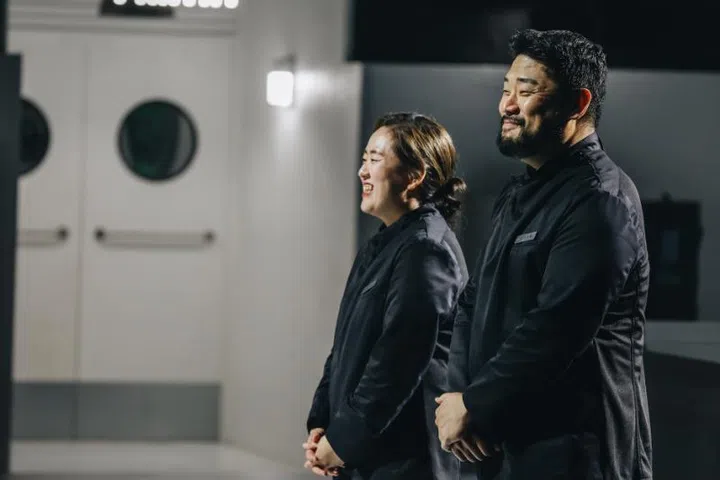
As the winners of the team challenge, all 12 White Spoon chefs were saved from elimination, while the eight Black Spoon chefs had to go through another individual elimination round. Opposed to the convenience store challenge after the team challenge last season, the contestants were allowed to select a main ingredient of their choice this time, and had to spotlight its flavour with only 10 additional ingredients (including basics like salt and sugar) in order to win.
The only survivors from this challenge were Brewmaster Yun and Culinary Monster, who worked with dried pollock and asparagus respectively to make a hangover soup and grilled dish, beating out other strong contenders like Barbeque Lab Director and Rebellious Genius.
Black and White Alliance battle

The Black Spoon chef duo joined the White Spoon chefs for a never-seen-before challenge: the Black and White Alliance battle. The contestants were to pair up to prepare a dish that showcased their individual strengths, with one winning pair picked from the ‘survivor’s zone’ that had the advantage of skipping the next challenge, and one losing pair from the ‘elimination zone’ being eliminated.
The Black Spoon chefs were allowed to choose their partners first, with Culinary Monster going for White Spoon chef Son Jong-won because of their similar backgrounds in fine dining, and Brewmaster Yun pairing up with White Spoon chef Im Sung-geun for his well-known prowess in Korean cuisine. The rest of the White Spoon chefs were able to choose their own partners.
Find out which pair won, got eliminated, and moved on to the next challenge below.
Chefs Brewmaster Yun and Im Sung-geun: Won the round
This pair were first for many things: In pairing up, deciding which dish to cook for the challenge, finishing the challenge and to be picked to advance past the next round. With the same specialisation in Korean cuisine, great teamwork and their mastery in handling meat and brewing alcohol, the duo impressed the judges with a seemingly simple fare of ssam—meat (bakpogalbi or marinated grilled pork, in this case) wrapped in leafy vegetables—and radish salad because the dishes perfectly highlighted the individual strengths of each of the two chefs.
Chefs Hou Deok-juk and Chun Sang-hyeon: Moved onto the next round
While Chef Chun Sang-hyeon is an outstanding chef in his own right (having worked at South Korea’s Blue House for over two decades) partnering with Chef Hou Deok-juk, his former mentor from his time at The Shilla Seoul, was a real throwback moment for the two. The endearing pair prepared a lobster and mango appetiser with the two seasonal ingredients, but were candidates for elimination as a result of the mayo sauce being too greasy for the dish.
Chefs Son Jong-won and Culinary Monster: Moved onto the next round
We expected nothing less from the fine dining experts who bring with them culinary experience from their time in the U.S.. The team reimagined elements from the classic Waldorf salad into an innovative and unexpected dish that saw caviar balanced on tartlets made from baked brioche, a crab meat salad wrapped in genoise (a sponge cake sheet) and apple jelly. Despite roadblocks along the way like the genoise being too brittle, and Chef Anh confessing that he had higher standards for the two chefs, they pulled through as contenders for survival.
Chefs Kim Hee-eun and Venerable Sun-jae: Moved onto the next round
Like Chef Paik mentioned, this was a particularly exciting pairing that saw a combination of flavours seen in Korean Buddhist temple dishes and fine dining. The chefs came up with one row of gimbap (Korean seaweed rice rolls) each, featuring ingredients like tofu and abalone to highlight their individual takes on the classic dish. While the judges liked the dish, they were ultimately moved to the elimination zone for failing to create a dish where their collaborative spirit took centre stage.
Chefs Jung Ho-young and Sam Kim: Moved onto the next round
As co-stars on Chefs & My Fridge, a popular Korean variety show, this pair were already in sync from the start, combining Japanese and Italian styles to make grilled croaker fish with an Italian sauce made from prosciutto, and stuffed swim bladder. The dish was praised by the judges for how well the Italian and Japanese influences worked together, and they survived the round as a result.
Chefs Choi Kang-rok and Kim Sung-woon: Moved onto the next round
Likewise, these chefs combined Japanese and Italian techniques in the form of a dish that stars ddeokbal (crab legs), gnocchi and vegetables in a crab and bonito flake broth. The judges took a liking to the dish right off the bat, appreciating that the dish combined Italian and Japanese flavours well, making them the last survivor pair.
Chefs Choi Yu-gang and Park Hyo-nam: Eliminated
As chefs specialising in French and Chinese cuisines, both White Spoon chefs produced a dish from spiny lobster, asparagus and avocado and vichyssoise (a thick soup made of pureed leeks, onions and potatoes) to commemorate the diplomatic relationship between the two countries. Ultimately, the differences in their styles resulted in the Chinese cuisine influence being overpowered by the French flavours, and in failing to meet the collaborative aspect of the criteria of the challenge, they were eliminated.
One-on-One Life-or-Death Match

With only five survivor spots left (excluding Chefs Brewmaster Yun and Im Sung-geun, who won the last round), the remaining 10 contestants were in for a shock when it was announced that their next opponent would be their own teammate from the previous challenge—with no chances of revival this time.
Using the same set of ingredients, the chefs were given the chance to showcase their own styles in this challenge.
Below, the five chefs who joined Chefs Brewmaster Yun and Im Sung-geun as the final seven in this season of ‘Culinary Class Wars’.
Chef Jung Ho-young
Friends turned into foe in this battle between Chefs Jung Ho-young and Sam Kim. Going full steam with a Japanese approach—Chef Jung’s speciality—he braised the croaker, resulting in a slightly more tender texture than Chef Kim’s poaching method, which ultimately put him over the top, though there was a tie at first, with Chef Anh voting for Chef Kim first.
Venerable Sunjae
It was fine dining versus Korean cuisine at its simplest when it came to Chefs Kim Hee-eun and Venerable Sunjae. Where Chef Kim redid her previous gimbap dish with abalone and seaweed, focusing on the feedback she received this time, Venerable Sunjae prepared one familiar to her: vegetarian bibimbap (mixed rice), with sauces made from fermented soybean paste and a soy sauce. Though Venerable Sunjae’s dish was simple and straightforward, the humble bibimbap proved her expertise and made a great impact on both judges, who made her the survivor.
Chef Hou Deok-juk
In a face-off with his student, veteran chef Hou Deok-juk prepared Chinese-style fried noodles, improvising his cooking method to adapt to a different kind of noodles. He made what Chef Anh called the “most memorable dish [he] had that round”. This led to his victory over Chef Chun Sang-hyeon, who created a dish featuring fried mango and lobster covered in chilli sauce.
Chef Choi Kang-rok
While Chef Kim Sung-woon had an advantage as many of the ingredients were from Taean, his hometown, he ultimately lost to Chef Choi Kang-rok, who proved to be a tough opponent as the winner of Masterchef Korea season two. With many of the ingredients being seafood, Chef Kim prepared crepes in chowder, while Chef Choi built on the feedback they received from the judges and changed out elements from the previous round like the potato gnocchi for a potato dish he invented to highlight his innovative cooking style.
Undecided
While the matches between the other chefs were captivating, the battle between White Spoon chef Son Jong-won and Black Spoon chef Culinary Monster shaped up to be the biggest duel of Culinary Class Wars season two so far, with many fans commenting that this showdown was worthy of the finals. With Chef Son, a Michelin-starred and all-around GOAT (greatest of all time), on one hand and Culinary Monster, who other chefs dubbed to be a culinary genius on the other, viewers were left on a cliffhanger when it came to who the judges chose as the winner.
So far, Chef Paik voted for Chef Son’s steamed egg dish (opposed to Culinary Monster’s xiaolongbao-style dumplings topped with caviar), and while Chef Anh shared that his decision was based on an extremely subtle difference, the result of this battle will only be released next week.
Episodes Five to Seven: Team Challenges
The nerve-wrecking team challenge between the White Spoon chefs and Black Spoon chefs was also brought back in this season of Culinary Class Wars, this time with a twist: the judges or the teams were to pick one ingredient each per round, by spinning the ferris wheel containing options from the land and sea like chicken, burdock root, veal, rockfish and salmon.
There were a total of three rounds in this challenge. Seven people competed in the first round, five people in the second round and the challenge concluded with a final round pitting three aces from the Black and White Spoon chef lineup against each other.
First round: White Spoon chefs
Working with ingredients—squid and the seasonal Korean melon—that the judges picked, both teams ended up producing the same style of dish, a salad paired with fried calamari. While both Chef Ahn and Chef Paik loved the execution of the Black Spoon chefs’ dish, as it balanced and highlighted the original flavours of the ingredients they picked, the experienced White Spoon chefs won by a landslide with 66 votes. They did so by going for mass appeal and something the 100 judges would be familiar with, incorporating other ingredients like apples and water celery for a tangy and sweet taste.
Second round: White Spoon chefs
Introducing yet another unexpected turn of events, the judges were halved this round, reducing it to a total of 50, with two points per vote. This time, each team picked an ingredient, ending up with chicken and pollock roe for their umami flavours. Led by Chef Park Hyo-nam, the White Spoon chefs went for chicken fricassee, an indulgent French dish with roasted chicken and a thick white sauce, to switch things up after starting with a sour offering in the first round.
Lagging 32 points behind, the Black Spoon chefs decided to go for a bolder flavour with kkanpunggi, a Korean-Chinese style spicy garlic fried chicken, with pollock roe and cheese.
The votes were tied between Chef Ahn, who voted for the White Spoon chefs’ classic dish as he liked its depth, and Chef Paik, who voted for the Black Spoon chefs’ fried chicken, which he claimed was the best he has tasted so far. Ultimately, the White Spoon chefs won by just four points (two votes) with 52 points in total.
Third round: Unrevealed
In this round, the panel of judges were reduced to just 10 people, and the eight mystery judges were revealed to be contestants from the previous season, many of whom were finalists: Chef Kwon Sung-jun (Napoli Matfia, last season’s winner), Chef Edward Lee, Chef Choi Hyun-suk, Chef Jung Ji-sun, Chef Yoon Nam-no (Cooking Maniac), Chef Kim Mi-ryeong (Auntie Omakase #1), Chef Jang Ho-joon and Chef Lu Chinglai. With less judges, each vote carried more points.
White Spoon chefs chose their aces—celebrity and Michelin-starred Chef Son Jong-won, Chef Jung Ho-young, who was revived, and Sam Kim, another celebrity chef. With lots at stake, the Black Spoon chefs that competed in this round were Chef Culinary Monster, Chef Barbeque Lab Director and their team leader, Chef Knife Omakase.
With the hidden, unlisted ingredient revealed to be tofu—a throwback to the ‘Tofu Hell’ cooking marathon challenge last season—the White Spoon chefs chose rockfish to be paired with tofu to make a Japanese dish, and the Black Spoon chefs went with veal loin for a chilled noodle dish.
While we were left on a cliff hanger before the final results were announced, the Black Spoon chefs nearly caught up with 142 points, as opposed to White Spoon chefs’ 148 points, with only Chef Kim Mi-ryeong to turn the tables.
Episodes Three to Five: Blind Tasting Duel
In episodes three, four and five of Culinary Class Wars season two, the White Spoon and Black Spoon chefs faced off in individual battles with a specific ingredient from a region in South Korea.
Black Spoon chefs that won this round
1. Chef Dweji Gomtang
Featured ingredient: Pine nuts from Gapyeong
Chef Dweji Gomtang shocked the crowd by becoming the first Black Spoon winner of the challenge, beating out Venerable Sunjae, who made noodles with fragrant Korean melon. Chef Dweji Gomtang shared that he learnt about Buddhist temple cuisine from Venerable Sunjae, and made a vegetable japchae (a Korean stir-fried dish) inspired by her teachings here.
Venerable Sunjae was ‘revived’ by Chef Paik at the end of episode five.
2. Chef Rebellious Genius
Featured ingredient: Uiryeong quail from Uiryeong
White Spoon chef Lee Jun (who owns Soigne) is what you’d imagine when picturing a chef with two Michelin stars: precise, self-assured and a perfectionist, and Black Spoon chef Rebellious Genius also exemplified his name by stepping up to challenge his former head chef. In one of the most exciting duels in this challenge, the Black Spoon chef pulled through by being creative and utilising the entire quail in his dish rather than using tried-and-tested methods (which Chef Lee admitted he has a penchant for). Here, Chef Rebellious Genius proves himself to be a dark horse to keep an eye on future episodes.
3. Chef Culinary Monster
Featured ingredient: Sea squirt from Changwon
Chef Culinary Monster and Chef Song Hoon, two chefs with similar backgrounds working in the U.S. and in famous restaurants, went head-to-head with sea squirts, an ingredient rarely, if at all, used in Western cuisine, evening the playing field between the two. Chef Culinary Monster proved himself as one to watch by preserving as much of the sea squirt’s natural flavours as possible, while enhancing it with the sweetness from the flowers, which ultimately led to his win.
4. Chef Barbeque Lab Director
Featured ingredient: Pork neck from Mungyeong
With both chefs specialising in meat dishes, it was a battle of instinct versus experience. Chef Barbeque Lab Director won the challenge with Chef Raymon (who poached and grilled the meat) by bringing his signature smoky flavour into the dish in an innovative way—incorporating hot charcoal into oil.
5. Chef Seoul Mother
Featured ingredient: Monkfish from Pohang
Imagine being so matched in skills that your dishes tie twice. Chefs Seoul Mother and Jung Ho-young paired up to make dishes with monkfish, which has a mild and sweet flavour, but is difficult to handle because of its slimy texture. Chef Seoul Mother won with her Seoul-style stew after three rounds of voting because of a marginal fault Chef Ahn found with the dryness of the fish in Chef Jung’s chawanmushi dish.
Chef Jung was ‘revived’ by Chef Ahn at the end of episode five.
6. Chef Brewmaster Yun
Featured ingredient: Chestnuts from Gongju
Despite Chef Brewmaster Yun’s nervousness in going against White Spoon chef Lee Keum-hee, an experienced chef specialising in traditional Korean cuisine, the Black Spoon chef was surprisingly gutsy, going experimental and preparing soup with fresh rice cakes containing chestnut paste. Chef Brewmaster Yun’s efforts paid off, with the judges being surprised at how well the combination of chestnuts and rice cakes worked, choosing her dish over Chef Lee’s traditional chestnut porridge.
7. Chef Witch with a Wok
Featured ingredient: Pork skin from Jeungpyeong
Beating out Masterchef winner Jennie Wallden, who made a salad with crisp pork skin, Black Spoon chef Chef Witch with a Wok won with her fragrant and smoky dish of pork skin cumin ribs, which Chef Paik explained was a unique take on the Chinese dish.
8. Chef Knife Omakase
Featured ingredient: Garlic from Danyang
Despite going against Michelin-starred White Spoon chef Kim Geon, who made Italian rice balls with mackerel and garlic fried rice, Chef Knife Omakase was unfazed, winning over the judges with his garlic ramen, which highlighted the sweetness of the main ingredient.
9. Chef Annyeong Bonjour
Featured ingredient: Seaweed from Wando
The calm and composed Black Spoon chef Annyeong Bonjour played to his strengths with his background in French cooking, creating tuile (a crisp French wafer) with the seaweed that is stuffed with chicken mousse. Ultimately, he was picked over White Spoon chef Shim Sung-chul and his seaweed porridge as Chef Annyeong Bonjour brought out the texture of the seaweed better.
White Spoon chefs that won
1. Chef Son Jong-won
Featured ingredient: Beef tongue from Wonju
Chef Son Jong-won emerged as the first winner of the challenge with his dish that elevated the cut with a truffle sauce and potatoes that were also from Wonju. Both judges preferred his classic dish despite Chef Paik explaining that Chef Three Star Killer’s grilled beef tongue dish was perfectly done.
2. Chef Hou Deok-juk
Featured ingredient: Blue crabs from Taean
To sum up the few minutes Netflix dedicated to introducing White Spoon chef Hou Deok-juk, he’s the indisputable expert in Chinese cuisine in South Korea, with 57 years of experience and multiple Michelin stars under his belt. Stepping up to challenge him is Black Spoon chef Fan Master, who worked alongside Chef Hou at The Shilla Seoul’s Palsun restaurant two decades ago. They took different methods—Chef Hou steaming the crab and making a ‘foo young’ dish with eggs and crab roe and Fan Master grilling it for paella—and ended up in a tie. Chef Hou ultimately won over the chefs by proving his skill levels, with Chef Ahn admitting that the dish was the work of a master.
3. Chef Im Sung-geun
Featured ingredient: Cheonggukjang from Paju
With Cheonggukjang—an extra-strong fermented soybean paste with a pungent odour and an umami taste–—at the heart of this challenge, Chef Im Sung-geun, a veteran chef who won Korean Food Wars 3, triumphed over Chef Loner in a Hole-in-the-Wall with an inventive dish serving the raw ingredient with other vegetables in a wrap.
4. Chef Kim Sung-woon
Featured ingredient: Mustard greens kimchi from Yeosu
With dishes at the opposite ends of the spectrum—Chef Kim Sung-woon’s cubed snailfish and sour kimchi soup and Chef Boss in the Kitchen’s Agnolotti stuffed with cheese, kimchi and sausage—Chef Kim impressed the judges more with his comforting and nostalgic dish.
5. Chef Park Hyo-nam
Featured ingredient: Whelks from Sokcho
It was a match between two experts in French cuisine, with Chef Park Hyo-nam, a revered chef, creating a dish that captured the essence of the Sokcho sea, and Chef French Papa whipping up a dish that emulated escargots, a French cuisine classic. Chef Park Hyo-nam won with two votes for his unexpected take on the ingredients.
6. Chef Choi Kang-rok
Featured ingredient: Large green onions from Jindo
With a returning crowd-favourite on one hand and a chef that was widely acknowledged by the contestants as a hidden gem on the other, White Spoon chef Choi Kang-rok and Black Spoon chef Iron Arms made it difficult to guess which one was likely to win. While Chef Paik complemented Chef Iron Arms’ attempt in maximising the flavours in his minimal grilled onion dish, Chef Choi pulled through with two votes for his chawanmushi dish that pushed the flavours of the onions to their fullest potential.
7. Chef Kim Hee-eun
Featured ingredient: Pork shank from Sancheong
This was another case of a protege challenging their mentor. Chef Little Tiger divulged that Chef Kim Hee-eun has been coaching her since she was in middle school, and seems to have taken after her, with both opting for pressure cookers in this challenge. While Chef Little Tiger served a cold dish of sliced pork with Joseon japchae, Chef Kim went for a hot braised dish to improve the ingredient’s texture, which put her at the top.
8. Chef Sam Kim
Featured ingredient: Fermented anchovies from Jeju
Chef Sam Kim, a well-known chef and television celebrity, surprised fans when he appeared on the show. Battling Chef Trendsetter with fermented anchovies, both created Italian-style dishes (Chef Kim with a pasta dish) and Chef Trendsetter with potato pancakes and an Italian sauce made of olive oil, anchovies and garlic, but Chef Kim ultimately won with his choice to cook the pasta al dente, which allowed the flavour of the anchovies to come through stronger.
9. Chef Chun Sang-hyeon
Featured ingredient: Tongue sole fish from Gunsan
The White Spoon chef, formerly the executive chef for South Korea’s presidents, impressed the judges by preparing the fish by semi-drying it and braising it in soy sauce, beating out Black Spoon chef Banchan Wizard’s traditional dish inspired by a recipe in ancient cookbooks.
10. Chef Choi Yu-gang
Featured ingredient: Korean beef chuck flap tail (a shoulder cut) from Jangsu
Presenting the judges with a colourful starch sheet covering the marbled cut of beef, Michelin-starred Chef Choi Yu-gang won his round with Black Spoon chef Perfect Match, who made a simpler Italian appetiser pairing thin slices of chuck flap tail with spring greens.
Related article: Best Upcoming K-dramas In 2025: Release Dates And Where To Stream
Episodes One to Three: Black Spoon Chef Elimination Round
The premise for the first elimination round was similar to before, where the 40 Black Spoon chefs had to serve up their signature dishes and only 19 would survive—one less as Chef Kim Do-yun did not pass the challenge.
Below, the Black Spoon chefs that survived the first round and what you need to know about them.
1. Chef Brewmaster Yun
While many contestants highlighted a singular dish, Chef Brewmaster Yun (Yun Nara) prepared a spread of pork and stew to go with the soju she brewed herself, and impressed Chef Ahn enough to become the first survivor in this season of ‘Culinary Class Wars’. She runs Yunjudang, a homely traditional Korean pub based in Seoul.
2. Chef Seoul Mother
A well-known figure in the Korean culinary scene, Chef Seoul Mother (Woo Jungwook) went the nostalgic and wholesome route with a simple yet nourishing spread of rice with side dishes. In real life, she is the owner of Superpan, an eatery serving Seoul-style food, and has even personally taught celebrities how to cook.
3. Chef Dweji Gomtang
Chef Dweji Gomtang (Ok Dongsik) prepared his signature dish of pork bone stew, which also serves as the inspiration behind his moniker. He founded the eponymous Okdongsik, a popular chain of restaurants with six locations in Seoul, Tokyo, Honolulu, New York City, L.A. and Paris.
4. Chef Loner in a Hole-in-the-Wall
Naming himself after his experience running Dokdo 16 Celsius, a hole-in-the-wall bar in Seochon, Seoul, alone, Chef Loner in a Hole-in-the-Wall (Kim Sang-hoon) dished up what he called a ‘modern juansang’, an array of dishes—mackerel bibimbap and skewers grilled over applewood, in his case—to go with drinks.
5. Chef Little Tiger
Chef Little Tiger (Kim Si-hyeon) is the protege of White Spoon chef Kim Hee-eun, and prepared a similar spread paired with drinks (a ‘sulsang’, or drinking table). Following her own preferences in food, she prepared a simple fare of five seasoned vegetable dishes like mugwort with tofu and fennel with crab roe, and gained Chef Paik’s approval with how perfectly seasoned the vegetables were.
6. Chef French Papa
Known to be warm and helpful even to junior chefs, Chef French Papa (Tommie Lee) survived with his spin on the classic French bouillabaisse, and impressed Chef Paik with his instincts to serve the stew hot rather than lukewarm to reduce the fishiness of the dish. He is currently a chef at Bistrot de Yountville, a long-running French restaurant in the Gangnam district.
7. Chef Culinary Monster
With impressive accomplishments like being a founding member and later the head chef of Atomix, a two Michelin-starred Korean restaurant in New York City, it’s surprising that Chef Culinary Monster (Lee Ha-sung) is in the mix of Black Spoon chefs. For the first challenge, he served a wild chive porridge with truffles, a unique take on the dish that was new even to Chef Ahn.
8. Chef Witch with a Wok
As the first chef specialising in Chinese cuisine to pass this round, Chef Witch with a Wok (Yi Moon Jang) experimented with Chinese and Korean styles to create her dish. She is a veteran chef at Grand Walkerhill Seoul hotel and is said by other contestants to be on par with Jung Ji-sun, one of last season’s finalists.
9. Chef Barbeque Lab Director
Formerly a white collar worker, Chef Barbeque Lab Director (Yoo Yongwook) followed his passions and decided to pursue cooking instead, quickly becoming famous for his barbecued meat at Imok Smoke Dining. While he claims that he doesn’t deserve the title of ‘chef’ yet, we think that he earned it for pulling off smoky and tender beef ribs within 100 minutes.
10. Chef Iron Arms
Why the name “Chef Iron Arms”? The chef (Park Ju-sung) has a rare and incurable disease that causes muscle loss in his right hand, but when he’s in the zone, his arm becomes tough as iron. He shared that he came on the show to prove that people with his condition are still capable of great things—and that he did. The determined owner-chef of Sobajuu made a big impression by handmaking buckwheat soba noodles paired with chicken broth tsuyu, earning him one of the last spots at the table.
11. Chef Annyeong Bonjour
If Chef Annyeong Bonjour were a sauce, he would be kimchi bisque! His creations are where the kick from classic Korean cuisine and the refined touch of French food meet. The owner-chef of Chez Nous Private Kitchen was adopted in France and has naturally incorporated Korean flavours into his French cuisine. He won Chef Ahn over with the “doneness of cuisson”, which otherwise means that his protein was perfectly cooked. *Chef’s kiss*
12. Chef Perfect Match
People often say that food is art, and Chef Perfect Match (Park Garam) proves it to be true. The chef at Seoul-based restaurant Dresden Green served a lobster salad finished with what looked to be a lobster tail. It was revealed to be tuile, a thin French wafer that she cut and hand-painted to replicate the look of one. She got Chef Paik’s approval almost immediately for her fun and thoughtful dish.
13. Chef Boss in the Kitchen
We’ve got an It boy in the building! Chef Boss in the Kitchen was cheered on by many of the White Spoon chefs, who thought he should have been one too. He is the director and owner of his own restaurant.
14. Chef Side Dish Master
Using humble and easily accessible ingredients like cabbage and sesame leaves, Chef Side Dish Master, who leads the team of chefs at Onharu, won the approval of Chef Ahn by creating “something special” from humble and easily accessible ingredients like cabbage, pollock and sesame leaves.
15. Chef Knife Omakase
Chef Knife Omakase (Shin Hyun-do) burst onto the scene with an impressive showcase of his knife techniques and innovative ways to elevate dishes like gimbap (Korean-style sushi). He is the owner chef of Monologue and Menshoku, Japanese restaurants based in Seoul.
16. Chef Rebellious Genius
Living up to his name, Chef Rebellious Genius (Lee Chan-yang) made a gutsy move by starting out with a rabbit and rabbit liver dish—rarities in South Korea. He is the head chef at Seoul-based fine dining spot Original Numbers in his regular life.
Related article: Your Guide To All The Fashion And Luxury Brand Cafés In Singapore
17. Chef Fan Master
Chef Fan Master’s charcoal grilling display in the first round was less of one you’d see at a competition and more of an elegant performance, but he had humble beginnings, sharing that he was first taken in to be an apprentice at Akasaka Jubako, a historic Japan-based restaurant that specialises in eel dishes.
18. Chef Trendsetter
With Chef Trendsetter’s (Kim Hun) survival, we can look forward to more unpredictable moves in the show. In the first round, he intrigued Chef Paik and many White Spoon chefs with his innovative dish (a bestseller at his restaurant Sam Sam Sam)—a lasagna rolled up to be shaped like a pie for a crunchy texture.
19. Chef Three Star Killer
While Chef Three Star Killer was the last chef to be selected from the group of deferred participants, working at famous restaurants alongside three Michelin-starred chefs like Chef Corey Lee, Chef Thomas Keller and even Chef Ahn, definitely makes him one to watch in this season of ‘Culinary Class Wars’.
What should you watch after Culinary Class Wars?
If you can’t get enough of the cast and are ready for a rabbithole of Culinary Class Wars-related content, we’re here to enable you.
Catch Chefs Choi Kang-rok, Son Jong-won, Jung Ho-young, Sam Kim and several of previous season’s fan-favourite contestants like Yoon Nam-no (Cooking Maniac) and Kwon Sung-jun on recent episodes of Chef & My Fridge on Netflix.
Chef Anh’s YouTube channel also regularly features appearances by the cast of the show, like Chefs Venerable Sunjae, Im Sang-geun, Three Star Killer, Rebellious Genius, Witch with a Wok and Fan Master.