
In Conversation: Chefs Violet Oon And Nixon Low On Mentorship, Reinvention And Singapore’s Culinary Evolution
Two local culinary insiders, Violet Oon and Nixon Low, meet again after two decades to discuss how Singapore’s food scene has evolved.
By Nicole Ng - published
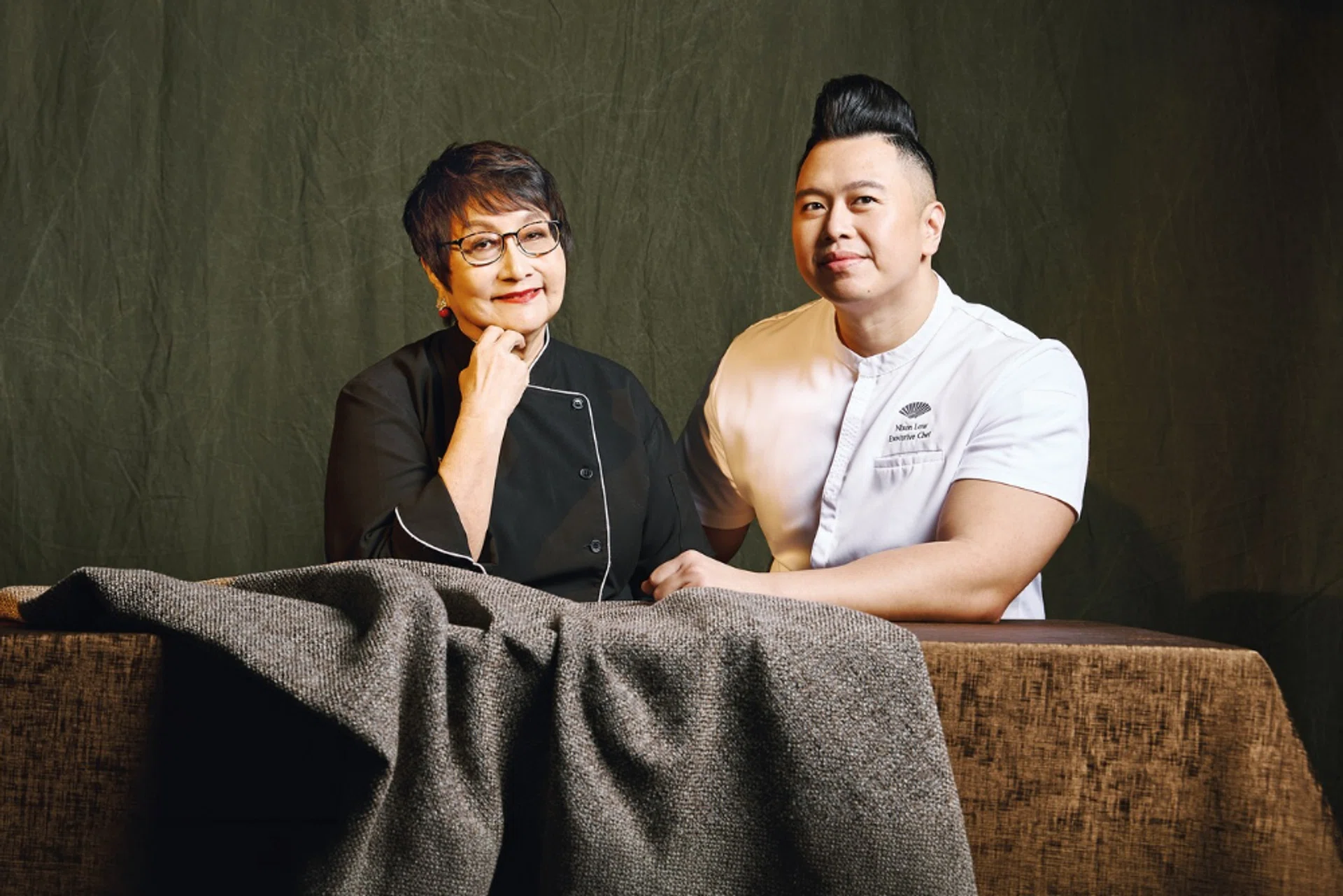
Executive Chef at Mandarin Oriental, Singapore Nixon Low and chef and restaurateur Violet Oon (whom Low affectionately refers to as Ms. Oon throughout), go way back.
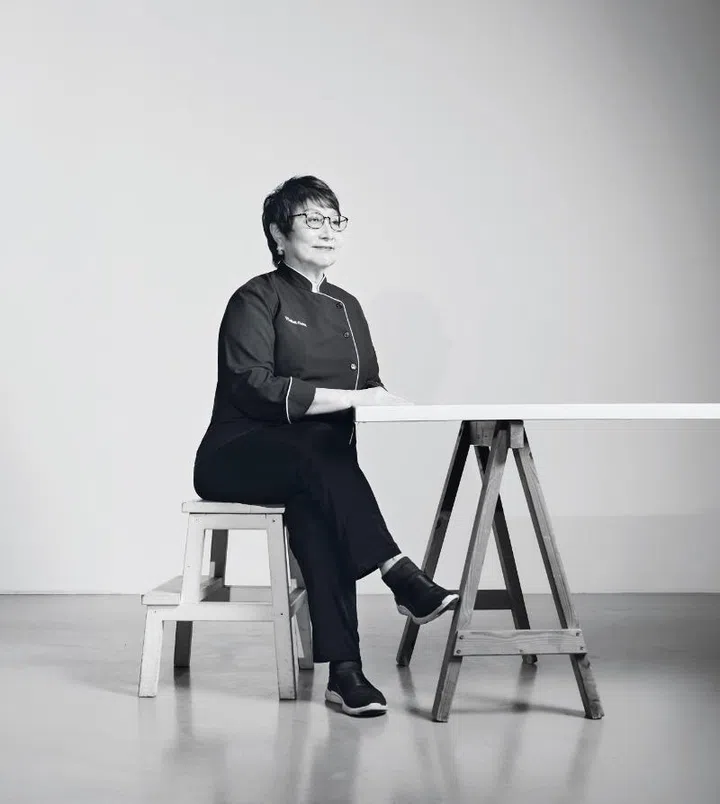
Oon’s story is familiar to many Singaporeans. She started out as a journalist, launching the monthly publication The Food Paper, before being appointed as Singapore’s food ambassador in 1988 and eventually opening her own beloved restaurants, Violet Oon Singapore.
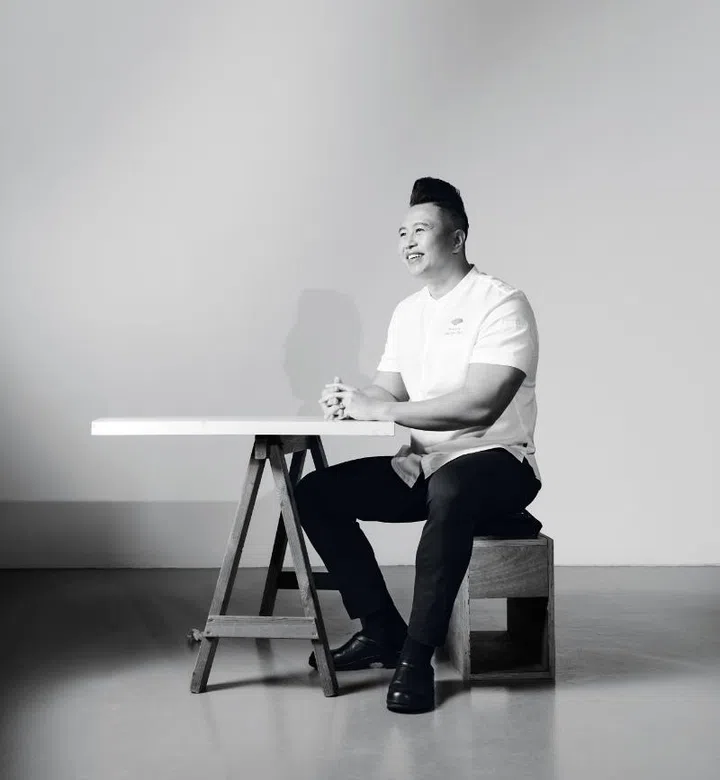
Two decades ago, Low, an ambitious, fresh-faced graduate from Temasek Polytechnic’s hospitality management programme joined Oon’s team in testing the recipes for the Naturally Peninsula cookbook. Here, they reunite for a conversation about pursuing excellence as a chef and the evolution of Singapore’s food scene.
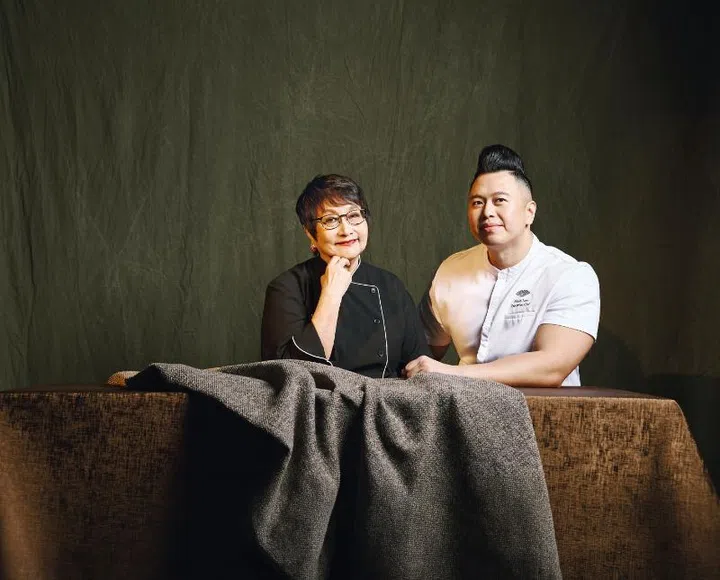
Violet Oon and Nixon Low
Related article: Fable Founders Tan Jiahui And Eugenia Chin On The Intricacies Of Typography, Cultural References And More
Violet Oon (VO): It was exactly 20 years ago that you came to work with me on a very unusual culinary project—to assist me to test the recipes by the seven executive chefs of the seven properties of the iconic Peninsula Hotel Group of Hong Kong for its cookbook, Naturally Peninsula. You were recommended to me by your chef lecturer in Temasek Polytechnic.
Nixon Low (NL): Right after graduating with a Diploma in Hospitality Management, I had this opportunity to work with you. Working on the Naturally Peninsula cookbook opened up my encyclopedia of knowledge—of food, of techniques, of different cultures, without travelling overseas. During that period, you shared a lot of knowledge, and I got the opportunity to speak to chefs from around the world. After I completed my national service and returned to the industry, all that information was still in my head when I became a third cook at a hotel. I already had knowledge that my seniors didn’t have, and that gave me a headstart in my career. How do you feel about the chefs that you’ve seen over the decades?
VO: At first, it wasn’t “chefs”, it was “cooks”. It was not prestigious. I think your generation was the first to be recognised as artists.
NL: Yeah, when food became avant-garde.
VO: Now you’re more of...
NL: A craftsman. [laughs]
Related article: 12 Best Peranakan Restaurants In Singapore
VO: And a culinary creative. I’m happy you’ve made a name for yourself in Singapore, which is not easy. Our chefs are becoming much more creative. A lot of independent restaurants are doing well. That’s a wonderful movement. Which part of your career has been of the greatest value to you as a chef?
NL: Every phase in my life has moulded me into what I am today. I’m very fortunate to have worked with you for the first of many years to come, and that helped me get a very firm footing of what I wanted to do in future. Not just knowledge, but a whole understanding of how the industry is going to be. We work long hours, we stand, we are open-minded, we do what’s right, and we try to have that fire in us.
VO: I think the fire in your soul is very important.
NL: In my mid-career, I had an opportunity to help open three hotels and manage their restaurants, events, catering and room service operations at age 27, which gave me insight into what I wanted to do further on. Halfway through my journey, there was this tiredness, a burnout, and either you lose everything here or change into a better person.
VO: You had always worked at five-star hotels, and this was a smaller hotel group. I asked you why you wanted to do this, and you said that it’s a chance to organise a whole kitchen from scratch. Rather than a career setback, you saw an opportunity to take yourself to the next level.
Related article: New Restaurants, Cafes And Pop-Ups In Singapore
NL: That opportunity helped me to see that there’s actually more to this than just cooking. It’s about building everything from ground zero, then the excitement of cooking the first plate of food that goes out. That was a big turning point in my career, and I became very confident. If the owners now need me to open a new concept, run a business, I’ve done it before. What do you think was a turning point in Singapore’s culinary scene?
VO: It was the launch of the integrated resorts in Singapore, with the top chefs at Marina Bay Sands and Joël Robuchon at Resorts World Sentosa. It brought [things] to another level. Without them, our culinary scene wouldn’t be as we know it. It brought us fine dining, Japanese food and this whole melting pot. Every chef around the world wants to make it in Singapore.
NL: Especially when it comes to Asia, you would make a major stop in Singapore to make a name for yourself.
Photography: Athirah Annissa
Creative direction: Windy Aulia
Makeup: Rina Sim using YSL Beauty
Hair: Grego using Revlon Professional Singapore