
What To Know About The Loewe Foundation Craft Prize 2026 Exhibition In Singapore: The Winner, Standout Pieces And More
Tradition finds new life in the hands of these artistic visionaries.
By Larissa Wong - published
The Loewe Foundation Craft Prize exhibition has touched down in Singapore, a moment of pride for Singaporeans as the nation steps up to host one of design’s most celebrated and prestigious awards.
Established in 1988 by Enrique Loewe Lynch, the Loewe Foundation was founded with the mission of pioneering creativity, artistry and safeguarding the heritage of all art forms, from dance and poetry to ceramics and photography. In 2016, Loewe’s Creative Director at the time, Jonathan Anderson, founded the Loewe Foundation Craft Prize, aimed at celebrating and spotlighting working artists who set the standard for innovation, pushing boundaries through their unique vision and exceptional craftsmanship in their respective disciplines.
Now helmed by Shelia Loewe, a fifth-generation member of the founding family, the Loewe Foundation Craft Prize has come to be celebrated as one of the highest honours in the art community. This year, the annual event is running its ninth edition here in Singapore at the National Gallery Singapore from 13 May to 14 June 2026, marking the foundation’s first-ever exhibition in Southeast Asia.
This year, over 5,100 hopeful applicants applied, with 30 finalists from 19 countries shortlisted by a panel of leading figures from design and architecture, alongside the 2025 winner Kunimasa Aoki and Loewe’s current Creative Directors Jack McCollough and Lazaro Hernandez. The submitted works have one a common thread: to go beyond the confines of the medium and to create an innovative piece of work with a distinct artistic vision.
At a ceremony held at the National Gallery Singapore on 12 May—attended by ambassadors and friends of the House including Aespa’s Giselle, Phuwin Tangsakyuen, Baifern Pimchanok and Tay Tawan Vihokratana—Korean ceramic artist Jongjin Park was unveiled as the winner of this year’s Loewe Foundation Craft Prize. According to a statement, Park’s work, Stata of Illusion, was chosen by the jury “for its ability to confound expectations of what ceramics can be, revealing a sculptural presence that is at once unexpected and purposeful.”
Keep scrolling to find out more about some of the standout works to look out for at the Loewe Foundation Craft Prize exhibition 2026—the artists, their stories, and some learnings we picked up while in conversation with some of the finalists at the exhibition preview.
Related article: All The Latest Lifestyle News In Singapore Worth Keeping Up With
1. Strata of Illusion By Jongjin Park, Winner Of The Loewe Foundation Craft Prize 2026
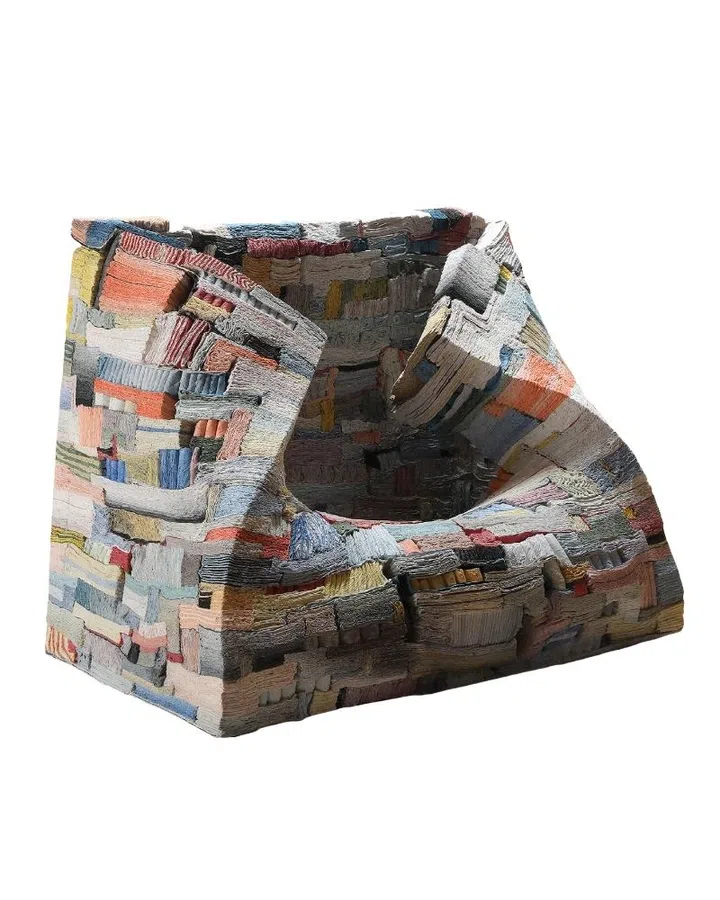
At first glance, ceramics is not a word that comes to mind when you look at Stata of Illusion—and that’s the intended reaction for Jongjin Park’s piece, which explores the boundaries of material truth and illusion. At the preview, we learned from the artist himself that the process took approximately four months, beginning with his first spark of inspiration, drawn from piles of stacked recycled paper in his studio.
In our conversation, Park shared that Stata of Illusion is actually made from stacks of “mundane paper” like kitchen towels and copy paper, which were covered in slip and completely burnt off in the kiln. The piece was sanded after firing, revealing the layers of paper and creating clean lines. Its slumped form came as a result of the heavy material and extended hours in a burning-hot kiln, with the artist embracing the new silhouette as an element of character and the evidence of materials being pushed to their limits.
2. Endless By Adelene Koh
As the only Singaporean finalist, all eyes are on book artist Adelene Koh. After speaking to the artist at the Loewe Foundation Craft Prize preview, we learned that Koh first chanced upon the art of bookbinding at the New York Book Fair and was since enamoured by the craft. Years later, she now makes the craft distinctly her own, telling stories in her own way with a particular focus on the endbands—an often overlooked yet fundamental element of bookbinding.
With her piece Endless, Koh spotlights the endbands, making them the focal point, expressing her desire for her work to “spark curiosity” in the art of bookbinding and “open that sense of wonder” in people.
Related article: “I Find Great Joy In Giving Books New Life”: Loewe Foundation Craft Prize 2026 Finalist Adelene Koh On The Art Of Bookbinding
3. Frafra Tapestry by Baba Tree Master Weavers × Álvaro Catalán de Ocón, Special Mention Recipient
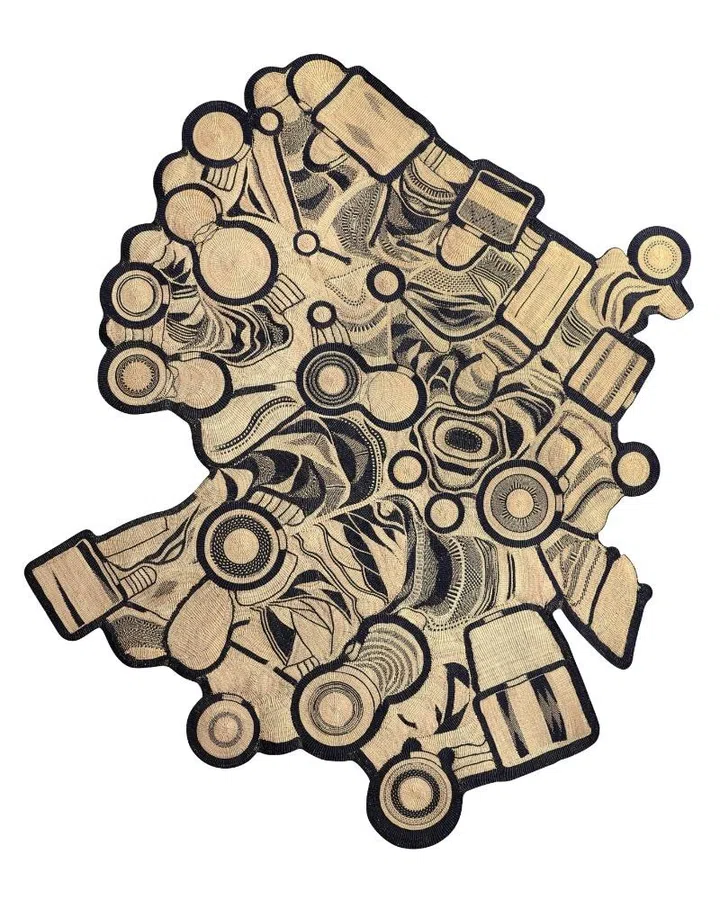
Made as a collaborative work between Spanish artist Álvaro Catalán de Ocón and Baba Tree Master Weavers, Frafra Tapestry honours community and tradition in the most beautiful ways. Crafted using traditional and ancient weaving techniques, elephant grass is transformed into a kaleidoscope of circles and soft shapes that loosely replicate the blueprint of family compounds in northern Ghana. Each shape is representative of a household, with the entire piece uniting a community of the Frafra people, who are known for their handwoven basketry traditions.
4. Collier By Graziano Visintin, Special Mention Recipient
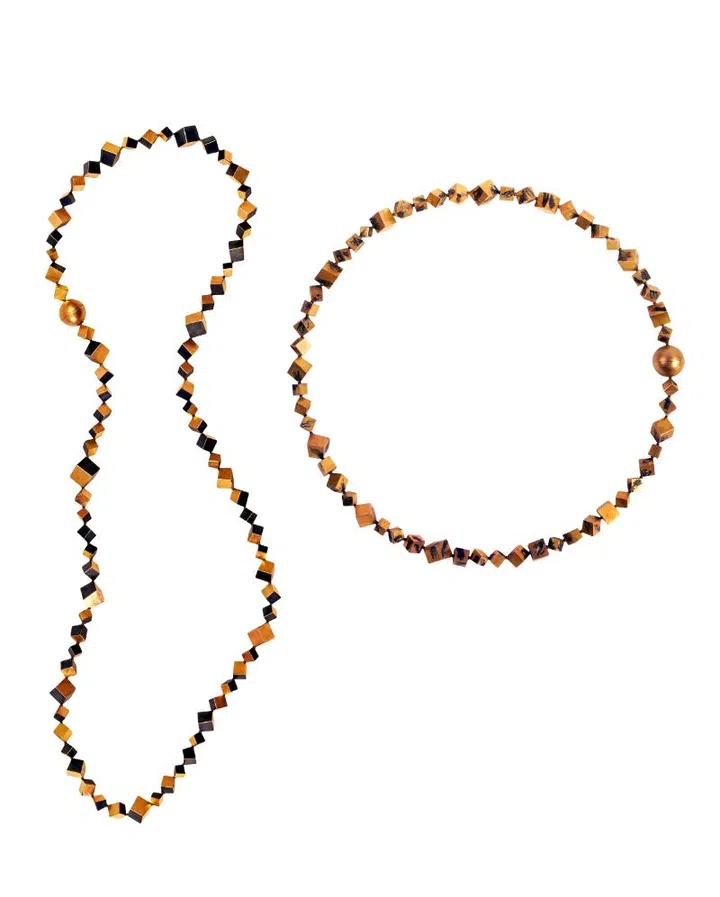
Crafted by celebrated jewellery artist Graziano Visintin, Collier is tangible evidence of enduring ancient techniques in the modern world. The necklaces were made using a melting and moulding technique that can be traced back to Ancient Egypt. Tiny sheets of metal were folded, welded together and brushed with niello—a mixture of sulfur, copper, silver, and lead—to give the material colour and texture, before melting the metal in sulfur.
The niello recipe Visintin used originated from Theophilus, a 12th-century Benedictine monk, skilled artisan and creator of De diversis artibus, (“On Diverse Arts” in English), a comprehensive manual detailing medieval painting, glassmaking, and metalwork techniques. His legacy lives on in Visintin, through his geoterrical shapes of metal painted in niello, and his respect and mastery of the ancient technique.
5. The Caretaker’s Clotheshorse By Xanthe Somers
The Caretaker’s Clotheshorse is Xanthe Somers’ ode to the women of Zimbabwe. In this piece, ceramics take form in layers of coloured weaves, inspired by Zimbabwean rattan baskets, painted in tones reminiscent of tea towels, blankets and other elements found in a home, as explained by Somers during the preview. The artist also added that the boldness and vibrancy of The Caretaker’s Clotheshorse speak to the “invisible hands” and “invisible labour” of women in domestic settings that can no longer be overlooked.
6. FAUN’S FLESH by Maria Koshenkova
Maria Koshenkova turns pain into beauty with her glass artwork FAUN’s FLESH. The artist has always been inspired by the human body, especially the invisible aspects of it, and its fragile and vulnerable qualities. After speaking with the artist, we learned that she sees the glass as an “embodiment of emotions”. The heaviness of the medium, alluding to trauma and suffering, is contrasted with a mix of colours such as pink, red, and silver, evoking a sense of brightness and beauty, representing the most basic issues of the human experience. Koshenkova also shared that her piece was crafted with bits of pieces of glassware from her late grandparents.