
By Windy Aulia - published
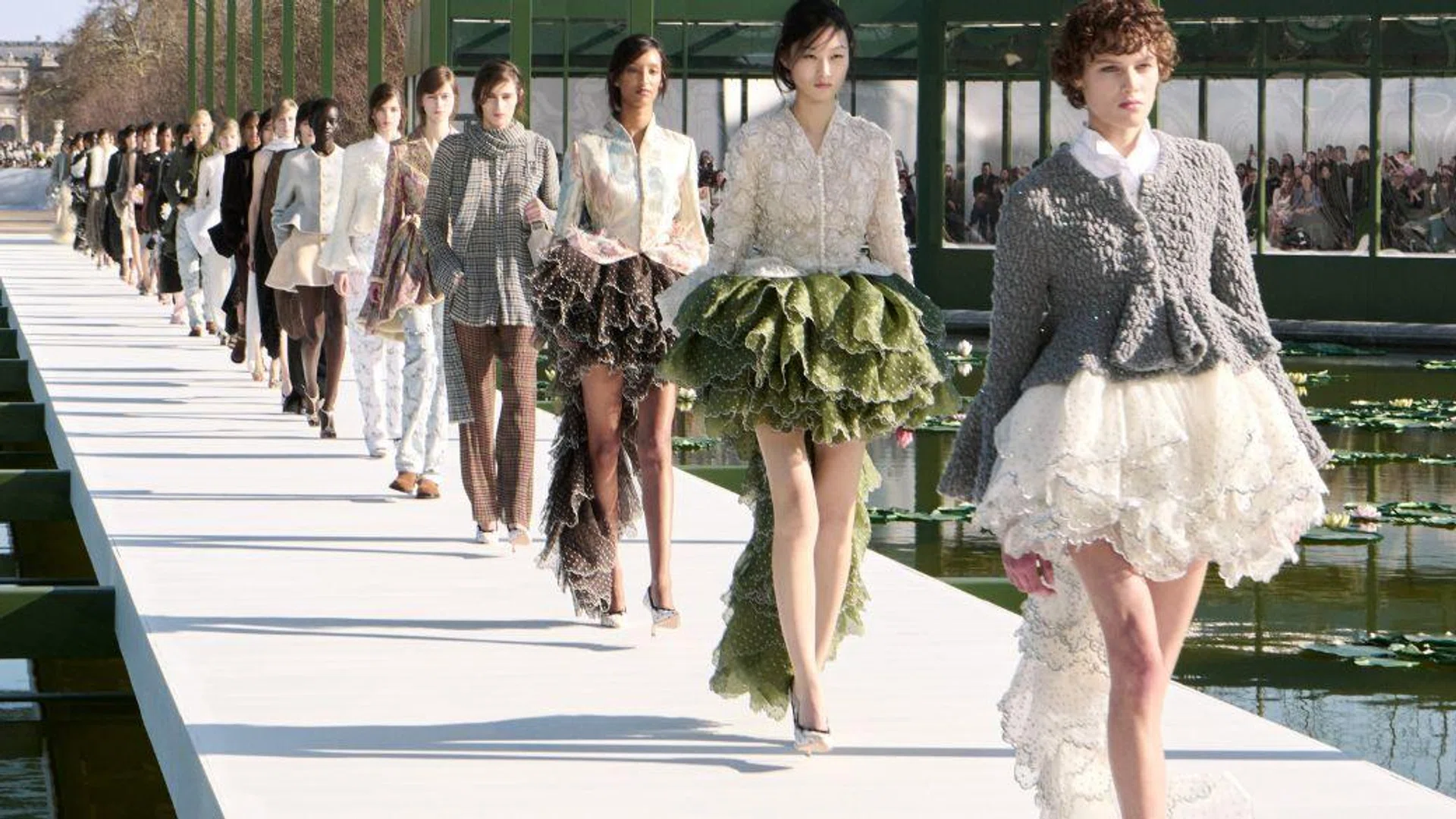
The recent Dior fall/winter 2026 show was a fine example of when great design and a memorable set come together under good creative direction by Jonathan Anderson, and the result was something spectacular. First of all, the runway was transformed into a vision of an idyllic park, complete with the suggestion of a still pond glinting beneath soft light and floating water lilies for added measure. It was an imposing structure built inside Jardin de Tuileries. It was meant to be a fleeting pastoral dream conjuring a wondrous crisp afternoon, where skirts brush against gravel paths, reflections ripple gently across the water—an image that was perhaps in the blueprint when Queen Catherine de’ Medici first commissioned the formal garden in 1564.
Related article: Ins And Outs: Here Are All The Major Designer Changes In Fashion
This atmosphere of suspended calm established the tone for the collection: contemplative, romantic, yet subtly grounded in reality. Anderson allowed the environment and the clothes to speak in tandem, creating a mood that felt both transportive and intimate. He spoke about how a park back then was utilised as a place to see and to be seen. And the clothes that he presented were the conduit.
Related article: At Dior’s Haute Couture, The Anderson Era Takes Shape
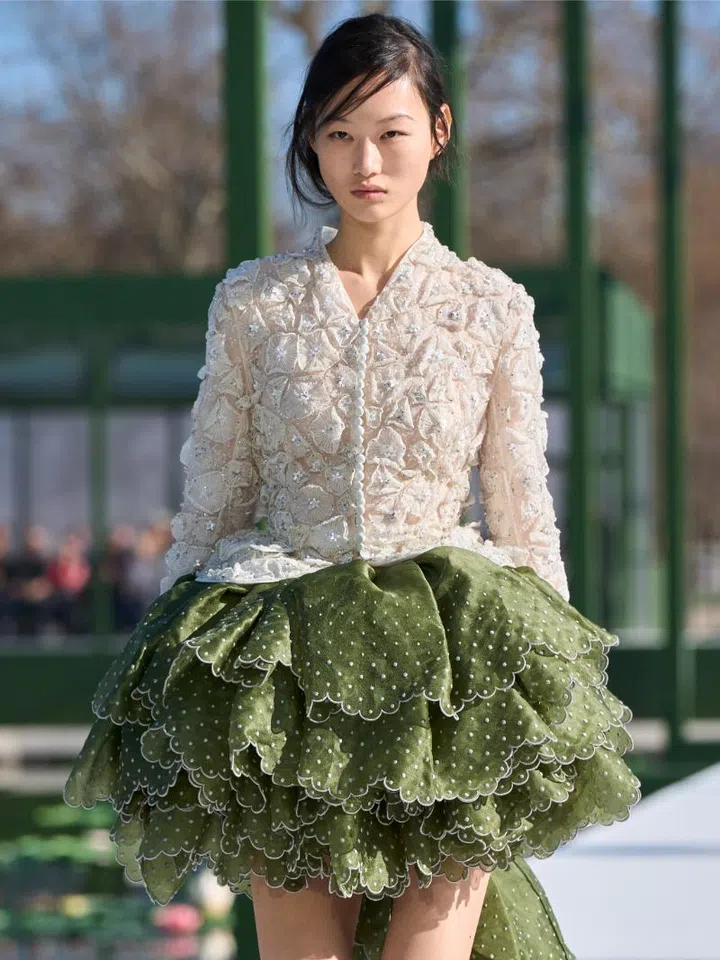
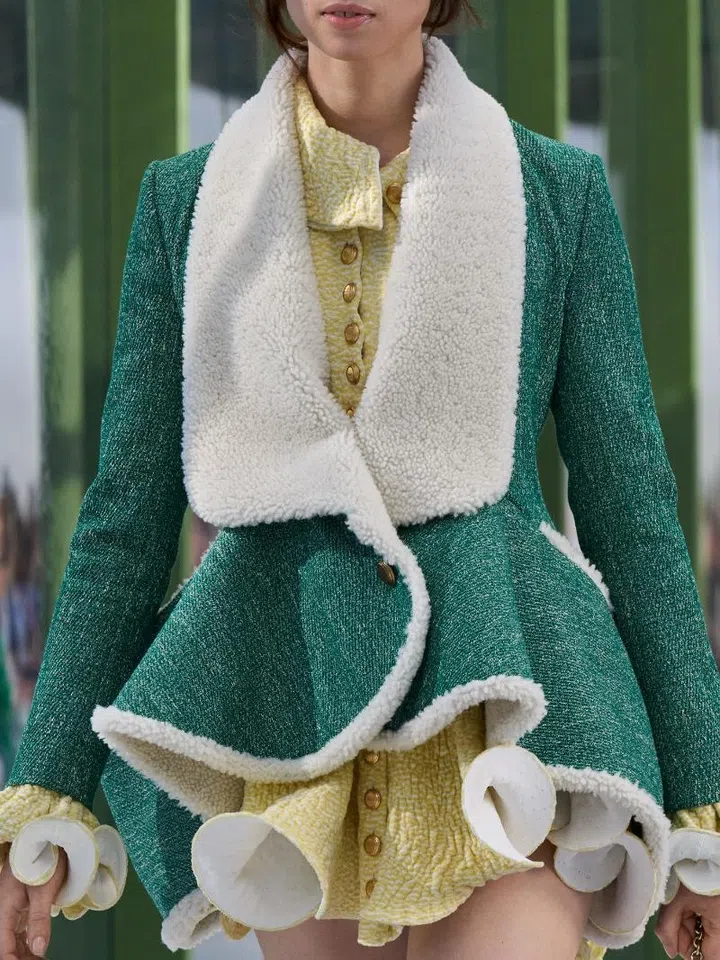
Among the standout looks was an opening passage of softened tailoring. The charcoal and moss-toned jackets paired with fluid, ruffled mini skirts that moved with an almost aquatic ease, echoing the pond’s imagined surface. A series of petal-layered dresses in muted ivories and washed blush tones appeared to bloom as the models walked, their asymmetrical hems curving like leaves caught in motion. One particularly striking ensemble juxtaposed a sculptural knit top, folded with near-origami precision, against a sheer, weightless skirt that hovered around the legs, marrying structure and fragility in a single silhouette. Elsewhere, a sequined denim look was cut with the ease of daywear but shimmered subtly under the lights. Anderson’s interest in recalibrating Dior’s codes for a contemporary rhythm of life runs the gamut of a modern woman’s day-to-night wardrobe. Eveningwear avoided bombast; instead, a black column dress traced with delicate, almost vine-like embroidery drew attention through craftsmanship rather than volume, its restraint amplified by the tranquil setting.
Related article: Rebel Rebel: Jonathan Anderson’s Boys Run Riot At Dior
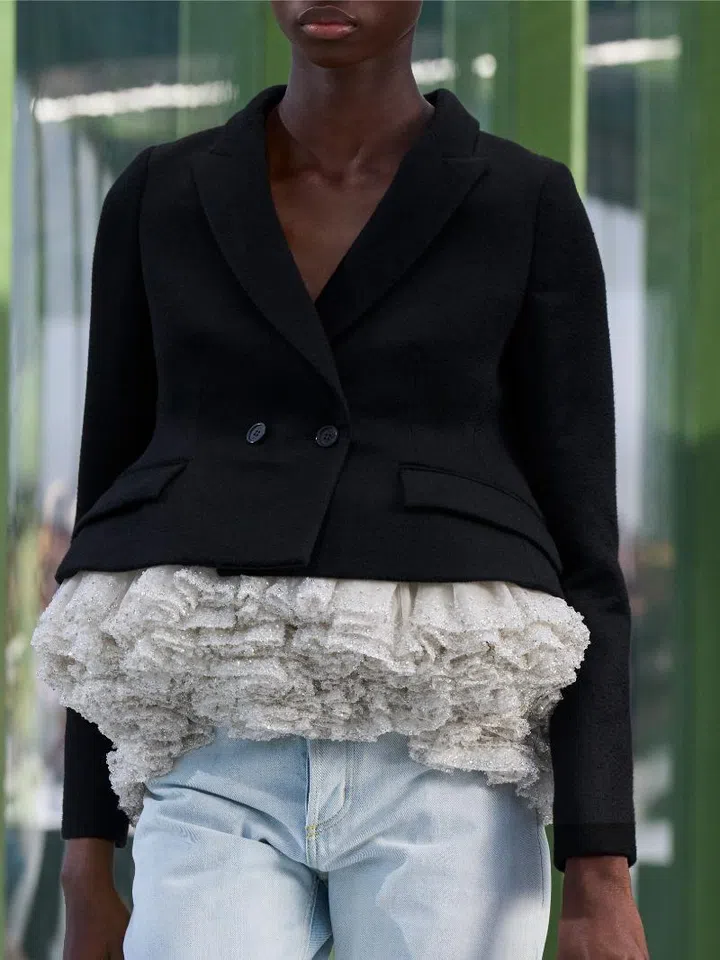
Central to the collection was Anderson’s evolving interpretation of the Bar jacket, that enduring emblem of Dior’s postwar New Look. Rather than replicating its famously nipped waist and rigid peplum in literal form, he approached it as a proposition rather than a prescription. Some versions were gently elongated, their waists hinted at rather than sharply cinched, while others were rendered in softer fabrics that allowed the silhouette to flex with the body. In a few instances, the peplum seemed to dissolve into layered panels, less architectural and more fluid, as though shaped by a breeze drifting across the park. Anderson’s Bar jacket did not reject the house’s heritage; it reframed it, proposing that structure can coexist with comfort, and that femininity need not rely on strict containment.
Related article: All The Fashion News You Need To Know Right Now
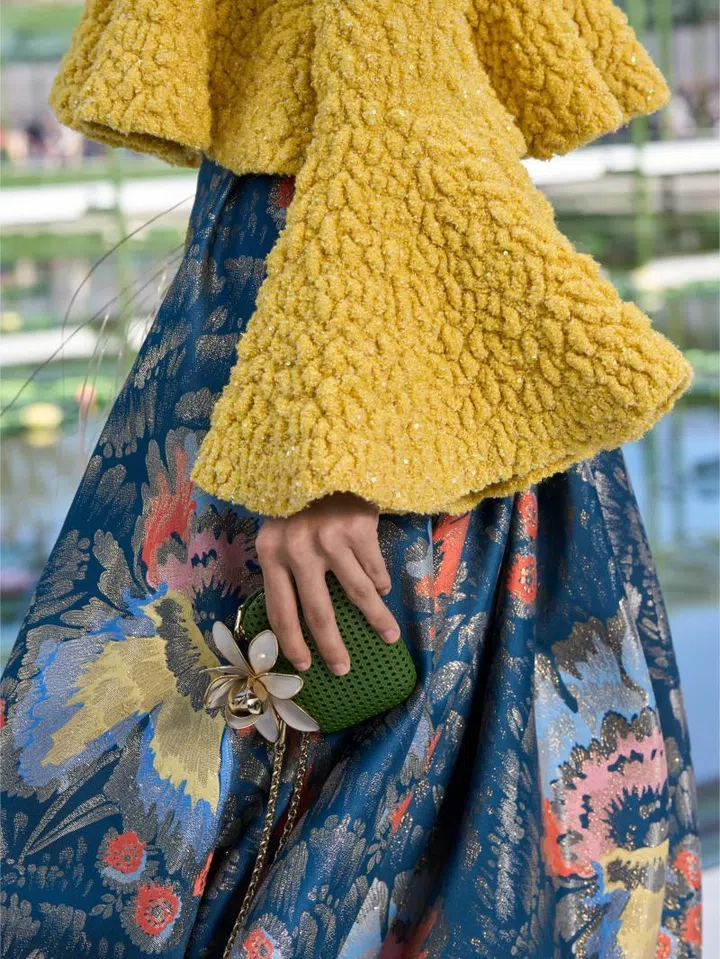
The dialogue between setting and garment was what ultimately made the show truly stands out. The evocation of a serene park and reflective pond underscored the collection’s emphasis on movement and introspection. Textures—from dense wool to gauzy chiffon—were layered with deliberation, creating depth without heaviness. Accessories, sculptural yet controlled, complemented the looks without distracting from them—though at times they can be singled out as character in Dior’s beautiful park. In this imagined landscape, Anderson presented a Dior woman who is composed but not constrained, romantic yet pragmatic, aware of history but not beholden to it.