
By Aaron Kok - published
By now, one thing’s become clear: Jonathan Anderson is playing the long game at Dior.
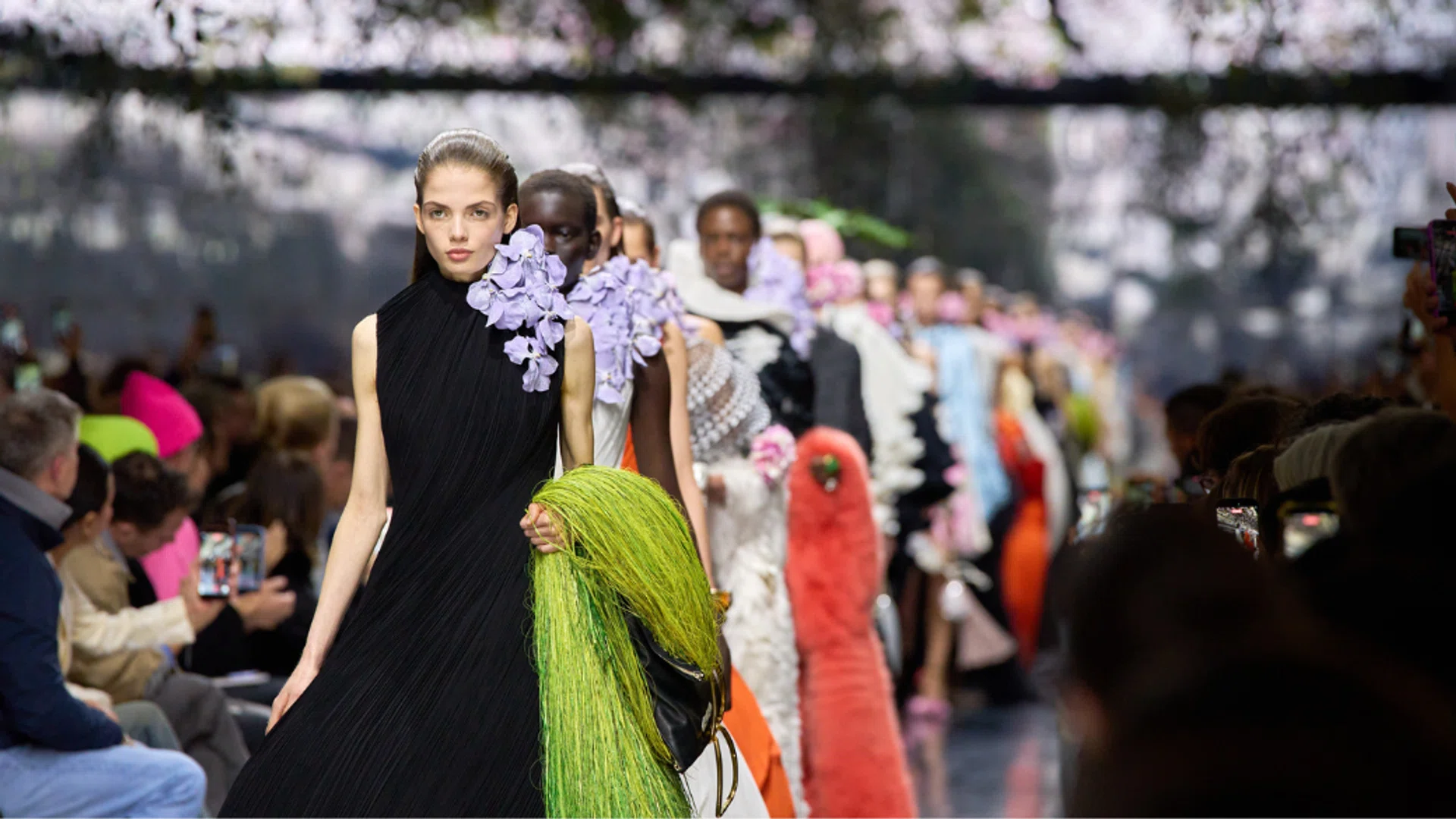
With his fourth collection for the house—and his very first foray into haute couture—he continues to articulate a vision that doesn’t just bend Dior’s codes, but stretches them into new dimensions, both literally and conceptually. If ready-to-wear was the prelude and menswear the rigour, then the spring/summer 2026 couture collection that blossomed last night is where the silhouette starts to sing.
Anderson has said it’ll take five collections before his Dior is fully realised. But already, we are beginning to see the grammar form: SS26 brought about prep jocks and whispering princesses, and FW26’s menswear gave us a band of Poiret punks. This time, the shapes are grown-up, more assertive, more sculptural. Couture, in Anderson’s hands, is as much about reverence as much as it is about a response, it seems.
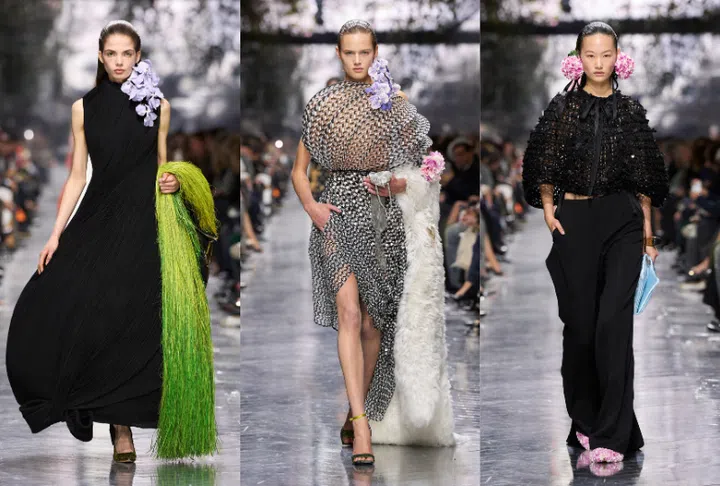
The show opened with a trio of micro-pleated buoyant dresses—akin to a look from his spring/summer 2026 ready-to-wear show—which signals an interesting reversal: rather than couture tailing prêt-à-porter, Anderson revealed that he started working on these couture dresses first, which then acted as a sort of genesis for his broader Dior language. In his world, couture is the source code, if you will.
Related article: All The Asian Stars At Fall/Winter 2026 Fashion Week
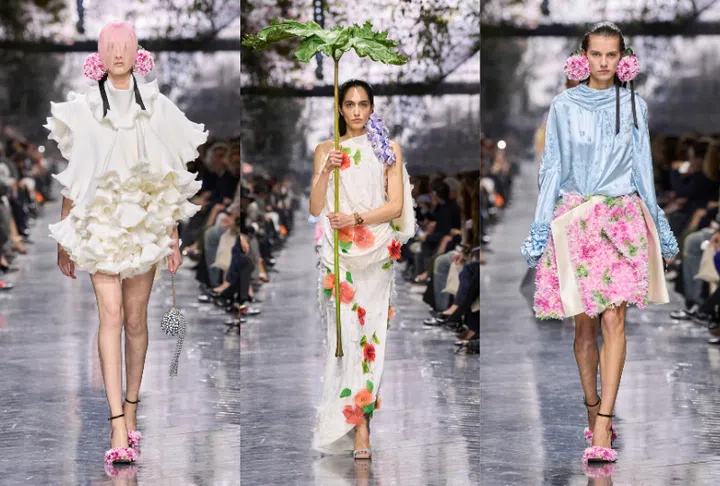
What followed was a procession of garments that felt less like clothes and more like propositions. Volumes were pushed to extremes: caged crinolines ballooned into cyclamen-esque domes; sculpted capelets in handspun cashmere seemed to float with cosy grace; floral-motifed silk jacquards gently flowed across bodies. One white cocktail dress covered in a hundred thousand little mother-of-pearl paillettes swooped up to defy gravity, while a shaggy coat-dress vibrated with frayed edgework. Even the quieter pieces—an ankle-grazing coat with a dramatic asymmetric collar, a sheer dress in smoky tulle, and that breathtaking final bridal look on Mona Tougaard—spoke to a radical simplicity rooted in obsessive craft.
There is a poetry in the precision here. Florals, ever the Dior fetish, are miniaturised and multiplied: tens of thousands of silk petals form dense surface treatments or trail delicately from ear cuffs, echoing the cyclamen bouquet gifted to Anderson by his predecessor John Galliano, whose presence in the audience added a dramatic layer of generational continuity. Anderson calls it a “creative baton”—Galliano’s flowers literally clipped to models’ ears, like a benediction from couture’s enfant terrible to its new futurist.
Related article: Jisoo And Thanaerng Lit Up Tokyo At The Dior Addict Sweet Shop Pop-Up
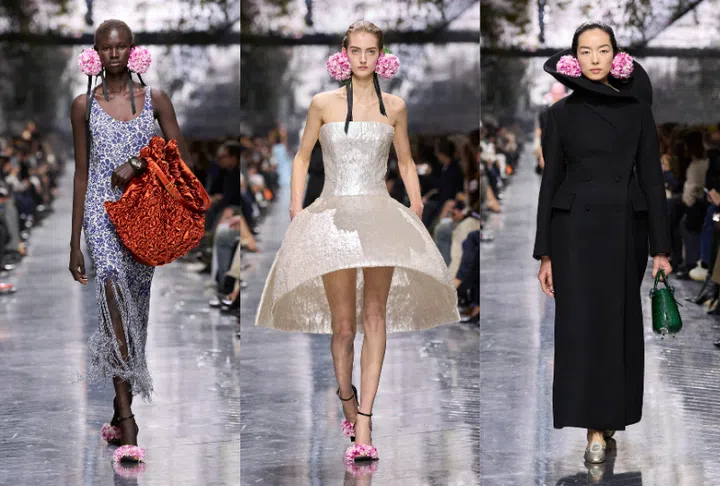
The collection, as Anderson describes in the show notes, is a wunderkammer; a cabinet of curiosities where nature meets artifice and old-world craft meets new-world form. That comes alive in the materials: 18th-century French textiles repurposed for evening coats and loafers; moulded leather handbags with meteorite clasps; knit yarns spun directly from raw fibres into gossamer-soft capes and sculptural tops. A standout accessory moment was a miniature clutch adorned with an 18th-century portrait miniature by Rosalba Carriera—a literal relic that has been recast as ornament.
Anderson’s couture is rigorous, yes, but it’s never dry. Here, there is a sense of play pulses beneath the grandeur that provokes and teases: a balloon top veiled in net like a butterfly’s chrysalis, a sheer tank worn tucked into a draped skirt like couture gone clubbing. Tulle, chiffon, and organza are shredded into feather-light flutters. At times, the silhouettes flirt with the grotesque—lumps and bumps erupting from hips or shoulders—but even those feel intentional, almost a nod to the alien beauty of nature’s own asymmetry.
Related article: BAZAAR Editor’s Picks: Best Looks From Hermès Menswear Fall/Winter 2026
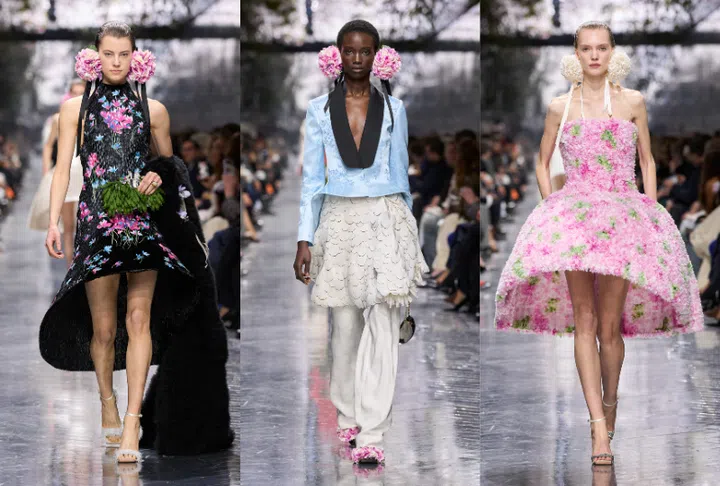
What’s striking is how the theatricality never slips into parody. Anderson is clearly in conversation with his Dior predecessors—there’s Raf Simon’s minimalism in the black tailoring, Galliano’s Belle Epoque spirit in the draped gowns, Gianfranco Ferre’s deft hand at sculpting fabric—but the tone is unmistakably his. The silhouette may be extreme, but the intent is human. “Why do couture today?” he asks in the press note. His answer is a simple one: because to make it is to protect it.
There is also a fascinating recalibration of who couture is for. Alongside the runway, Anderson devised an entire private client offering, as well as a public exhibition at the Musée Rodin, titled Grammar of Forms, where his designs are shown alongside Christian Dior originals and ceramic works by Magdalene Odundo. It’s a triptych of intention: couture as object, experience, and education.
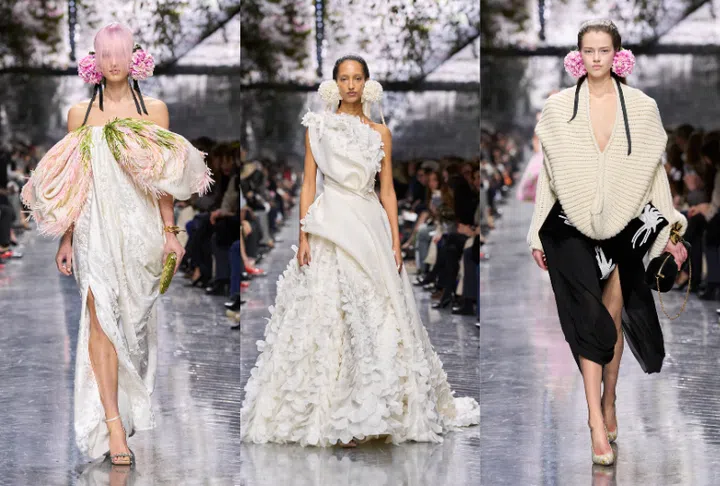
Still, this being Dior, there’s no shortage of showmanship. Jewellery pieces include meteorite-set rings, trailing ear cuffs lacquered like orchids, and pearl-framed miniature brooches. Anderson calls couture an endangered craft. If that’s true, this collection is both a joyful celebration as well as a pleading for pause. Because in a world that’s constantly moving faster, he asks us to take a moment to wonder, to look, to touch, and to remember what hands can do.