
5 Creatives Who Are Rethinking Craft In Singapore
Driven by a love of the arts and craft, these creators produce work that sparks real curiosity in others.
By Hayden Ng and Aaron Kok - published
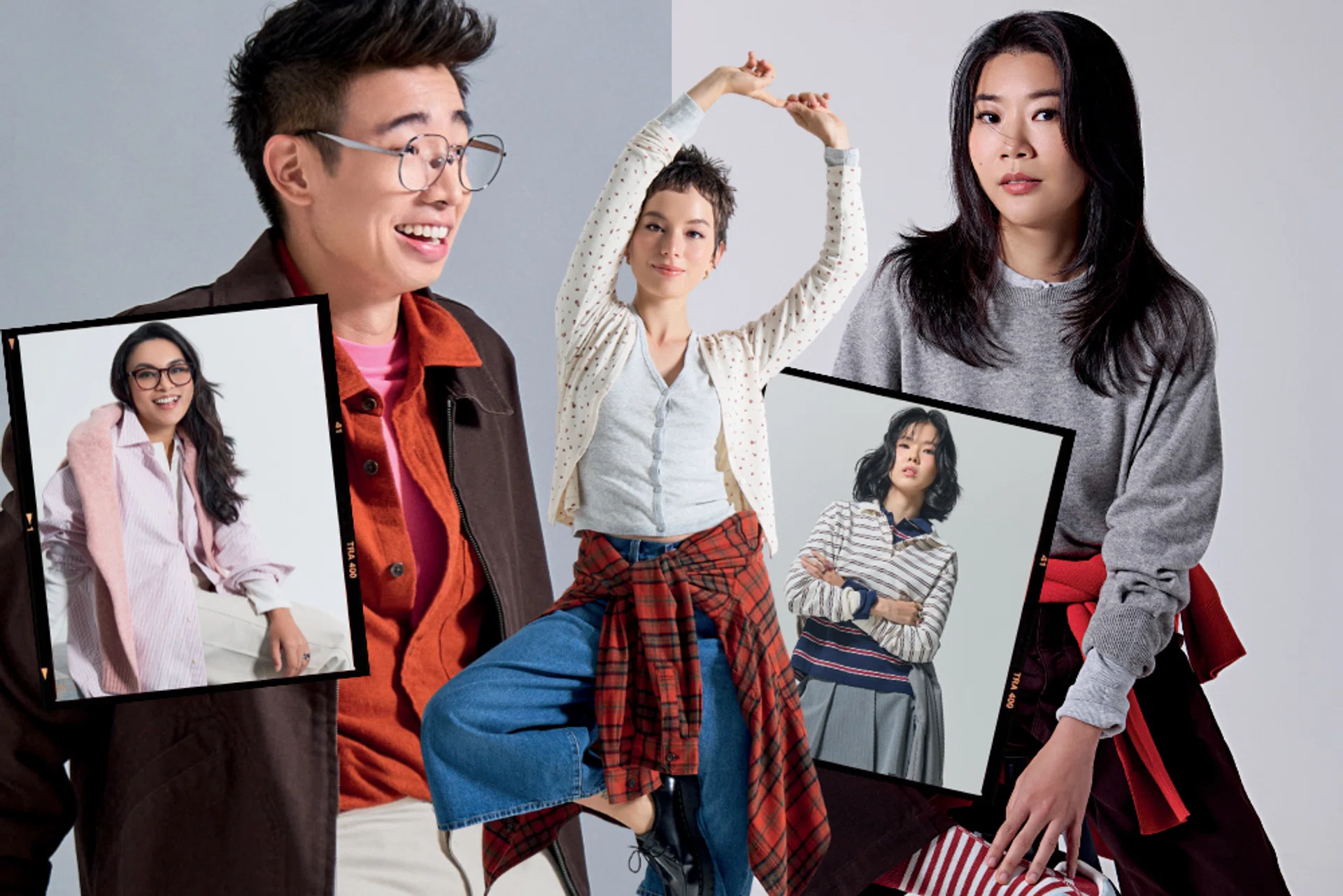
Craft is no longer confined to inherited techniques or traditional ideas of making. In the hands of a new generation, it becomes a flexible language, one that can move between fine art, design, public space and everyday life. These creatives are working with drawing, glass, paint, calligraphy and large-scale imagery, using familiar processes to arrive at unexpected results. What connects them is a deep attention to material, gesture and time, as well as a belief that making by hand still has something urgent to say. Their work proves that craft can remain rooted in patience and skill while continuing to evolve, respond and take on entirely new forms.
About “25 Creatives, 25 Stories”
As Harper’s BAZAAR Singapore marks its 25th anniversary, we spotlight 25 rising and established creatives helping to shape Singapore’s cultural landscape, and driving Singapore’s creative community forward.
Read more of their stories below:
5 Creatives Who Are Redefining Tradition
6 Creatives Who Are Taking The Road Less Travelled
5 Creatives Who Are Shaping Culture In Singapore
4 Creatives Who Are Putting Singapore On The World Stage
Related article: New Restaurants, Cafes And Pop-Ups In Singapore: August 2026
Tang Bi Feng, 25, Founder of Gurasu House
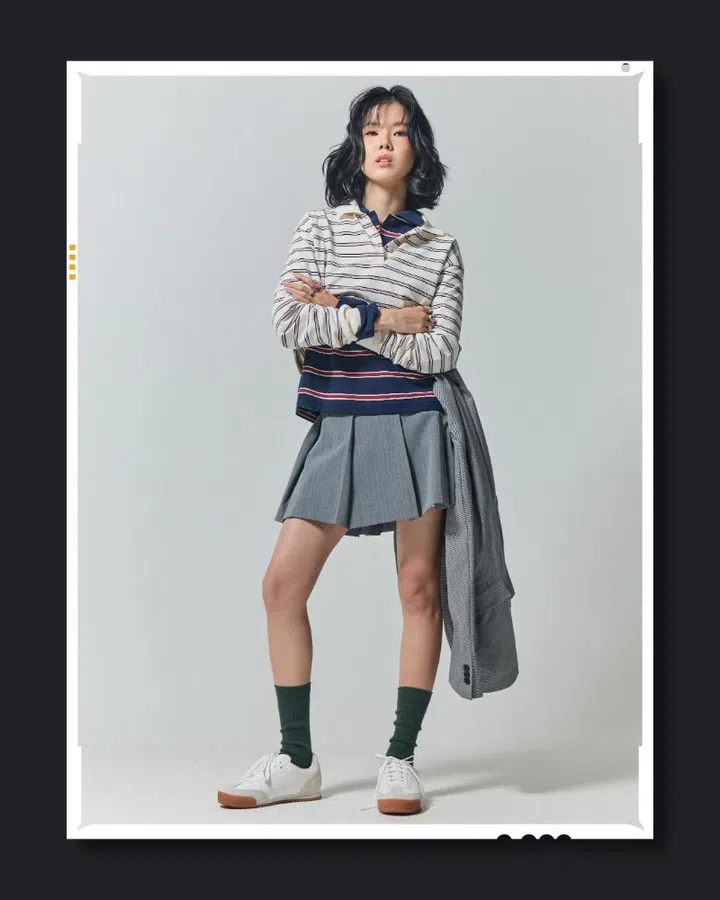
Tops; skirt; Uniqlo Air blazer; socks; sneakers; UNIQLO.
While on the social media platform Xiaohongshu, Tang Bi Feng discovered videos of lampworking, a glass-shaping craft enjoying a surge of interest in China. She fell in love with it and yearned to learn more, but couldn’t find any dedicated workshops here.
In October 2024, she flew to China to learn it. By 2025, she opened her own lampworking studio, Gurasu House. The expansion reads as business growth, but to Tang, it means more. “It represents every risk taken, every late night spent planning, and every person who believed in what we were building,” she says. “More importantly, it means we now have a space that can continue supporting the growth of glass art in Singapore.”
Tang plans to turn Gurasu House into a hub for regional lampworkers in the future. “Singapore sits in a unique position in Asia, and I think there’s an opportunity to connect artists, studios and learners from around the world through a shared love of glass.”
What do you do to spark your creativity?
I love learning new crafts and attending workshops that have nothing to do with glass. Bookbinding, woodworking, floristry, metalwork. If someone is making something with their hands, chances are I want to try it. And somehow I always find a way to relate it back to the torch. Sometimes it’s a technique. Sometimes it’s a form. Sometimes it’s the way another maker thinks about their craft.
What’s one thing outsiders get wrong about being a creative in Singapore?
I think people often imagine that creatives spend all day being creative. The reality is usually a lot less glamorous. Running a creative business requires structure, discipline, and an enormous amount of problem-solving. Passion might be what gets you started, but consistency is what keeps things moving. A lot of creatives are quietly managing businesses behind the scenes while everyone else only sees the finished work.
Could you name one creative you’ve always been inspired by, and why?
My current favourite creative is Jane Chuck. What I admire most isn’t any single project she’s worked on, but how naturally all the different parts of her life fit together. She’s a business owner, creative, and content creator, but none of those roles feel separate. Everything feels like an authentic extension of who she is. As someone who is also balancing multiple roles—as an artist, educator, business owner, and content creator—I find that incredibly inspiring. It reminds me that building a creative career isn’t just about mastering a craft. It’s also about building a life and body of work that feels genuinely aligned with who you are.
Related article: The Best Mooncakes Of 2026, Tried And Reviewed By The BAZAAR Team
Toby Tan, 32, Artist
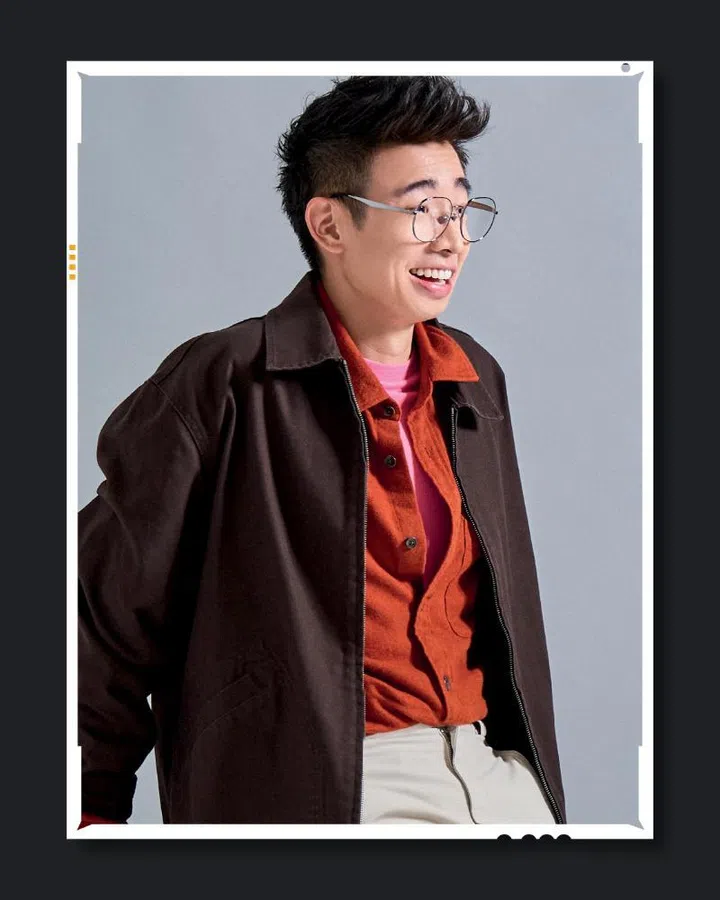
Uniqlo and JW Anderson jacket; shirt; sweater; trousers, UNIQLO.
Toby Tan will tell you he draws for a living, though he’d much rather draw to live. It’s a small but telling distinction, one that gets to the heart of how the multidisciplinary artist approaches his work.
Known professionally as tobyato, Tan’s practice spans wall murals, brand collaborations, and product design. His visual language is rooted in Eastern art, motifs and mythologies—all of which trace back to childhood temple visits with his family, layered with an early Pokémon obsession.
Nine years into his career, creativity has expanded beyond what he can draw on a wall. “It’s how you creatively carry and present yourself in conversation, in public, in client meetings,” he says. The intangible, he’s learnt, holds up the tangible. For Tan, success, for now, means having the luxury and freedom of choice to do the things he wants with his family and friends, and for his own fun.
What is creativity to you, and how has that definition shifted over the years?
When I started, creativity to me was a very tangible visual thing. My art style, my paint strokes, my projects. But as I progressed in my career, I’ve realised that creativity is also about the intangibles. It’s how you creatively carry and present yourself, in conversation, in public, in client meetings, solving problems, wearing different hats. The intangible creativity sits within the tangible side that we can see.
Why is creativity important in today’s world?
Creativity brings joy but it also solves problems. We often put creativity in this whimsical box of fun, but it’s extremely practical for creative solutions, stories and finds its way into many aspects of our lives, whether we realise it or not.
Could you name one creative you’ve always been inspired by, and why?
I’ve always been quite enamoured and inspired by the career of the Danish architect Bjarke Ingels. Even though I’m not in the architecture space, I deeply admire how he approaches his projects, challenges the norm and also reminds me that how you present yourself is equally important as the work you present.
Related article: All The Latest Lifestyle News In Singapore Worth Keeping Up With
Anna Du Toit, 25, Multidisciplinary Artist
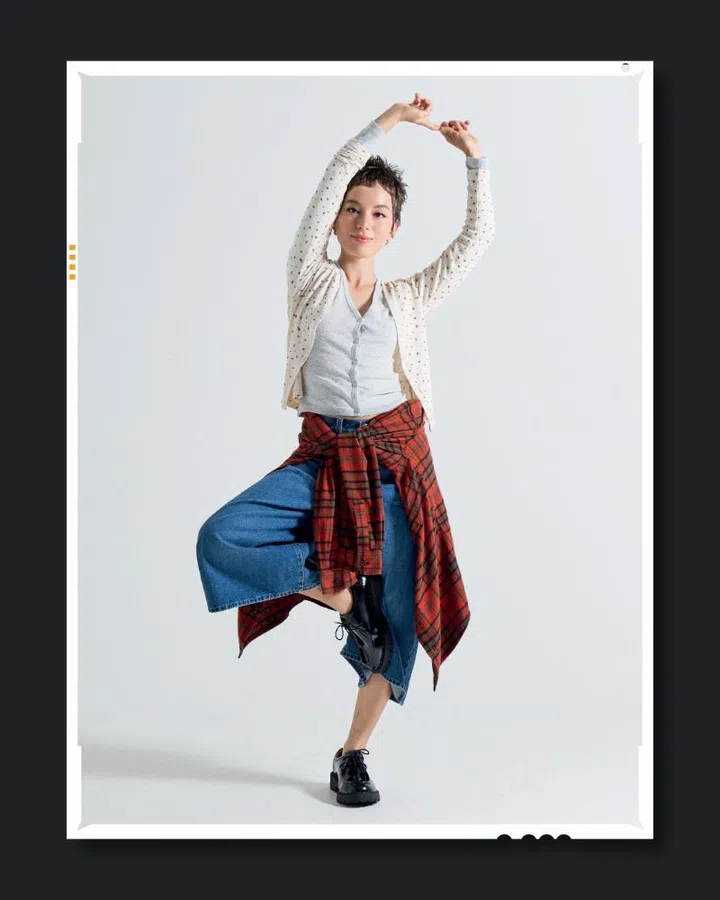
Cardigans; trousers; shirt; shoes, UNIQLO.
In contrast to today’s hyper-digital pace, Anna Du Toit approaches her artwork—ranging from ballpoint pen drawings to larger sculptures—with a slower, more introspective touch.
“When art is rushed, you lose the thought processes and the accidents that end up meaning the most,” she says. Du Toit, whose father is an architect who encouraged her to draw from a young age, developed her current style by exploring small, surreal worlds on pen and paper during the Covid-19 lockdown.
She finds herself in her most creative state with projects that “never see the outside world.” Creativity, to her, is similar to a child who needs nurturing. “Sometimes, that means benign neglect,” she adds. “Letting it be messy and not forcing it to perform or produce before it’s ready.”
What do you do to spark your creativity?
I jump between doing different things. I love how my different interests feed into one another, how a love for gardening helps you understand clay, or an interest in photography helps you understand depth in painting and ballpoint pen. It’s part of the learning process, otherwise you stagnate.
What’s one thing that outsiders get wrong about being a creative in Singapore?
That Singapore lacks creative power. The truth is, there have always been incredibly talented people here bursting with ideas. Unfortunately, the environment to nurture those ideas to maturity is lacking, and so they tend not to make it into the mainstream.
How does AI impact your profession?
Art has always been about the person behind it as much as the thing itself. AI has never felt wonder, nostalgia or loss, or the specific weight of a place it grew up in, and that gap shows. I worry about institutions normalising AI art before people have had a chance to really reckon with what gets lost. But I’ve never met an artist who gave up easily. We’ve learnt to live with instability.
Related article: Your Guide To SG Culture Pass-Maxxing: Where To Use, Top Activities And More
Louisa Raj, 36, Artist
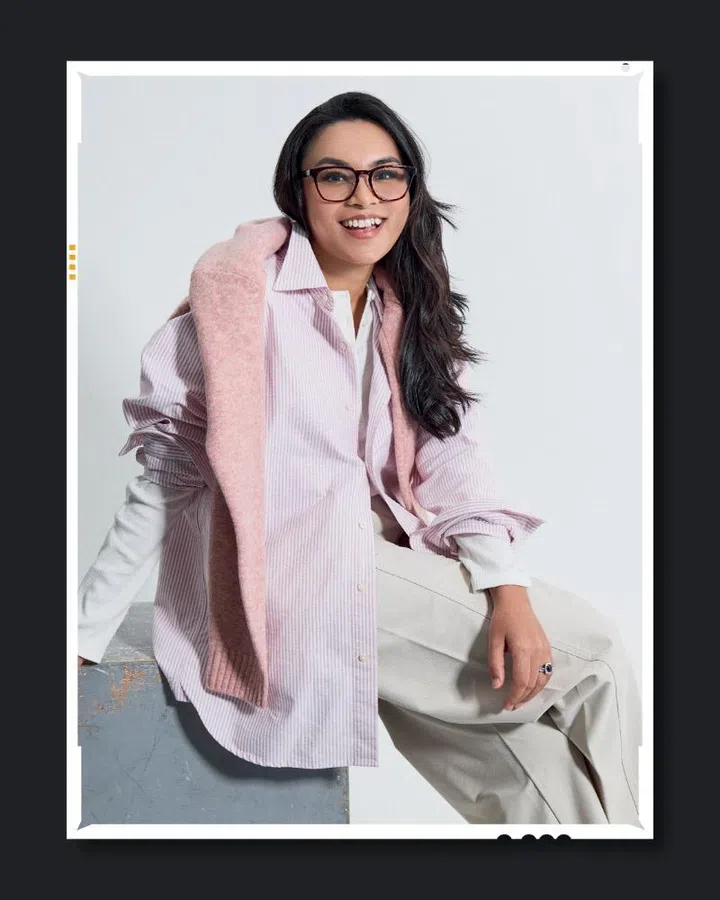
Top; shirt; trousers; sweater; glasses, UNIQLO.
Despite having no background in the arts, Louisa Raj turned her passion into a success story, proving it is never too late to pursue your interests and be recognised for them. For 10 years, she worked in the finance sector. In 2025, the self-taught artist left finance to paint full-time.
“[My paintings] started selling and more people started asking,” she shares. “After a couple of years, I felt I was ready. I just knew that I would regret it if I didn’t give myself the chance now.” These signs helped confirm her decision to go full-time.
A hyperrealist, Raj paints “everyday things that we’ve stopped noticing.” Her artwork features objects ranging from rice bags to mahjong tiles, and it has not only earned her an online following but also a collaboration with the Singapore Tourism Board—a large-scale mural of a 1980s coffee shop for the Formula 1 Singapore Grand Prix Hospitality Suite last year.
Why is creativity important in today’s world?
I think creativity has always been important, not just now. I think humans have always needed to make things and find beauty in things. That hasn’t changed. For me personally, it just brings a lot of joy. There’s something really satisfying about making something with your hands, or seeing something in a way you’ve never seen it before. It feels good and it makes life more interesting.
What’s one thing that outsiders get wrong about being a creative in Singapore?
That there’s no room for it, and that it’s non-essential. People assume Singaporeans are too practical to take art seriously or that the culture doesn’t support it. But some of my most passionate collectors are Singaporean. They take it seriously once they decide they care about something.
Could you name one creative you’ve always been inspired by, and why?
David Hockney. Whenever I see his paintings I can’t look away. He’s like a magician with colour and composition. And he dedicated his whole life to this craft, which I find really inspiring. It is an example that if you just keep painting, it shows. Most of what I know about him is from his interviews. But the way he talked about looking and painting still gives me a lot to think about.
Related article: 12 Pop Culture Trends Singaporeans Were Obsessed With Over The Last 25 Years
Wu Yanrong, 35, Visual Artist
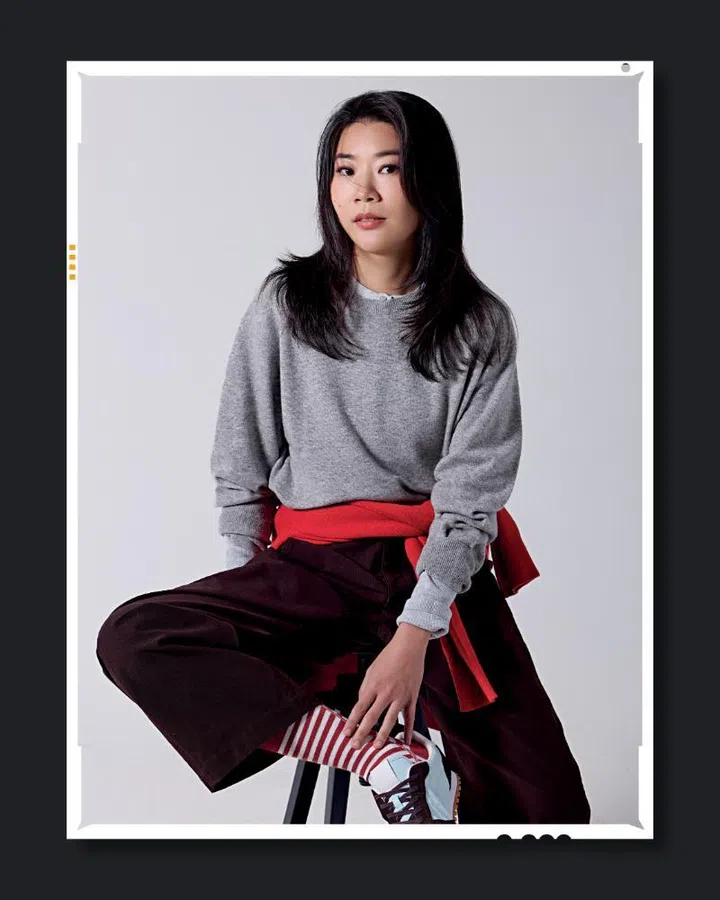
Top; sweaters; trousers; sneakers, UNIQLO. Socks, stylist’s own.
Wu Yanrong paints by leaving out everything unnecessary. A visual artist trained in graphic design and Chinese calligraphy, her practice is built on “distilling objects to their essence through minimal, deliberate brushstrokes”.
Wu’s interest in the arts began at a young age, and after experimenting with multiple media over the years, she always returns to her paintbrushes. Her background in Chinese calligraphy has influenced her work. There is the tangible side, she explains—the way she holds the brush, composes the work—and the intangible: the philosophy of yin and yang, the pursuit of balance.
Creativity, to her, means freedom, and that definition has never shifted. But her idea of success has. “When I first started, success was about setting goals and achieving them,” she shares. “As I’ve grown older, I’ve realised that art is a way of life and that there is no end goal.”
What is creativity to you, and how has that definition shifted over the years?
Freedom. It has never shifted.
What do you do to spark your creativity?
I get my ideas in the shower, when I’m walking or when I’m out in nature. Drawing is a nice and easy way to kickstart something.
Why is creativity important in today’s world?
Now that it’s so easy to generate things, I think it’s even more important to find your own voice and identity. Humanmade work will always be better.
Photography: Lawrence Teo and Angela Guo
Creative direction: Windy Aulia
Styling: Gracia Phang
Production: Aaron Kok
Makeup: Rina Sim using Chanel Beauty
Hair: Jimmy Yap/Kimistry; Grego using Revlon Professional
Stylist’s assistant: Jolin Lam, Laila Mishazira
In collaboration with UNIQLO.