
5 Creatives Who Are Redefining Tradition
Rooted in heritage yet driven by innovation, these creatives are finding ways to preserve and reinterpret traditions.
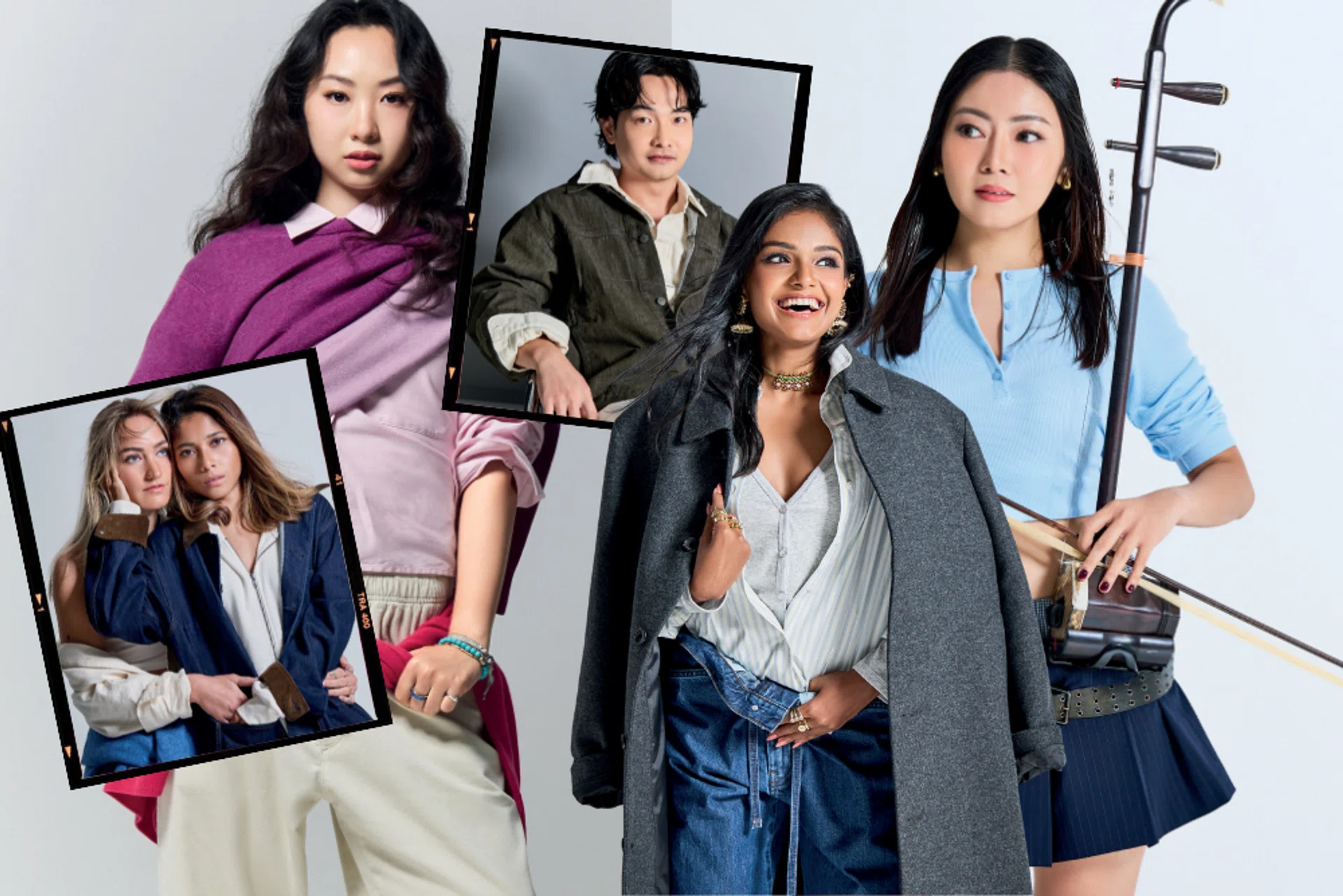
By Hayden Ng and Aaron Kok - published
Tradition survives through use. It lives in the hands of those willing to study its rules, understand its histories and then carry it somewhere new. Across opera, dance, music, metalwork and food, these creatives are treating heritage as a living practice rather than a fixed inheritance. An erhu slips easily into electronic production; Bharatanatyam finds fresh movement alongside contemporary dance; old techniques take shape in objects, performances and ideas made for the present. Even sustainability becomes a way of reconsidering the values passed between generations.
Their work honours where they come from while asking what tradition might become next, ensuring that familiar forms remain relevant, resonant and open to reinvention.
About “25 Creatives, 25 Stories”
As Harper’s BAZAAR Singapore marks its 25th anniversary, we spotlight 25 rising and established creatives helping to shape Singapore’s cultural landscape, and driving Singapore’s creative community forward.
Read more of their stories below:
5 Creatives Who Are Rethinking Craft In Singapore
6 Creatives Who Are Taking The Road Less Travelled
5 Creatives Who Are Shaping Culture In Singapore
4 Creatives Who Are Putting Singapore On The World Stage
Related article: A Fashionable Life: The Best Living Rooms, As Seen In Harper’s BAZAAR Singapore
Tan Wei Tian, 22, Teochew Opera Artist
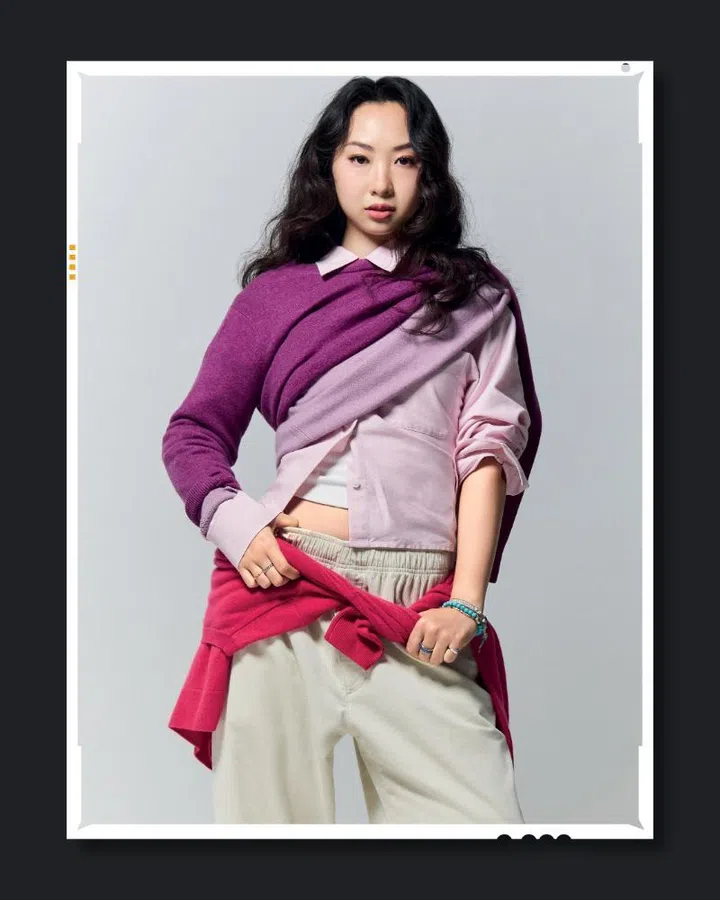
Camisole; Uniqlo and JW Anderson shirt; sweaters; trousers, UNIQLO. Jewellery, Wei Tian’s own.
If there is one thing that Tan Wei Tian is determined to do in her career, it is to keep Teochew opera alive for future generations. The 22-year-old Teochew opera star, one of the youngest in Singapore, is working with local organisations to make traditional arts relevant in today’s society.
Named by Singapore Tourism Board as a cultural ambassador in 2017, Tan has since performed abroad as a representative of the art form. She’s currently pursuing a Bachelor in Chinese Opera at the Shanghai Theatre Academy, where she’s found other young opera artists who share the same passion. “Learning alongside them made the process so much more fulfilling for me,” she says.
This year marks Tan’s 20th anniversary on the Teochew opera stage, a remarkable milestone for the young artist. She credits the art form with shaping who she is. “My mum fondly remembers how, even as a child, I could distinguish the good and bad characters on stage,” she says. “As I matured and delved deeper into scripts and roles, I learnt lessons in righteousness, integrity and empathy.”
What challenges do you face as an opera artist in Singapore, and how do you overcome them?
Personally, it is quite tough to find people of similar age who also have an interest in opera in Singapore. Teenage me would say the journey was slightly lonely, but I have grown into it. On a performing level, I think I face the same challenges as any other opera artiste in Singapore, which is how do we continue to make opera more alive in modern Singapore? This is a slow process, but we have been making small progress over the years to tackle this problem. I am very thankful that over the years, Nam Hwa Opera has been extremely supportive in my journey and provided me with countless performing opportunities to gain experience. With their efforts within Singapore and overseas, the opera scene in Singapore is slowly gaining a wider audience, and more people get the opportunity to appreciate Teochew opera and traditional performing arts.
What are the realities of being a creative in Singapore?
It can be challenging because it often requires balancing passion with practical realities. As someone involved in a traditional art form, I also face the challenge of reaching new audiences and showing that opera is still relevant today. At the same time, I feel very blessed because Singapore provides many platforms for artists to learn, collaborate and showcase their work. The reality is that being a creative here requires patience, adaptability and a willingness to keep learning. Progress may not always be immediate, but every performance, project and audience interaction helps us grow and contribute to the arts ecosystem.
Could you name one creative you’ve always been inspired by, and why?
In terms of bringing Chinese culture into modern music, I am very inspired by Jay Chou. I particularly enjoy his songs that are written with inspiration from Chinese culture, and I am still in awe at how all these meanings can be blended into a mandopop piece so well. I hope one day I can try creating something similar with Teochew opera.
Related article: Wild Group Founder Leonard Lim On Forging Meaningful Connections, His Current Playlist And More
Shruthi Nair, 29, Freelance Dancer and Choreographer
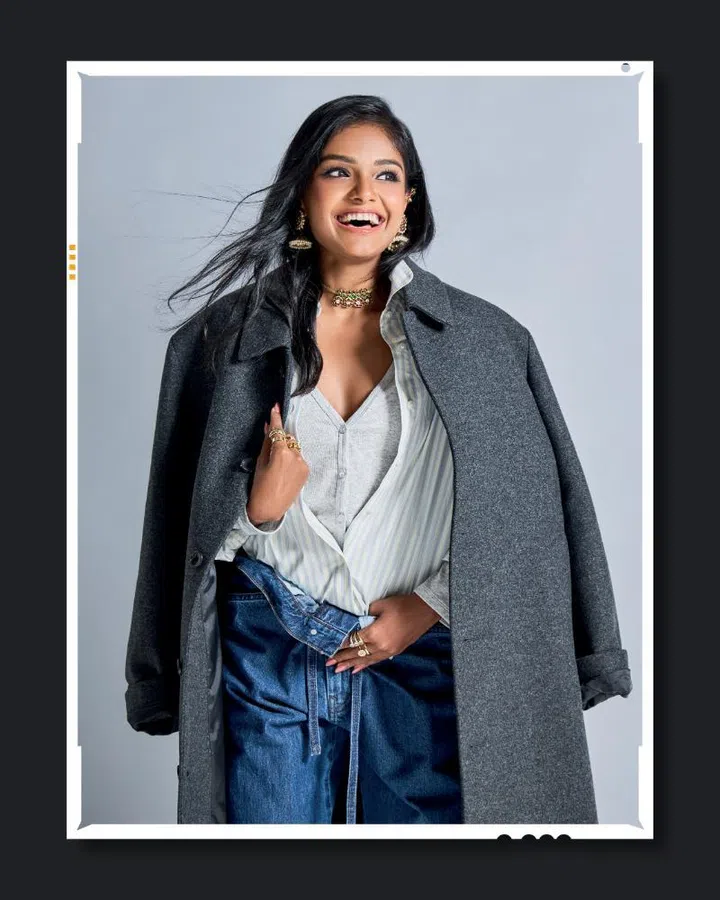
Top; coat; jeans; Uniqlo and JW Anderson shirt; UNIQLO. Jewellery, Shruthi’s own.
Shruthi Nair was never built for a desk-bound job. Two years into her corporate job, she found she couldn’t sit still and she needed to “get up every 15 minutes”. In 2023, she left corporate life to build her dance career, which felt meaningful to her.
“It has given me so much over the years; a sense of purpose, community, challenge and joy,” she adds. It was also dance that threw her into the spotlight some eight years ago. A clip of her performing outside the Indian Heritage Centre went viral online, and fast forward to last year, she took on the global stage to represent Singapore at the World Expo 2025 in Osaka, Japan.
Much of Nair’s work sits at the intersection of tradition and modernity, blending Indian classical dance form Bharatanatyam with contemporary movements. Through her performances, Nair hopes her audiences will “see the beauty of the spaces in between tradition and contemporaneity. This is where some of my most meaningful discoveries have happened.”
What is creativity to you, and how has that definition shifted over the years?
When I was younger, I thought creativity was about coming up with original ideas and making things that felt new to myself and hopefully the world. But that has definitely changed. I see creativity as much less mysterious than that now. It’s about curiosity now. It’s about paying attention, asking questions, making connections, and being open to different ways of seeing things.
What are the realities of being a creative in Singapore?
If you’re a creative in Singapore, you will most likely find yourself wearing many more hats than just being able to indulge in your creative work. Beyond creating the work itself, you’re also managing projects, building relationships, applying for opportunities, handling administration, and finding ways to sustain your practice. It can be draining for a single person, but that reality has also made many creatives here incredibly resourceful, adaptable and collaborative.
Could you name one creative you’ve always been inspired by, and why?
I would say Akram Khan. His ability to stay rooted in and honour his Indian Classical Dance training while creating work that has a beautiful, contemporary sensibility is fascinating. His work never feels confined by labels or expectations. He draws from his classical training, but uses it to ask larger questions about identity, memory, migration, belonging and what it means to be human.
Related article: All The Latest Lifestyle News In Singapore Worth Keeping Up With
Matthias Yong, 31, Founder of Baremetalco
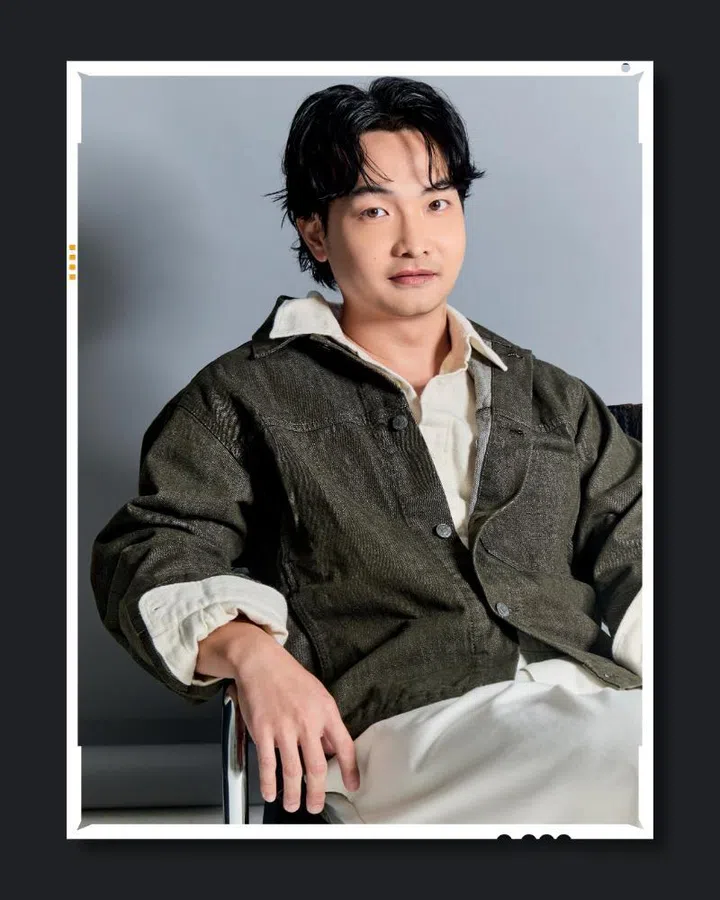
Shirt; jacket; Uniqlo: C trousers, UNIQLO.
Baremetalco is not just a workshop. For founder Matthias Yong, it’s about reimagining what it means to create. He believes that the most ordinary objects can become the most meaningful ones when they’re made with intention and care. Growing up around his father’s steel fabrication business, the second-generation metalsmith developed an early connection to the trade. “I’ve always been very hands-on and curious about how things are made,” he says. “That was the moment I realised that I connected with the material.”
Working exclusively with bare, unpainted metal, he creates commissions ranging from bespoke home pieces to sculptural works. His most defining work remains The Maker’s Sink, a hand-hammered, irregularly shaped stainless steel sink. “It reminded me that even the hardest things can be shaped into something soft and beautiful.” Proof, perhaps, that even in a time that prizes the new, some traditions are still very much worth keeping.
What has your profession taught you?
Patience and perseverance. Good work takes time and metal doesn’t allow shortcuts, because every mistake becomes visible. No matter how long you’ve been doing it, there’s always a new challenge waiting around the corner.
What is creativity to you, and how has that definition shifted over the years?
When I was younger, I thought creativity was mainly about coming up with something cool or unique. Today, I see creativity as problem-solving. It’s about finding unexpected solutions, adapting to situations and turning limitations into opportunities. Creativity isn’t just having your own inspiration, but executing it as well.
What’s one thing that outsiders get wrong about being a creative in Singapore?
Many people think creativity is about being artistic and fun. In reality, most of the work happens behind the scenes. We have to put on multiple hats at once instead of simply doing the very thing we dream of doing. Creativity involves so much more discipline and energy than what most people realise.
Related article: Creative Technologist Aditi Neti On Humanising Technology, Keeping Traditions Alive And More
Christina Rasmussen, 30; and Sasha Wijidessa, 31, Founders of Fura
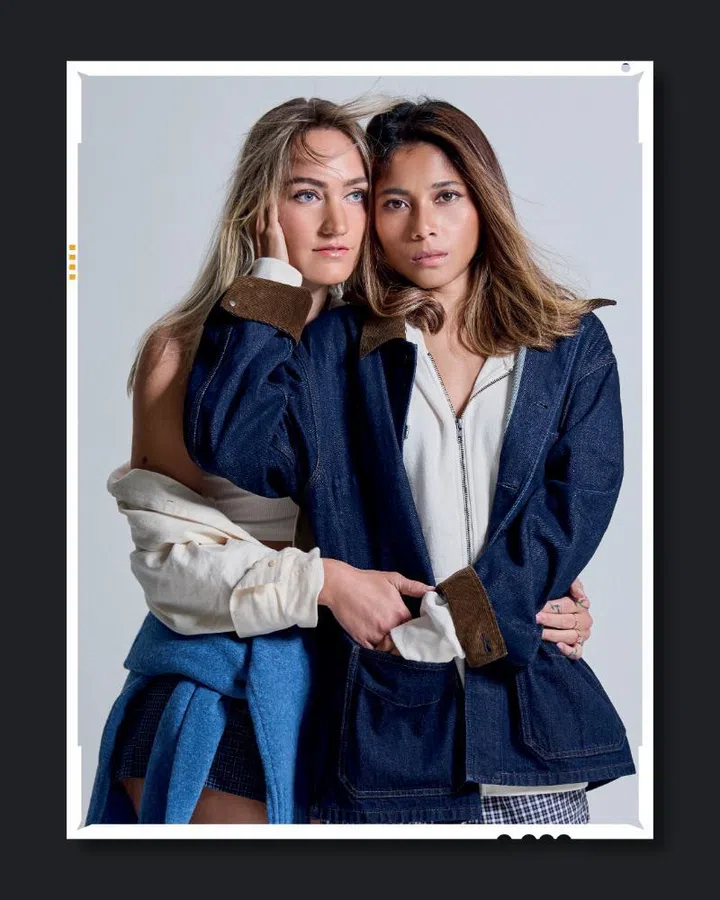
On Christina: Top, boxer shorts; sweater, Uniqlo and JW Anderson shirt, UNIQLO.
On Sasha: Hoodie; jacket; boxer shorts, UNIQLO.
When Christina Rasmussen and Sasha Wijidessa were living in Copenhagen, Denmark, sustainable food and beverage establishments were the norm. “We lived a comfortable, slower life founded on ethics over convenience, quality over quantity, and passion over trend,” shares Rasmussen.
After moving back to Singapore, the duo felt that, in a country so rooted in filial obligations, social responsibilities deserve equal concern. Together, they founded Fura, a sustainability-driven gastrobar in 2023. Its menu comprises planet-friendly, future-minded options that use readily available ingredients with a low carbon footprint.
The pair’s vision of success has remained the same since Fura’s opening. It has never been about how long-lasting the space is, but rather about the impact they’ve made on the people they get to meet along the way.
“We’re lucky enough to have some fantastic people who are really impacted by what we stand for,” says Wijidessa. “You’ll rarely feel out of touch or lost in direction when you have frequent interactions like these, and it keeps us driven.”
What is creativity to you, and how has that definition shifted over the years?
Christina Rasmussen: Since opening, I think it’s shifted from what I thought would work in the space or for our guests to being practical. You see how the workflows, guest trends, produce availability and plenty of other factors alter how you design the menu.
So while being creative can be freeing in many ways, it’s also limiting and it needs to be balanced to attain consistency, dependability, and viability; both financially and operationally. I think like most may say, opening your own place is a reality check but at the same time, it opens doors and opportunities you initially did not think possible.
What do you do to spark your creativity?
Sasha Wijidessa: We get a lot of our inspiration with just what we see and how we live every day, noticing what is going on in our world and how we translate that into more conscious living. Our travels and exposure to different techniques, processes and heritage allow us to experience new ways of thinking too.
Why is creativity important in today’s world?
CR: I believe an outlet for self-expression is essential for meeting our essential or non-essential hierarchy of needs.
Related article: Your Guide To SG Culture Pass-Maxxing: Where To Use, Top Activities And More
Calista Liaw, 26, Erhu Artist and Founder of LIAÜ
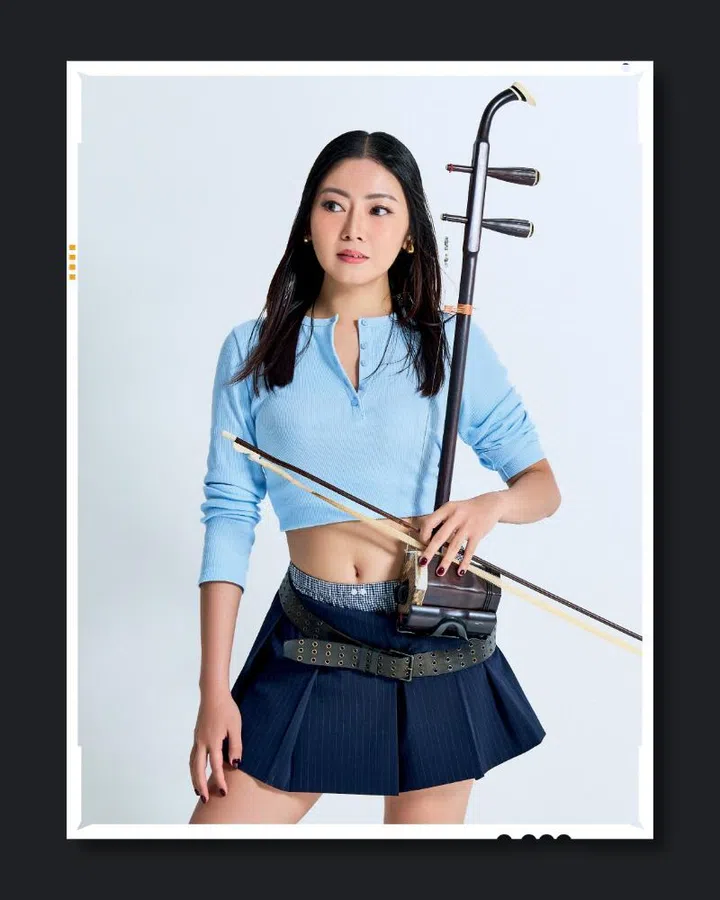
Top; boxer shorts; skirt, UNIQLO. Belt, stylist’s own.
Erhu artist Calista Liaw has built a career on an instrument most people file under ‘traditional’, and made it feel modern. Case in point: her album named REBIRTH, a 12-track collection inspired by the Chinese zodiac, fusing erhu with contemporary R&B, hip-hop and electronic beats.
Liaw started playing erhu at the age of eight in the Chinese orchestra at primary school, before turning professional while at university. Her journey in this field has instilled discipline, resilience, and a willingness to embrace growth through discomfort. “Whether in music, business, or creative pursuits, I’ve come to see every setback, critique, and challenge not as a barrier, but as part of the process of refining an uncut stone,” she shares. As a soloist, her performances have sold out, proving that a career in the traditional arts is not just viable, it can be celebrated. Her track record earned her a spot on the 30 under 30 Music Leaders list by the Southeast Asian Directors of Music.
“What I’ve learnt is that opportunities rarely arrive at your doorstep,” she says. “You have to seek them boldly, create them when they don’t exist, and be willing to step outside your comfort zone.”
What do you do to spark your creativity, and keep yourself creative?
I really value my alone time because it’s often when I can sit fully with my thoughts, emotions, and curiosities without distraction. I enjoy going down rabbit holes, whether that’s reading about a niche topic, discovering an interesting perspective online, or stumbling upon a piece of art, architecture, or music from another part of the world. Many of my creative ideas arrive unexpectedly during these quiet moments of exploration.
What does success mean to you now, as compared to when you first started?
When I first started out, success looked very much like what society told me it should look like: good grades, impressive qualifications, a stable career, and all the traditional milestones that come with adulthood. As I built my career, that definition evolved into performing more shows, working with bigger brands and artistes, and receiving recognition through media coverage and industry achievements. But over time, I’ve realised that success is a moving target. Every time I reach a new high, I’m already thinking about how to outdo myself—not necessarily in a bigger or more visible way, but in a way that feels more meaningful. Sometimes “better” means greater artistic excellence, sometimes it means creating more opportunities for others, building a stronger business, or simply becoming a better version of myself.
Could you name one creative you’ve always been inspired by, and why?
Recently, I have really been into Chinese hip-hop artist Vava. She works with elements of Chinese culture in a way that feels authentic, confident, and unapologetically modern. Her music combines infectious beats with strong storytelling and a distinct artistic identity, while her style and stage presence are equally compelling. She has shown me that cultural heritage doesn’t have to be preserved in a static form. That mindset has been a significant influence on my own exploration of how the erhu can exist within modern musical experiments.
Photography: Lawrence Teo and Angela Guo
Creative direction: Windy Aulia
Styling: Gracia Phang
Production: Aaron Kok
Makeup: Rina Sim using Chanel Beauty
Hair: Jimmy Yap/Kimistry; Grego using Revlon Professional
Stylist’s assistant: Jolin Lam, Laila Mishazira
In collaboration with UNIQLO.