
Anthony Chen Returns Home With “We Are All Strangers”
As his trilogy comes full circle, Anthony Chen considers what it means to grow up.
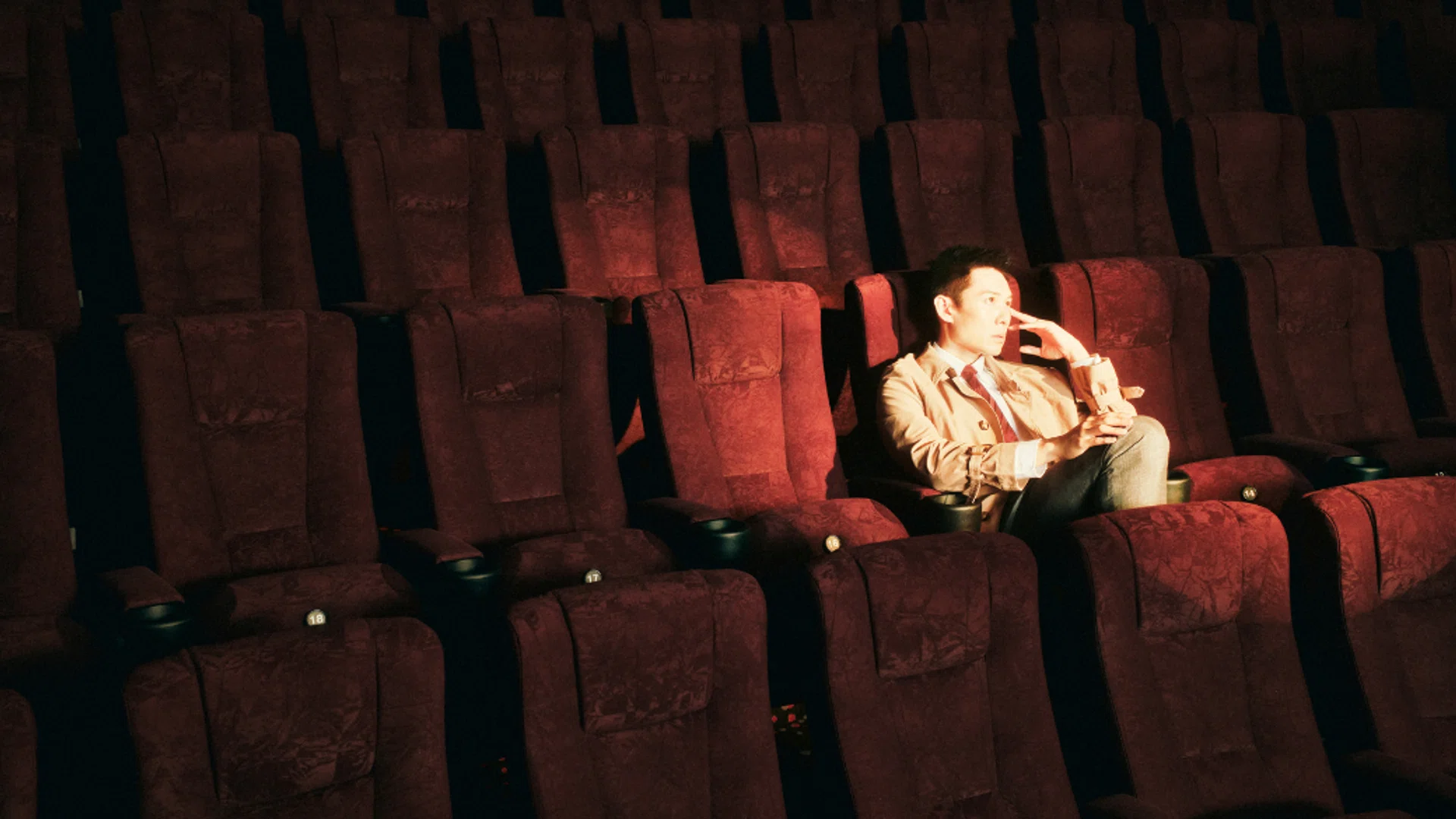
By Aaron Kok - published
It takes a specific kind of man who can admit, without any ego or hesitation, that he is “very anal” (his words, not ours) about whether a character’s footwear should shift from Crocs to sandals. Anthony Chen is one of them.
He says this plainly, because in his films, a shoe is never just a shoe. A fake branded watch says something; just as the way a person speaks does; or the neighbourhood vernacular they use; or the language they reach for when upset. All of these become a kind of personality evidence.
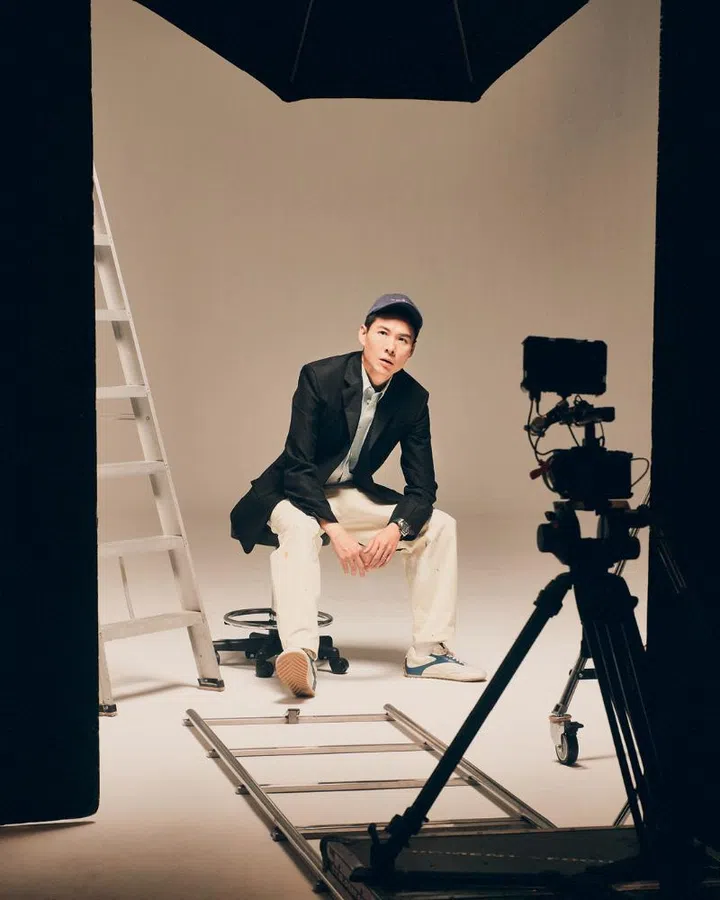
Jacket; shirt; jeans; sneakers, Bottega Veneta. “We Are All Strangers” cap, Anthony’s own.
Related article: Heart Evangelista Is No Longer Playing To Please
This month, Chen returns with We Are All Strangers, the final instalment of what has now become his “Growing Up” trilogy. It began in 2013 with Ilo Ilo, the tenderly seismic debut that took him to Cannes, and continued with Wet Season in 2019, a film about loneliness and desire. Now comes We Are All Strangers, a sprawling yet intimate portrait of a young man pushed into adulthood, and of the family structures that form around duty, love and survival.
Chen is aware that calling it a trilogy can sound slightly retrofitted. These are not films with cliffhangers, shared villains or Marvel-level world-building. Each stands on its own. Yet when he speaks about them now, the connections feel less imposed than discovered. “There are two layers to it,” he says. “We watch literally a Singapore boy in three different films, at three different phases of their lives. At the same time, it is also my own growing up.”
Chen made Ilo Ilo in his 20s, Wet Season in his 30s, and We Are All Strangers in his early 40s. In that same span, he became a husband and father, and that private evolution entered the work with more force. The trilogy, in his telling, also becomes a portrait of Singapore’s own maturing, from the late ’90s Asian financial crisis to the present. “I feel like the first film and the second film are intimate portraits of a family,” he says. “The third one is also an intimate portrait of a country.”
That word “intimate” matters. We Are All Strangers may be his broadest Singapore film yet in terms of social sweep, but it begins from a human worry. The seed came from Koh Jia Ler, who first appeared in Ilo Ilo as an impetuous 11-year-old and later returned in Wet Season as a teenager. After the latter wrapped, Koh told Chen he wanted to drop out of school and asked the director to convince his parents to let him do so. In Singapore, where qualifications are a kind of civic necessity, the statement landed heavily with Chen.
“Who drops out of school in Singapore?” Chen recalls asking. “I was genuinely worried about this young man going out into this really brutal adult world. What happens if you’re forced to grow up?”
That concern became the beginning of We Are All Strangers. Koh’s own life brushes up against the film in small ways. Chen mentions that the actor had done food delivery before, did livestreams to sell products, worked in a bar and so on. Life and cinema, in this case, shook hands.
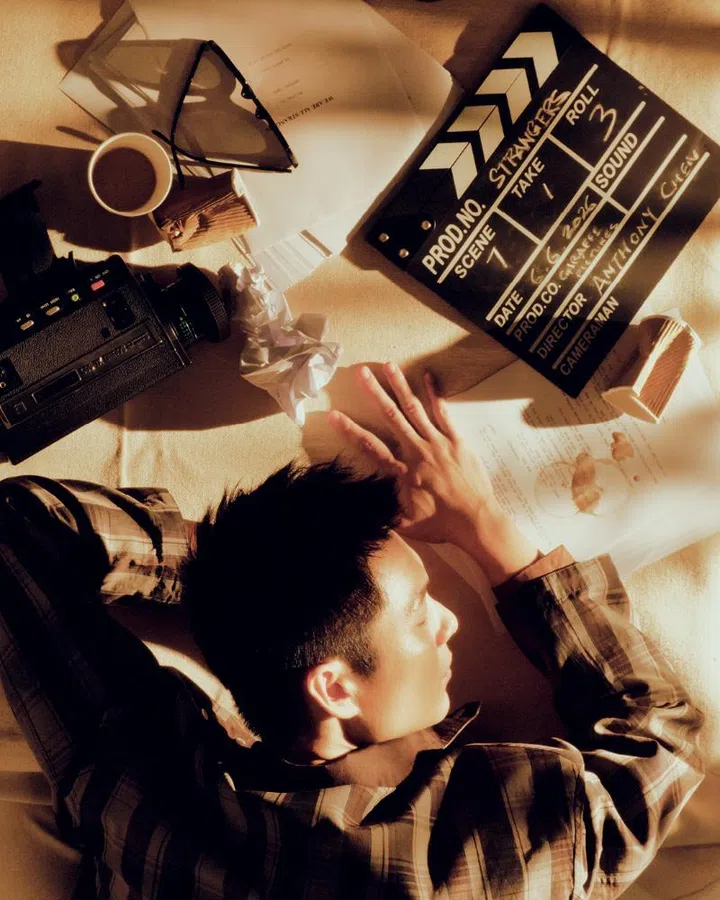
Jacket; shirt, Hermès.
Related article: 10 Singaporean Movies To Rewatch This National Day
Ordinary Lives, Closely Seen
The resulting film is not exactly an easy watch. It is warm and tender in places, even funny when it wants to be, but a cool heaviness runs through it. We Are All Strangers moves with the uncomfortable logic of life itself, where affection and frustration can sit at the same table, and people can make choices that test your patience even as you find yourself rooting for them.
Watching it, I am made aware of my own vantage point of privilege. The film does not scold, but it does make comfort visible. Case in point: the two wedding scenes offer one of its sharpest observations. On one side are the polished rituals of a fancy hotel ballroom wedding many Singaporeans know well. On the other is a coffee shop wedding: public, communal, joyous in a completely different register. Chen does not frame one as superior to the other. He lets the contrast speak, allowing culture and class to surface without underlining the point in red.
“For me, it’s very important to be empathetic, but not sympathetic,” he says. “I don’t believe in just selling cheap sadness porn.”
That line is useful because We Are All Strangers could have easily gone in that direction. In less careful hands, a film about working-class Singaporean life might become tearjerker material looking for a film festival medal. Chen avoids that by refusing to flatten his characters into victims or lessons. They are allowed to be silly and stubborn, to fall in love, get things wrong and behave in confusing ways.
His writing process begins with people first. He does not start with social issues and reverse-engineer a story around them. “When I get the individual right, and then I get the family right, what you see is a real portrait of the self, family, society and eventually the country.” That might explain why Chen’s films can feel so precise without becoming preachy. He is drawn to people doing what they think they must, with the limited tools they have.
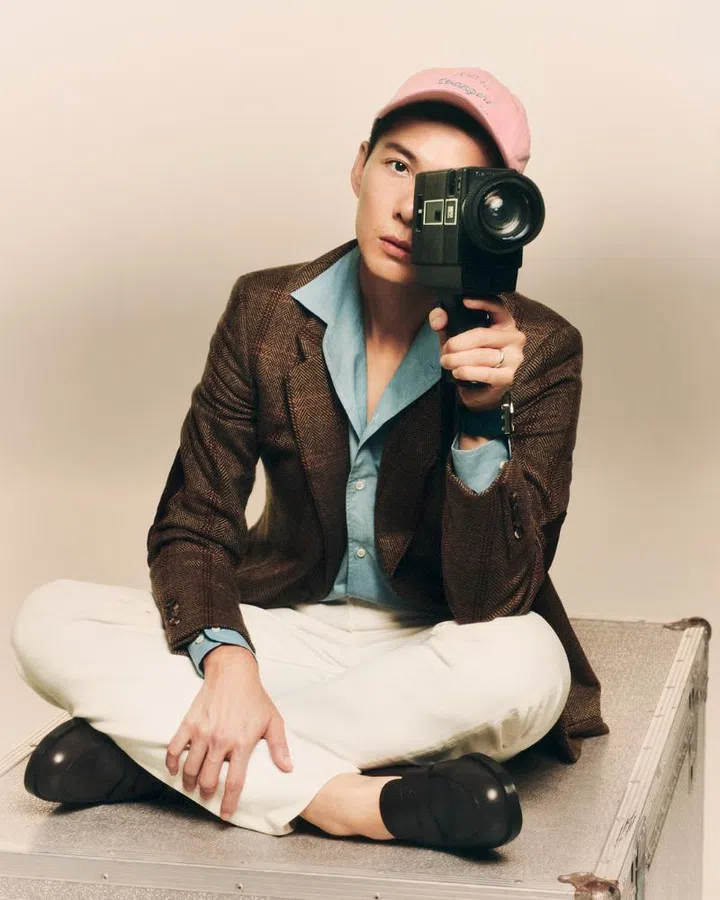
Jacket; shirt; trousers; shoes, Loro Piana. “We Are All Strangers” cap; watch; ring (worn throughout), Anthony’s own.
Related article: Ludi Lin Is Thinking Beyond The Action Hero
There is a lot of Singapore in that thought. In We Are All Strangers, the city appears in its full texture: gleaming in one moment, deeply lived-in the next. Chen captures it with a tenderness that feels unmistakably local. At the press screening, he said: “I made this film for Singapore and for Singaporeans.” He also spoke about beauty in ordinary life. “How do we make ordinary life look beautiful?” he asked. “I wanted to find beauty in all these forgotten spaces.”
That love for Singapore runs through his work. Chen’s cinema is not interested in a glossy version of the country, where every story arrives polished and safely inspirational. His Singapore has coffee shops, HDB corridors, cramped rooms, family dinners and people who do not always have the words to describe their own journeys. It is affectionate because it is observant.
Family remains the great engine of his work. In We Are All Strangers, family becomes something inherited, improvised and tested under pressure.
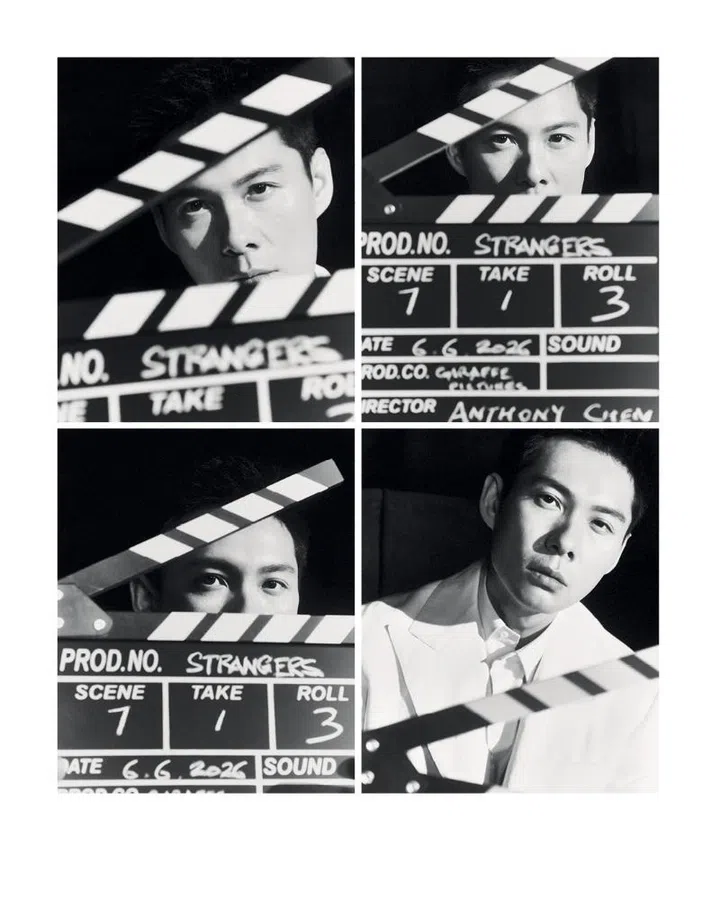
Jacket; shirt, Ralph Lauren.
Related article: All The Latest Lifestyle News In Singapore Worth Keeping Up With
Chen does not see his attraction to family stories as a neat creative choice. To him, it is cultural, almost cellular. “Being Asian, it is almost in our DNA,” he says. “We always see ourselves as part of this unit.” In Singapore, that is sharpened by proximity. You may want to be your own person, but your parents might still live 30 minutes away, and the family dinner is never as far as one imagines.
Chen’s own life has changed the way he writes these dynamics. “Everyone thinks at some point you come of age,” he says. “But the growing and learning continues.” Becoming a father did not hand him instant wisdom. It gave him material, certainly, but also questions. “A lot of people expect that you are married and then you have a child, so you know how to be a husband and how to be a father. Actually, it takes years.”
Chen’s connection to the film runs deep, because so much of it comes from emotional memory. During one scene in We Are All Strangers, he found himself crying at the monitor and unable to stop, moved by the actions of the film’s father figure. It was, he says, embarrassing, but it spoke to how closely he carries the people in his films. “I don’t know how to make work if it’s not personal,” he says. “Maybe filmmaking is my therapy. I don’t know. I’m too Asian to go and air my laundry to someone.”
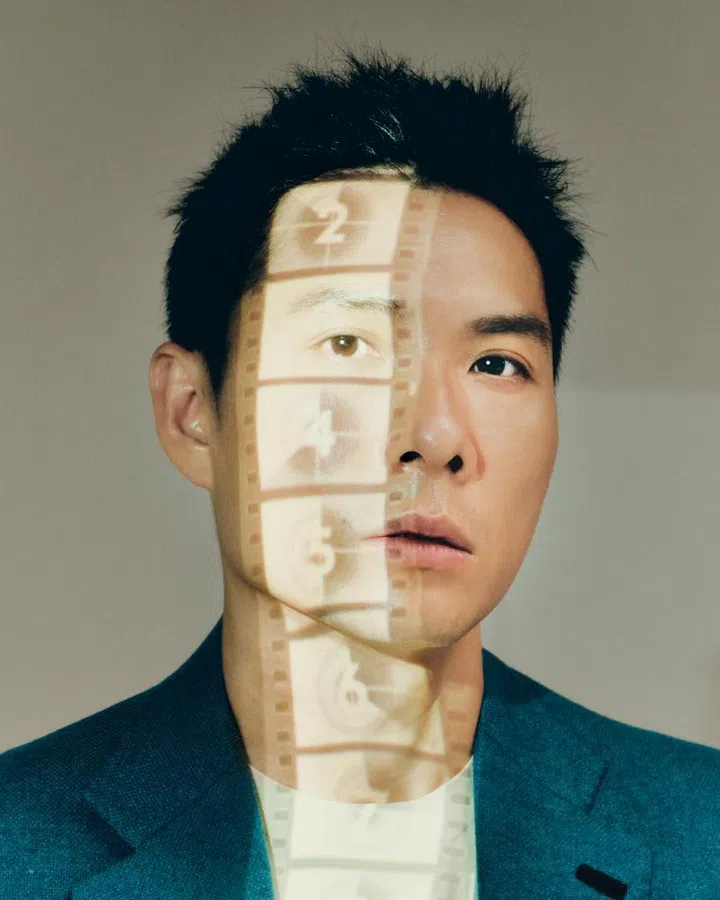
Jacket; knit, Loro Piana.
Related article: 5 Creatives Who Are Redefining Tradition
A Chosen Film Family
The line is classic Chen: funny, blunt, revealing, and not quite as casual as it sounds. His films come from sincerity, but sincerity alone does not explain their control. Ask Yeo Yann Yann, who has worked with him for 20 years, beginning with his short film Ah Ma, and she will tell you about the precision.
She remembers meeting him when he was still in national service, sitting in front of a monitor in fatigues. He had told her that sadness did not always need to be expressed with tears. Later, on set, he asked if she could give him one tear in her left eye. “Siao ah this guy,” she exclaims, recalling what she thought at the time.
That, in essence, is the Anthony Chen method. Yeo says he gave her a new understanding of film performance during Ilo Ilo. Chen explained that on a big screen, everything is magnified. Every breath and blink changes what the audience receives. “From that film, every time a director says something, I’ll give it a try,” she says. “There’s no harm trying.”
Their working relationship now has the texture of family, which means trust, shorthand and a healthy amount of irritation. “Sometimes I feel like he’s a very irritating brother,” she says. “There are times I want to say, can you please don’t torture yourself like that?”
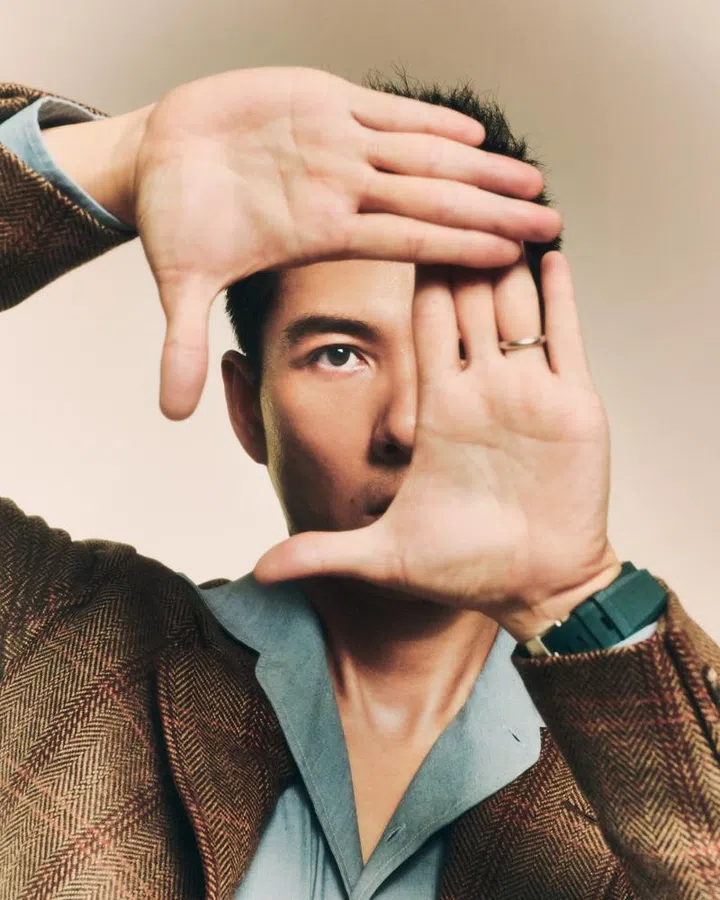
Jacket; shirt, Loro Piana.
Related article: Harhys Stewart On The Business Of Football, Life Overseas And Making Every Match Count
The creative family around Chen has been built through years of films, arguments, awards, failing and trying again. With Yeo and Koh, especially, the relationship has become almost strangely fated. Chen says he resisted casting them again at different points, especially for Wet Season. Yet the film kept leading him back to them. “Sometimes it’s not that you choose them,” he says. “Life chooses your family for you.”
Chen has a larger hope for Singapore cinema too. He is proud of his generation of filmmakers, and says the country has come a long way. Singapore films now travel to Cannes, Berlin and Venice, while We Are All Strangers premiered in competition at the Berlin International Film Festival and went on to screen at the Shanghai International Film Festival. For a small country with a small film industry, those moments matter. What Chen wants now is support closer to home.
He says this with a slight tinge of urgency, but without bitterness. More than anything, there is the feeling of someone who knows how hard it is to make a film here, and continues because the work feels necessary. “If we don’t tell our own stories, no one is going to tell them for us,” he says.
As for what comes after the trilogy, Chen is not ready to declare a grand new project. He has made films outside Singapore and will continue to do so. He has also been producing work by younger filmmakers. A body of work is not only what one directs, but also what one makes possible for others.
Chen does joke that producing films for other directors has its own challenges, because people are less willing to shill out discounts for an Anthony Chen-backed project. “‘Go find more money’ is what they might say,” he adds with a hearty laugh.
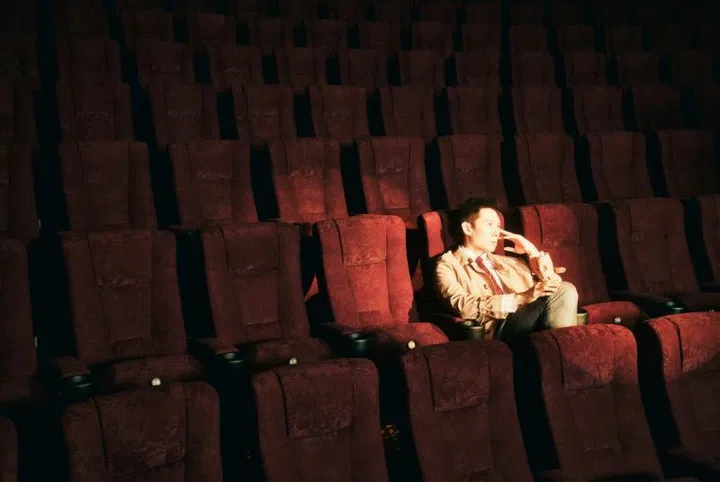
Coat; shirt; tie; trousers, Brunello Cucinelli.
Related article: 5 Creatives Who Are Rethinking Craft In Singapore
And at the end of it all, We Are All Strangers may bookend questions that Chen has been asking for the better part of the past decade, but it does not leave you in despair. Its title suggests distance, yet the film keeps finding all the ways people move towards one another—awkward and imperfect.
Maybe that is what growing up finally is: not a clean arrival as individuals, but the decision to keep walking beside someone anyway.
Editor-in-Chief: Kenneth Goh
Photography: Shawn Paul Tan
Art direction: Sheryl Seah
Styling: Aaron Kok
Makeup: Rina Sim, using Hermès Beauty
Hair: Michael Chiew/ Hairform, using Goldwell
Photographer’s assistant: Xie Feng Mao
Stylist’s assistant: Jolin Lam
Special thanks: Giraffe Pictures and Golden Village Singapore
SPH Media is a principal partner of National Day 2026.